Granby DUI Defense Lawyer
Grand County’s mountain terrain, seasonal tourism, and the stretch of US-40 running through Granby create conditions that make DUI stops a regular occurrence in this part of Colorado. Law enforcement agencies operating along Highway 40, near the Granby Ranch ski area, and along the roads connecting Winter Park with Lake Granby are active year-round, with enforcement intensifying during ski season, summer boating weekends, and holiday weekends when recreational traffic surges. A Granby DUI defense lawyer who understands how these cases are built, where the evidence tends to break down, and what the Grand County court process actually looks like is a fundamentally different resource than a general practice attorney who handles the occasional DUI as a side matter.
Colorado’s impaired driving laws carry consequences that extend well beyond the criminal case itself. A DUI conviction can cost you your driver’s license through a separate DMV Express Consent proceeding, affect your employment, increase your insurance rates substantially, and, for repeat offenses, result in mandatory jail time and felony charges. The criminal case and the DMV proceeding operate on separate tracks, each with its own deadlines and procedural requirements, and failing to act quickly on either front can result in consequences that are difficult or impossible to undo later.
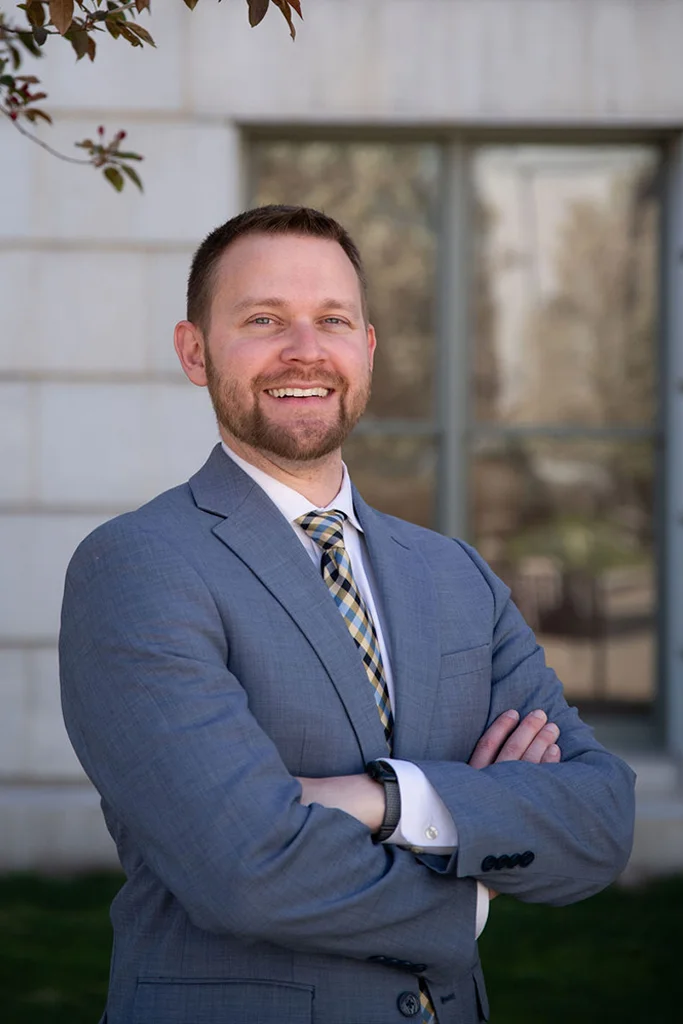
Reid DeChant has represented clients facing DUI and DWAI charges across Colorado’s Front Range and mountain communities, including cases arising in rural and semi-rural jurisdictions where local prosecution and court culture can differ significantly from what happens in Denver. His background as a former public defender gave him exposure to an enormous volume of impaired driving cases across multiple Colorado courthouses, and his training at the Trial Lawyers College sharpened his ability to take those cases to trial when the evidence and the circumstances call for it. That combination matters enormously in a jurisdiction like Grand County, where a DUI charge can follow someone for years.
What Sets DeChant Law Apart for Grand County DUI Cases
Most criminal defense practices in Colorado are built around Denver and the urban Front Range courts. That geographic concentration means many attorneys have limited familiarity with how cases move through the 14th Judicial District, which covers Grand and Routt counties, and with the specific enforcement patterns along Highway 40 and the roads surrounding Granby, Hot Sulphur Springs, and Kremmling. Reid DeChant has invested his practice in developing the kind of cross-jurisdictional experience that allows him to represent clients effectively beyond the metro area, and his track record in rural Colorado courts reflects that commitment.
Reid’s former public defender experience is directly relevant to DUI defense. In that role, he handled DUI and DWAI cases at every stage, from initial advisement hearings through contested DMV proceedings and jury trials. He has cross-examined law enforcement officers on field sobriety test administration, challenged breathalyzer calibration and maintenance records, and scrutinized the foundational question of whether a traffic stop was legally justified in the first place. His results speak to this approach: multiple DUI cases dismissed outright, multiple DMV Express Consent actions dismissed on procedural and constitutional grounds, and DUI trials resulting in not guilty verdicts, including cases in Jefferson, Douglas, Arapahoe, and Broomfield counties.
Reid is a member of the National Association of Criminal Defense Lawyers and the Colorado Criminal Defense Bar, which keeps him connected to developments in DUI defense law and emerging litigation strategies that practitioners who only occasionally handle these cases never encounter. His training at the Trial Lawyers College, the program founded by legendary trial attorney Gerry Spence, taught him that courtroom advocacy at its most effective is built on genuine human understanding of a client’s situation, not procedural maneuvering alone. That philosophy shapes how he approaches every DUI case, including those in Grand County.
DUI and Related Charges Commonly Filed in Granby and Grand County
- DUI (Driving Under the Influence): Colorado’s DUI statute applies when a driver is substantially incapable of safely operating a vehicle due to alcohol or drug impairment, and law enforcement along Highway 40 and near Grand County’s resort areas actively enforce this charge, particularly during winter ski season and summer lake recreation periods.
- DWAI (Driving While Ability Impaired): A lesser Colorado charge that applies when alcohol or drugs have impaired a driver even slightly, typically associated with blood alcohol content between 0.05 and 0.079. DWAI is still a criminal offense with real consequences and should be defended with the same seriousness as a full DUI charge.
- DUI-D (Driving Under the Influence of Drugs): Colorado law includes drug impairment within its DUI framework, covering marijuana, prescription medications, and controlled substances. The legal standard for marijuana impairment, particularly the five nanogram per milliliter THC blood limit, is frequently challenged because that threshold does not accurately reflect actual impairment for regular users.
- Aggravated DUI Circumstances: Factors such as a blood alcohol content of 0.15 or higher, a child passenger in the vehicle, excessive speeding, or a prior DUI within a certain period can trigger enhanced penalties, mandatory sentencing provisions, and ignition interlock requirements even on a first offense.
- DUI Third Offense / Felony DUI: Colorado classifies certain repeat DUI offenses as felonies, which dramatically changes the stakes. A fourth or subsequent DUI, or a DUI causing serious bodily injury or death, can result in state prison time and a felony record. Reid has defended DUI third offense cases in Jefferson, Douglas, and Broomfield courts, including cases that resulted in not guilty verdicts at trial.
- DMV Express Consent Proceedings: Separate from the criminal case, Colorado’s Express Consent law requires drivers to submit to chemical testing and triggers an administrative license revocation process managed by the DMV. This hearing must be requested within a short window following the arrest or license revocation becomes automatic. DeChant Law has a documented record of DMV Express Consent actions being dismissed, including dismissals based on improper advisement, procedural errors, and failure to administer chemical testing within the required timeframe.
What to Do After a DUI Arrest in Granby or Grand County
The first and most time-sensitive action after a DUI arrest in Grand County is requesting a DMV hearing to contest the Express Consent license revocation. Colorado law gives you a narrow window from the date of your arrest to make that request. If you miss it, your driver’s license will be revoked automatically regardless of how your criminal case ultimately resolves. This deadline is not flexible, and it is entirely separate from whatever happens at your arraignment in Grand County District Court or Grand County Court in Hot Sulphur Springs, where misdemeanor DUI cases are typically handled.
Criminal DUI cases in Grand County move through the 14th Judicial District, and your arraignment will typically be scheduled at the Grand County Justice Center in Hot Sulphur Springs. Knowing where your case will be heard, which judges typically handle the docket, and how the local prosecution approach compares to what you might encounter in a larger urban court is genuinely useful information that an attorney familiar with the jurisdiction can provide. Grand County is a small community with a relatively compact court system, and the culture of that courthouse can differ from Denver-area courts in ways that affect case strategy.
Before your first court appearance, gather everything you can remember about the stop: where you were driving, what time it was, why you believe the officer stopped you, what was said during the stop, whether you performed field sobriety tests and under what conditions, and whether you submitted to a breath or blood test or refused. The physical conditions during field sobriety tests matter significantly, and in Grand County, roadside testing on icy, uneven, or high-altitude terrain can affect performance in ways that have nothing to do with alcohol consumption. Document your recollection as soon as possible after the arrest, before memory fades.
Avoid making statements about the incident on social media, to friends, or to law enforcement beyond what is required. Anything you say can be used in the criminal case against you, and prosecutors in Grand County, as everywhere in Colorado, will look at available evidence carefully. The strongest position you can take in the days immediately following an arrest is to retain counsel, request the DMV hearing, and let your attorney handle communications with the prosecutor’s office.
How DUI Cases in Colorado Are Actually Contested
A DUI arrest is not a conviction. The path from an arrest on Highway 40 in Granby to a conviction at trial or through a plea involves several points where a well-prepared defense attorney can intervene and change the outcome. The first question is always whether the traffic stop itself was lawful. An officer must have reasonable articulable suspicion that a traffic law was violated or that criminal activity was occurring before making a stop. If the stop was pretextual or based on conduct that does not rise to that standard, the evidence gathered afterward, including field sobriety test results and blood alcohol content readings, may be suppressible. Suppression of key evidence frequently results in case dismissal.
Even when a stop was lawful, the evidence gathered at the roadside and afterward is subject to scrutiny. Standardized field sobriety tests have specific administration protocols established by the National Highway Traffic Safety Administration, and deviations from those protocols can undermine the reliability and admissibility of the results. Breath testing instruments require regular calibration and maintenance, and records showing gaps or irregularities in that maintenance history can raise serious questions about the accuracy of a reported BAC reading. Blood testing must follow proper chain of custody procedures, and any break in that chain creates grounds for challenge.
At the same time, not every DUI case is built to win at trial. An experienced DUI attorney in Granby or the surrounding Grand County area also evaluates whether a negotiated resolution, whether a reduction to DWAI, a deferred judgment, or another disposition, serves the client’s actual interests better than trial. That evaluation requires honest, informed judgment about the evidence, the client’s history, the likely outcome with this prosecutor and this judge, and the client’s own priorities. Reid’s approach is to give clients an honest assessment of where the case stands and what the realistic options are, not to over-promise outcomes or push clients toward decisions that serve the attorney’s convenience rather than the client’s situation.
Questions About Granby DUI Defense
What is the difference between DUI and DWAI in Colorado?
Colorado law distinguishes between DUI, which requires that a driver be substantially incapable of safely operating a vehicle due to impairment, and DWAI, which applies when alcohol or drugs have affected the driver even slightly. A blood alcohol content of 0.08 or higher creates a statutory presumption of DUI, while BAC between 0.05 and 0.079 is associated with DWAI. DWAI carries fewer mandatory penalties than DUI on a first offense, but it is still a criminal conviction with real consequences for your record and your license.
Do I have to submit to a breath or blood test if stopped in Grand County?
Colorado’s Express Consent law means that by driving on Colorado roads, you have legally consented to chemical testing if a law enforcement officer has probable cause to believe you are impaired. Refusing to take a test triggers its own penalties under the Express Consent statute, including license revocation and the fact that refusal can be used against you in the criminal proceeding. Whether submitting or refusing is the better option depends on the specific facts of your situation, which is one reason contacting an attorney as early in the process as possible matters.
What happens to my driver’s license after a DUI arrest in Granby?
The arresting officer typically takes your driver’s license and issues a temporary permit that is valid for a limited period. Colorado’s DMV then initiates an Express Consent revocation proceeding that is entirely separate from the criminal case. You must request a hearing with the DMV within a short window after the arrest to contest this revocation. Failing to request the hearing means the revocation becomes automatic. DeChant Law has a demonstrated track record of obtaining dismissals in DMV Express Consent proceedings on a variety of grounds.
Can I be charged with DUI in Colorado if I only used marijuana?
Yes. Colorado’s DUI law covers impairment from any substance, including marijuana. Colorado uses a blood THC concentration of five nanograms per milliliter as a permissive inference standard, but this is not the same as the BAC standard for alcohol; a jury is not required to find impairment based on that level alone, and the science connecting THC blood levels to actual driving impairment is genuinely contested. This creates real space for defense arguments, particularly for regular cannabis users whose THC levels may be elevated without reflecting meaningful impairment at the time of driving.
How long does a DUI case typically take to resolve in Grand County?
Grand County is a smaller jurisdiction than the urban Front Range courts, and case timelines can vary depending on court scheduling, complexity of the evidence, and whether the case is headed toward a negotiated resolution or trial. Straightforward misdemeanor DUI cases may resolve over the course of a few months through plea negotiations, while contested cases involving suppression motions or trial can extend considerably longer. The DMV proceeding runs on a separate timeline and is often resolved before the criminal case concludes.
Is it possible to get a DUI reduced or dismissed in Grand County?
Reductions and dismissals do occur in DUI cases in Grand County, as they do across Colorado. The factors that influence whether a reduction or dismissal is available include the strength of the evidence against you, any procedural or constitutional issues with how the stop, arrest, or testing was conducted, your prior criminal and driving record, and the facts and circumstances of the specific incident. DeChant Law has obtained DUI dismissals in multiple Colorado jurisdictions, and the same analytical approach applied to those cases is applied to every Grand County matter the firm handles.
What is the ignition interlock requirement for a DUI conviction in Colorado?
Colorado requires ignition interlock devices for drivers whose licenses are revoked due to DUI, typically as a condition of obtaining a restricted license that permits driving during the revocation period. The duration of the interlock requirement varies depending on factors such as whether the offense was a first or subsequent DUI and whether the driver refused chemical testing. An attorney can help you understand the interlock requirements specific to your situation and advise on how to minimize license disruption during the case and any resulting revocation period.
Can a Granby DUI conviction affect my ability to work in a job that requires driving?
Yes, and this is one of the most significant practical consequences people underestimate when facing a DUI charge in Grand County. A conviction can result in license revocation or restriction, which directly affects anyone whose job requires operating a commercial vehicle, a company car, or any vehicle as part of their employment. Commercial drivers face particularly serious consequences because CDL holders are subject to federal regulations that impose their own disqualification standards, which in some cases are more severe than what Colorado’s criminal courts would impose on a non-commercial driver. Professional licensing boards in certain fields may also inquire about DUI convictions.
What if the field sobriety tests were done on a snowy or icy road in Grand County?
This is a legitimate and frequently relevant defense issue in mountain Colorado. Field sobriety tests, particularly the walk-and-turn and one-leg-stand tests, are designed to be administered under specific conditions, including on flat, dry, well-lit surfaces. Icy, uneven, or snow-covered roads along Highway 40 or near Granby Ranch can compromise a person’s ability to perform these tests regardless of their sobriety level. Cold temperatures, high altitude, and poor lighting conditions can also affect performance and observations. These environmental factors are documented and argued where the evidence supports it.
Should I accept a plea deal from the Grand County prosecutor or take my case to trial?
That decision should be made with a complete, honest evaluation of the evidence in your specific case. There is no universal right answer. Some DUI cases have evidentiary or constitutional vulnerabilities that make trial a strong option. Others involve evidence that would be difficult to overcome at trial, making a negotiated resolution to a lesser charge a genuinely favorable outcome. The question of whether to go to trial should never be decided based on fear of the courtroom or a lawyer’s reluctance to try cases. Reid DeChant has taken DUI cases to trial and obtained not guilty verdicts, which means clients who work with DeChant Law know their attorney is prepared to go all the way when the case warrants it.
DeChant Law’s DUI Defense Representation Across Grand County and the Surrounding Region
DeChant Law represents clients facing impaired driving charges throughout Granby and the broader Grand County area, including clients from Winter Park, Fraser, Tabernash, Hot Sulphur Springs, Kremmling, Grand Lake, and Parshall. The firm also extends its representation to clients from neighboring mountain communities who find themselves charged in the 14th Judicial District, including individuals who were passing through Grand County on Highway 40 during ski season, summer fishing trips, or visits to Rocky Mountain National Park’s western entrance. Clients traveling from Summit County communities like Dillon, Silverthorne, and Frisco, and from Routt County near Steamboat Springs, have also turned to DeChant Law when facing DUI charges in the region. On the Front Range, the firm’s DUI defense practice covers Denver, Jefferson County, Arapahoe County, Adams County, Douglas County, Broomfield, and the surrounding metro communities where Reid developed much of his trial experience as a public defender and in private practice.
Speak with a Granby DUI Attorney About Your Case
A DUI charge in Grand County carries real stakes, from criminal penalties to license consequences to the long-term effects on your record and your livelihood. Consulting with a Granby DUI attorney as early as possible after an arrest gives you the best opportunity to preserve your options, meet critical deadlines, and understand exactly what you are facing before the legal process moves further along without you. Reid DeChant brings a level of DUI defense experience, trial preparation, and client commitment that makes a measurable difference in how these cases resolve.
Contact DeChant Law to schedule a consultation and discuss your Grand County DUI case directly with Reid. The earlier you reach out, the more can be done to protect your position in both the criminal case and the separate DMV proceeding.