Cañon City DUI Defense Lawyer
Fremont County has its own rhythm when it comes to DUI enforcement. The highways that wind through the Arkansas River corridor, the stretches of U.S. Route 50 between Cañon City and Salida, and the roads that carry traffic to and from Skyline Drive all see consistent law enforcement activity. A stop that begins with a trooper’s flashlight can quickly spiral into a breathalyzer, a blood draw at St. Thomas More Hospital, and a court date at the Fremont County Combined Courts that reshapes your life. Working with a Cañon City DUI defense lawyer who understands how these cases are actually built, and how they can be challenged, matters more than most people realize until they are too deep in the process to course-correct.
Colorado’s DUI statutes carry real weight. A first offense can mean fines, mandatory alcohol education, probation, community service, and a driver’s license revocation that plays out separately through a Department of Motor Vehicles express consent hearing. By the time a second or third offense enters the picture, the consequences become exponentially more serious, including mandatory jail time and the possibility of a felony conviction if prior offenses are stacked in the right way. None of this is theoretical. Fremont County prosecutors take these cases seriously, and the evidence they rely on, field sobriety tests conducted on uneven roadside terrain, breathalyzer results from devices that require precise calibration and proper administration, blood samples that must be handled and analyzed under strict chain-of-custody rules, is frequently more fragile than it appears on paper.
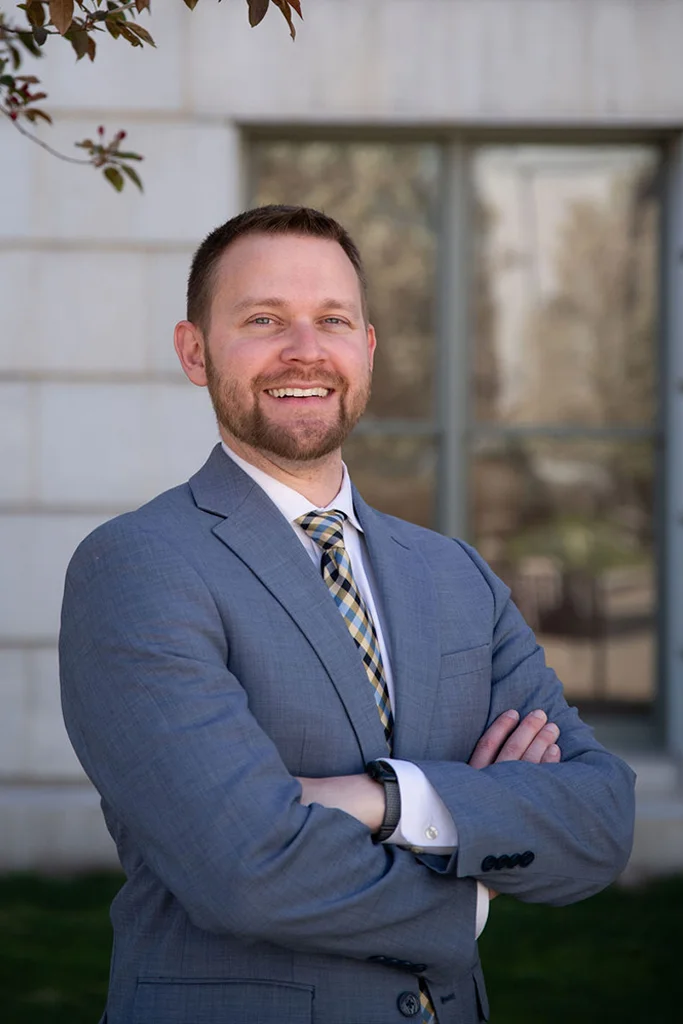
Reid DeChant defends DUI and DWAI clients across Colorado’s Front Range and mountain communities, bringing a depth of courtroom experience that most private attorneys simply cannot match. If you are dealing with a DUI charge in or around Cañon City, what follows is what you should know before your next court date.
The DUI Charges That Come Through Fremont County Courts
- DUI Per Se: Colorado law establishes a blood or breath alcohol concentration of 0.08 or higher as legally sufficient for a DUI per se charge, meaning the prosecution does not need to prove impaired driving separately from the chemical test result. However, how that result was obtained, and whether the testing equipment was properly maintained and operated, is always a legitimate line of defense.
- DWAI (Driving While Ability Impaired): Colorado’s DWAI charge applies at alcohol concentrations of 0.05 to 0.079 and also covers situations where any impairment, however slight, affected driving. DWAI is often treated as a lesser charge, but it still carries criminal penalties, points on your license, and a permanent record entry that follows you into background checks.
- DUI-Drugs: Colorado law criminalizes driving under the influence of any substance that impairs ability to operate a vehicle safely. In Fremont County, this includes prescription medications, cannabis (Colorado sets a legal limit for active THC in blood), and controlled substances. Drug recognition evaluations conducted by specially trained officers are often at the center of these cases, and their methodology is subject to challenge.
- Felony DUI: A fourth or subsequent DUI conviction in Colorado is classified as a Class 4 felony. For anyone in Cañon City with prior convictions on their record, even older ones, the stakes of a new arrest are dramatically elevated and require a defense approach calibrated to the felony-level exposure.
- Underage DUI: Colorado’s express consent law applies to drivers under 21 who operate vehicles with any detectable alcohol concentration. The standard is lower than for adult drivers, and a conviction while young carries collateral consequences that can affect academic enrollment, financial aid, and professional licensing for years.
- Commercial Driver DUI: CDL holders face a lower per se threshold and lose their commercial driving privileges under circumstances that can end a career. The interaction between criminal court proceedings and federal motor carrier regulations makes these cases uniquely complex.
Why DeChant Law Handles Cañon City DUI Defense Differently
Reid DeChant’s background is not a typical private defense attorney resume. He spent significant time as a public defender handling high volumes of criminal cases in Denver, Broomfield, and Adams County courtrooms, defending clients accused of DUI, DWAI, assault, theft, felonies, and charges up to and including homicide. That volume of courtroom exposure means Reid has cross-examined police officers, challenged breathalyzer foundations, and tried DUI cases to verdict far more often than most defense lawyers who went directly into private practice. He has obtained not-guilty verdicts at trial in DUI cases, secured dismissals at the DMV express consent level, and successfully challenged chemical test results and officer conduct at suppression hearings. That track record is documented, not merely claimed.
What also distinguishes Reid’s practice is his training at the Trial Lawyers College, the intensive program founded by Gerry Spence that focuses on storytelling, genuine human connection with juries, and psychodrama as a preparation tool. That training shapes how Reid prepares every DUI case for potential trial. A DUI case that looks like a straightforward chemical test result to a prosecutor often contains human context that a jury should hear: the nervousness of a driver pulled over on a dark highway, the physical conditions that can skew a field sobriety test, the medical history that affects breath testing accuracy. Reid builds cases around what is actually true about his clients, not around legal abstractions. He is also a member of the National Association of Criminal Defense Lawyers and the Colorado Criminal Defense Bar, which keeps him current on evolving DUI science, case law, and defense strategy. If you are searching for a DUI defense attorney for a Cañon City case, those credentials translate directly into the quality of representation you receive.
What the First 72 Hours After a Cañon City DUI Arrest Actually Require
After a DUI arrest in Fremont County, two parallel tracks begin running simultaneously, and most people only focus on one of them. The criminal case will be prosecuted through the Fremont County Combined Courts, located at 136 Justice Center Road in Cañon City. Your arraignment will happen relatively quickly, and you will need to decide how to plead while also assessing whether there are grounds to challenge the stop, the field sobriety testing, or the chemical test. The other track is the DMV administrative process. Colorado law requires that a request for a DMV hearing be made within a specific number of days following the license revocation notice that comes with most DUI arrests. Missing that window means accepting the license revocation automatically, regardless of how the criminal case resolves. An experienced Cañon City DUI attorney will handle the request and preparation for that DMV hearing concurrently with the criminal defense, because the two proceedings require coordinated strategy.
In the immediate aftermath of the arrest, several practical steps matter. Write down everything you remember about the stop: where you were on the road, the officer’s questions, the conditions under which field sobriety tests were administered (was there a slope? wind? poor lighting?), what you were told before you submitted to a chemical test, and the sequence of events from the moment the officer’s lights went on. These details fade quickly and can become critical later. If a blood draw was performed, note where it happened and the time elapsed between driving and the draw, because Colorado’s express consent law has a two-hour window for chemical testing that is not always honored. Any deviation from proper procedure is potentially significant.
Do not discuss the details of your case with anyone outside of an attorney-client relationship, including on social media or with people present during the arrest. Prosecutors in Fremont County can and do use statements made after the arrest in building their case. Contact a DUI defense lawyer serving Cañon City before your arraignment, not after.
How DUI Cases in This Region Are Actually Won
DUI defense is not primarily about finding a loophole. It is about holding the government to the standards it has set for itself. Every piece of evidence used to convict someone of DUI comes with legal requirements attached: the officer must have had a lawful basis for the initial stop; field sobriety tests must be administered according to standardized protocols established by the National Highway Traffic Safety Administration; breathalyzer devices must be calibrated, maintained, and operated properly; blood draws must follow chain-of-custody and laboratory analysis protocols; and chemical testing must be completed within the legally required window.
When any of those requirements are not met, the evidence may be suppressible. A successful suppression motion can remove the chemical test result from evidence entirely, which frequently results in a reduced charge or dismissal. Even where suppression is not available, the facts may support a challenge to the weight of the evidence at trial. Juries are asked to make decisions about real people based on real facts, and a defense that honestly presents the human context of what happened on the road that night, through effective cross-examination of the arresting officer and credible presentation of the client’s story, can produce not-guilty verdicts even in cases where the government’s file looks strong on paper. Reid DeChant has obtained not-guilty verdicts in DUI cases tried in Colorado courtrooms. That result does not happen by accident.
Questions About Cañon City DUI Defense
What happens at the DMV express consent hearing, and why does it matter separately from the criminal case?
The DMV express consent hearing is a civil administrative proceeding that runs parallel to the criminal case. The hearing officer decides whether your driver’s license should be revoked based on the chemical test result or a test refusal. The hearing is separate from the criminal conviction, meaning you can lose your license even if the criminal charge is later dismissed. You have a limited window after the arrest to request this hearing. If the request is missed, revocation becomes automatic. Winning the DMV hearing preserves your driving privileges during the criminal case and beyond.
Can my DUI case be dismissed if the officer lacked a valid reason to stop me?
Yes. The Fourth Amendment requires that a traffic stop be supported by reasonable articulable suspicion. If the stop was pretextual or based on an officer’s observation that does not legally satisfy that standard, a motion to suppress can challenge the entire stop. If granted, all evidence gathered after the stop, including the chemical test result, is excluded. Without that evidence, the prosecution typically cannot proceed. The specific facts of your stop, where you were on U.S. 50, what the officer claims to have observed, the time of night, and the patrol patterns in that area, all factor into this analysis.
What is the difference between DUI and DWAI in Colorado, and does DWAI go on my record?
DUI applies at a BAC of 0.08 or higher, or when impairment is substantial. DWAI applies at a BAC between 0.05 and 0.079, or when impairment is slight but detectable. Both are criminal charges under Colorado law. DWAI is a lesser offense with generally lower penalties on a first offense, but it is still a criminal conviction, it still appears on background checks, and it still counts as a prior offense if you are charged again in the future. Neither should be dismissed as inconsequential.
How does Colorado’s express consent law affect my rights during the arrest?
By driving on Colorado roads, you have implicitly consented to chemical testing if a law enforcement officer has probable cause to believe you are impaired. You can refuse the test, but refusal has its own consequences, including a longer automatic license revocation and the fact that the refusal itself can be used as evidence against you at trial. Whether to submit to testing or refuse is a decision with no universally right answer; it depends on circumstances specific to your situation. This is one reason why having a defense attorney who has handled express consent issues in detail makes a tangible difference to your outcome.
Will a DUI conviction affect my professional license in Colorado?
Colorado’s professional licensing boards, including those governing healthcare providers, teachers, attorneys, real estate brokers, and others, are notified of criminal convictions and have authority to impose discipline up to and including license revocation. The impact varies by profession and the circumstances of the conviction, but a DUI conviction is categorically a reportable event for many licensed professionals. For anyone who holds or is applying for a professional license, the stakes of a DUI conviction extend well beyond the courtroom.
Can a DUI charge in Cañon City affect my immigration status?
Yes, in some circumstances. A DUI conviction can trigger immigration consequences for non-citizens, particularly if the charge involves aggravating factors, if it is classified as a felony, or if it is combined with other convictions. Immigration law in this area is complex and changes frequently. Anyone who is not a U.S. citizen and is facing a DUI charge should discuss immigration implications with a defense attorney before entering any plea.
How is cannabis impairment handled in a Colorado DUI-Drugs case?
Colorado law sets a permissive inference threshold for active THC in blood. A driver who tests at or above that level may be presumed impaired, though the inference is not conclusive and can be rebutted at trial. Cannabis metabolizes differently than alcohol, and factors like tolerance, recency of use, and individual physiology affect what a blood THC result actually means in practice. The science behind cannabis impairment testing is contested, and DUI-Drugs cases involving cannabis frequently turn on whether the driving observed and the physical symptoms noted by the officer are credibly consistent with actual impairment.
What does a first-offense DUI in Colorado typically mean for sentencing?
A first-offense DUI in Colorado involves a range of possible penalties including fines, mandatory alcohol education and treatment classes, community service hours, probation, a period of license suspension or revocation, and potential jail time. Sentencing varies based on the specific BAC level, the judge, the county, whether any property damage or injury was involved, and how the case is handled. A DUI with a very high BAC can trigger enhanced penalties even on a first offense. The range is wide enough that how a case is negotiated or tried genuinely affects the outcome.
Is it worth contesting a DUI charge even if the breath test result is over the legal limit?
Frequently, yes. A chemical test result over 0.08 is not automatically a conviction. The result can be challenged on foundational grounds: calibration and maintenance records for the device, proper observation periods before testing, operator certification, and whether the testing was done within the legally required window. There may also be grounds to challenge the initial stop, the field sobriety evaluation, or other aspects of how the arrest was conducted. Even where the evidence is not suppressible, trial verdicts depend on how the entire case is presented, and results at or near the legal threshold are not as airtight as prosecutors sometimes imply.
How long does a DUI case in Fremont County typically take to resolve?
The timeline depends on the complexity of the case, the court’s docket, whether the defense requests and receives discovery, whether suppression motions are filed, and whether the case resolves through plea negotiations or proceeds to trial. A straightforward first-offense misdemeanor DUI might resolve within several months. Cases involving contested evidence, expert witnesses, or felony-level exposure take longer. The Fremont County Combined Courts handle a mix of cases, and scheduling dynamics affect timing as well. An attorney who is actively managing your case will give you a realistic timeline based on the actual facts and the current state of the docket.
Serving DUI Clients in Cañon City and Across Fremont County and the Surrounding Region
DeChant Law represents DUI and DWAI clients throughout the Cañon City area and the surrounding communities that fall within Fremont County and neighboring jurisdictions. From Penrose and Florence to the east, through the Royal Gorge corridor, and into the residential and commercial districts of Cañon City proper, including areas along U.S. Route 50, State Highway 115, and the roads that connect to Pueblo County, we handle cases across the geographic footprint that Fremont County law enforcement patrols. We also represent clients from Coal Creek, Williamsburg, Lincoln Park, and the rural stretches between Cañon City and the Chaffee County line near Salida. For clients whose charges arise from incidents on State Highway 9, the roads leading toward Westcliffe in Custer County, or the mountain corridors south toward Huerfano County, DeChant Law provides representation built on genuine trial experience rather than volume processing. Clients from Pueblo, Colorado Springs, and the communities along the I-25 corridor who have cases pending in Fremont County also work with our office.
Cañon City DUI Attorney: Reach Out Before Your Next Court Date
A DUI charge in Fremont County does not resolve itself favorably on its own. The DMV clock starts immediately, the prosecutor is building their file, and the defenses that exist in your case are available only if someone with the experience to identify and develop them is working on your behalf. Reid DeChant is a Cañon City DUI attorney who has taken these cases through to verdict and through dismissal at every stage, from DMV hearings to jury trials. If you are facing a DUI or DWAI charge in Cañon City or the surrounding area, call DeChant Law to discuss your case before your next appearance. The earlier in the process your defense is structured, the more options remain available to you.