Mead DUI Defense Lawyer
A DUI stop on Highway 66 or along the stretch of Weld County Road 34 can go from a routine traffic pull-over to a criminal charge in minutes. For residents of Mead and the surrounding communities in Weld County, an impaired driving charge carries consequences that reach far beyond that night: a criminal record, a driver’s license revocation, insurance rate spikes, and in many cases, mandatory treatment programs or jail time. The decisions made in the hours and days immediately following an arrest determine a great deal about where this ends up. A Mead DUI defense lawyer who understands how Colorado prosecutes these cases, how local law enforcement conducts traffic stops, and how the Colorado DMV’s license revocation process works can make a real difference in your outcome.
Colorado’s DUI laws apply two distinct standards. A blood alcohol content at or above 0.08 percent triggers a DUI charge. A BAC between 0.05 and 0.08 percent can result in a DWAI charge (Driving While Ability Impaired), which carries its own penalties and is often overlooked by people who assume they are safe below the DUI threshold. Drug-impaired driving charges, including impairment from prescription medications or marijuana, are prosecuted under the same framework. None of these charges are minor, and none of them should be approached without someone who has actually tried these cases in Colorado courtrooms.
DeChant Law represents clients facing DUI and DWAI charges throughout the Denver metro area and into Weld County, including Mead, Longmont, Frederick, Firestone, and neighboring communities. Attorney Reid DeChant brings public defender trial experience, private practice focus on impaired driving cases, and specialized training that most defense lawyers simply do not have. If you are facing a DUI charge anywhere in this region, the analysis that follows explains what you are actually up against and how this firm approaches it.
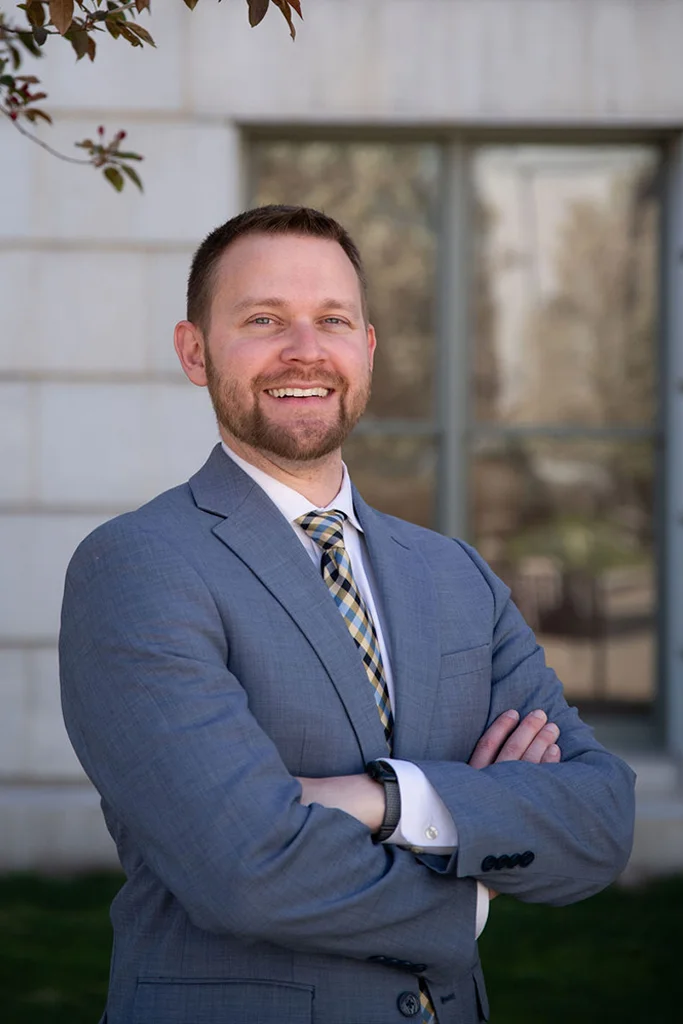
What Reid DeChant Brings to Your Mead DUI Defense
Reid DeChant built his criminal defense practice on trial experience that most private defense attorneys never accumulate. As a former public defender in Denver, Broomfield, and Adams County courtrooms, Reid handled a high volume of DUI, DWAI, and DUI-drug cases alongside felony and misdemeanor defense across virtually every charge category. That background means he has cross-examined police officers on field sobriety test administration hundreds of times. He understands how breathalyzers get miscalibrated, how blood draw procedures get contaminated, and how roadside observations get exaggerated in police reports. That specific courtroom knowledge is what separates a defense built for trial from one built for a quick plea.
Reid is also a graduate of the Trial Lawyers College, an invitation-only program founded by legendary trial attorney Gerry Spence. The program trains lawyers in genuine narrative advocacy, connecting with jurors as human beings rather than presenting legal arguments to them as abstractions. In DUI cases, where the prosecution often leads with numbers and charts, a defense lawyer who knows how to tell a client’s story to a jury can change how a panel weighs the evidence. Reid’s case results reflect that approach: multiple DUI and DUI-drug acquittals at trial, multiple DMV license revocation hearings dismissed, and a track record of case dismissals across Arapahoe, Jefferson, Douglas, and Broomfield counties. He is recognized by the National Association of Criminal Defense Lawyers and the Colorado Criminal Defense Bar, memberships that reflect an ongoing commitment to the craft of criminal defense, not just credentials on paper.
For someone in Mead looking for a DUI defense attorney, what matters is this: Reid has won DUI cases at trial in multiple Colorado counties, he has a proven record of getting DMV revocation proceedings dismissed, and he treats clients as partners in their own defense rather than passive observers in a process they do not understand.
DUI Charges Residents of Mead and Weld County Face
- Standard DUI (BAC 0.08 or above): Colorado’s standard DUI charge applies when a breath or blood test returns a result at or above 0.08 percent, though prosecutors can also pursue a DUI charge based on observed impairment regardless of BAC. First-offense penalties include fines, license points, possible jail, and mandatory alcohol education classes.
- DWAI (Driving While Ability Impaired): Colorado is one of the few states with a statutory DWAI offense that kicks in at a BAC between 0.05 and 0.08 percent. Many drivers stop worrying at one drink below the DUI line and do not realize a DWAI conviction still carries license points, fines, and a criminal record.
- DUI-Drugs: Impairment from marijuana, prescription medications, or controlled substances is prosecuted under the same DUI framework as alcohol. There is no chemical threshold for drug impairment the way there is for alcohol, so these cases often come down to officer observations and toxicology evidence, both of which are challengeable.
- Repeat DUI Offenses: Colorado escalates DUI penalties significantly for second and third offenses, and a third DUI can be charged as a felony under Colorado law. Prior offenses from other states can count. If you have prior DUI history, the stakes on a new charge are substantially higher, and the defense strategy needs to account for sentencing exposure from the outset.
- DMV Express Consent License Revocation: Separate from the criminal case entirely, Colorado’s Express Consent law requires drivers to submit to chemical testing. A refusal or a test above the legal limit triggers an administrative license revocation through the DMV. You have a short window after arrest to request a hearing, and if you miss it, the revocation becomes automatic. Multiple DeChant Law clients have had their DMV revocation proceedings dismissed entirely.
- Underage DUI and Zero Tolerance: Colorado’s zero-tolerance law applies to drivers under 21. A BAC as low as 0.02 percent can support a charge for drivers in that age group, with consequences that affect driving privileges, insurance, and educational opportunities.
The Mead DUI Process and What to Do Right Now
If you were arrested for DUI in Mead or elsewhere in Weld County, your case will most likely be filed in Weld County Court or Weld County District Court, depending on whether the charge is a misdemeanor or felony. The courthouse in Greeley handles most Weld County criminal matters. Understanding where your case is headed matters because the local prosecutors, judges, and procedures influence how a case gets negotiated and tried.
One of the most common and costly mistakes people make after a DUI arrest is waiting too long to contact a lawyer. Colorado law gives you seven days from the date of your arrest to request a DMV Express Consent hearing to challenge your license revocation. If that deadline passes without a request, the DMV proceeds with the revocation automatically, and you lose the opportunity to fight it administratively. This is not a deadline that can be extended. Contact a DUI attorney in Weld County immediately after your arrest, and make the hearing request part of the first conversation.
After the arrest, preserve everything you can. Write down what you remember about the traffic stop: where it happened, what the officer said, how you were asked to perform field sobriety tests, and what conditions existed (lighting, road surface, weather, footwear). Notes made soon after an event are far more reliable than memory weeks later, and the details matter when a defense lawyer reviews whether the stop itself was legally justified. Issues like improper traffic stop initiation, poorly administered standardized field sobriety tests, breath test machine maintenance failures, and blood draw chain-of-custody problems have led to dismissed cases in Colorado courts.
Do not discuss the details of your arrest with anyone except your attorney. Statements made to friends, family, or on social media can surface in a prosecution. Let your lawyer be the one who evaluates what the evidence actually shows before any representations are made.
How Colorado DUI Defense Actually Works at Trial and in Negotiation
Most people charged with DUI assume the case is lost because they took a breath test. That assumption is wrong more often than it should be. Breath testing equipment in Colorado must be properly maintained, calibrated, and operated according to strict protocols. Law enforcement agencies have documented histories of maintenance failures on breathalyzer devices, and those records are discoverable. Blood testing introduces separate issues around sample handling, labeling, storage temperature, and chain of custody. A result that looks definitive on paper can become contested evidence when the underlying process is examined carefully.
Field sobriety tests are another area where the defense can challenge the prosecution’s case. The standardized battery of tests used in Colorado, including the Horizontal Gaze Nystagmus test, the Walk-and-Turn, and the One-Leg-Stand, are only valid indicators of impairment when administered according to precise NHTSA protocols. Uneven pavement, poor lighting, medical conditions affecting balance, and officer errors in administering the tests can undermine their reliability. An attorney who has cross-examined police officers on this ground before knows exactly what to look for in the dashcam footage and the officer’s report.
Beyond evidence challenges, Colorado law offers diversion and deferred prosecution options in some DUI cases, particularly for first-time offenders. These paths are not available in every case and are subject to prosecutorial discretion and court approval, but they exist and should be explored where appropriate. A DUI attorney serving Mead who knows the Weld County courts knows how to evaluate whether these options are realistic in a given case and how to position a client to take advantage of them.
Questions People Ask About Mead DUI Defense
What happens to my driver’s license after a DUI arrest in Colorado?
Colorado’s Express Consent law triggers an automatic license revocation if you refuse a chemical test or if your BAC meets or exceeds the legal threshold. The revocation is an administrative action separate from your criminal case and is handled through the Colorado DMV. You have seven days from the arrest to request a hearing to contest the revocation. If you request the hearing in time, the revocation is stayed while the hearing is pending. An attorney can represent you at the DMV hearing and argue for dismissal, as Reid DeChant has done in multiple cases.
Can I be charged with DUI in Colorado for marijuana impairment even though marijuana is legal?
Yes. Colorado’s legal recreational marijuana status does not protect drivers from DUI-drug charges. While Colorado law sets a permissible inference at five nanograms of active THC per milliliter of blood, the prosecution can still pursue a charge based on observed impairment even without that threshold being met. These cases are scientifically complex because THC metabolizes differently from alcohol and can remain detectable long after impairment has ended.
What is the difference between a DUI and a DWAI in Colorado, and does it matter?
Both are criminal offenses in Colorado, but DWAI carries slightly lower penalties on a first offense. However, a DWAI conviction still results in a criminal record, license points, fines, and a mark that counts as a prior offense if you are ever charged again. Treating a DWAI as a minor matter is a mistake, and the charge is worth defending as seriously as a DUI.
Will a DUI conviction in Colorado affect my job?
For many people, yes. Employers in transportation, healthcare, education, government contracting, and licensed professions often conduct background checks where a DUI appears. Commercial drivers face the most immediate and severe consequences because a DUI conviction can disqualify you from holding a commercial driver’s license. Even for non-CDL holders, a conviction that results in a license suspension can affect any job that requires driving as part of the role.
How long does a DUI case take to resolve in Weld County?
Timelines vary based on whether the case goes to trial, the complexity of the evidence, and court scheduling. A straightforward misdemeanor DUI that resolves through a plea or diversion can take a few months. A case that goes to trial or involves contested evidence will take longer. The DMV administrative process runs on its own separate timeline from the criminal case and can often be resolved faster.
Is it possible to get a DUI dismissed entirely in Colorado?
Yes. Cases get dismissed for a range of reasons, including unlawful traffic stops, improper administration of field sobriety tests, breath test equipment problems, blood draw procedural errors, and constitutional violations in the arrest or investigation. DeChant Law has obtained DUI dismissals in multiple Colorado counties, including cases in Douglas, Jefferson, Arapahoe, and Broomfield. Dismissal is not guaranteed in any case, but it is a realistic outcome when the evidence and procedures are carefully examined.
What if I refused the breath or blood test at the time of my arrest?
Refusing a chemical test in Colorado triggers a longer DMV revocation period than a failed test and can be used by the prosecution as evidence of consciousness of guilt. However, refusal cases are still defensible. The lawfulness of the traffic stop, whether you were properly advised of your rights and consequences under the Express Consent law, and the adequacy of the officer’s observations can all be challenged. The refusal does not automatically mean a conviction.
Can a DUI from years ago affect a new DUI charge in Mead?
Yes. Colorado looks back at prior DUI and DWAI convictions when determining how to charge and sentence a new offense. A prior conviction, even from another state, can elevate a new DUI to a second or third offense with substantially higher penalties. A third DUI can be charged as a felony regardless of whether injury occurred. If you have prior history, the defense strategy on a new charge has to account for that exposure from the very beginning.
Do I need a lawyer if this is my first DUI and I just want to plead guilty and move on?
This is a common impulse and often a costly one. Pleading guilty without a lawyer reviewing the evidence means you accept a conviction without knowing whether the stop was lawful, whether the testing was reliable, or whether diversion options existed. A DUI conviction creates a criminal record that can affect employment, professional licenses, immigration status, and future charging decisions. Having the charge reviewed costs far less than the long-term consequences of a conviction that could have been challenged.
How does a DUI affect a professional license in Colorado?
Colorado’s licensing boards for professions including nursing, medicine, law, real estate, and commercial driving have their own reporting and disciplinary procedures that operate independently from criminal courts. A DUI conviction can trigger a board inquiry and potential license discipline. If you hold a professional license, protecting it is part of the overall defense strategy, not a secondary concern.
Serving Mead, Weld County, and the Surrounding Communities
DeChant Law represents clients facing DUI and DWAI charges across a broad stretch of Colorado’s Front Range. From Mead and Longmont through Frederick, Firestone, and Dacono in Weld and Boulder counties, and extending south through Thornton, Brighton, Commerce City, and Westminster in Adams County, the firm serves clients wherever they were stopped and wherever their case is being prosecuted. Cases arising near the I-25 corridor through Weld County, along State Highway 119, or in the rural stretches of Weld County Road 34 and surrounding county roads frequently end up in Greeley-area courts, and Reid DeChant is prepared to represent clients in those venues. The firm also handles cases filed in Jefferson County courts in Golden, Arapahoe County courts in Centennial, Douglas County courts in Castle Rock, and Denver County courts at the Lindsey-Flanigan Courthouse. Broomfield County cases, which go through the Broomfield Combined Courts, are another area where Reid has a documented record of results. Whether your arrest happened on a quiet stretch of Weld County road or coming back from a concert in Denver, the firm’s geographic reach means you have access to serious DUI representation regardless of which courtroom is handling your case.
Mead DUI Attorney Ready to Review Your Case
A DUI charge in Mead does not have to become a DUI conviction. The evidence in these cases is often more complicated than a police report makes it look, and the procedural requirements Colorado places on law enforcement are specific and enforceable. Reid DeChant is a Mead DUI attorney with real trial results in Colorado DUI cases, a training background that goes beyond standard legal education, and a practice built on treating clients as people whose lives matter, not files to be processed. Contact DeChant Law to have your case reviewed and to understand what your actual options are.