Bennett DUI Defense Lawyer
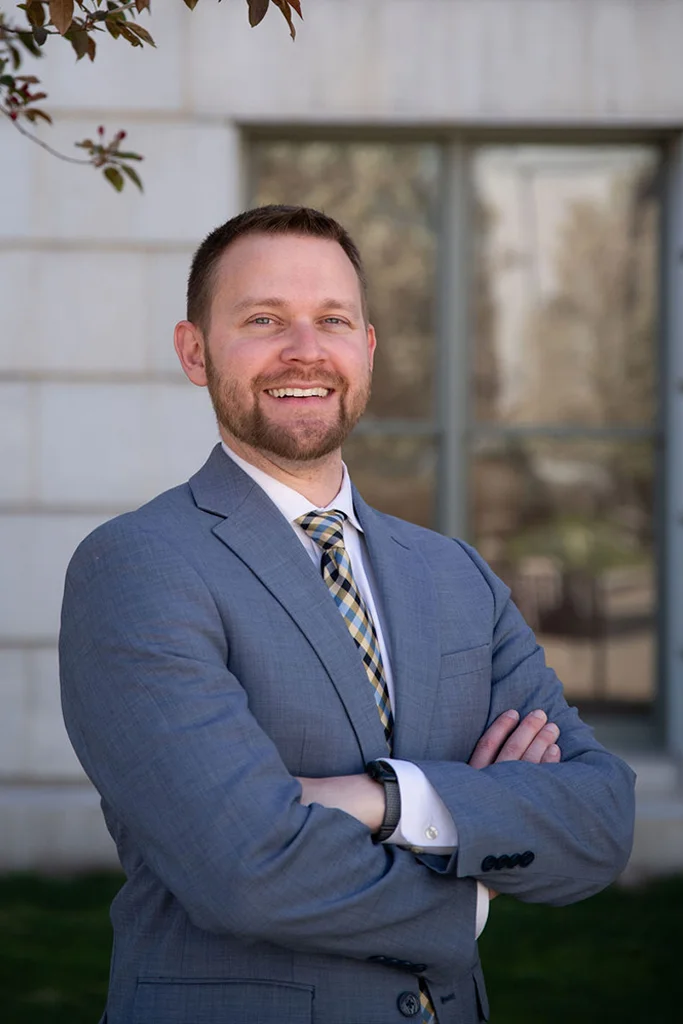
A traffic stop on Highway 93 near Bennett can turn your entire life sideways in a matter of minutes. One moment you are driving home from a gathering in Strasburg or heading back through Watkins after a long day, and the next you are standing on the roadside while an Adams County deputy administers field sobriety tests. The decisions that follow, what you say, whether you submit to testing, and who you call first, carry consequences that extend far beyond a fine or a night in custody. Bennett DUI defense lawyer Reid DeChant understands the specific pressures that come with impaired driving charges in communities like Bennett, where your license is not just a convenience but a necessity for work, family, and daily life.
DUI charges in Colorado carry a layered set of consequences that most people do not fully understand until it is too late to address them properly. There is the criminal case in Arapahoe County District Court or Adams County District Court, depending on where your stop occurred. There is the separate DMV Express Consent proceeding threatening your license. There are insurance implications, employment considerations, and, for commercial drivers or people holding professional licenses, consequences that go far beyond what the court imposes. Getting these handled correctly requires someone who has fought impaired driving cases specifically, not just someone who handles the occasional DUI alongside an otherwise general practice.
Reid DeChant has built a defense practice focused heavily on DUI and DWAI cases throughout the Denver metro and eastern Colorado communities, including Bennett and the surrounding stretch of the I-70 corridor. With trial experience accumulated as a public defender handling high volumes of cases across Adams County, Broomfield, and Denver courtrooms, and specialized training from the Trial Lawyers College, Reid approaches every DUI case as something worth fighting, not just negotiating away at the first opportunity.
What Makes DeChant Law the Right Choice for Your Bennett DUI Case
Not every attorney who lists DUI on their website has actually taken a DUI case to trial and won. Reid DeChant has. His case results include multiple Not Guilty verdicts at trial for DUI and DUI-Drugs charges across Jefferson County, Douglas County, Arapahoe County, and beyond, along with a significant number of outright dismissals at both the DMV and criminal court levels. That record matters because it reflects something beyond familiarity with paperwork, it reflects the experience of a lawyer who has stood before juries, cross-examined the arresting officer, challenged the breathalyzer calibration records, and convinced a fact-finder that the government did not prove its case.
Reid’s background as a public defender gave him something that years of private practice alone cannot manufacture: volume. He handled enormous caseloads in Colorado’s busiest courtrooms, learning the rhythms of each jurisdiction, the tendencies of local prosecutors, and the procedural pressure points that create leverage for the defense. His subsequent training at the Trial Lawyers College, founded by legendary attorney Gerry Spence, added a dimension that goes beyond legal mechanics. Reid learned to present cases as human stories, to connect with jurors in ways that make the client a real person rather than a defendant, and to challenge the government’s narrative rather than simply reacting to it. For someone facing a DUI charge in a small community like Bennett, where the social and professional stakes of a conviction feel intensely personal, that kind of advocate makes a real difference.
Reid is also a member of the National Association of Criminal Defense Lawyers and the Colorado Criminal Defense Bar, organizations that keep him current on evolving DUI science, changing evidentiary standards, and the latest defense strategies being developed nationwide. When you work with DeChant Law, you are not getting an attorney who handles your case in isolation. You are getting one who engages with the broader defense community and brings that knowledge into your case.
DUI Charges a Bennett Defense Attorney Should Be Prepared to Handle
- Standard DUI: Colorado’s standard DUI charge applies when a driver’s blood alcohol content registers at 0.08 or above, or when impairment is demonstrated through officer observations and field sobriety performance; penalties escalate significantly for repeat offenses and can include mandatory jail time, fines, probation, community service, and ignition interlock requirements.
- DWAI (Driving While Ability Impaired): Colorado’s DWAI law covers situations where a driver is impaired to the slightest degree, even with a BAC below 0.08; it is a separate and lesser charge, but it still carries criminal penalties and can affect your license, and it is often charged alongside or instead of DUI based on roadside observations.
- DUI-Drugs: Colorado law applies DUI statutes to driving under the influence of any drug, including marijuana, prescription medications, or controlled substances; drug DUI cases often involve more contested science, including the reliability of drug recognition evaluator testimony and the timing of blood draw results.
- Commercial Driver DUI: CDL holders face a lower BAC threshold and more severe consequences; even a single DUI conviction can end a commercial driving career, making aggressive defense especially critical for drivers who haul freight along the I-70 corridor through Bennett, Strasburg, and into Denver.
- Underage DUI: Colorado applies a stricter standard for drivers under 21, with the UDD (Underage Drinking and Driving) statute covering BAC levels as low as 0.02; these cases often carry consequences into education, financial aid eligibility, and employment that extend long past any sentence.
- Felony DUI: A fourth or subsequent DUI offense in Colorado is charged as a felony, an offense that carries the possibility of prison time and a permanent felony record; the stakes of aggressive defense at this level cannot be overstated, and every prior conviction in the chain may itself be subject to scrutiny.
- DMV Express Consent Hearings: Colorado’s Express Consent law creates a parallel administrative process separate from the criminal case; failing to request a hearing within seven days of your license revocation notice can result in automatic suspension, and the hearing itself requires specific legal arguments about the advisement, timing, and administration of chemical testing.
After a DUI Stop Near Bennett: What the Process Looks Like and What You Should Do
The first thing to know is that a DUI arrest in this part of Colorado typically means your case will be handled in Adams County District Court if the stop occurred in Adams County, or in Arapahoe County if you were stopped closer to the Arapahoe side of the I-70 corridor. The Arapahoe County Justice Center in Centennial and the Adams County Justice Center in Brighton are the courthouses where your appearances will take place. Understanding which court has jurisdiction matters immediately, because the DMV hearing request deadline runs from the date of your arrest and does not wait for the criminal case schedule to sort itself out.
You have seven days from the date of your arrest to request a DMV hearing to contest the revocation of your license. This deadline is not flexible and missing it forfeits your right to contest the administrative suspension entirely. Many people in Bennett focus entirely on the criminal charge and overlook the DMV process, which runs independently and on its own timeline. A DUI attorney in Bennett who handles both proceedings simultaneously is protecting you on two fronts at once, because a dismissed criminal charge does not automatically undo a license revocation that went uncontested.
In the days immediately following your arrest, preserve everything you can remember about the stop. Where on the road were you when the officer initiated the stop? What reason did the officer give? Were there any problems with the roadside tests, lighting issues, uneven pavement, medical conditions, or footwear that could have affected your performance? What was the timing between your last drink and when you drove? These details are not minor. In field sobriety and breathalyzer challenges, the margin between a valid and invalid test result is often narrow, and specific facts about the stop can create real defense arguments.
One of the most common mistakes people make after a Bennett DUI arrest is talking about the details of the stop with friends, family, or on social media before speaking with a DUI defense attorney. Those conversations can complicate your case in ways that are difficult to undo. The other common mistake is assuming a first offense is minor enough to handle without strong legal representation. First offense DUI convictions in Colorado carry real penalties, create a record that affects future charges if you are ever stopped again, and can trigger insurance premium increases that cost thousands of dollars over time.
The Science Behind DUI Charges and Where Defenses Actually Live
Colorado DUI cases rest heavily on chemical testing, either breath or blood, and that testing is not as precise as it is often presented. Breathalyzer machines must be regularly calibrated, and those calibration records are discoverable. Breath test results are affected by a range of physiological conditions including body temperature, respiratory conditions, and the presence of certain compounds in the mouth that can cause artificially elevated readings. If the testing device used after your Bennett stop was out of calibration, had a maintenance history suggesting reliability problems, or was administered under conditions that could have skewed the result, those issues need to be examined by someone who knows what to look for.
Blood testing is often assumed to be definitive, but it carries its own vulnerabilities. The blood draw must occur within a specific time window to be legally valid. The sample must be properly stored, handled, and tested by an accredited laboratory. Chain of custody documentation must be intact. Fermentation of the sample can cause BAC readings to rise after collection, a phenomenon known as rising blood alcohol that can make a driver’s BAC at the time of testing appear higher than it was at the time of driving. An experienced Bennett DUI attorney who understands these scientific issues will request the actual laboratory records, not just the reported result, and work with forensic experts where the evidence warrants it.
Field sobriety tests, including the Horizontal Gaze Nystagmus test, the Walk and Turn, and the One Leg Stand, are standardized by the National Highway Traffic Safety Administration, and their validity depends on officers following specific protocols. If the officer deviated from those protocols, administered the tests on unsuitable terrain, failed to account for relevant medical conditions, or scored the performance without proper training, the results can be challenged. Reid has cross-examined officers on exactly these points in courtrooms throughout the Denver metro region, and the DMV case results listed on the DeChant Law website reflect how often those challenges succeed when properly developed.
Questions People Ask After a DUI Arrest in Bennett
What happens to my license after a DUI arrest in Colorado?
When you are arrested for DUI in Colorado, the officer will typically confiscate your physical license and issue a temporary driving permit. Your license faces revocation through the DMV’s Express Consent process. You have seven days from the arrest date to request a hearing to contest that revocation. If you do not request a hearing, the revocation takes effect automatically. Winning the DMV hearing can preserve your full driving privileges, while losing it typically results in a suspension period followed by an ignition interlock requirement.
Can I refuse a breath or blood test in Colorado?
You can refuse, but refusal carries automatic consequences under Colorado’s Express Consent law. Refusing a chemical test results in a license revocation that is often longer than the revocation for a failed test, and the refusal can be used against you in the criminal case. The decision to refuse or submit is situation-specific, and the consequences depend heavily on whether it is a first or subsequent offense and other facts present at the stop.
Is a first offense DUI in Colorado a misdemeanor or a felony?
A first offense DUI is a misdemeanor in Colorado under most circumstances. However, a DUI that causes injury or death can be charged as a felony regardless of prior history, and a fourth or subsequent DUI is charged as a felony. Misdemeanor DUI still carries penalties including possible jail time, fines, license suspension, probation, community service, alcohol education requirements, and ignition interlock installation.
What is DWAI and how is it different from DUI?
DWAI stands for Driving While Ability Impaired and applies when a driver is impaired to any degree by alcohol, drugs, or a combination of both, even if their BAC is below the 0.08 threshold for DUI. Colorado is one of the few states with a DWAI statute, and it is commonly charged when a driver’s BAC falls between 0.05 and 0.08 or when observational evidence of impairment exists without a confirmed BAC at the DUI level. DWAI carries fewer mandatory minimums than DUI but is still a criminal conviction with real consequences.
Will a DUI in Colorado affect my ability to drive for work?
Yes, and the severity depends on your employment type. Commercial drivers face stricter thresholds and potentially career-ending consequences from a single conviction. Employees who drive as part of their job duties may face termination if their driving record becomes a condition of employment. People who drive to work in a rural area like Bennett, where public transportation is not a realistic alternative, face immediate practical hardship from any period of license suspension, making it especially critical to contest both the criminal charge and the DMV revocation.
Can a DUI conviction be expunged from my Colorado record?
Colorado’s expungement laws are more limited for adult criminal convictions than many people expect. Adult DUI convictions are generally not eligible for expungement under Colorado law. Sealing a record is sometimes possible for certain charges that were dismissed or resulted in acquittal, but a conviction that stands typically remains on your record. This is one of the strongest reasons to fight a DUI charge aggressively from the outset rather than accepting a plea that may seem convenient in the short term.
What if I had a drink or two but genuinely was not impaired?
The legal question in a Colorado DUI case is not whether you consumed alcohol, but whether you were impaired to a substantial degree or your BAC reached the statutory threshold. Having consumed alcohol before driving is not itself illegal. If your actual BAC was below 0.08 and your driving was not affected in a meaningful way, that is a legitimate defense, and it is one worth developing. The government bears the burden of proving its case, and cases involving borderline BAC results or chemical testing with reliability issues are exactly the situations where a prepared defense attorney can create reasonable doubt.
How long does a DUI case in Adams or Arapahoe County typically take to resolve?
It varies. A straightforward misdemeanor DUI case in Adams County or Arapahoe County might move through arraignment, pretrial conferences, and either a disposition or trial in several months to a year. Cases involving contested evidence, expert witnesses, or significant factual disputes tend to take longer. The DMV process runs on a shorter timeline and is typically resolved within a few months of the hearing request. An attorney who is actively pursuing defense work in both proceedings simultaneously helps ensure that important deadlines in one process do not get overlooked while the other is in motion.
Does the Drug Recognition Evaluator testimony hold up in court?
Drug Recognition Evaluator, or DRE, testimony is admitted in Colorado courts, but its reliability is contested in the scientific community and has been challenged by defense attorneys in multiple jurisdictions. DRE evaluations involve a 12-step protocol that must be followed precisely, and deviations from that protocol provide grounds for challenge. The conclusions drawn by DREs about specific drug categories are more subjective than chemical test results, and the connection between observed symptoms and actual impairment at the time of driving is a legitimate area of dispute. For DUI-Drugs cases near Bennett or anywhere along the I-70 corridor, scrutinizing the DRE process is often a central part of the defense.
What should I say when I am pulled over on suspicion of DUI?
You are required to provide your license, registration, and proof of insurance. Beyond that, you have the right to remain silent about where you have been, whether you have been drinking, and how much you consumed. Officers are trained to gather statements that can be used against you, and roadside conversations about your evening, even made casually and honestly, routinely become prosecution evidence. You can decline to answer questions and clearly state that you wish to speak with an attorney. How you handle those first minutes has a direct effect on what is available to the defense later.
Bennett and Surrounding Eastern Colorado Communities DeChant Law Serves
DeChant Law represents clients facing DUI and criminal charges throughout the Denver metro region and the eastern Colorado communities that stretch along the I-70 corridor and beyond. From Bennett and Strasburg through Watkins and the unincorporated stretches of Adams County, Reid DeChant has worked in the courtrooms and administrative hearing rooms that handle cases from these communities. The firm also serves clients from Aurora, Commerce City, Brighton, Thornton, and Northglenn in Adams County, as well as Centennial, Aurora’s Arapahoe County precincts, Parker, and Englewood in Arapahoe County. Clients from Denver proper, Lakewood, Wheat Ridge, Arvada, Westminster, Broomfield, Longmont, and Littleton also work with DeChant Law on DUI and criminal defense matters. If your arrest occurred anywhere along the stretch of Highway 36, E-470, or the I-70 corridor running through Byers, Deer Trail, or any of the smaller communities east of Denver, the firm has the jurisdictional knowledge to represent you effectively in the relevant courts.
Talk to a Bennett DUI Attorney Before Your Next Court Date
The window for protecting your license and building a meaningful defense is short after a DUI arrest. A Bennett DUI attorney who has taken these cases to trial and won, who has challenged Express Consent proceedings successfully, and who understands the specific dynamics of Adams County and Arapahoe County courts is the resource you need right now. DeChant Law represents clients who want someone who will actually fight their case, not just manage it toward an inevitable conviction. If you are facing a DUI charge in or around Bennett, contact DeChant Law to speak with Reid DeChant directly about what happened and what your options actually look like.