Black Hawk DUI Defense Lawyer
Gilpin County’s casino corridor creates a unique enforcement environment that catches many drivers off guard. The stretch of highway connecting Black Hawk and Central City to the Denver metro area, particularly Colorado Highway 119 and the Peak to Peak Scenic Byway, sees concentrated DUI enforcement on weekend nights and holiday periods when casino traffic peaks. A Black Hawk DUI defense lawyer who understands how Gilpin County law enforcement operates, how mountain road driving conditions affect field sobriety tests, and how the local courts handle these cases is not a convenience. It is a meaningful advantage.
DUI charges in Colorado carry consequences that extend far beyond the night of the arrest. A conviction triggers automatic points on your driving record, mandatory alcohol education requirements, possible ignition interlock installation, and a license revocation process handled separately by the Colorado Division of Motor Vehicles. For someone who drives to work, cares for a family, or holds a professional license, losing driving privileges can unravel a life built over many years. The criminal case and the DMV action run on parallel tracks simultaneously, and failing to respond aggressively on both fronts in the days immediately following an arrest can result in consequences that a well-prepared defense might have prevented.
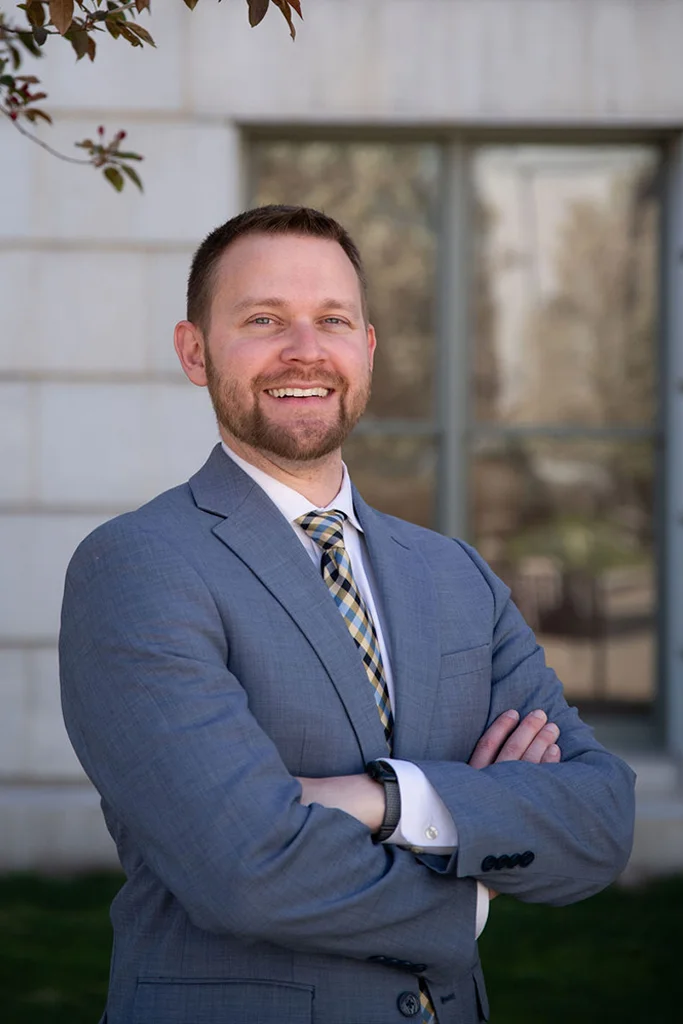
Reid DeChant at DeChant Law handles DUI cases across the Denver metro and surrounding mountain communities, including Gilpin County. His practice grew out of extensive public defender experience in Adams, Broomfield, and Denver County courtrooms, and he has defended clients against impaired driving charges ranging from first-offense DUI to felony DUI with serious injuries. If you were stopped near the casinos, on Highway 119, or anywhere in the Black Hawk area, the representation you secure in the first 72 hours will shape every decision that follows.
What Reid DeChant Brings to a Black Hawk DUI Case
Reid DeChant built his practice on a premise that most DUI defendants discover only in hindsight: the lawyer you hire before charges are formally filed, before your DMV hearing deadline passes, and before critical evidence disappears is worth far more than one hired after those windows close. His background as a former public defender means he logged an unusually high volume of courtroom hours early in his career, developing cross-examination skills and procedural familiarity that attorneys who moved straight into private practice rarely accumulate at the same pace.
Reid is a graduate of the Trial Lawyers College, the program founded by legendary attorney Gerry Spence, which trains lawyers in storytelling, authentic courtroom communication, and building genuine human connection with juries. That training matters in DUI cases because jurors bring assumptions about impaired driving into the courtroom before a single witness testifies. Dismantling those assumptions requires more than reciting legal standards. It requires communicating your client’s story in a way that resonates with real people. Reid’s case results reflect this approach: he has achieved not-guilty verdicts at trial in DUI cases in Jefferson, Douglas, and Arapahoe County courts, and has secured outright dismissals on both the criminal and DMV sides of the case across multiple jurisdictions.
Reid maintains active membership in the National Association of Criminal Defense Lawyers and the Colorado Criminal Defense Bar, organizations that keep him connected to the latest developments in DUI defense science, including advances in breath testing challenges, blood draw protocols, and field sobriety test research. He is also recognized by leading attorney rating organizations for the quality of his defense work. For someone facing a DUI charge in or around Black Hawk, those credentials translate directly into a defense built on current knowledge and genuine trial readiness.
DUI Charges That Arise in the Black Hawk Area
- Standard DUI: Under Colorado law, a driver with a blood or breath alcohol content of 0.08 or higher can be charged with DUI per se, while a driver who is substantially incapable of safely operating a vehicle regardless of BAC faces a DUI charge based on impairment, and both theories can be pursued simultaneously by prosecutors.
- DWAI (Driving While Ability Impaired): Colorado’s DWAI statute applies when alcohol or drugs have impaired a driver to the slightest degree, typically reflected by BAC readings between 0.05 and 0.08, and this charge is often filed alongside DUI allegations arising from the same stop.
- DUI-Drugs: Cannabis remains legal in Colorado, but drugged driving charges are actively prosecuted throughout Gilpin County; law enforcement increasingly uses Drug Recognition Evaluators during traffic stops near casino properties, and a driver impaired by marijuana, prescription medication, or any controlled substance can face the same penalties as alcohol-based DUI charges.
- Felony DUI: A fourth or subsequent DUI conviction in Colorado triggers felony-level charges with potential prison exposure, and even a case that appears to be a third offense requires careful review of prior convictions to confirm whether they were obtained lawfully and whether they properly count toward the enhancement threshold.
- DMV Express Consent Proceedings: Separate from the criminal case, Colorado’s Express Consent law allows the DMV to initiate license revocation proceedings following a DUI arrest, and the driver has only seven days from the date of arrest to request a hearing or automatic revocation follows; Reid has secured dismissals at DMV hearings on grounds including improper advisements, failure to administer chemical testing within the required timeframe, and Miranda-related violations.
- Underage DUI: Colorado applies a stricter BAC threshold for drivers under 21, and a charge arising from a young person visiting Black Hawk’s casinos (which require patrons to be 21) typically involves additional scrutiny of how the initial contact with law enforcement was initiated.
- Commercial Driver DUI: Drivers holding a commercial license face a lower BAC threshold under federal and state law, and a conviction or even a disqualification arising from a DUI stop on Highway 119 can permanently affect a commercial driving career.
The 72-Hour Window After a Black Hawk DUI Arrest
The first decisions you make after a DUI arrest in Gilpin County carry disproportionate weight. Colorado’s Express Consent law creates a hard deadline: you have seven days from the date of arrest to request a DMV hearing to contest the revocation of your driver’s license. That deadline does not pause while you research attorneys or wait to see whether the criminal charge moves forward. Missing it means an automatic revocation takes effect, and while reinstatement may eventually be possible, the license will be gone in the interim. Contacting a DUI defense attorney in Black Hawk within the first day or two of arrest is not overcaution. It is the only realistic way to preserve your right to a DMV hearing.
Criminal proceedings in the Black Hawk area flow through Gilpin County District Court, located at the Gilpin County Courthouse at 203 Eureka Street in Central City. First appearances and bond hearings happen quickly, often within 24 to 72 hours of arrest. If you were released from custody, your first court date will be scheduled soon, and the way that appearance is handled, including whether counsel appears with you and whether motions are being developed in parallel, will set the tone for everything that follows. Gilpin County is a small jurisdiction where DUI cases often move faster than they would in a large urban court system. That compression makes preparation even more important.
One of the most consequential early steps is preserving evidence that tends to disappear with time. Patrol car dashcam and bodycam footage has retention windows that vary by department. Surveillance footage from casino properties along the corridor may capture events before and after the stop and can be obtained only with prompt action. Witness information from passengers, valets, or other drivers becomes harder to gather as days pass. If a chemical test involved a blood draw rather than a breath test, the blood sample may be available for independent retesting, but only if that process is initiated while the sample remains viable. An attorney who begins working a case within hours of arrest can secure this evidence. One retained weeks later often cannot.
How Mountain Road Conditions and Casino Environments Affect DUI Cases
DUI defense in a mountain corridor like Black Hawk presents factual issues that do not arise in flat urban settings. Field sobriety tests were designed and validated under conditions that assume flat, dry, well-lit pavement. The roads around Black Hawk and Central City do not always meet those conditions. Highway 119 includes grades, curves, and surfaces affected by mountain weather. Parking areas near casino properties may be uneven or poorly lit. A driver asked to perform a one-leg stand or a walk-and-turn test on a sloped surface, in cold temperature, wearing shoes appropriate for a night out at a casino, faces challenges that have nothing to do with alcohol consumption. These are exactly the kinds of factual issues a prepared defense attorney documents, develops, and argues at hearing or trial.
The casino environment also creates documented patterns of enforcement. Law enforcement presence near Black Hawk and Central City tends to concentrate during high-traffic periods, including weekend evenings, holidays, and major events at the casino hotels. The nature of that environment, where guests may have consumed alcohol over several hours while gambling and then drive down a winding highway to the metro, means that officers are attuned to certain behavioral cues that can lead to stops. Whether the stop itself was legally justified is the first question in any DUI defense. If the officer lacked reasonable articulable suspicion to make the stop, everything that followed, observations of impairment, field sobriety tests, a request for a chemical test, may be subject to a motion to suppress. Successfully suppressing evidence obtained from an unlawful stop can result in a case being reduced significantly or dismissed entirely.
Blood alcohol content evidence also deserves careful scrutiny in mountain cases. Altitude has been studied in connection with how alcohol is absorbed, metabolized, and retained in the body, and the timing between consumption and testing can affect BAC results meaningfully. A driver who consumed alcohol in a casino at elevation and then tested some time after the stop may present a very different BAC picture at the time of actual driving than the number recorded on a chemical test suggests. These are not fringe arguments. They are grounded in established science and deserve to be evaluated by an attorney who understands DUI evidence at a technical level.
Questions People Ask About Black Hawk DUI Cases
What happens if I refused the chemical test after my Black Hawk DUI stop?
Refusing a chemical test in Colorado triggers an automatic license revocation under the Express Consent law, separate from the criminal charge. The revocation period for refusal is generally longer than for a failed test. However, a refusal also means the prosecution does not have BAC evidence, which changes the shape of the criminal case. Whether refusal helps or hurts depends heavily on the specific facts, and it is a question worth working through with a defense attorney who can assess both the DMV side and the criminal side simultaneously.
Is the seven-day DMV deadline really that rigid?
Yes. Colorado does not grant extensions for the hearing request deadline based on not knowing about it or not having hired an attorney yet. If the deadline passes without a request, the revocation proceeds automatically. This is one of the primary reasons why contacting a DUI defense attorney in Black Hawk immediately after arrest is so consequential.
Can a DUI charge from Black Hawk affect my professional license?
It can. Colorado licensing boards for healthcare professionals, attorneys, real estate brokers, teachers, and many other licensed occupations require disclosure of criminal charges and convictions and have authority to discipline license holders based on DUI findings. The severity of the response varies by profession and by the specific outcome of the criminal case, but a conviction carries more risk than a dismissal or reduced charge. If you hold a professional license, that exposure should be part of the conversation with your defense attorney from the outset.
What if I was taking a prescription medication, not drinking alcohol?
DUI-drugs charges in Colorado extend to prescription medications, including those legally prescribed to you. Impairment caused by benzodiazepines, opioids, sleep aids, or other medications can support a charge, and the presence of a valid prescription is not a complete defense if the evidence shows you were impaired at the time of driving. These cases often involve Drug Recognition Evaluator testimony, which can be challenged on multiple grounds including training, protocol compliance, and the scientific basis for specific conclusions.
How does a DUI in Gilpin County affect my ability to drive to work?
If your license is revoked following a DUI in Black Hawk, Colorado provides a pathway to a restricted license that allows driving with an ignition interlock device installed. The conditions, timing, and scope of this restricted license depend on your prior record and whether you refused the chemical test. A DMV hearing that successfully prevents or delays revocation keeps you on the road without those restrictions while the case is pending.
Will I have to appear in Gilpin County court personally?
Most DUI proceedings require the defendant to appear in person, particularly at arraignment, hearings on motions, and trial. Gilpin County District Court in Central City is the venue for these proceedings. Depending on how the case develops, your attorney may be able to handle certain procedural appearances without requiring you to travel, but substantive hearings and any trial will require your presence.
What is the difference between DUI and DWAI for sentencing purposes in Colorado?
DWAI carries lighter mandatory minimums than DUI for a first offense, but both charges carry real consequences including fines, possible jail time, community service requirements, and alcohol education program completion. A DWAI conviction is still a conviction and still shows on your driving record, and prior DWAI convictions count toward the escalating penalties that apply on subsequent offenses. Reduction from DUI to DWAI is sometimes achievable through negotiation, but whether it represents the best outcome in a specific case depends on the evidence and the individual’s history.
What if I was involved in an accident before being contacted by law enforcement?
An accident adds layers of complexity. If someone was injured, felony DUI charges become possible regardless of prior record. Law enforcement will be investigating the accident itself, and evidence from the collision scene, including witness accounts, physical evidence, and vehicle data, becomes part of the DUI investigation. These cases demand prompt, thorough attention to the accident evidence, not just the roadside contact that followed.
Does it matter which casino I was coming from when I was stopped?
Factually, it may matter. The length of time between your last drink and the traffic stop, the specific casino’s surveillance footage capturing your condition and behavior, and witness accounts from casino staff can all become part of a defense. Evidence of what actually happened before the stop, including how much time elapsed, what you ate, and what you consumed, is directly relevant to interpreting chemical test results and challenging impairment observations.
Is a not-guilty verdict at trial a realistic goal, or should I focus on getting a plea deal?
The right goal depends entirely on the strength of the evidence against you. Reid DeChant has achieved not-guilty verdicts at trial in DUI cases in multiple Colorado jurisdictions, and those outcomes happened because the evidence was vigorously challenged and the facts, honestly presented, favored the client. Not every case goes to trial, and not every case should. A careful review of the evidence is how you determine which path makes sense. What you should not do is accept a plea deal out of fear before anyone has evaluated whether the prosecution’s case can actually be defeated.
DUI Defense Representation Across Black Hawk and the Surrounding Region
DeChant Law represents DUI clients in Black Hawk and throughout the surrounding communities of Gilpin County, including Central City, Rollinsville, and Tolland. The firm also handles cases for clients traveling from the Denver metro area who were stopped on Highway 119, the Peak to Peak Highway, or Clear Creek Canyon Road while returning from the casino corridor. The geographic reach extends across Jefferson County communities including Golden, Evergreen, Conifer, Morrison, Lakewood, Wheat Ridge, Arvada, and Littleton. Cases from Arapahoe County, including Aurora, Englewood, Centennial, Greenwood Village, and Lone Tree, fall within the firm’s practice area, as do cases arising in Adams County, including Thornton, Westminster, Northglenn, Brighton, and Commerce City. Broomfield County and its surrounding communities are also served, along with Douglas County cases from Highlands Ranch, Parker, Castle Rock, Lone Tree, and Castle Pines. Clients from Denver neighborhoods including Capitol Hill, LoDo, RiNo, Baker, Five Points, Park Hill, and the Highlands regularly work with the firm. For cases involving mountain communities from Idaho Springs through Georgetown and the Highway 6 corridor, DeChant Law provides representation across the full range of those cases as well.
Speak With a Black Hawk DUI Attorney Before That Seven-Day Window Closes
The path from a DUI arrest to a resolved case involves more decisions, more deadlines, and more moving pieces than most people realize in the hours after being released. A Black Hawk DUI attorney from DeChant Law can help you understand exactly where you stand: what the DMV proceeding requires, what the criminal case looks like based on the available evidence, and what an honest, experienced defense actually involves from start to finish.
Reid DeChant does not treat clients as case files to be processed. He builds a defense from the actual facts of your situation, challenges evidence that deserves to be challenged, and argues before judges and juries when the evidence supports going to trial. If you were stopped near Black Hawk, Central City, or anywhere along the casino corridor, reach out to DeChant Law as soon as possible to schedule a consultation and get a clear picture of your options before any deadline passes.