Georgetown Criminal Defense Lawyer
Georgetown sits at a crossroads that its residents know well: a small, tight-knit community in Clear Creek County where law enforcement presence is consistent, the courts move efficiently, and a criminal charge carries consequences that follow you far beyond any sentence a judge might impose. When something goes wrong, whether a DUI arrest after a night in Idaho Springs, a domestic violence allegation, or a drug charge stemming from a traffic stop on I-70, the geography of rural Colorado criminal prosecution means you are dealing with a system that knows fewer faces and forgets fewer names. That reality makes the quality of your defense representation more consequential, not less.
Working with a Georgetown criminal defense lawyer who genuinely understands how Colorado criminal cases are prosecuted, what Clear Creek County courts expect, and how to build a defense that holds together under scrutiny is not a luxury. It is the practical difference between a criminal record that haunts your employment, housing, and professional license prospects for years, and an outcome that lets you move forward.
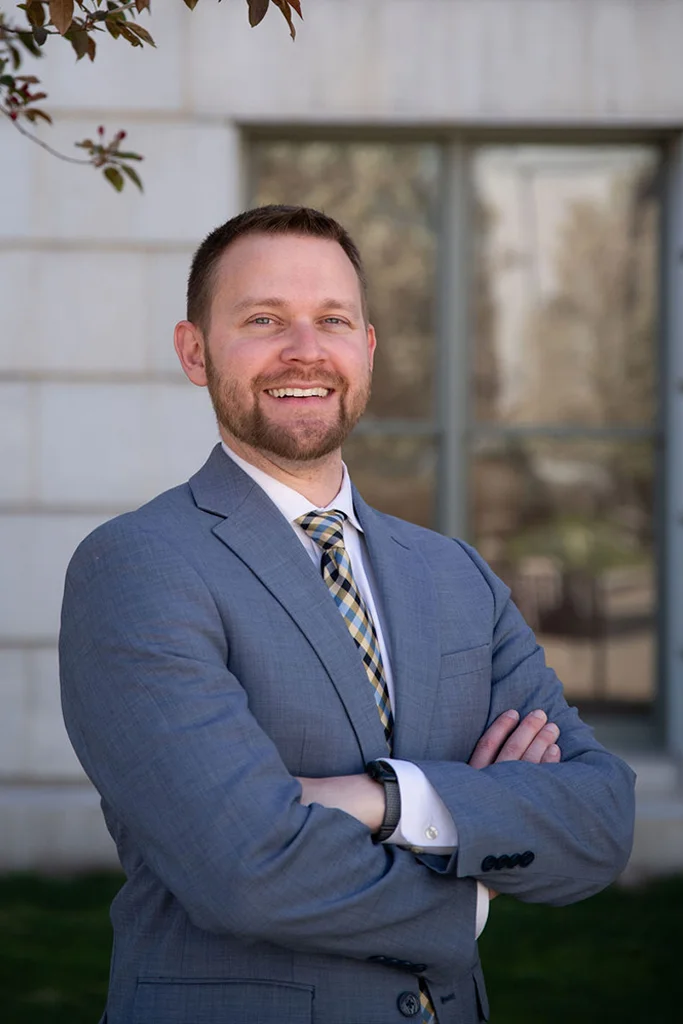
DeChant Law represents clients facing criminal charges in Georgetown and across Clear Creek County, bringing courtroom experience forged through years of public defender trial work and private practice focused entirely on criminal defense. Attorney Reid DeChant has stood beside clients at every stage of the criminal process, from the first appearance through jury verdict, across a wide range of charges. That experience, and the approach it has shaped, is what this page is about.
What Georgetown Criminal Defense Cases Actually Look Like
Clear Creek County is not a high-volume urban jurisdiction, but the charges that come through its courts are serious. The county’s geography shapes the criminal caseload in ways that are worth understanding. Interstate 70 cuts through the county and is among the most actively patrolled roadways in Colorado, a corridor where law enforcement conducts regular DUI checkpoints and investigatory stops, particularly on weekends and holidays when ski traffic is heaviest. Georgetown, Idaho Springs, and the surrounding mountain communities also see a steady volume of domestic violence cases, property crimes, and drug-related charges that arise from the unique pressures of small-town life and seasonal tourism.
Clear Creek County cases are handled in the 5th Judicial District, which covers Clear Creek, Eagle, Lake, and Summit counties. The district courthouse for Clear Creek County is located in Georgetown itself at the Clear Creek County Justice Center. Knowing how the 5th Judicial District operates, which judges handle which dockets, how the district attorney’s office approaches plea negotiations, and what defense arguments resonate in this specific court environment, is the kind of granular knowledge that makes a real difference in how a case resolves. A Georgetown criminal defense attorney who has worked these courts and understands their rhythms is not interchangeable with someone who has never appeared there.
Criminal Charges Reid DeChant Defends in Georgetown and Clear Creek County
- DUI and DWAI on I-70: The stretch of I-70 through Clear Creek County is one of the most aggressively patrolled corridors in Colorado, with checkpoint operations and saturation patrols occurring year-round. Colorado law distinguishes between DUI and the lesser DWAI charge, and the distinction matters enormously for licensing, fines, and record consequences. Reid DeChant has focused significant training and experience on challenging impaired driving charges, including the DMV Express Consent proceedings that run parallel to the criminal case and can cost you your license independent of any court outcome.
- Domestic Violence Allegations: Colorado’s mandatory arrest law means that when law enforcement responds to a domestic disturbance, someone is usually going to jail regardless of what either party wants. Georgetown’s smaller community setting can intensify the pressure these cases create. A domestic violence tag on any charge, even a misdemeanor, carries collateral consequences including firearm prohibitions under federal law and potential immigration consequences that most people do not anticipate.
- Drug Possession and Distribution: Despite Colorado’s legalized recreational cannabis framework, charges involving controlled substances such as methamphetamine, fentanyl, heroin, and cocaine remain serious criminal matters under Colorado law. The I-70 corridor sees drug interdiction activity, and possession charges can escalate to distribution allegations based on quantity or packaging alone.
- Assault and Felony Menacing: Assault charges in Colorado range from misdemeanor third degree assault, which requires only a showing of knowing or reckless causation of bodily injury, to felony assault charges involving serious harm or use of a weapon. Felony menacing, a charge that arises when someone places another person in fear of imminent serious injury through a threat or physical action, is prosecuted seriously in Colorado courts and carries significant potential prison exposure.
- Theft and Property Crimes: Property crime charges in Colorado are graded by the value of property involved, with felony theft beginning at specific statutory thresholds. A theft conviction carries consequences beyond fines and probation, including the reputational damage that follows a person into every future job application and background check.
- Traffic Offenses with Criminal Consequences: Not all traffic matters are civil infractions. Vehicular assault, vehicular homicide, hit and run resulting in injury, and driving with a revoked license can all result in criminal charges handled in Clear Creek County courts. These charges deserve the same focused attention as any other criminal matter.
- Sex Offenses and Registration Requirements: Sex offense charges carry some of the most severe long-term consequences in Colorado law, including mandatory sex offender registration requirements that persist for years or for life depending on the classification. DeChant Law has defended clients facing these charges, including cases involving contested factual allegations and charges related to failure to register.
What to Do if You Are Facing Criminal Charges in Georgetown
The hours immediately following an arrest or the receipt of a summons are the hours that matter most. In Clear Creek County, if you have been arrested, your first court appearance, typically a bond hearing or advisement, will happen at the Clear Creek County Justice Center located at 405 Argentine Street in Georgetown. At that advisement, a judge will inform you of the charges, set bond conditions, and issue any protection orders that apply. What you say in that room, and more importantly what your attorney says, can affect your bond conditions and your freedom for the duration of the case.
Do not speak to investigators, detectives, or patrol officers about the substance of your case after an arrest. This is not a platitude. It reflects how Colorado criminal cases are actually built. Statements made to law enforcement before an attorney is involved are admissible and are routinely used to fill gaps in the prosecution’s evidence. Invoking your right to remain silent is not an admission of guilt, and any reasonable judge or juror understands that. Contact an attorney before making any statement, signing anything, or agreeing to any search.
If your charge involves a DUI or DWAI, note that the DMV Express Consent process runs on a separate track from the criminal court proceedings. Colorado’s Express Consent law requires that drivers submit to chemical testing when lawfully requested to do so, and a refusal or a test result above the legal threshold triggers an administrative action against your driver’s license. You have a limited window, typically seven days from the date of arrest, to request a DMV hearing to challenge that action. Missing this deadline generally means automatic revocation. Reid DeChant handles both the criminal defense and the DMV hearing process, which is critical because the two proceedings involve overlapping evidence and strategy.
Gather and preserve anything that could be relevant to your defense. This includes dashcam footage from your own vehicle if applicable, screenshots of text messages or social media conversations if they bear on the circumstances of the alleged offense, contact information for any witnesses who were present, and documentation of any medical conditions that could explain behavior that law enforcement may have misinterpreted. Do not attempt to contact witnesses or alleged victims yourself, particularly in domestic violence cases where no-contact orders are common and violations carry independent criminal consequences.
Why DeChant Law Is the Right Choice for Georgetown Criminal Defense
Reid DeChant’s background is not typical of private criminal defense attorneys. He came to private practice through the public defender system, where he handled criminal cases across Denver, Broomfield, and Adams County courtrooms, defending clients charged with everything from misdemeanor traffic offenses to homicide. That volume of trial experience is genuinely difficult to replicate in private practice, where client caseloads are typically smaller. It means Reid has cross-examined police officers hundreds of times, argued motions to suppress evidence in cases where the stop was questionable, and tried cases from opening statement through verdict in front of real juries.
Reid is also a graduate of the Trial Lawyers College, the program founded by attorney Gerry Spence that trains lawyers in authentic advocacy and human connection in the courtroom. That training has shaped how Reid approaches every case: not as a collection of legal arguments to assemble and file, but as a human story that a judge or jury needs to understand. The distinction matters because juries acquit human beings whose circumstances they grasp and believe. Crafting that kind of defense requires the lawyer to actually know the client, understand what led to this moment, and present that truth without flinching.
Reid is a member of the National Association of Criminal Defense Lawyers and the Colorado Criminal Defense Bar, professional associations that reflect serious engagement with the criminal defense community and access to the best thinking in the field. DeChant Law case results include DUI charges dismissed and not guilty verdicts at trial across multiple Colorado counties, domestic violence matters dismissed at trial and by the prosecution, and acquittals on assault charges. Past results do not guarantee future outcomes, but they reflect the kind of work that is possible when a case is defended with genuine preparation and courtroom skill. For anyone searching for a criminal defense attorney serving Georgetown, these credentials are the baseline to demand.
Questions Georgetown Residents Ask About Criminal Defense
What court handles criminal cases in Georgetown, Colorado?
Criminal cases in Georgetown are handled in the Clear Creek County Combined Court, which is part of Colorado’s 5th Judicial District. The courthouse is located in Georgetown on Argentine Street. The 5th Judicial District also covers Eagle, Lake, and Summit counties, and the district attorney’s office prosecutes cases across all four counties from that regional office structure.
How serious is a first DUI charge in Colorado?
A first DUI conviction in Colorado is a misdemeanor, but the consequences are substantial. They typically include license revocation, mandatory alcohol education classes, possible jail time, fines, and a requirement to install an ignition interlock device on your vehicle. A DWAI conviction, while treated somewhat differently, still results in points against your license and can affect your record. For commercial drivers or anyone with a professional license, even a first offense can trigger separate proceedings with their licensing board.
Can a domestic violence conviction be expunged in Colorado?
Colorado’s record sealing laws are limited when it comes to domestic violence convictions. Convictions for domestic violence offenses generally cannot be sealed in Colorado, which is one of the reasons fighting the charge aggressively from the outset matters so much. An arrest that does not result in a conviction may be eligible for sealing under certain conditions, but a conviction will typically remain on your record permanently.
What does Colorado’s mandatory arrest law mean for domestic violence cases?
Colorado law requires law enforcement officers to make an arrest when they have probable cause to believe a domestic violence offense has been committed. This means that even if the alleged victim does not want to press charges, the arresting officer does not have discretion to walk away without making an arrest if probable cause exists. The decision to prosecute then rests with the district attorney, not the complaining party, which is why domestic violence cases frequently proceed even when the alleged victim later recants or declines to cooperate.
What happens at a DMV Express Consent hearing in Colorado?
The Express Consent hearing is an administrative proceeding held before a DMV hearing officer, not a criminal court judge. It focuses on a narrow set of questions: whether the stop was lawful, whether the officer had reasonable grounds to believe you were impaired, whether you were properly advised of the consequences of refusal or testing, and whether the test was administered correctly and within the required two-hour window. DeChant Law has had numerous DMV Express Consent actions dismissed on procedural and substantive grounds, including improper advisements and testing outside the required timeframe. These hearings are winnable, but they require careful preparation and knowledge of the administrative process.
If I was stopped on I-70 near Georgetown, can I challenge the traffic stop itself?
Yes. A traffic stop that lacks reasonable suspicion is unconstitutional, and evidence gathered as a result of an unlawful stop may be suppressed through a motion filed in the criminal case. This includes the results of field sobriety tests, chemical tests, and any statements you made after the stop. The specific facts of how the stop was initiated, whether the officer’s observations were consistent with the stated reason for the stop, and whether the detention was prolonged beyond what the initial stop justified are all areas that an experienced defense attorney will examine closely.
How does a criminal charge affect a Colorado professional license?
Many Colorado licensing boards, including those overseeing teachers, nurses, real estate agents, contractors, attorneys, and healthcare providers, require licensees to report criminal charges and convictions. The board then has independent authority to investigate and potentially sanction the license. A misdemeanor conviction in criminal court can, in some circumstances, result in license suspension or revocation by the relevant licensing authority. This means your defense strategy needs to account for these parallel proceedings, not just the criminal case itself.
Is it worth contesting a misdemeanor charge in Georgetown, or should I just take a plea?
That question deserves a real answer based on the specific facts of your case, which is why consulting with a defense attorney before making that decision is so important. The calculus is not simply about the punishment a judge might impose at sentencing. It includes the long-term record consequences of a conviction, the collateral effects on employment, housing, and licensing, and the realistic prospects for a better outcome through negotiation or trial. In some cases, misdemeanor charges can be reduced, dismissed, or diverted through programs that avoid a conviction altogether. Walking into court and accepting the first offer without that analysis is rarely the best approach.
What is a deferred judgment and when is it available in Colorado?
A deferred judgment is an agreement in which a defendant enters a guilty plea that is held in abeyance while the defendant completes a period of probation. If the defendant successfully completes the probation conditions, the guilty plea is withdrawn and the case is dismissed. Deferred judgments are not available for all charge types, and they do come with conditions and risks, including the consequence that a violation of probation results in entry of the guilty plea and a conviction. Whether a deferred judgment makes sense depends on the charges, the facts, and the defendant’s individual circumstances.
How long does a criminal case in Clear Creek County typically take to resolve?
Case duration in the 5th Judicial District varies based on the complexity of the charges, whether the matter proceeds to trial, and the court’s current docket. Misdemeanor matters may resolve in a matter of months through negotiation or motion practice. Felony cases that proceed through the full process, including preliminary hearings, pretrial motions, and trial, can take considerably longer. The pace of litigation is one of many factors to discuss with your attorney early in the representation so you can plan accordingly.
Serving Georgetown, Clear Creek County, and Surrounding Mountain Communities
DeChant Law represents clients throughout the Georgetown area and across the broader region surrounding Clear Creek County. This includes clients in Idaho Springs, Empire, Silver Plume, and Dumont, as well as those traveling through or residing in the communities along the I-70 mountain corridor. The firm also regularly serves clients from the neighboring communities of Evergreen, Conifer, and the Foothills communities in Jefferson County, as well as clients from Summit County communities including Breckenridge, Silverthorne, Dillon, and Frisco, all of which fall within the 5th Judicial District’s reach. Clients from Eagle County, including Vail, Avon, Edwards, and Basalt, are also represented, as are those from Lake County and the Leadville area. Reid DeChant regularly appears in courts across the mountain corridor and understands the specific prosecution approaches and judicial culture of each county within the district and the broader Denver metro region.
Talk to a Georgetown Criminal Defense Attorney About Your Case
A criminal charge in Clear Creek County does not have to define what comes next in your life, but how you respond to it will. DeChant Law offers straightforward, honest counsel about what you are facing and what a realistic defense looks like in the 5th Judicial District. Reid DeChant brings genuine trial experience, specialized training in courtroom advocacy, and a commitment to treating every client as a full partner in their own defense. If you are searching for a Georgetown criminal defense attorney who will engage seriously with the facts of your case and fight for the best possible outcome, contact DeChant Law to schedule a consultation. The sooner that conversation happens, the more options remain available to you.