Idaho Springs DUI Defense Lawyer
The stretch of U.S. Highway 6 and Interstate 70 through Clear Creek County sees consistent law enforcement presence, and Idaho Springs sits squarely in the middle of it. Travelers heading to ski resorts, hikers returning from trail heads, and locals finishing a night out at one of the downtown bars all move through the same corridors that Clear Creek County Sheriff’s deputies and Colorado State Patrol troopers patrol with regularity. A DUI stop in this mountain corridor can unfold quickly and escalate faster than most people expect, particularly for anyone who did not immediately understand the full weight of the Express Consent law and what it requires at the roadside. If you are searching for an Idaho Springs DUI defense lawyer, what you actually need is an attorney who has taken these cases from arrest through trial and understands both the technical landscape of DUI prosecution and the specific courts and agencies that will shape your case.
Colorado’s approach to impaired driving enforcement is aggressive, and the consequences compound in ways that catch defendants off guard. A DUI or DWAI conviction does not just affect your criminal record. It triggers a parallel administrative action through the Colorado Division of Motor Vehicles that operates on its own timeline, its own evidentiary rules, and its own set of deadlines that have nothing to do with the criminal case at the Lindsey-Flanigan Courthouse or your local district court. Missing the DMV hearing request window, which can be as short as seven days from the date of a license revocation, can cost you your driving privileges before your criminal case even reaches its first substantive hearing. Anyone who faces an Idaho Springs DUI arrest is really fighting on two fronts simultaneously, and the strategy on each front must be coordinated from day one.
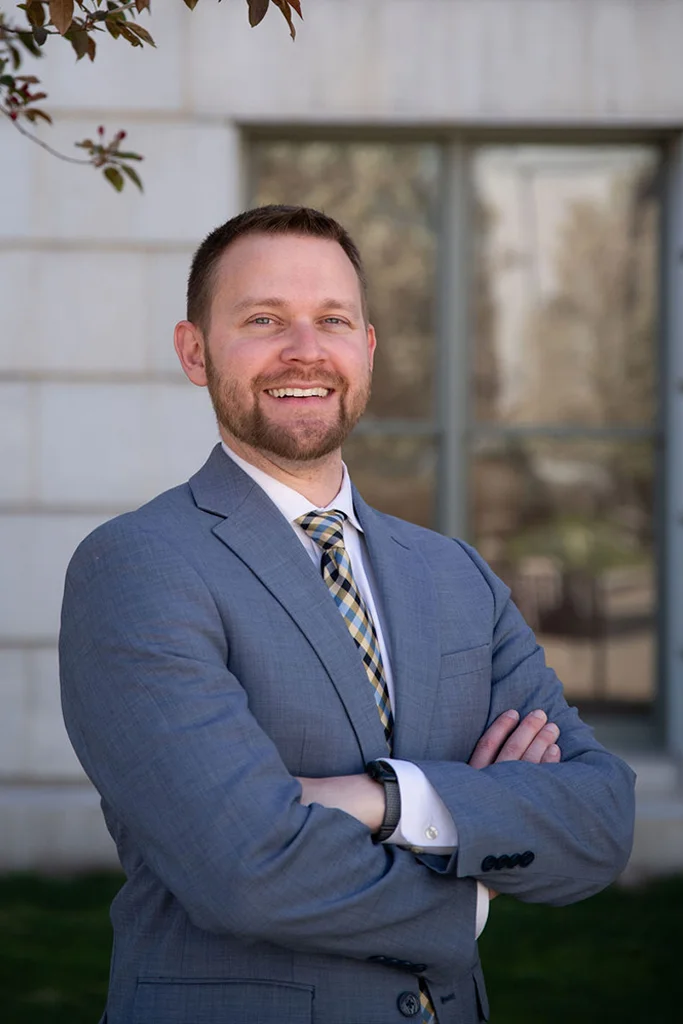
Reid DeChant built DeChant Law around exactly this kind of dual-track defense. His background as a former public defender gave him courtroom experience across multiple Colorado counties at a volume that most private practitioners do not accumulate. His training at the Trial Lawyers College, founded by Gerry Spence, shaped a litigation philosophy rooted in understanding the full human story of every client, not just the police report version. What that means for someone arrested for DUI in Idaho Springs is that Reid approaches your case with the kind of granular preparation that comes from having actually litigated these charges repeatedly, challenged chemical test evidence, cross-examined law enforcement officers on their field sobriety testing procedures, and gone to trial when the facts warranted it.
DUI Charges in Clear Creek County: What Actually Happens After an Arrest
An Idaho Springs DUI arrest typically begins on one of the county’s primary corridors. I-70 between the Idaho Springs interchange and the Georgetown split is one of the most actively patrolled stretches of highway in the entire mountain corridor, especially on weekends, during ski season, and around major events at venues further up the hill. Highway 40 through Empire and the roads connecting Idaho Springs to Central City and Black Hawk also generate DUI contacts, in part because those routes funnel traffic from casino towns where alcohol is freely available and the roads are challenging even for sober drivers.
After a stop, the sequence of events matters enormously for your defense. How the officer developed reasonable articulable suspicion to pull you over, how they conducted the initial contact, whether they administered Standardized Field Sobriety Tests and if so under what conditions, whether they read the correct Express Consent advisement before requesting a chemical test, and whether the breath or blood test was administered within the two-hour window required by Colorado law, each of these checkpoints is a potential point of challenge. The case results documented on the DeChant Law website include multiple DMV Express Consent actions that were dismissed because of flaws at exactly these procedural stages: improper advisements, test administration timing violations, and Miranda issues that contaminated the Express Consent process. These are not technicalities in the dismissive sense of the word. They are the actual law, and when law enforcement does not follow it correctly, evidence can be suppressed and cases can be won.
Clear Creek County District Court, located in Georgetown, handles criminal DUI cases filed from Idaho Springs and the surrounding communities. The court operates under Colorado’s state criminal code, but local practices, the specific judges assigned to the division, and the tendencies of the Clear Creek County District Attorney’s Office all shape how cases actually resolve. An attorney who has practiced in Colorado’s mountain jurisdiction courts understands that these courtrooms have a different rhythm than busy urban courthouses. Volume is lower, which means individual cases often receive more judicial attention, and judges tend to have clearer familiarity with the attorneys who appear before them regularly. Showing up with a well-prepared defense, supported by documented challenges to the evidence, carries real weight in this environment.
What DeChant Law Brings to a Mountain Corridor DUI Case
Reid DeChant’s public defender experience covered Denver, Broomfield, and Adams County courtrooms, and that foundation of high-volume trial work is the engine behind everything he does in private practice. Defending DUI cases at volume means you have tested breath test challenges, blood draw chain-of-custody arguments, field sobriety test validity disputes, and officer credibility attacks across dozens of real trials. The pattern recognition that comes from that kind of exposure is difficult to replicate. Reid knows which arguments hold up under cross-examination by prosecutors, which suppression motions have the strongest footing in Colorado case law, and how to evaluate early in a case whether the evidence favors a negotiated disposition or whether taking the matter to trial gives the client the better chance.
The recognition Reid has earned from national legal organizations, including membership in the National Association of Criminal Defense Lawyers and the Colorado Criminal Defense Bar, reflects an ongoing commitment to staying current in an area of law that evolves through both legislative changes and developments in forensic science. Blood alcohol testing methodology, the science of breath test machines, the validated versus non-validated field sobriety tests approved under the National Highway Traffic Safety Administration protocols, these are areas where the law and science intersect in ways that require continuous learning. Reid maintains those connections to the broader criminal defense community specifically because they keep him sharp on the issues that arise in every DUI case.
The DeChant Law case results also reflect a track record that matters when you are choosing who will handle your DUI defense. Multiple DMV Express Consent hearings have been won outright, preventing license revocations that would have disrupted clients’ lives before the criminal case even concluded. DUI and careless driving charges have ended in not guilty verdicts at trial. DUI cases out of Jefferson County, Douglas County, Arapahoe County, and Broomfield County have been dismissed. That breadth of geographic and case-type experience is directly relevant to someone facing a Clear Creek County DUI, because the legal arguments that work in these cases are built on Colorado law, and that law applies in every Colorado county.
Colorado DUI Charges That Arise in the Idaho Springs Area
- DUI (Driving Under the Influence): Colorado’s DUI statute applies when a driver is substantially incapable of safely operating a vehicle due to alcohol, drugs, or a combination. This is a per se violation when a blood or breath test shows a blood alcohol concentration at or above .08, but a case can also proceed on observed impairment alone, making the officer’s testimony and field sobriety observations critical pieces of evidence to challenge.
- DWAI (Driving While Ability Impaired): A lesser charge that applies when a driver is impaired to the slightest degree by alcohol or drugs. A BAC between .05 and .08 creates a rebuttable presumption of DWAI. While DWAI carries somewhat lighter penalties than DUI, it still results in a criminal conviction and DMV points, and prosecutors sometimes offer DWAI as a resolution when DUI evidence is thin.
- DUI-D (Driving Under the Influence of Drugs): Mountain corridor enforcement frequently encounters impairment by marijuana, prescription medications, or other controlled substances. Colorado law treats drug-impaired driving the same as alcohol-impaired driving under the DUI statute, but the evidentiary challenges are often very different, particularly because the science of cannabis impairment at a given blood THC level is not nearly as established as alcohol BAC.
- Repeat DUI Offenses: A second or third DUI in Colorado triggers mandatory minimum jail time, longer license revocations, ignition interlock requirements, and in some cases felony charges if prior convictions meet the statutory threshold. The stakes in repeat-offense cases are significantly higher, and the investigation of prior conviction records becomes a critical part of the defense.
- Underage DUI: Colorado has a separate DWUI statute for drivers under 21 who have any detectable amount of alcohol. These cases can affect college enrollment, scholarships, and long-term career prospects in ways that extend well beyond the immediate criminal penalties.
- Commercial Driver DUI: CDL holders face a lower BAC threshold and disqualification consequences that can end a professional driving career. Defending a commercial driver’s DUI requires attention to both the standard criminal proceedings and the separate federal and state regulatory framework governing commercial licenses.
After an Idaho Springs DUI Arrest: Where to Focus First
The first thing to understand is that the DMV clock starts immediately upon a license revocation, whether that revocation came through a served revocation notice at the roadside or through the mail. You have a very short window to request a DMV hearing, and missing it generally means the revocation becomes final by default. Requesting that hearing is not just a formality. The hearing itself is an opportunity to cross-examine the arresting officer under oath, to test the validity of the Express Consent advisement, and to build a record that can support the criminal case. A DUI attorney in Idaho Springs who is also handling your DMV matter can use that hearing strategically in ways that benefit both proceedings.
On the criminal side, your case will be filed in Clear Creek County District Court in Georgetown. The court is located at 405 Argentine Street, Georgetown, Colorado. Arraignment typically comes after a summons or a direct filing by the DA’s office, and discovery including police reports, body camera footage, breath test records or blood test chain-of-custody documents, and any dash camera video should be requested immediately. Video evidence in particular can either confirm the officer’s account or contradict it in ways that significantly shift the trajectory of the case. Officers’ written reports are sometimes authored hours after an arrest, and discrepancies between what the body camera captured and what ended up in the report are exactly the kind of inconsistency that skilled cross-examination can expose at a DMV hearing or at trial.
People frequently underestimate the role that the chemical test itself plays in building a defense. Colorado blood tests are analyzed by the Colorado Department of Public Health and Environment’s forensic toxicology lab, and the chain of custody from the draw to the analysis must be documented and preserved correctly. Defenses based on improper blood draw procedures, contaminated samples, laboratory error, or the timing of the draw relative to actual driving are legitimate and sometimes decisive. Breath tests, which are taken on the roadside or at the station using certified instruments, must be administered according to specific protocols, and the maintenance records and calibration history of the device used in your test are subject to discovery. None of this analysis happens automatically. An attorney has to know to look for it and to pursue it aggressively.
Questions Idaho Springs DUI Defendants Actually Ask
What is the difference between a DUI and a DWAI in Colorado?
DUI requires proof that the driver was substantially incapable of safely operating a vehicle, while DWAI requires only that the driver was impaired to the slightest degree. The BAC thresholds differ, with .08 creating a per se DUI and a reading between .05 and .08 giving rise to a DWAI presumption, but both can be charged based on observed impairment even without a BAC reading. DWAI is still a criminal conviction and carries DMV consequences, though the point levels and mandatory penalties are somewhat lower than a DUI conviction.
How long do I have to request a DMV hearing after a DUI arrest in Colorado?
The standard window is seven days from the date of the revocation notice for an Express Consent revocation when you failed or refused a chemical test. Missing this deadline typically means the revocation proceeds without a hearing. Because the deadline is so short, contacting an attorney within the first day or two after an arrest is critical if you want to preserve your ability to contest the license action.
Can I refuse a breath or blood test during a DUI stop in Idaho Springs?
Colorado’s Express Consent law means that by driving on Colorado roads, you have already consented to chemical testing if an officer has probable cause to believe you are impaired. Refusing a test has its own consequences, including a longer revocation period and the fact that the refusal itself can be used as evidence in your criminal case. Whether refusal is strategically advisable depends on the specific facts of your situation, which is one reason it matters to understand your rights before you find yourself at a roadside stop, not after.
Does a DUI in Idaho Springs affect my ability to drive to work if I lose my license?
Colorado has a limited driving privilege process that allows some drivers whose licenses have been revoked to continue driving to work, school, medical appointments, and other essential activities if they install an ignition interlock device. The availability of this option depends on your prior record and how your case resolves. Your attorney can help you understand whether you qualify and how to pursue it without inadvertently waiving defenses in your primary case.
What happens if I was visiting Colorado from out of state when I was arrested for DUI in Idaho Springs?
Your home state license is not directly revoked by Colorado’s DMV action, but Colorado will report the conviction and the revocation to your home state through interstate compacts. Most states treat an out-of-state DUI as equivalent to a DUI in their own jurisdiction and impose their own penalties including points and suspension. You will likely still need to appear for court proceedings in Clear Creek County or arrange for your attorney to appear on your behalf under certain circumstances.
How does marijuana impairment factor into a DUI-Drugs charge in Clear Creek County?
Colorado law creates a permissible inference of impairment when a driver’s blood shows five nanograms or more of active THC per milliliter. However, unlike alcohol, THC metabolizes in ways that do not reliably correspond to actual impairment at any given moment, and regular cannabis users may have elevated blood THC levels even when they are not acutely impaired. This creates real scientific and legal arguments that defense attorneys can raise at trial, challenging both the relevance of the test result and the officer’s observed impairment evidence.
What are the typical penalties for a first DUI conviction in Colorado?
A first DUI conviction can include fines, mandatory alcohol education classes, community service, a period of license revocation, and jail time that is often suspended in favor of probation on a first offense but remains a possibility. The specific outcome depends on the BAC level, whether there were any aggravating factors such as an accident or a minor passenger, and how the case was ultimately resolved. These ranges are set by statute and can shift based on legislative changes, so your attorney can advise you on the current penalties that apply to your specific charge.
Is it worth contesting a DUI if my BAC was above .08?
Yes, and often the answer is emphatically yes. A BAC above the statutory threshold does not foreclose a defense. The test result itself can be challenged on chain-of-custody grounds, instrument calibration issues, timing of the test relative to driving, or physiological factors that affect how a particular individual’s body processed alcohol. Beyond the test result, the stop itself must have been lawful, the field sobriety tests must have been administered correctly, and the Express Consent advisement must have been given properly. Any of these failure points can result in suppression of evidence or dismissal of charges regardless of what the number on the test showed.
Does a DUI conviction in Idaho Springs affect my professional license in Colorado?
It can, depending on the profession. Colorado licensing boards for healthcare workers, attorneys, teachers, commercial drivers, and others routinely ask about criminal convictions and have authority to investigate and take disciplinary action based on them. Whether a DUI triggers a mandatory report, a discretionary review, or no licensing consequences at all depends entirely on the regulatory framework for your specific profession. This is a consequence that extends well beyond the criminal case itself and is worth discussing with your defense attorney at the outset.
How long does a DUI case in Clear Creek County typically take to resolve?
Clear Creek County’s lower case volume compared to Denver metro courts means cases can sometimes move faster, but contested DUI cases that involve discovery disputes, suppression motions, or trial preparation realistically take several months from arrest to resolution. Cases that go to trial take longer than cases resolved by plea. The DMV proceeding operates on its own separate timeline that may conclude before or after the criminal case. Your attorney can give you a more accurate estimate once the initial filings and discovery materials have been reviewed.
DeChant Law’s DUI Representation Across the Mountain Corridor and Denver Metro
DeChant Law represents clients facing DUI charges throughout Clear Creek County and the surrounding communities that feed into both mountain corridor and Denver metro courts. That includes Idaho Springs, Georgetown, Silver Plume, Empire, Dumont, and Lawson along the I-70 corridor. Clients traveling from or residing in the Black Hawk and Central City gaming district who face DUI charges on Gilpin County roads and the connector highways between those communities are also served. The firm’s representation extends through Jefferson County communities including Evergreen, Conifer, Morrison, Golden, Arvada, Lakewood, and Wheat Ridge, where mountain and suburban DUI cases regularly arise on U.S. Highway 285, Highway 74, and the C-470 corridor. In the Denver metro proper, the firm handles cases from across Denver County, Adams County, Arapahoe County, Douglas County, and Broomfield County, covering jurisdictions from Aurora and Englewood through Castle Rock, Highlands Ranch, Thornton, Westminster, and Northglenn. Clients from Littleton, Commerce City, Centennial, Greenwood Village, and Parker are represented as well. The firm’s foundation in public defender work across these jurisdictions means Reid has established credibility and courtroom experience in the courthouses where your case will actually be heard.
Talk to an Idaho Springs DUI Attorney Before Your Next Court Date
The window between an arrest and the first court appearance is where the most important groundwork gets laid. Evidence is freshest, deadlines are immediate, and the decisions made in those early days shape everything that follows. If you are looking for an Idaho Springs DUI attorney who will examine every piece of evidence, pursue every defensible argument, and take your case to trial when that is the right call, Reid DeChant at DeChant Law is prepared to have that conversation with you. Call DeChant Law to schedule a consultation and start building a defense from the facts of your specific situation.