Idaho Springs Criminal Defense Lawyer
Idaho Springs sits at the crossroads of Clear Creek County’s mountain corridor, where Highway 6, I-70, and the surrounding canyon roads funnel thousands of travelers, outdoor recreationists, and local residents through a community that sees its share of criminal charges. When law enforcement activity in Clear Creek County results in an arrest, the consequences hit hard and fast. Jail, license suspension, fines, and a permanent record can follow someone for years after a single incident on a mountain road or at a local bar. Knowing who to call, and why that choice matters, can be the difference between a conviction and a dismissal.
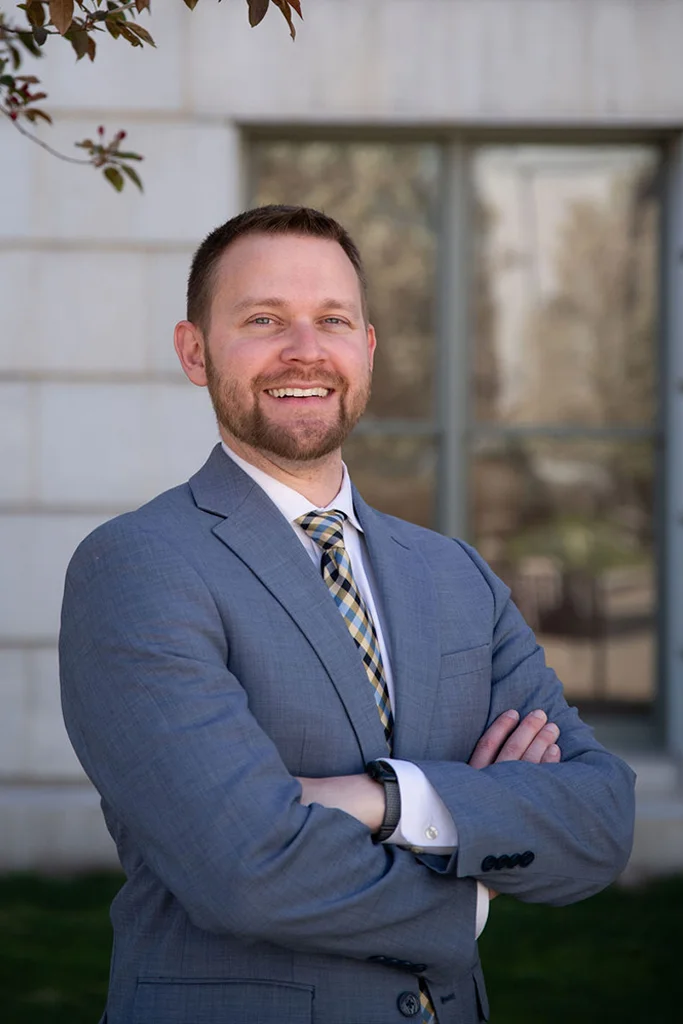
At DeChant Law, Idaho Springs criminal defense lawyer Reid DeChant brings genuine courtroom experience to clients charged with crimes anywhere in Clear Creek County and the surrounding mountain communities. Reid’s background as a former public defender gave him rare exposure to high-volume, high-stakes criminal work before he moved into private practice. He has defended cases ranging from traffic offenses and DUI to assault and serious felonies, and he trained at the Trial Lawyers College under a method built on authentic client relationships and narrative-driven advocacy. That combination is not common in mountain jurisdiction criminal defense, where many attorneys handle a broad mix of civil matters and lack deep criminal trial experience.
Clear Creek County’s courts are not Denver courts. The dynamics are different, the enforcement patterns are different, and the types of cases that come through Idaho Springs reflect the unique character of a mountain community adjacent to major travel corridors and outdoor recreation. Clients here need a criminal defense attorney who understands both the substantive law and the practical realities of how these cases move through the local system.
What Reid DeChant Brings to Clear Creek County Criminal Defense
Reid DeChant’s practice at DeChant Law is built on a foundation that matters in criminal defense: trial experience and genuine commitment to clients. His time as a public defender placed him in courtrooms constantly, cross-examining officers, challenging evidence, and advocating for clients who had little room for error. That environment demands efficiency, sharpness, and the ability to identify what actually matters in a case. It also builds the kind of familiarity with criminal procedure that years of transactional or civil work simply cannot replicate.
Reid’s training at the Trial Lawyers College, the program founded by legendary trial attorney Gerry Spence, distinguishes his courtroom approach from attorneys who rely on legal arguments alone. The program teaches lawyers to understand clients as people and to communicate that humanity to judges and juries. Verdicts come from connection and credibility, not just motions. Reid has put this training to work in real cases, including Not Guilty verdicts at trial for DUI, assault, sex offense registration charges, and domestic violence matters, as well as dismissals in cases ranging from DMV license revocation hearings to felony charges.
For someone arrested in Idaho Springs or anywhere else in Clear Creek County, those results matter. When Reid reviews your case, he is not just looking for one angle. He examines the stop, the investigation, the chain of custody for any evidence, the officer’s conduct, and how the prosecution has framed its theory. He maintains active membership in the National Association of Criminal Defense Lawyers and the Colorado Criminal Defense Bar, staying current with defense strategy and Colorado-specific developments that affect how cases are built and contested.
Criminal Charges Commonly Filed in Idaho Springs and Clear Creek County
- DUI and DWAI on Mountain Roads: I-70 through Clear Creek Canyon is one of Colorado’s most heavily patrolled corridors, particularly on weekends and holiday stretches. Law enforcement conducts sobriety checkpoints and targeted patrols near Idaho Springs exits, and charges under Colorado’s DUI and DWAI statutes carry significant license, financial, and criminal consequences that escalate sharply for repeat offenses.
- Drug Possession and Distribution Charges: Clear Creek County sees drug cases connected to both transient populations moving through the I-70 corridor and local community issues. Possession of controlled substances including methamphetamine, cocaine, fentanyl, and prescription medications without authorization can result in felony charges depending on quantity and circumstances.
- Assault and Domestic Violence Charges: Assault charges in Colorado range from third-degree misdemeanor offenses to felony assault with a deadly weapon. Domestic violence designations attach mandatory consequences including protection orders, no-contact provisions, and treatment requirements. These cases often hinge on credibility, witness accounts, and the specific facts of an encounter.
- Traffic Offenses and Vehicular Crimes: Careless driving, reckless driving, vehicular assault, and leaving the scene of an accident are all charged with regularity in a county where mountain roads create dangerous conditions. Depending on circumstances, these charges can rise to felony level when injury or death is involved.
- Theft, Burglary, and Property Crimes: Small mountain communities experience property crime related to outdoor equipment, residential break-ins, and commercial theft. Colorado grades theft offenses by value, with higher amounts triggering felony charges that carry prison exposure.
- Weapons Charges: Colorado has specific statutes governing concealed carry, prohibited persons, and use of weapons in certain circumstances. Clear Creek County’s mix of outdoor culture and proximity to Denver means weapons-related arrests arise in various contexts, including during vehicle stops and at campsites.
- Failure to Appear and Warrant Issues: Visitors and travelers who pick up charges in Clear Creek County sometimes fail to appear for court dates, resulting in warrants that complicate future traffic stops, background checks, and housing applications anywhere in Colorado.
How Mountain Jurisdiction Criminal Cases Actually Work
Clear Creek County’s criminal cases are processed through the Clear Creek County Combined Courts, located in Georgetown. If you were arrested in Idaho Springs, charged in the county, or cited and released with a future court date, your case will move through that courthouse. Georgetown is a small county seat, which means the courts operate differently than the high-volume Denver County courts where Reid also has extensive experience. Fewer cases does not mean less serious outcomes. Felonies in Clear Creek County still carry the same Colorado sentencing ranges as identical charges filed in Denver or Jefferson County.
After an arrest, Colorado law requires that you appear for an advisement hearing where bond is set and charges are formally read. If you were released from the Clear Creek County Detention Facility or given a summons for a future date, that date is not optional. Missing it results in an arrest warrant. One of the most common mistakes people make in small county criminal cases is treating an appearance date as less urgent than it would feel in a major metropolitan courthouse. The consequences for missing a court date are identical regardless of county size.
Early in a case is also when the most important defense work happens. Before the first hearing, your attorney should be reviewing any dashcam or bodycam footage, examining the affidavit for probable cause, and identifying whether the stop, search, or arrest complied with constitutional requirements. Evidence issues are time-sensitive. Video footage may be preserved or may not be, depending on department policy and how quickly a request is made. Requesting records early matters.
If you were charged with DUI in Clear Creek County, you also face a separate DMV proceeding through Colorado’s Express Consent law. That administrative action to revoke your license runs parallel to the criminal case and has its own deadline. You have a limited window after an arrest to request a hearing to contest the revocation. If no request is made, the revocation proceeds automatically. DeChant Law has a record of DMV Express Consent dismissals, including cases dismissed for improper advisement, failure to administer chemical tests within the required window, and other procedural grounds.
The Difference Between Pleading Quickly and Defending Fully
Prosecutors in smaller jurisdictions sometimes move quickly to resolve cases, and a surface-level review of the charges can make a plea offer look reasonable. The problem is that a plea resolves the case without testing the evidence. It locks in a criminal record. It may trigger immigration consequences if you are not a citizen. It activates mandatory reporting requirements for professional licenses in fields like healthcare, education, law, and contracting. What looks like a manageable outcome on day one can create serious complications for years.
Reid’s approach at DeChant Law starts with a full case review before any discussion of resolution. That means looking at whether the stop was constitutional, whether Miranda rights were properly given, whether field sobriety tests were administered and scored correctly, whether search warrants were obtained when required, and whether the prosecution’s evidence actually supports the charge as filed. In DUI cases, Reid has obtained dismissals based on problems with how Express Consent advisements were given and on chemical test timing defects. In assault and domestic violence cases, he has taken cases to trial and won Not Guilty verdicts where the prosecution believed their case was solid.
The Idaho Springs criminal defense attorney relationship that serves clients best is one built on honest assessment. Not every case goes to trial. Some cases resolve through negotiation after identifying real weaknesses in the prosecution’s position. The goal is the best realistic outcome, pursued with complete knowledge of the case rather than an early guess.
Questions People Ask About Criminal Defense in Idaho Springs
What court handles criminal cases filed in Idaho Springs?
Criminal cases arising in Idaho Springs and throughout Clear Creek County are handled at the Clear Creek County Combined Courts in Georgetown. Both misdemeanor and felony matters go through that courthouse, though serious felonies may proceed through District Court while misdemeanors and traffic matters stay in County Court.
Do I need a lawyer if I am only facing a misdemeanor charge in Clear Creek County?
Misdemeanors in Colorado carry real consequences including jail time, fines, probation, and a permanent criminal record that appears on background checks. A misdemeanor conviction can affect housing applications, employment, and professional licenses. Whether representation makes sense depends on the specific charge, your record, and the evidence, but the consequences are rarely as minor as the word “misdemeanor” implies.
I was arrested for DUI near Idaho Springs on I-70. What happens to my license?
Under Colorado’s Express Consent law, a DUI arrest triggers both a criminal case and a separate DMV proceeding to revoke your license. You have a limited number of days after the arrest to request a DMV hearing to contest the revocation. If you miss that window, revocation proceeds without a hearing. These two proceedings run on separate tracks, and both require attention from the start.
Can out-of-state visitors get criminal charges resolved without returning to Clear Creek County for every hearing?
Colorado courts generally require defendants to appear for certain hearings, though some proceedings may be handled through counsel depending on the charge and the court’s practice. Missing required appearances results in a warrant. If you live out of state and picked up a charge while visiting the Idaho Springs area, working with a Colorado criminal defense attorney early is essential to managing your obligations and, where possible, your travel requirements.
How serious are drug possession charges in Colorado compared to other states?
Colorado has made some legislative changes to drug sentencing over recent years, but possession of controlled substances outside of the legal cannabis framework remains a serious matter. Fentanyl possession, for example, has been treated with increasing severity given the public health crisis around that substance. Quantity, type of drug, and circumstances all affect how charges are filed and what consequences attach. Assuming Colorado is uniformly lenient on drug charges is a mistake.
What happens if I have a prior DUI conviction and I am charged with DUI again in Clear Creek County?
Colorado’s DUI statutes impose escalating penalties for repeat offenses. A second or third DUI conviction carries significantly higher minimum sentences, longer license revocations, mandatory ignition interlock requirements, and heightened scrutiny from prosecutors. The history of prior convictions directly affects how a case is charged and what the prosecution will offer in any negotiation. Prior record makes early and thorough defense work even more important.
Can a criminal charge from Idaho Springs affect my commercial driver’s license?
Yes. Commercial drivers face a separate and stricter regulatory framework under federal motor carrier rules. A DUI conviction, or even a disqualifying administrative action, can end or severely restrict a commercial driving career. CDL holders have lower legal limits and face federal disqualification periods that run independently of state criminal consequences. If you hold a CDL and are facing any impaired driving or serious traffic charge in Clear Creek County, the stakes extend well beyond the state criminal case.
What does the Trial Lawyers College training mean for how my case is handled?
The Trial Lawyers College, founded by Gerry Spence, is selective and intensive. Its curriculum centers on authentic storytelling, deep client relationships, and psychodrama techniques designed to help lawyers understand and communicate the full human context of a case. In practice, this means Reid approaches your case as the story of a real person, not a collection of charges and evidence. Judges and juries respond to narrative. Legal arguments matter, but how a lawyer presents a client’s humanity can be decisive, especially in cases that go to trial.
Is there any point in challenging evidence in a case where the officer had a dashcam running?
Dashcam footage cuts both ways. It can confirm the officer’s account, or it can contradict it. Field sobriety test administration has specific protocols, and dashcam video sometimes reveals that tests were not administered correctly, that conditions were unfair, or that the officer’s written account does not match what the footage shows. Chemical test results have their own chain-of-custody and procedural requirements. Video evidence is worth examining carefully, not taken at face value.
What should I do in the first 48 hours after an arrest in Clear Creek County?
Do not give statements to law enforcement beyond identifying yourself as required. Do not post about your arrest or the incident on social media. Do not contact the alleged victim if a protection order has been issued. Preserve any evidence that supports your account, including text messages, receipts, witness contact information, or photographs. Contact a Colorado criminal defense attorney as soon as possible so that deadlines are not missed and the defense review can begin while details are still fresh and records are still available to preserve.
Clear Creek County and Surrounding Mountain Communities We Serve
DeChant Law represents clients charged with crimes throughout Clear Creek County and the broader mountain corridor. From Idaho Springs itself through Georgetown, Silver Plume, and Empire, Reid handles cases across the full geographic range of the county. The firm also serves clients from the Evergreen and Bergen Park areas to the south, as well as those passing through from the Jefferson County communities of Conifer, Morrison, and Kittredge whose cases originate along the I-70 mountain corridor. Clients from Golden, Wheat Ridge, and Lakewood frequently find themselves facing charges connected to activity along Highway 6 or the canyon roads. Communities along the Peak to Peak Highway including Black Hawk and Central City, where gaming activity generates a distinct category of enforcement, are also within the firm’s reach. Residents of the Foothills communities from Genesee through Dumont and those traveling from the Denver metro area through Floyd Hill and the tunnel approaches to Clear Creek County can rely on the same level of representation that DeChant Law brings to clients throughout the Denver metro area.
Idaho Springs Criminal Defense Attorney Ready to Review Your Case
A charge filed in Clear Creek County deserves the same level of defense that would be available in any major metropolitan court. The distance from Denver does not diminish the consequences, and it does not reduce what a thorough, experienced defense lawyer can accomplish. Reid DeChant at DeChant Law serves as an Idaho Springs criminal defense attorney prepared to examine every aspect of your case, from the initial stop to the evidence and the prosecution’s theory, and to pursue every available avenue for the best outcome possible. Contact DeChant Law to schedule a consultation and start building your defense.