Superior DUI Defense Lawyer
A DUI arrest in Colorado does not end with a trip to the station and a court date. It triggers two separate legal proceedings that run simultaneously, one in the criminal courts and one at the Colorado Division of Motor Vehicles, and losing either one carries consequences that can follow you for years. If you are searching for a Superior DUI defense lawyer, the geography matters as much as the legal issue itself. Cases arising in Superior and the surrounding Boulder County and Jefferson County communities move through specific courtrooms, involve particular law enforcement agencies, and are prosecuted by district attorneys who take impaired driving charges seriously. The quality of your defense depends on how well your attorney understands all of it.
Colorado’s impaired driving laws are among the more layered in the country. The state recognizes both DUI and DWAI as distinct offenses with distinct thresholds, and prosecutors can pursue either charge depending on the evidence available. A blood alcohol content at or above 0.08 supports a DUI charge, while driving while ability impaired can be charged at a BAC as low as 0.05. Colorado also aggressively pursues drug-impaired driving cases, which creates a separate category of complexity because chemical testing for drugs does not carry the same scientific clarity as a breathalyzer reading. Whether your case involves alcohol, prescription medication, marijuana, or some combination, the defense strategy requires careful attention to the specific type of evidence involved and how it was collected.
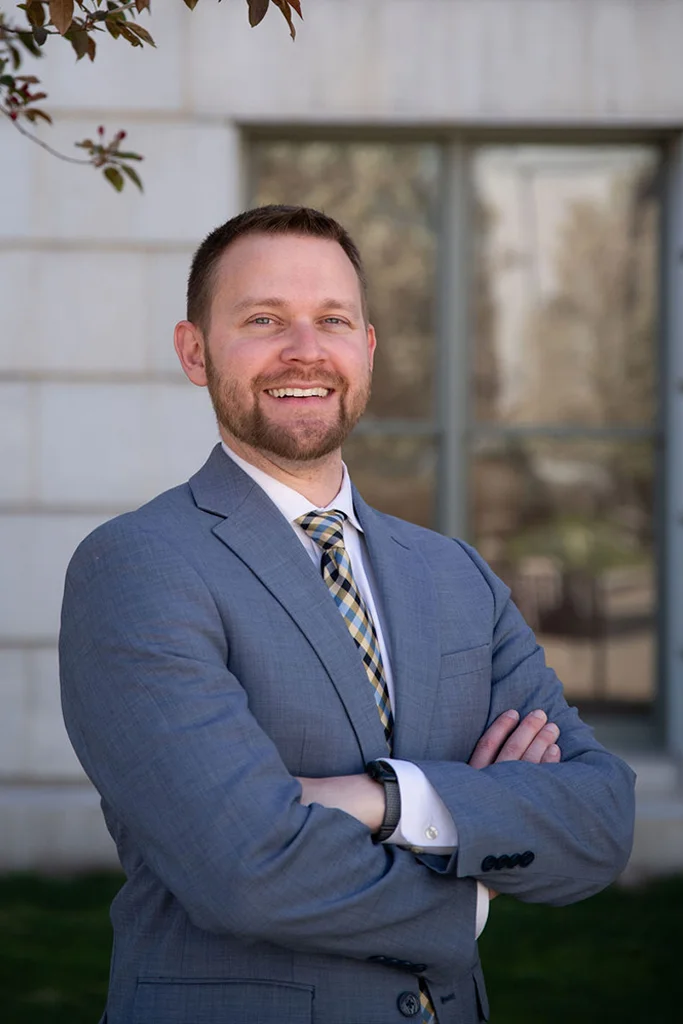
Reid DeChant at DeChant Law has built his practice on exactly this kind of careful, specific, forensically attentive defense work. The firm handles DUI cases across the Denver metro area and surrounding communities, and that geographic breadth translates into genuine courtroom familiarity with the courts and prosecutors that residents of Superior are most likely to encounter after an arrest on US-36, McCaslin Boulevard, or the roads connecting Superior to the broader Front Range.
How Colorado DUI Cases Actually Unfold After an Arrest
The hours immediately following a DUI arrest in Colorado are more consequential than most people realize. Colorado operates under an express consent law, meaning that by driving on Colorado roads, you have already consented to a chemical test if law enforcement has reasonable grounds to believe you are impaired. If an officer requests a blood or breath test and you refuse, or if you take the test and your result triggers a license revocation, the DMV begins its own administrative process separate from any criminal charge. You have a short window after the arrest to request a hearing at the DMV to contest the revocation of your license. Missing that window means the revocation proceeds automatically, regardless of what happens in criminal court.
On the criminal side, your first court appearance will be an arraignment where the formal charges are presented and you enter a plea. From there, the case moves through a discovery process in which your attorney can examine the evidence the prosecution intends to use, including the traffic stop documentation, the officer’s field sobriety test observations, the chemical test results, and the chain of custody for any blood samples taken. This phase is where experienced DUI defense work begins in earnest, because the methods law enforcement used to stop you, investigate you, and test you are all subject to legal challenge.
Cases arising from arrests in the Superior area may be processed through the Boulder County Combined Courts in Boulder or through Jefferson County courts in Golden, depending on where the stop occurred. Both court systems have their own rhythms, calendaring practices, and prosecutorial tendencies. An attorney who has appeared regularly in both courtrooms brings practical familiarity that matters when negotiating with a deputy district attorney or arguing suppression motions before a judge.
What a Superior DUI Attorney Should Know How to Challenge
- Traffic Stop Legality: Every DUI investigation begins with a stop, and that stop must be supported by reasonable articulable suspicion of a traffic violation or criminal activity. Stops that originate from a hunch, a profile, or improper use of a checkpoint can result in suppression of all evidence gathered afterward, including chemical test results.
- Field Sobriety Test Administration: Standardized field sobriety tests, including the horizontal gaze nystagmus, walk-and-turn, and one-leg stand, must be administered according to specific protocols developed by the National Highway Traffic Safety Administration. Deviations from those protocols undermine the reliability of the results and open the door to effective cross-examination of the arresting officer.
- Breathalyzer Accuracy and Calibration: Colorado law requires that breath testing equipment be properly maintained and calibrated according to established standards. Records of calibration, maintenance logs, and operator certifications are all discoverable and can reveal vulnerabilities in the prosecution’s evidence if proper procedures were not followed.
- Blood Draw Procedures and Chain of Custody: Blood tests must be drawn by qualified personnel, stored properly, and transported according to strict protocols. Any break in the chain of custody, any improper storage condition, or any handling irregularity can compromise the reliability of the result and provide grounds for challenging its admissibility.
- Drug Impairment Testing Standards: Unlike alcohol, there is no universally accepted per se limit for most drugs under Colorado law. Prosecutors rely heavily on Drug Recognition Expert testimony in these cases, and that testimony is subject to significant scientific challenge regarding methodology, training standards, and the reliability of the conclusions drawn.
- Two-Hour Rule for Chemical Testing: Colorado requires that a chemical test be administered within two hours of driving for the result to carry full legal weight. DeChant Law has successfully challenged license revocations where law enforcement failed to administer the test within this window, as reflected in the firm’s actual case results.
- Express Consent Advisement Errors: Officers are required to advise drivers of their rights and obligations under Colorado’s express consent law in a specific manner. Errors in how that advisement is given can provide grounds for dismissal of the DMV action against your license, separate from any criminal charge.
Why DeChant Law Brings Particular Depth to DUI Defense
Reid DeChant’s background is unusual in private DUI defense for reasons that directly benefit clients facing impaired driving charges. His years as a public defender in Denver, Broomfield, and Adams County courtrooms meant he handled a volume of cases that most private attorneys never approach. That exposure translated into deep familiarity with how law enforcement builds DUI cases, how prosecutors evaluate evidence, and where the weak points in a standard impaired driving investigation actually appear. He understands the bureaucratic and forensic machinery of a DUI prosecution from the inside out, which shapes how he dismantles it from the outside.
His training at the Trial Lawyers College, founded by attorney Gerry Spence, sharpened a different kind of skill: the ability to present a client’s story to a jury in a way that connects on a human level, not just a legal one. This matters in DUI cases because juries carry strong assumptions about impaired driving. Overcoming those assumptions requires more than poking holes in technical evidence. It requires a coherent narrative about who you are, the specific circumstances of your arrest, and why the government’s account of what happened is incomplete or wrong. Reid’s approach to case preparation treats those two skills, forensic scrutiny and narrative advocacy, as inseparable.
The firm’s documented case results reflect this combination in action. DMV express consent actions have been dismissed for improper advisement, for failure to administer the chemical test within the required two hours, and on other procedural grounds. DUI charges have been resolved with not-guilty verdicts at trial in Jefferson County, Douglas County, Arapahoe County, and Jefferson County for drug-related impaired driving. These are not easy wins in a state that prosecutes impaired driving vigorously. They reflect the kind of preparation and courtroom advocacy that comes from a DUI defense attorney in Superior who treats each case as a full contest rather than a negotiation toward a lesser plea.
Reid holds membership in the National Association of Criminal Defense Lawyers and the Colorado Criminal Defense Bar, organizations that connect him with the best current thinking in DUI defense strategy, forensic science challenges, and changes in Colorado law. That ongoing engagement keeps his defense approach current in an area of law where the science, the statutes, and the prosecutorial tactics continue to evolve.
Questions People Ask About DUI Defense in Colorado
What is the difference between DUI and DWAI in Colorado?
Colorado charges DUI when a driver’s blood alcohol content is 0.08 or higher, or when the totality of evidence suggests the driver was substantially incapable of safely operating a vehicle due to alcohol or drugs. DWAI, or driving while ability impaired, is a lesser offense charged when impairment is detectable but does not reach the DUI threshold. DWAI can be charged at a BAC as low as 0.05. Both offenses carry penalties including fines, license consequences, and potential jail time, though DWAI penalties are generally less severe for a first offense than DUI penalties.
What happens to my driver’s license after a DUI arrest in Colorado?
After a DUI arrest where you either fail a chemical test or refuse one, the Colorado DMV initiates a separate administrative action to revoke your license. You have a limited number of days from the date of the arrest to request a DMV hearing to contest the revocation. If you miss that deadline, the revocation proceeds automatically. A DUI defense attorney can represent you at the DMV hearing, and a favorable outcome there can preserve your driving privileges regardless of the criminal case outcome.
Can I refuse a breath or blood test in Colorado?
You can refuse, but there are automatic consequences under Colorado’s express consent law. Refusal typically results in a longer license revocation than a failed test, and the refusal itself can be used as evidence in the criminal case. The advisement you receive from the officer at the time of your arrest is supposed to inform you of these consequences, and errors in how that advisement is given have sometimes provided grounds to challenge the revocation.
How long does a DUI case take to resolve in Colorado?
The timeline varies considerably depending on whether the case goes to trial, the complexity of the evidence, and the specific court’s docket. Misdemeanor DUI cases in Boulder County or Jefferson County might resolve within a few months through a plea or dismissal, while cases heading to trial can take closer to a year from arrest to verdict. The DMV process runs on its own separate timeline and often resolves faster than the criminal case.
Does a Colorado DUI conviction stay on my record permanently?
A DUI conviction in Colorado cannot be expunged from an adult’s criminal record under current law. It remains visible in background checks conducted by employers, landlords, and licensing agencies. This permanence is one of the reasons fighting a DUI charge aggressively at the outset, rather than accepting a plea quickly, can have lasting practical significance far beyond the immediate penalties.
What if my DUI involved marijuana rather than alcohol?
Colorado law treats marijuana-impaired driving as a DUI offense. While there is a permissible inference tied to a specific THC blood level under Colorado law, that inference is not conclusive, and the science around marijuana impairment testing is far less settled than alcohol testing. Cases involving alleged marijuana impairment often rely heavily on Drug Recognition Expert testimony, officer observations, and field sobriety test results. Each of those categories is subject to meaningful challenge in ways that differ from a typical alcohol DUI case.
Can a DUI charge affect my professional license in Colorado?
Certain professional licensing bodies in Colorado require disclosure of criminal arrests or convictions. Healthcare professionals, teachers, lawyers, real estate agents, and others holding state-issued licenses may face separate licensing board inquiries as a result of a DUI charge, even if the charge is eventually resolved without a conviction. The licensing consequences can be more career-damaging than the criminal penalties themselves for some clients, making a dismissal or not-guilty verdict significantly more valuable than a plea to a reduced charge.
What does a not-guilty verdict at a DUI trial actually require?
A not-guilty verdict requires that the jury not be persuaded beyond a reasonable doubt that the prosecution has proven every element of the offense. In a DUI trial, that can happen through successful challenges to the stop, the field sobriety evidence, the chemical test results, or the officer’s testimony about observed impairment. It can also happen when the jury hears a coherent counter-narrative about what actually occurred. Trial outcomes in DUI cases are not purely technical; the credibility and presentation of testimony on both sides plays a real role in how juries decide.
How is a DUI treated differently if it is a second or third offense in Colorado?
Colorado’s DUI sentencing framework includes mandatory minimum jail time that increases with each prior offense. A second DUI carries longer mandatory minimums than a first, and a third offense can be charged as a felony under certain circumstances, dramatically elevating the potential penalties. Prior offenses also affect the DMV’s revocation periods and ignition interlock requirements. For repeat offense cases, the stakes at trial are substantially higher, and the case for aggressive defense is correspondingly stronger.
If the chemical test showed I was under the legal limit, can I still be convicted of DUI?
Yes. Colorado law allows conviction based on observable impairment, officer testimony about driving behavior, and field sobriety test performance, even when a chemical test result falls below the 0.08 threshold. Prosecutors in these cases typically rely more heavily on the officer’s narrative and body camera footage. These cases require a different defense emphasis, one focused on challenging the officer’s observations and presenting alternative explanations for whatever behavior prompted the stop and investigation.
DUI Defense Representation Across Superior and the Surrounding Region
DeChant Law represents clients facing DUI and DWAI charges throughout the communities of Boulder County, Jefferson County, and the broader Denver metro region. Clients from Superior, Louisville, Lafayette, and Broomfield frequently find their cases processed in court systems serving these areas, and the firm’s experience in those courtrooms reflects years of consistent advocacy. The firm also represents clients from Westminster, Arvada, Thornton, Northglenn, and the surrounding Adams County communities. Across the southern Denver metro, clients from Lakewood, Littleton, Englewood, Greenwood Village, Centennial, and Aurora have relied on DeChant Law for DUI defense. Jefferson County communities including Golden, Wheat Ridge, Edgewater, and Evergreen fall within the firm’s regular practice area as well. Farther south, DUI cases from Douglas County, including Lone Tree, Parker, Castle Rock, and Highlands Ranch, are part of the firm’s documented case history. The firm’s geographic reach also extends into the mountain corridor communities along US-6 and I-70, where DUI enforcement is active particularly on weekends and during ski season.
Talk to a Superior DUI Attorney About Your Case
A DUI charge in Colorado moves quickly on two tracks simultaneously, and the early decisions about your license hearing and your criminal defense strategy are too important to delay. Reid DeChant is a Superior DUI attorney whose trial record in Colorado impaired driving cases reflects the kind of thorough, evidence-focused advocacy that produces real results, not just better paperwork. If you have been arrested for DUI or DWAI anywhere in the Boulder County or Jefferson County area, contact DeChant Law to discuss your case with someone who will give you an honest assessment of where you stand and what your options actually are.