Superior Criminal Defense Lawyer
Superior sits in the heart of the Boulder-Denver corridor, a community that blends suburban quiet with proximity to two of Colorado’s most active prosecutorial offices. When someone in Superior is arrested or charged with a crime, their case almost always flows through Boulder County District Court or, depending on the specific location of the alleged offense, Jefferson County courts. Those courthouses operate under prosecutors whose job is to build cases, secure pleas, and push charges forward. Having a Superior criminal defense lawyer who actually knows how to disrupt that process, not just negotiate around its edges, changes the outcome.
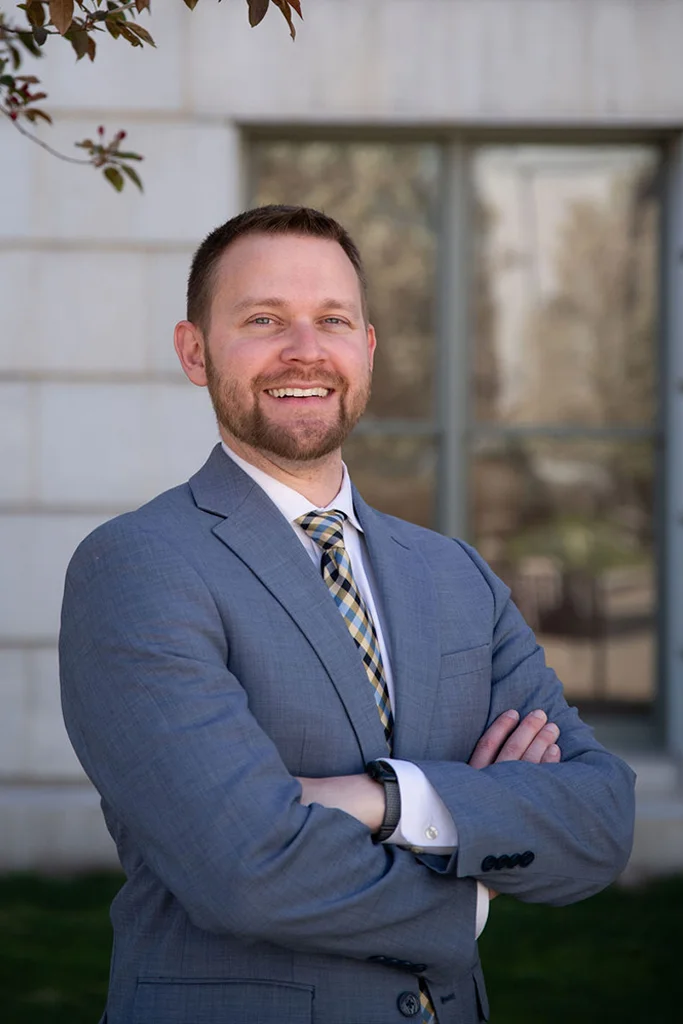
Reid DeChant of DeChant Law has handled criminal cases across the Denver metro and front range, from traffic-related charges to serious violent felonies. His background as a former public defender gave him direct exposure to high-volume courtroom work across multiple Colorado jurisdictions. He understands how Colorado prosecutors assess cases, what law enforcement often gets wrong during traffic stops and investigations, and where the actual pressure points are that cause charges to get reduced or dismissed entirely. That kind of courtroom-built instinct is not something that comes from reading case law in a library.
If you are living in Superior or the surrounding area and you are facing criminal charges, the geography of your situation matters. It shapes which courthouse you will appear in, which prosecutors will handle your file, and which defenses are most likely to resonate. Working with a criminal defense attorney who brings genuine trial experience to those specific contexts is not a luxury, it is the practical difference between a conviction on your record and a life that continues on your terms.
What Reid DeChant Brings to Superior Criminal Defense Cases
DeChant Law is built around Reid DeChant’s unusual combination of public defender depth and private practice focus. As a public defender, Reid handled cases spanning virtually every category of criminal charge in Colorado, including DUI, assault, theft, drug offenses, sex crimes, and homicide. That range is significant. When defense lawyers have only worked one or two charge types, they tend to miss the cross-cutting issues that surface in complex cases. Reid’s breadth of experience means he approaches each case with pattern recognition that comes from having stood next to hundreds of clients in real courtrooms and watched what actually happens.
Reid is a graduate of the Trial Lawyers College, the program founded by legendary trial attorney Gerry Spence that trains lawyers in narrative advocacy, psychodrama, and authentic storytelling. This matters in criminal defense because jurors do not convict or acquit legal arguments. They make decisions about human beings. Reid’s training at the Trial Lawyers College shapes how he builds every defense, from the initial case theory through closing argument, with a focus on helping judges and juries understand the actual human context of what happened.
His recognition by national legal organizations, including membership in the National Association of Criminal Defense Lawyers and the Colorado Criminal Defense Bar, reflects a commitment to staying current on the best available defense strategies and connected to the best defense minds in the country. The firm’s documented case results include acquittals at trial on DUI charges, assault charges, sex offense charges, domestic violence charges, and felony menacing, along with multiple dismissals at both the trial and DMV hearing levels. Past results do not guarantee future outcomes, but they reflect a lawyer who is actually prepared to take cases to verdict rather than one who defaults to pleas.
Criminal Charges That Arise in and Around Superior, Colorado
- DUI and DWAI: Colorado’s express consent law requires drivers to submit to chemical testing, and violations can trigger both criminal prosecution and a separate DMV action to revoke your license. Superior residents who are stopped on Highway 36, McCaslin Boulevard, or US-36 near the interchange frequently face these dual-track consequences. DeChant Law has challenged express consent advisements, improper test timing, and defective stop justifications in multiple DMV hearings and jury trials.
- Drug Possession and Distribution: Colorado’s cannabis legalization has not eliminated drug charges. Possession of cocaine, methamphetamine, fentanyl, and prescription medications without authorization remains a serious matter under Colorado law, with consequences ranging from deferred sentences to state prison depending on the substance, quantity, and the defendant’s prior record.
- Domestic Violence Charges: In Colorado, domestic violence is a sentence enhancer rather than a standalone charge, applied to underlying offenses like assault, harassment, or false imprisonment when the parties have an intimate relationship. These cases involve mandatory arrest policies and are aggressively prosecuted. DeChant Law has obtained jury acquittals and prosecutorial dismissals in domestic violence cases involving strangulation, assault, and felony menacing.
- Assault and Menacing: Charges involving physical altercations or threats with a weapon span from Class 3 misdemeanor assault up to Class 3 felony assault, with the specific facts of the incident driving where charges land. Boulder County and Jefferson County prosecutors treat these cases seriously, and a trial-capable defense attorney makes a measurable difference in how these cases resolve.
- Theft and Property Crimes: Colorado’s theft statute grades offenses by the value of the property alleged to have been taken. A charge that sounds minor at $500 can escalate quickly when prosecutors aggregate multiple alleged incidents or push the value over a felony threshold. Understanding how local prosecutors apply these statutes matters for building an effective response.
- Sex Offense Charges: Allegations of sexual assault, unlawful sexual contact, or failure to register as a sex offender carry some of the most serious consequences in Colorado criminal law, including mandatory sex offender registration that can follow a person for decades. These cases demand forensic sophistication, disciplined cross-examination, and the kind of narrative defense work Reid’s training specifically addresses.
- Vehicular Offenses and Serious Traffic Crimes: Careless driving causing injury, vehicular assault, and vehicular homicide charges arise from traffic incidents on Colorado roads, including the heavily traveled corridors near Superior such as Highway 36 and the interchanges with McCaslin and Northwest Parkway. These charges can carry felony exposure and demand immediate attention.
After an Arrest Near Superior: What the Next Hours Actually Require
The period immediately following an arrest is when the most consequential mistakes happen, and they almost always happen because people do not understand what is actually at stake. Statements made to law enforcement at the scene, at the jail, or during any subsequent contact without counsel present can and will be used in prosecution. Colorado law does not require you to answer questions beyond providing basic identification in certain circumstances. Exercising your right to remain silent is not obstruction. It is prudent, and it preserves your options.
If you are charged with DUI or a related offense in Boulder County or Jefferson County, be aware that you are facing two separate proceedings. The criminal case proceeds through the court, while a DMV express consent hearing is a separate administrative action that can result in license revocation independent of what happens in court. The deadline to request a DMV hearing is tight, typically within seven days of the notice of revocation. Missing that window forfeits your right to contest the revocation. This is not a deadline most people know about, and it is one of the first things Reid addresses when a DUI client contacts the firm.
Boulder County District Court handles felony cases, while the Boulder County Court handles misdemeanors. Jefferson County has its own court structure, with cases depending on where the alleged offense occurred. Superior itself straddles county lines in some areas, so identifying the correct jurisdiction early affects which prosecutors will be involved, what local practices apply, and how quickly proceedings are likely to move. An attorney who regularly appears in these courts will recognize the distinctions that a general practitioner might miss.
Documentation is important from the first day. If your case involves an incident where physical evidence was collected, witnesses were present, or recordings might exist, that evidence begins to deteriorate or disappear quickly. Surveillance footage gets overwritten. Witnesses’ memories shift. Obtaining records, preserving video, and identifying favorable witnesses early is work that should start immediately, not after a few months of waiting to see how things develop.
How Colorado’s Sentencing Structure Shapes Defense Strategy
Colorado classifies felonies from Class 1 through Class 6, with Class 1 being the most serious, and misdemeanors in three classes, with additional unclassified categories for certain traffic and municipal offenses. The classification of a charge determines the presumptive sentencing range a judge must work within, but it does not determine the outcome of your case. Defense strategy that genuinely accounts for Colorado’s sentencing structure identifies which facts, if successfully challenged, drop a case from one classification to another, and which procedural arguments could result in evidence suppression that changes the entire complexion of the prosecution’s case.
Colorado also has specific provisions for deferred judgments, which allow defendants who plead guilty under certain conditions to have charges dismissed if they successfully complete a supervision period. These arrangements are not available in every case and are not always the right choice, but understanding when they apply and how to negotiate their terms is part of representing clients effectively under Colorado law. The difference between a deferred judgment that leads to dismissal and a conviction that stays on your record permanently can affect employment, housing, professional licensing, and immigration status for years.
For clients with professional licenses, Colorado’s criminal charging system intersects with professional licensing boards in ways that are sometimes more consequential than the criminal case itself. A conviction for certain offenses can trigger mandatory reporting to licensing authorities for teachers, healthcare professionals, financial industry workers, and attorneys. Understanding these downstream consequences shapes how aggressively to defend the underlying charge and what resolution terms actually serve the client’s long-term interests.
Questions People Ask When Looking for a Superior Criminal Defense Attorney
Does a minor misdemeanor conviction in Colorado actually matter long-term?
Yes, in ways that are often underestimated. Misdemeanor convictions in Colorado show up on background checks, can affect professional licensing, and in some cases trigger immigration consequences for non-citizens. Employers, landlords, and licensing boards see misdemeanor convictions. Treating a misdemeanor charge as something to just plead out and move past without exploring alternatives can create obstacles that follow someone for a long time.
What is the difference between a DUI and DWAI charge in Colorado?
Colorado has two distinct impaired driving offenses. Driving Under the Influence requires proof of substantial impairment, typically associated with a blood alcohol content of 0.08 or higher. Driving While Ability Impaired is a lesser charge associated with a BAC between 0.05 and 0.08, where the impairment is more limited but still sufficient to affect the ability to operate a vehicle safely. DWAI carries lesser penalties than DUI but is still a criminal conviction with points against your license and potential probation. Both charges trigger DMV proceedings.
What happens at a DMV express consent hearing in Colorado?
An express consent hearing is an administrative proceeding before a DMV hearing officer, separate from the criminal court process. The hearing addresses whether law enforcement had reasonable grounds for the stop and arrest, whether you were properly advised of express consent obligations, and whether the chemical test was administered according to required procedures. Defects in any of these areas can result in dismissal of the revocation action. DeChant Law has a documented record of obtaining dismissals at express consent hearings on procedural and substantive grounds.
Can domestic violence charges in Colorado be dropped if the alleged victim recants?
Not automatically. Colorado domestic violence cases are treated as state cases, not private disputes, and prosecutors are not bound by a victim’s request to drop charges. Prosecutors regularly proceed with domestic violence prosecutions even when the alleged victim does not cooperate or explicitly asks for the case to be dismissed. The strength of a recantation as a defense depends heavily on the other evidence in the case and how the defense uses it at trial or in plea negotiations.
If evidence was obtained during an illegal traffic stop, will it automatically be excluded?
Not automatically, no. A motion to suppress evidence is the mechanism for asking the court to exclude evidence obtained in violation of constitutional protections, but the court must hold a hearing, evaluate the facts, and apply the applicable legal standard. If the court agrees the stop was unlawful and the evidence is the product of that unlawful stop, suppression is the remedy. In many DUI and drug cases, the suppression of key evidence effectively ends the prosecution’s ability to proceed. But this outcome requires filing a well-developed motion and litigating it effectively, not just asserting that something seemed unfair.
How long does a felony case in Boulder County typically take from arrest to resolution?
Felony cases in Boulder County District Court move on timelines that depend heavily on the complexity of the evidence, whether forensic testing is involved, and whether the case is set for trial. Many felony cases resolve within several months to a year or longer if they proceed to trial. Continuances, discovery disputes, and court scheduling all affect the timeline. Cases involving digital evidence, expert witnesses, or multiple defendants take longer. Understanding that timeline and managing client expectations throughout is part of responsible defense representation.
Can a felony conviction in Colorado be expunged or sealed?
Colorado’s record sealing laws have expanded in recent years. Certain felony convictions can now be sealed under specific conditions, including the passage of time after sentence completion and the nature of the underlying offense. Drug convictions, in particular, have become more eligible for sealing under recent legislative changes. Not all felonies qualify, and the sealing process requires a separate petition and court approval. Discussing record sealing prospects with your attorney from the beginning of a case, rather than after conviction, can affect which plea terms are worth accepting.
What happens to someone with prior DUI convictions who is charged again in Colorado?
Colorado’s DUI sentencing escalates significantly with prior convictions. A second DUI carries mandatory minimum jail time. A third DUI is a Class 4 felony under Colorado law, which carries potential state prison exposure. These are not theoretical possibilities, they are the statutory outcome if convicted. Prior convictions from other states count toward Colorado’s habitual offender calculations. A person facing a third or subsequent DUI faces an entirely different risk profile than a first-time offender, and the defense strategy needs to reflect that reality.
Does it matter which defense attorney handles the preliminary hearing in a felony case?
It matters significantly. A preliminary hearing in a Colorado felony case is the court’s determination of whether probable cause exists to bind the case over for trial. An effective preliminary hearing can result in charges being reduced or dismissed, and it provides an early opportunity to cross-examine prosecution witnesses under oath, locking in their testimony before trial. Attorneys who treat preliminary hearings as formalities to get through lose an opportunity that more assertive defenders use to their clients’ genuine advantage.
What does it mean that Colorado domestic violence cases have mandatory arrest policies?
Under Colorado law, when law enforcement responds to a domestic violence call and has probable cause to believe an act of domestic violence occurred, they are required to arrest the primary aggressor. Officers do not have discretion to leave the situation to the parties to resolve. This means arrests happen in situations where both parties may want law enforcement to simply leave, and charges proceed even when the alleged victim does not want them to. Understanding this framework is important because it explains why domestic violence charges require an aggressive defense strategy from the outset rather than a wait-and-see approach.
DeChant Law’s Criminal Defense Representation Across the Superior Area and Front Range
DeChant Law serves clients throughout the Boulder-Denver corridor and the broader front range region of Colorado. Superior residents facing criminal charges often find their cases handled in Boulder County District Court in Boulder or, when the alleged offense falls within Jefferson County’s jurisdiction, in the Jefferson County courts in Golden. Reid DeChant represents clients from Superior itself as well as from Louisville, Lafayette, Broomfield, Westminster, Thornton, Arvada, and the surrounding communities along Highway 36 and US-36. He also handles cases for clients in Denver, Adams County, Arapahoe County, and Douglas County, including communities like Aurora, Littleton, Englewood, Highlands Ranch, Parker, Castle Rock, and Lakewood. The firm’s background in Adams County courts and Jefferson County courts is particularly well-developed, with documented case results from both jurisdictions. Whether a client comes from the Erie or Longmont area to the north, the Wheat Ridge or Golden corridor to the south, or any point in between, DeChant Law extends its criminal defense representation throughout the metro and front range area that defines Colorado’s most active criminal justice landscape.
Speak with a Superior Criminal Defense Attorney at DeChant Law
A criminal charge in Superior or anywhere along the front range is a serious matter, and the decisions made in the earliest stages of the case shape everything that follows. DeChant Law offers clients direct access to a Superior criminal defense attorney whose background, training, and trial record reflect genuine preparation for the work, not just a willingness to meet and see what happens. Reid DeChant’s combination of public defender experience, Trial Lawyers College training, and active membership in national and state criminal defense organizations means that clients are represented by someone who is deeply invested in getting the outcome right. Call DeChant Law to schedule a consultation and start building a defense that actually addresses your situation.