Glendale DWAI Lawyer
A DWAI charge in Glendale carries real consequences that extend well beyond the courtroom. Colorado’s driving while ability impaired statute is distinct from standard DUI, with a lower legal threshold, a separate set of penalties, and consequences that can ripple into your driving record, insurance premiums, and even employment. For many people, a first DWAI feels minor, a traffic matter with a fine and some points, but the full picture is more complicated. Glendale sits within Arapahoe County, and the city’s concentrated stretch of South Colorado Boulevard is one of the more actively patrolled corridors in the metro area, particularly after dark and on weekends near its restaurants and entertainment venues. If you were stopped in Glendale or the surrounding area and now face a Glendale DWAI lawyer search, what you do next will shape how this resolves.
Colorado sets the DWAI threshold at a blood alcohol content between .05 and .079, well below the .08 DUI cutoff. That means a person who feels entirely in control of their faculties, and who might pass a field sobriety test in some respects, can still face a criminal charge. The law also applies to impairment from cannabis, prescription medications, and any combination of substances. Law enforcement in the Glendale area, including Colorado State Patrol units that patrol the I-25 and I-225 corridors nearby, are trained to evaluate drivers for impairment that does not register at the DUI level. The procedural steps taken during your stop and the evidence collected in the hours following your arrest are where cases are actually won or lost.
Working with a Glendale DWAI attorney who understands both the criminal charge and the parallel DMV process is essential. These are two separate proceedings, and they move on different timelines. Failing to act on the DMV side within the required window can result in an automatic license revocation that has nothing to do with how your criminal case resolves. DeChant Law handles both sides of impaired driving defense in Glendale and the surrounding Arapahoe County communities.
What a DWAI Charge Actually Looks Like Under Colorado Law
Colorado law creates a tiered system for impaired driving offenses. A full DUI requires the prosecution to prove you were substantially incapable of safely operating a vehicle due to alcohol or drugs, or that your BAC was .08 or above. DWAI requires only that your ability to operate a vehicle was impaired to the slightest degree. That is a meaningfully lower standard, and it means the prosecution does not need a breathalyzer reading above .08 to pursue the charge aggressively.
For a first DWAI with no prior convictions, Colorado law currently classifies the offense as a traffic misdemeanor rather than a criminal misdemeanor. The distinction matters, but it does not mean the penalties are trivial. A conviction can result in fines, points against your license, possible jail time, mandatory public service, and a requirement to complete alcohol education programs. The DMV may also move to revoke your license under the Express Consent law, which operates entirely separately from the criminal court proceeding. If your stop involved a blood or breath test with a result between .05 and .079, the DMV will not automatically revoke your license based on the BAC reading alone, but other factors from the stop can still trigger DMV action.
The charges escalate when prior convictions exist. A second DWAI becomes a criminal misdemeanor with more serious sentencing exposure. A third offense can be charged as a felony under Colorado law. Even a first-offense DWAI can be elevated if the stop involved an accident, a minor in the vehicle, or certain aggravating circumstances. Understanding where your specific case falls on this spectrum is the first analytical task any defense needs to address.
Why DeChant Law Handles Glendale DWAI Defense Differently
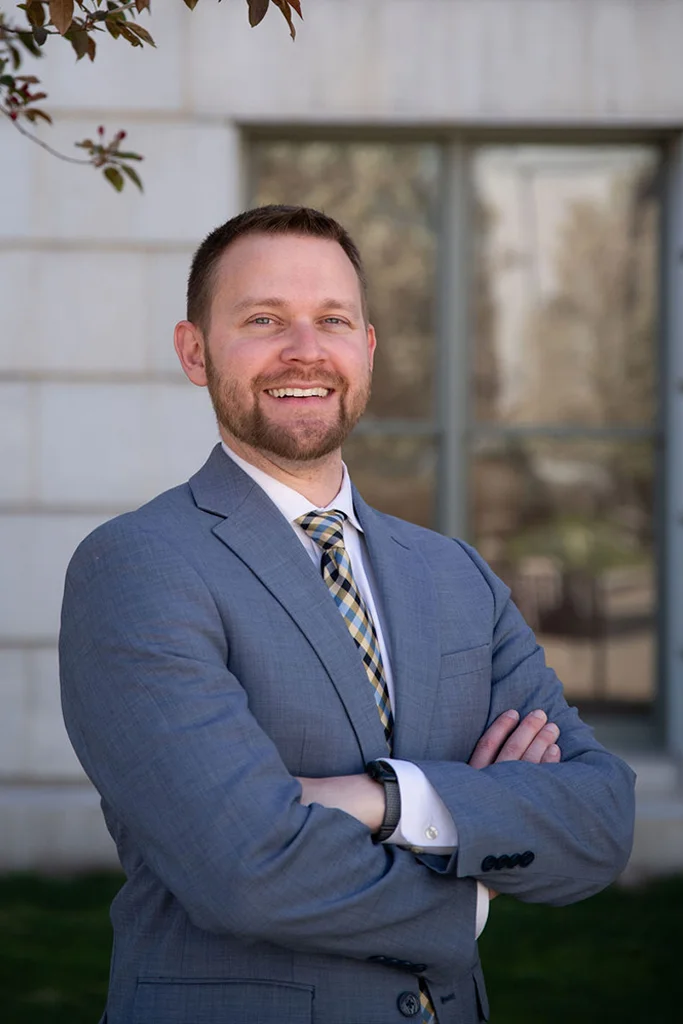
Reid DeChant built his practice on trial experience that most private criminal defense attorneys never accumulate. As a former public defender, Reid handled cases across Denver, Broomfield, and Adams County courtrooms, defending clients at every stage from arraignment through jury trial. That volume of courtroom experience translates directly into more effective DWAI defense because it means Reid has cross-examined police officers, challenged breathalyzer evidence, and argued suppression motions in real cases, not in simulated exercises.
Reid is also a graduate of the Trial Lawyers College, the selective program founded by Gerry Spence that trains attorneys in narrative advocacy and genuine connection with juries. In impaired driving cases, the difference between a conviction and an acquittal often comes down to how a jury understands the story behind the stop, the arrest, and the evidence. Reid’s training in that method shapes how he prepares and presents every case. The firm’s case results include multiple DUI and DWAI dismissals at the DMV level, Not Guilty verdicts at trial for DUI charges in Jefferson County, Douglas County, and Arapahoe County, and case dismissals for procedural violations including improper Express Consent advisements and chemical tests administered outside the two-hour window. Those results reflect a defense practice that pays close attention to the technical and procedural dimensions of impaired driving prosecution.
Reid maintains membership in the National Association of Criminal Defense Lawyers and the Colorado Criminal Defense Bar, both of which reflect active engagement with the evolving state of impaired driving law. DWAI defense requires current knowledge of how courts are treating chemical test challenges, what field sobriety standards law enforcement must meet, and how local prosecutors are handling these cases at the pre-trial stage. That ongoing professional engagement is part of what makes DeChant Law’s DWAI defense in Glendale substantive rather than formulaic.
The Charges and Issues That Come Up in Glendale DWAI Cases
- Blood alcohol content between .05 and .079: This is the core DWAI range under Colorado law. A result in this window triggers the DWAI charge rather than a DUI, but prosecutors still pursue these cases aggressively, and the BAC evidence itself can be challenged on calibration, administration, and timing grounds.
- Cannabis and drug DWAI: Colorado’s legal cannabis market means impairment cases frequently involve THC rather than alcohol. Law enforcement may use Drug Recognition Evaluators at the scene. There is no reliable per se limit for THC impairment the way there is for alcohol, which creates significant room for defense challenges on both the science and the observations.
- Express Consent DMV proceedings: When a driver submits to or refuses chemical testing, the DMV opens a parallel license revocation proceeding with its own deadlines and hearing process. The hearing must be requested within seven days of the officer’s notice. Missing that window typically results in automatic revocation regardless of what happens in court.
- Field sobriety test challenges: Standardized field sobriety tests have specific administration requirements. An officer who deviates from those standards, or who administers tests on uneven ground or without proper lighting, may produce results that can be challenged or excluded.
- Prescription medication impairment: A person legally prescribed a medication can still face DWAI charges if the drug affected their driving. These cases require careful attention to medical records, the specific drug involved, and whether the officer properly evaluated the driver under drug impairment protocols.
- Reasonable articulable suspicion for the stop: The traffic stop that produced the DWAI charge must have been legally justified. In Glendale, stops near South Colorado Boulevard bars and restaurants sometimes arise from minor traffic violations or observations that can be scrutinized. If the stop itself lacked proper legal justification, a suppression motion may be the most powerful defense available.
- Prior offenses and sentencing exposure: Colorado looks back ten years for prior impaired driving convictions when calculating penalties. A client who had a prior DUI or DWAI within that window faces significantly elevated consequences on a new DWAI charge, making pre-trial negotiation and defense even more consequential.
What to Do After a DWAI Stop in Glendale
The most time-sensitive obligation you have after a DWAI stop in Glendale or Arapahoe County is the DMV hearing request. The officer who conducted your stop likely issued paperwork that includes notice of potential license revocation under Colorado’s Express Consent law. You have seven days from that notice to request a hearing. That deadline is strict. Failing to request the hearing within the window means you lose the right to contest the revocation administratively, and the revocation goes into effect automatically. This is a separate and urgent task from finding a defense attorney for the criminal side of the case, though a DWAI defense lawyer in Glendale can handle both if engaged quickly.
On the criminal side, your case will likely be heard in Arapahoe County District Court, which handles criminal matters arising from Glendale. The Arapahoe County Justice Center is located in Centennial and is where most criminal proceedings involving Glendale stops are processed. You should gather and preserve everything from the night of the stop: any receipts or documentation showing what you consumed and when, the paperwork provided by the officer, any photos or communications from that evening, and contact information for anyone who was with you. This documentation helps your attorney evaluate the timeline and identify any procedural issues with the chemical test administration.
Avoid speaking with law enforcement or prosecutors about the substance of your case before you have legal representation. Voluntary statements made before an attorney is involved are almost never helpful to the defense and frequently create complications. Similarly, do not attempt to review or contest the field sobriety test video through informal channels. That footage is evidence and should be handled through the formal discovery process where your attorney can evaluate it properly and determine whether it helps or hurts your defense.
Questions People Ask About DWAI Defense in Glendale
What is the difference between a DUI and a DWAI in Colorado?
A DUI requires proof that a driver was substantially incapable of safely operating a vehicle due to alcohol or drugs, or that their BAC was at or above .08. A DWAI requires only that the driver’s ability was impaired to the slightest degree, and it applies at BAC levels between .05 and .079. Both charges are serious, but they carry different baseline penalties, and the prosecution’s evidence requirements differ in meaningful ways that affect defense strategy.
Will a DWAI conviction go on my criminal record in Colorado?
A first-offense DWAI is classified as a traffic misdemeanor in Colorado rather than a standard criminal misdemeanor. However, it still results in a conviction that appears on your driving record and may appear in background checks depending on the reporting source. It is not easily sealed in Colorado, which makes avoiding the conviction in the first place the most important goal.
Can a DWAI be reduced or dismissed before trial?
Yes. Reductions and dismissals happen in DWAI cases at pre-trial stages when the evidence supporting the charge is weak, when procedural violations occurred during the stop or testing process, or when negotiation with the Arapahoe County District Attorney’s office produces an alternative resolution. The specific facts of your case determine what outcomes are available, but many DWAI charges are resolved before reaching a jury.
What happens to my driver’s license after a DWAI charge in Glendale?
The DMV proceedings depend on the specific facts of your stop. If you submitted to chemical testing and your BAC was between .05 and .079, the DMV does not automatically revoke your license based on the test result alone, though points against your license may apply from the conviction. However, if the officer served Express Consent paperwork at the stop, you have seven days to request a hearing to contest any proposed revocation. Missing that deadline has consequences that the criminal court outcome cannot undo.
Does Colorado’s cannabis legalization change how DWAI charges for marijuana are handled?
Legal cannabis in Colorado does not provide a defense to impairment-based charges. A driver can be charged with DWAI based on cannabis impairment even if they lawfully purchased and consumed the product. The challenge for prosecutors is that there is no accepted per se impairment standard for THC the way .08 is a per se DUI threshold for alcohol. Defense attorneys can challenge both the officer’s subjective impairment observations and the reliability of any chemical test used to measure THC levels.
What is a Drug Recognition Evaluator, and how does their involvement affect my case?
A Drug Recognition Evaluator, often called a DRE, is a law enforcement officer with specialized training to identify impairment caused by drugs other than alcohol. If a DRE was called to the scene of your Glendale stop, their evaluation is typically part of the evidence in a drug DWAI case. DRE protocols have specific steps that must be followed, and an attorney can examine whether the evaluation was conducted properly, whether the officer’s observations were recorded accurately, and whether the conclusions drawn from the evaluation are scientifically supportable.
Can a DWAI conviction affect my professional license or employment in Colorado?
That depends on your profession and employer. Certain licensed professions in Colorado, including healthcare, law, real estate, and commercial transportation, have reporting obligations and may face disciplinary proceedings based on criminal or traffic convictions. Commercial drivers face particularly serious consequences because federal regulations impose strict standards on CDL holders. If you hold a professional license or work in a regulated field, discussing the full picture of your exposure with your attorney early in the case is important.
What if I refused the chemical test at the stop in Glendale?
Colorado’s Express Consent law means that by driving in the state, you have implicitly consented to chemical testing when lawfully asked. Refusing the test after a lawful request carries its own consequences under the Express Consent statute, including a longer mandatory revocation period than a failed test would produce. Refusal also does not prevent a DWAI charge from being filed based on other evidence such as the officer’s observations, field sobriety test performance, and driving behavior. The consequences of refusal versus submission are case-specific, and the decision you made at the roadside is something your attorney will factor into the overall defense approach.
Is it worth contesting a DWAI charge if my BAC result was right at the threshold?
A BAC reading at or near the lower boundary of the DWAI range is actually one of the more defensible situations in impaired driving cases. Breathalyzer and blood test results have margins of error, and a result that sits at the edge of the threshold may fall within that margin. Testing equipment must be properly maintained and calibrated, and the test must be administered according to specific protocols. A result that looks clear-cut on paper can be meaningfully challenged when the underlying evidence is examined carefully.
How does a prior DUI from another state affect a DWAI charge in Colorado?
Colorado courts look at prior impaired driving convictions from other states when calculating penalties and determining whether a charge should be elevated. A prior DUI or DWAI conviction from another jurisdiction can count toward Colorado’s look-back window if the out-of-state offense is substantially equivalent to a Colorado impaired driving charge. The specific statute from the prior state and how it maps to Colorado’s definitions is a legal question that your attorney should analyze before sentencing proceedings.
DWAI Defense from DeChant Law Across Glendale and Arapahoe County
DeChant Law represents clients facing DWAI charges throughout Glendale and the broader Arapahoe County region, including Englewood, Cherry Hills Village, Centennial, Aurora, Greenwood Village, Littleton, Sheridan, and the surrounding communities. The firm also handles cases arising from stops along I-25, I-225, and the South Colorado Boulevard corridor through Glendale itself. Clients from the Denver Tech Center area, the Hampden neighborhood, the University Hills corridor, and Belleview communities regularly turn to DeChant Law for DWAI representation. Whether your stop occurred near Cherry Creek, along the Alameda corridor, or in the quieter residential sections of Glendale’s eastern neighborhoods, the procedural and substantive dimensions of your case are handled with the same attention to detail. DeChant Law also serves clients from the I-70 corridor, the Thornton and Westminster areas to the north, and clients in Jefferson County and Douglas County who are navigating impaired driving charges through those jurisdictions.
Contact a Glendale DWAI Attorney at DeChant Law
A DWAI charge presents decisions that compound quickly, and the window for taking action on the DMV side is short. Reid DeChant is a Glendale DWAI attorney who brings actual trial experience, substantive knowledge of Colorado’s impaired driving law, and a defense approach built around understanding your specific situation rather than running a generic playbook. Whether this is your first encounter with the criminal system or you have prior history that complicates your exposure, the right representation makes a measurable difference in how these cases resolve. Call DeChant Law to speak with Reid directly about your case and what your defense looks like from here.