Jefferson County Gun Crimes Lawyer
Gun charges in Jefferson County move fast. From the moment of arrest, prosecutors at the Jefferson County District Attorney’s Office begin building a case, and the evidence collected in those first hours often becomes the foundation for the charges you will face. A Jefferson County gun crimes lawyer can step in early, challenge the legality of the stop or search, and start identifying weaknesses before the prosecution has a chance to solidify its position.
Colorado’s firearms laws carry real weight. A conviction for an unlawful weapons offense can strip you of your right to own or possess a firearm permanently, affect your employment, and in cases involving prior felony convictions or domestic violence findings, result in mandatory prison time with no probation available. Jefferson County courts handle everything from illegal possession charges to weapons used in connection with other crimes, and the sentencing outcomes vary dramatically depending on the facts and how aggressively the case is defended.
Whether you were arrested in Lakewood, Wheat Ridge, Golden, Arvada, or somewhere along the Highway 285 corridor, the geography of this county matters. So does the court where your case lands. Jefferson County gun charges are handled through the Jefferson County Combined Courts in Golden, and knowing how those courtrooms operate, who the judges are, and how the local DA approaches weapons cases is not a small thing. It shapes every decision made on your behalf.
What Gun Crimes Actually Look Like in Jefferson County
- Illegal possession by a prohibited person: Colorado law prohibits firearm possession by anyone convicted of a felony, subject to a domestic violence protection order, or adjudicated as mentally incompetent. Federal law adds additional categories. These cases often arise from traffic stops along US-6, C-470, or I-70 through Jefferson County when officers find a weapon during a search.
- Carrying a concealed weapon without authorization: Colorado allows concealed carry with a valid permit, but carrying without one, or carrying in a prohibited location, creates criminal exposure. Courts, schools, and certain licensed premises are common enforcement points.
- Menacing with a deadly weapon: Using or displaying a firearm in a way that places another person in fear of imminent serious bodily injury is charged as a felony in Colorado when a weapon is involved. These charges frequently accompany road rage incidents on C-470 or altercations at commercial areas throughout Jefferson County.
- Possession of a defaced firearm: Possessing a weapon with an altered, removed, or obliterated serial number carries its own criminal charge under Colorado law, separate from and in addition to any other offense involved.
- Weapons used during the commission of another crime: Prosecutors routinely add weapons charges on top of assault, robbery, or drug charges. When a firearm is present during another crime, mandatory sentencing enhancements can significantly increase the potential prison exposure.
- Straw purchases and illegal transfers: Buying a firearm on behalf of someone who cannot legally own one, or transferring a weapon without a background check when required, creates both state and federal criminal liability.
- Possession near schools or public buildings: Colorado law restricts firearm possession near school grounds and in certain public buildings. Jefferson County has numerous school zones along major corridors in Lakewood, Arvada, and Wheat Ridge where these restrictions apply.
How DeChant Law Approaches Jefferson County Firearms Defense
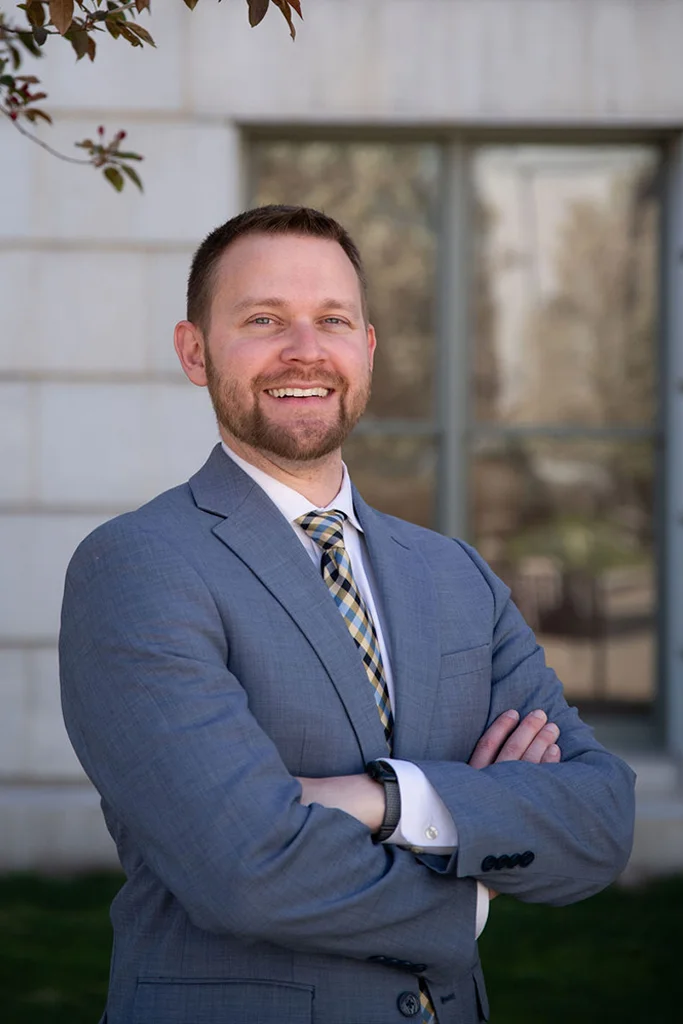
Reid DeChant built his practice on the kind of trial experience that most private defense attorneys do not accumulate. As a former public defender, Reid handled high volumes of criminal cases across Jefferson County, Adams County, Broomfield, and Denver courtrooms, including weapons-related charges at every level of severity. That means he has cross-examined police officers about search and seizure procedures, litigated suppression motions, and taken cases to verdict in front of juries who had to decide what really happened.
Reid is a graduate of the Trial Lawyers College, the program founded by Gerry Spence that trains attorneys in narrative advocacy and genuine connection with juries. That training matters in gun cases because the facts are rarely as clean as police reports make them appear. Whether the issue is an unlawful traffic stop, an improperly obtained search warrant, or a witness whose account does not hold up under cross-examination, Reid brings the kind of courtroom preparation that turns those weaknesses into results.
The firm’s record reflects that preparation. Reid has secured not-guilty verdicts at trial in assault and weapons-adjacent cases, achieved dismissals through effective motion practice, and obtained favorable outcomes through both litigation and negotiation across Jefferson County and the surrounding jurisdictions. He is a member of the National Association of Criminal Defense Lawyers and the Colorado Criminal Defense Bar, staying current on evolving defense strategies specific to firearms law. When you hire a Jefferson County gun crimes attorney at DeChant Law, you are not hiring someone who will push you toward a quick plea. You are hiring someone who will actually prepare your defense.
What Happens at the Jefferson County Combined Courts and What to Do Right Now
Gun cases in Jefferson County are filed at the Jefferson County Combined Courts located in Golden at 100 Jefferson County Parkway. Misdemeanor weapons charges are handled at the county court level, while felony firearms charges go through district court. First appearances typically occur within a day or two of arrest, and that early hearing sets the conditions for your release and begins the formal charging process. What your lawyer does before and during that first appearance matters.
One of the most consequential things that happens in gun cases is the initial contact with law enforcement. Anything you say to police about where the weapon came from, whether you knew it was there, or why you had it can be used against you. That does not mean you should be hostile or uncooperative with officers, but it does mean you should stop talking about the substance of your situation and ask to speak with an attorney. That one decision, made correctly in the moment of arrest, preserves your options.
After the arrest, gather everything you can remember about the stop or encounter while it is still fresh. Where were you? What were you doing? Did the officer give a reason for the stop? Was a search warrant obtained, or did police claim consent or another exception to justify the search? These facts feed directly into the most powerful defense tool available in gun cases: the suppression motion. If law enforcement violated your Fourth Amendment rights in obtaining the weapon or other evidence, that evidence can be excluded, and many weapons charges collapse without it.
Do not wait to contact a Jefferson County firearms defense attorney. Bond hearings, charging decisions, and evidence-collection timelines all move quickly after an arrest. An attorney who gets involved early can appear at bond hearings to argue for reasonable conditions, communicate with prosecutors before charges are formally filed, and begin requesting police body camera footage and dispatch records before they are lost or overwritten. Waiting even a few days can cost you access to evidence that might have helped your case.
The Consequences That Gun Convictions Carry Beyond Sentencing
Sentencing is only part of the picture. A felony weapons conviction in Colorado carries collateral consequences that follow you long after any prison sentence or probation term ends. Federal law permanently prohibits anyone convicted of a felony from owning or possessing a firearm, and that prohibition applies regardless of whether Colorado were to ever restore civil rights. For people who hunt, work in security, or simply want to maintain their Second Amendment rights, this consequence is often more significant than the sentence itself.
Employment consequences are significant as well. Many professional licenses, government positions, and private-sector jobs conduct background checks that surface weapons convictions. A conviction can bar you from careers in law enforcement, healthcare, finance, or education. If you hold a Colorado concealed carry permit, a conviction will result in its revocation, and reinstatement is not guaranteed even after completing your sentence.
For non-citizens living and working in Jefferson County, a firearms conviction can trigger immigration consequences including removal proceedings. Federal immigration law treats certain weapons offenses as aggravated felonies or crimes of moral turpitude, categories that can make someone deportable even after years of lawful residency. If you are not a U.S. citizen and you are facing a weapons charge, that dimension of your situation needs to be part of the defense conversation from the very beginning.
Questions About Jefferson County Gun Charges
What is the difference between a misdemeanor and felony gun charge in Colorado?
Colorado classifies weapons offenses across both misdemeanor and felony levels depending on the nature of the charge, the circumstances, and the defendant’s criminal history. Carrying a concealed weapon without a permit is generally a misdemeanor on a first offense, while possession by a prohibited person or possession of a weapon during another crime is typically charged as a felony. Felony weapons charges carry substantially higher sentencing exposure and the permanent loss of firearm rights.
Can police search my car without a warrant if they think I have a gun?
The legality of a warrantless vehicle search depends on the specific circumstances. Police can search a vehicle without a warrant if they have probable cause to believe it contains evidence of a crime, if the driver or passenger consents, or if the search falls within recognized exceptions like a lawful arrest search. However, the mere fact that an officer claims to have seen or suspected a weapon does not automatically justify every search. Suppression motions in Jefferson County courts scrutinize these factual claims carefully, and a successful motion can exclude the weapon entirely.
Does Colorado’s red flag law affect pending criminal gun cases?
Colorado’s Extreme Risk Protection Order law allows courts to temporarily restrict a person’s access to firearms when there is evidence they pose a danger. An ERPO can be issued independently of any criminal proceeding, and a person can face both an ERPO and criminal charges arising from the same set of events. The two proceedings run on separate tracks, but what happens in one can have practical implications for the other. If an ERPO has been filed against you alongside criminal charges, both need to be addressed simultaneously.
What happens if I was legally carrying a concealed weapon but I also got charged with another crime?
Having a valid concealed carry permit does not protect you from weapons-related charges if the firearm was used in connection with another offense. Colorado law allows prosecutors to add weapons enhancement charges when a firearm is present during a crime, even if the weapon was never fired or directly used. These enhancements can significantly increase sentencing ranges. The concealed carry permit itself may also be revoked as a result of the underlying conviction.
I was charged with possessing a firearm after a prior domestic violence conviction. How serious is that?
Federal law makes it a federal crime to possess a firearm after a conviction for a qualifying domestic violence misdemeanor or while subject to a qualifying domestic violence protection order. These are federal charges, meaning they are prosecuted in federal court, not Jefferson County Combined Courts, and federal sentencing guidelines apply. These cases are treated very seriously by federal prosecutors and can result in substantial prison sentences. If you are in this situation, you need a lawyer who understands both the state and federal dimensions of your exposure.
Can a gun charge be expunged or sealed in Colorado?
Colorado allows record sealing for certain criminal convictions, but the eligibility rules vary significantly by offense type. Many felony gun convictions are not eligible for sealing. Charges that were dismissed or resulted in acquittals are generally sealable. If you were convicted of a misdemeanor weapons offense, eligibility depends on the specific charge and your overall criminal history. An attorney can assess whether sealing is available for your situation after the case concludes.
Does Colorado’s open carry law mean I can carry anywhere?
Colorado generally permits open carry of a firearm by those legally entitled to possess one, but there are significant exceptions. Local governments, including Jefferson County municipalities, have authority to regulate open carry in certain public places. Schools, courthouses, polling locations, and establishments with specific posted prohibitions are common restricted zones. Open carry does not protect against a menacing charge if the way you are carrying or displaying the weapon causes another person to fear for their safety.
How long does a gun case typically take to resolve in Jefferson County?
Timelines vary depending on the severity of the charge, whether the case involves multiple co-defendants or related charges, and how contested the defense is. Straightforward misdemeanor cases may resolve in several court appearances over a few months. Felony cases going to trial can take a year or more from arrest through verdict. Jefferson County Combined Courts have their own scheduling rhythms, and a lawyer familiar with that court’s operations can give you a realistic sense of the timeline for your specific situation.
What should I do with a firearm legally registered to me that was seized by police?
If law enforcement seized a firearm that you legally owned, retrieving it is a separate process from resolving the criminal case. Jefferson County courts and the arresting agency have specific procedures for property return, and in many cases the weapon will not be returned until the criminal matter is fully resolved. If you are acquitted or the charges are dismissed, you will typically need to file a formal request for the weapon’s return. If you are convicted of a disqualifying offense, you may not be able to reclaim the firearm legally and arrangements for transfer to a third party may be required.
Will hiring a private defense attorney make a difference compared to a public defender?
Public defenders in Colorado are often experienced and capable attorneys, but they carry extremely high caseloads that limit the time they can dedicate to any single case. Private representation allows your attorney to invest significantly more time in investigation, motion practice, and case preparation. In gun cases where the margin between a suppression motion succeeding or failing can be the difference between charges being dismissed and a felony conviction, that preparation time matters. Reid DeChant’s background as a former public defender means he understands both sides of that dynamic.
Firearms Defense Representation Across Jefferson County and Surrounding Communities
DeChant Law handles gun crimes cases throughout Jefferson County and the broader Denver metro area. Within Jefferson County, that includes clients in Lakewood, Arvada, Wheat Ridge, Golden, Englewood, Littleton, Morrison, Conifer, Evergreen, Indian Hills, Ken Caryl, Edgewater, Mountain View, Westminster (western portions), and the unincorporated communities throughout the foothills. Cases arising from stops and incidents along US-6, C-470, Highway 285, and the I-70 mountain corridor are a regular part of the firm’s practice.
Beyond Jefferson County, the firm serves clients in Denver, Broomfield, Adams County, Arapahoe County, Douglas County, and the surrounding jurisdictions. Whether your case originated at a traffic stop near Red Rocks, at a residence in the Applewood neighborhood, along the commercial strip in Wheat Ridge, or during an incident in the mountain communities west of Denver, DeChant Law is positioned to represent you at the Jefferson County Combined Courts or at any courthouse in the greater metro region.
Speak With a Jefferson County Gun Crimes Attorney Before Your Next Court Date
Gun charges in Colorado do not resolve themselves, and the decisions made early in a case, at bond hearings, in conversations with investigators, in deciding whether to challenge the evidence or seek a negotiated resolution, shape the outcome more than anything that happens later. A Jefferson County gun crimes attorney at DeChant Law will review the facts of your arrest, identify whether your rights were violated, and give you a clear-eyed assessment of your options.
Reid DeChant has defended clients at the lowest moments of their lives, across courtrooms throughout the Denver metro area, with a track record that reflects genuine preparation and real results. Call DeChant Law to schedule a consultation and get the defense your case requires.