Jefferson County Probation Violation Lawyer
Probation feels like a second chance, until something goes wrong. A missed appointment, a failed drug test, a new arrest, or even a misunderstanding with your probation officer can trigger a violation hearing that puts your freedom at immediate risk. In Jefferson County, probation violation proceedings move quickly and carry real consequences, including the possibility of jail or prison time on the underlying sentence you thought you had resolved. If you are dealing with a probation violation allegation in Jefferson County, the window to act is narrow, and the stakes are not abstract.
What makes probation violations different from the original criminal charge is that the rules change. You do not get the same constitutional protections that applied at trial. The prosecution does not need to prove the violation beyond a reasonable doubt. A judge can find a violation based on a preponderance of the evidence, meaning it is more likely than not that you violated a term of supervision. That lower standard means the margin for error in your defense is smaller, and the attorney handling your case needs to understand exactly what Jefferson County courts expect at these hearings.
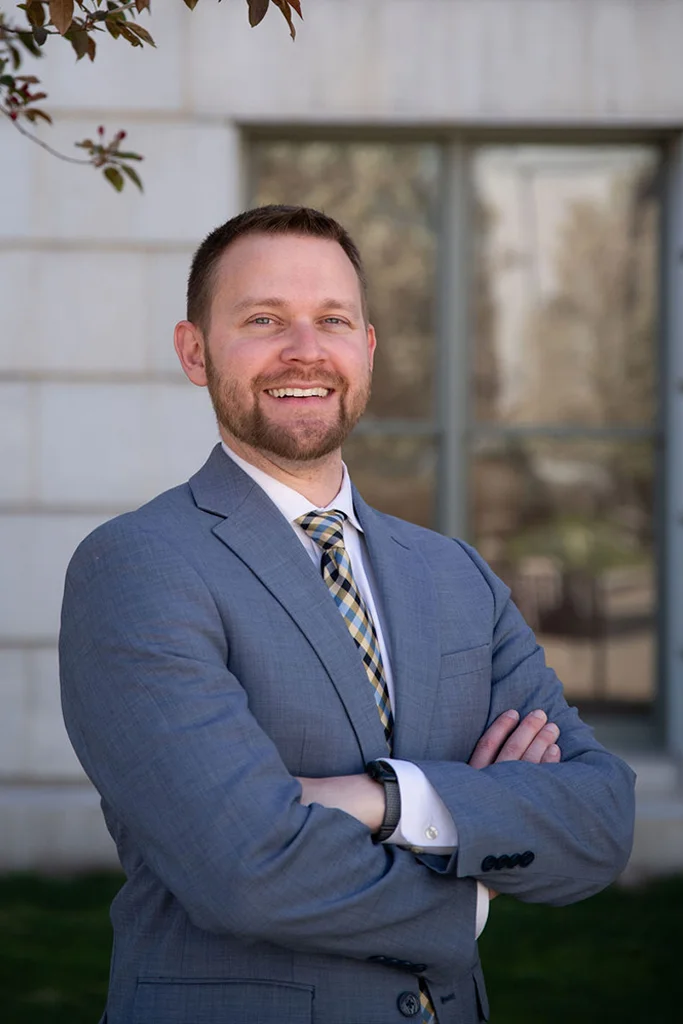
At DeChant Law, Jefferson County probation violation lawyer Reid DeChant approaches these hearings the same way he approaches any criminal proceeding: by building a genuine understanding of what happened, developing a clear narrative, and advocating forcefully for the client in front of the judge. Reid’s background as a former public defender in Colorado courts, combined with his training at the Trial Lawyers College, gives him a foundation that goes well beyond procedural competence. He knows how Jefferson County judges think about probation violations, and he knows how to give clients their best chance of avoiding revocation.
What Actually Triggers a Probation Violation in Jefferson County
Probation conditions in Colorado are set by the sentencing judge and can cover a wide range of requirements. Some conditions are standard across nearly every case. Others are tailored to the specific offense or offender. A violation can be alleged any time probation supervision believes a condition has not been met, and it does not take a new criminal arrest to set this process in motion.
- Missed check-ins or office appointments: Failing to report to your probation officer as scheduled is one of the most common technical violations alleged in Jefferson County. Life circumstances like work conflicts, transportation problems, or medical issues can create missed appointments that quickly escalate into formal violation proceedings.
- Failed or dilute drug or alcohol tests: Many probation sentences in Jefferson County include random urinalysis or alcohol monitoring requirements. A positive test, a dilute sample, or a missed test date can each independently trigger a violation allegation, regardless of the underlying offense.
- New criminal charges: A new arrest, even if charges are later dropped, typically prompts the probation officer to file a complaint with the court. The new arrest does not need to result in a conviction for the probation violation to proceed separately.
- Failure to complete required programs: Courts in Jefferson County frequently require probationers to complete substance abuse treatment, domestic violence therapy, community service, or other programming. Missing deadlines or being discharged from a program can constitute a violation.
- Unpaid fines, fees, or restitution: Financial conditions are common in Colorado sentences. While courts must consider ability to pay, ongoing failure to make payments or complete required community service hours can support a violation finding.
- Unauthorized travel or contact violations: Leaving the state without permission, contacting a protected person in violation of a no-contact order, or traveling to restricted locations are all recognized bases for a violation complaint in Jefferson County courts.
- Association with prohibited individuals: Certain probation orders prohibit contact with specific people or with individuals who have criminal histories. These restrictions can be difficult to navigate in practice, and violations can occur even inadvertently.
How Probation Violation Hearings Work at the Jefferson County Justice Center
Jefferson County criminal cases, including probation violation proceedings, are handled at the Jefferson County Justice Center in Golden. The process begins when a probation officer files a complaint with the court or when law enforcement makes a new arrest. From that point, a judge may issue a warrant for your arrest or a summons requiring you to appear. If a warrant is issued, you can be held in the Jefferson County Detention Facility without bond, depending on the judge’s assessment of the violation and your history on supervision.
The violation hearing itself is not a jury trial. A judge decides whether the violation occurred, and the standard of proof, as noted, is lower than what applies in criminal trials. You do have the right to be represented by an attorney, to present evidence, and to cross-examine the witnesses against you. These rights matter enormously. A probation officer’s testimony can be challenged. Documentation of your compliance efforts can be introduced. Medical records, employment records, or evidence of extenuating circumstances can shift how the judge views what happened.
If the court finds a violation, the judge then decides the sanction. Options range from a warning or modification of conditions, to a period of incarceration, to full revocation of probation and imposition of the original suspended sentence. In Jefferson County, judges have broad discretion at this stage. An attorney who knows how to present a compelling case for leniency, including evidence of rehabilitation, compliance history, and personal circumstances, can make a genuine difference in the outcome. This is not the moment to simply show up and hope for the best.
One procedural reality worth understanding: in Colorado, probation violations are governed by statute and by the Colorado Rules of Criminal Procedure. The rules allow hearsay evidence at violation hearings that would not be admissible at trial. This means the record against you can include things like probation officer notes, treatment provider reports, and testing lab results presented through testimony. Knowing how to respond to that evidence, and how to challenge its reliability or context, requires someone who has actually handled these hearings in Colorado courts.
Why DeChant Law Handles Probation Violations Differently
Reid DeChant’s time as a Colorado public defender meant handling not just trials, but the full arc of criminal representation, including violation hearings, sentencing modifications, and the ongoing advocacy that follows initial conviction. That experience across Denver, Broomfield, and Adams County courtrooms built a practical understanding of how Colorado probation systems actually operate, not just how they are described in statute. Working with a Jefferson County probation violation attorney who understands the gap between what conditions say and how compliance is actually measured can change the trajectory of your case.
Reid’s training at the Trial Lawyers College, an intensive program founded by Gerry Spence, shapes how he presents any case in front of a judge. Probation violation hearings often come down to credibility and context. Why did the violation happen? What has the client done since? What does the judge need to hear to choose modification over revocation? These are narrative questions as much as legal ones. Reid builds arguments that answer those questions in ways that resonate, not arguments that simply recite compliance data without meaning.
DeChant Law also maintains membership in the National Association of Criminal Defense Lawyers and the Colorado Criminal Defense Bar. These connections keep Reid current on developing legal strategies and case law relevant to post-conviction proceedings in Colorado. The firm’s case results include dismissed charges, not-guilty verdicts, and resolved proceedings across Jefferson County, Douglas County, Arapahoe County, and Adams County, demonstrating a consistent record across Colorado’s Front Range courts. For someone facing probation revocation, that track record in the courtroom matters.
What To Do If You Have Been Accused of a Probation Violation in Jefferson County
The first thing to understand is that the process has already started the moment a violation is alleged. Whether your probation officer has filed a complaint or you have received a notice to appear, the timeline is running. Do not wait to contact a Jefferson County probation violation attorney. There is often a brief window before a court date where the nature of the hearing, and sometimes the terms of your continued supervision pending that hearing, can be influenced by early legal action.
Gather any documentation you have that relates to the alleged violation. If the complaint involves a missed appointment, do you have records showing a work conflict, medical emergency, or transportation failure? If it involves a failed drug test, are there prescription medications or medical conditions that could explain the result? If it involves an unpaid fine, do you have documentation of your financial circumstances? This kind of evidence does not always reverse a violation finding on its own, but it shapes how the judge understands what happened and what sanction is appropriate.
Do not communicate directly with your probation officer about the alleged violation without speaking to an attorney first. Statements you make to your probation officer can be used at your hearing. Probation officers are not your advocates; they are agents of the court with their own reporting obligations. Anything you say about the alleged violation can become part of the record the court relies on.
Common mistakes in Jefferson County violation proceedings include appearing at the hearing without representation, attempting to negotiate directly with the probation department without understanding what the court actually has discretion to offer, and failing to present any mitigating evidence at the disposition phase. Even where a violation cannot be successfully contested, the difference between a modification and full revocation often depends entirely on what the attorney presents at the sanction phase of the hearing.
Questions About Probation Violations in Jefferson County
Can I be arrested before my violation hearing in Jefferson County?
Yes. When a probation violation complaint is filed, the court may issue either a summons or an arrest warrant. If a warrant issues, you can be taken into custody and held at the Jefferson County Detention Facility. The judge has discretion whether to set bond during the violation proceedings, and in some cases, defendants are held without bond until the hearing is resolved.
Do I have the right to a jury trial on a probation violation?
No. Probation violation hearings in Colorado are decided by a judge, not a jury. This is one of the significant procedural differences from the original criminal case. The judge who handles your violation may or may not be the same judge who sentenced you to probation.
What happens if my probation is revoked?
If the court revokes probation, the judge can impose the sentence that was originally suspended when you were placed on probation. Depending on the original charge, that could mean county jail time or a sentence to the Colorado Department of Corrections. In some cases, the judge imposes a modified sentence shorter than the original maximum. The outcome depends heavily on the circumstances of the violation and how the hearing goes.
Can the violation be dismissed if the underlying new charge is dropped?
Not automatically. A new criminal charge that is later dismissed does not automatically resolve the probation violation that was triggered by the same arrest. The violation is a separate proceeding, and the court can still find that the conduct underlying the arrest constituted a violation even if the criminal case did not result in a conviction. However, a dismissal of the new charge is relevant evidence that your attorney can use at the violation hearing.
What is the difference between a technical violation and a substantive violation?
A technical violation involves failing to comply with a condition of probation, such as missing an appointment or failing to pay fees, without committing a new crime. A substantive violation involves a new criminal offense. Courts and probation officers often treat these differently in terms of severity, but both can result in revocation if the judge decides that is appropriate given the circumstances.
Can I be violated for a failed drug test if the substance was legally prescribed to me?
This is a more complicated situation than many people realize. A positive test for a legally prescribed medication may or may not constitute a violation depending on how your probation conditions are written and whether your prescription was disclosed to probation supervision. Some probation agreements require advance disclosure of all medications. If you have a valid prescription but did not disclose it to your probation officer, you may still face a violation allegation that needs to be addressed at a hearing.
Does a probation violation show up separately on my criminal record in Colorado?
The violation proceeding itself is part of your existing case record rather than a separate criminal conviction. However, the outcome of the proceeding, including any revocation and imposition of a sentence to incarceration, becomes part of your record in the context of that case and can affect how future courts view your background.
Can I request early termination of probation instead of fighting a violation?
In some situations, where compliance has been strong and the violation is minor, there may be grounds to seek early termination or modification of probation conditions rather than simply defending against the violation as filed. Colorado courts have authority to modify or discharge probation before the full term is complete. Whether this is a viable strategy depends on the facts of your specific case and the judge’s history with your file.
How long do Jefferson County probation violation hearings typically take to resolve?
The timeline varies depending on the nature of the alleged violation and the court’s docket. Straightforward technical violations can sometimes be resolved within a few weeks. Cases involving new criminal charges may not be heard until those charges are at least partially resolved. During this period, your supervision status and any bond conditions continue to apply.
What if my probation officer gave me incorrect information about my reporting requirements?
Miscommunication between probation officers and probationers is more common than the system tends to acknowledge. If you followed instructions from your probation officer that turned out to be incorrect, or if conditions were never clearly explained to you in writing, that context is relevant to the violation hearing. Documentation of what you were told, including emails, letters, or records of in-person conversations, can support an argument that the violation was not willful or was the result of a breakdown in communication rather than intentional noncompliance.
Serving Jefferson County Probation Clients Across the Front Range
DeChant Law represents clients facing probation violation proceedings throughout Jefferson County and the surrounding region. Within Jefferson County itself, the firm serves clients from Lakewood, Golden, Arvada, Wheat Ridge, Littleton, Edgewater, Evergreen, Morrison, Conifer, and the communities throughout the foothills corridor including Genesee, Kittredge, and Indian Hills. The Jefferson County Justice Center in Golden is the primary venue for these proceedings, and familiarity with that courthouse and the judges who preside there matters in practice.
Beyond Jefferson County, DeChant Law handles probation violation cases in Denver County, Arapahoe County, Adams County, Douglas County, and Broomfield County. Clients in Aurora, Westminster, Thornton, Commerce City, Englewood, Centennial, Parker, and Castle Rock have all worked with the firm on post-conviction matters. Reid’s background as a public defender covered multiple Front Range jurisdictions, which means he has worked in the courtrooms and alongside the judicial officers across this entire region.
Talk to a Jefferson County Probation Violation Attorney Before Your Hearing
A probation violation hearing is not an administrative formality. It is a legal proceeding with real consequences, and the person across the table from you will be a prosecutor who has done this many times before. Working with a Jefferson County probation violation attorney who has actual Colorado courtroom experience, and who will treat your situation as something that deserves serious preparation, changes your position at that hearing in ways that matter. Reid DeChant at DeChant Law handles these cases with the same focus and attention he brings to felony trials. Contact DeChant Law to discuss your situation and understand what your options actually look like before you walk into that courtroom.