Arapahoe County Gun Crimes Lawyer
Firearms charges in Arapahoe County move fast. From the moment of an arrest, law enforcement begins building a case, evidence gets catalogued, and the Arapahoe County District Attorney’s Office starts making charging decisions that can follow a person for decades. An Arapahoe County gun crimes lawyer who understands how these cases are constructed, and more importantly how they can be challenged, gives you a real chance at a different outcome.
Colorado gun laws are layered. State statutes interact with federal law in ways that can transform a single incident into multiple overlapping charges. A firearm found during a traffic stop near I-225 or a weapons complaint arising in Aurora’s residential corridors can trigger charges ranging from simple possession violations to felonies carrying mandatory prison time. The firearm itself is rarely the whole story. Where it was found, how the stop or search happened, who owns the registered weapon, and what the person’s criminal history looks like all shape what charges get filed and how they proceed through the Eighteenth Judicial District.
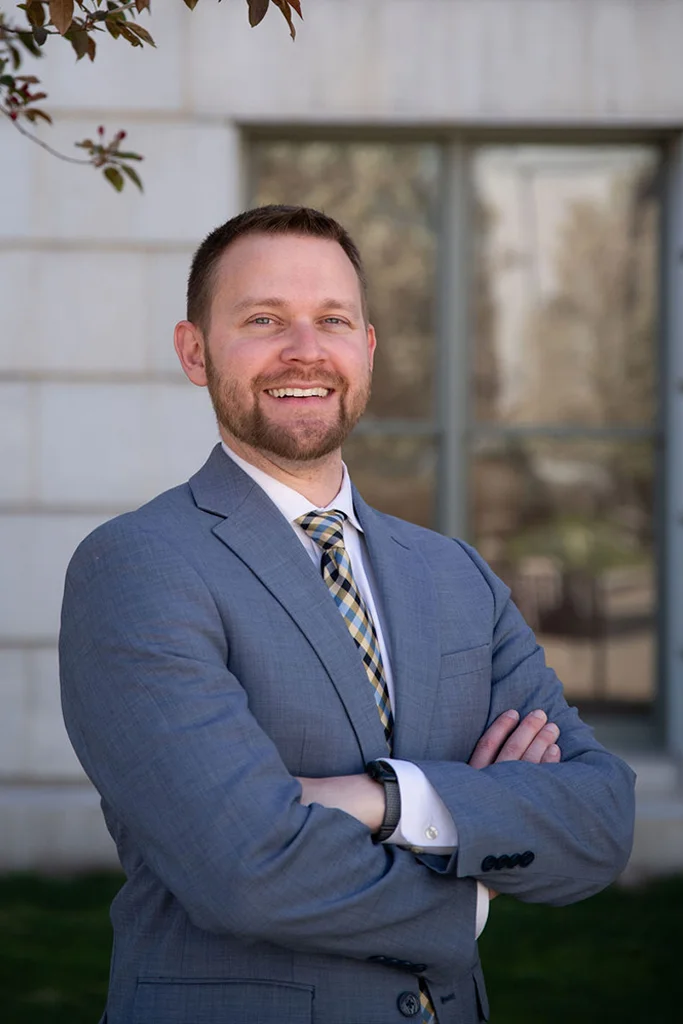
DeChant Law represents clients facing weapons charges throughout Arapahoe County and the surrounding jurisdictions. Reid DeChant brings a background as a former public defender, where he handled high volumes of cases in Colorado courtrooms across multiple counties, to every firearms defense matter he takes on. That courtroom depth matters in gun cases, where procedural and constitutional arguments can decide whether evidence is even admissible.
What Arapahoe County Gun Charges Actually Look Like
Gun crimes in Colorado rarely fit a single profile. Some clients are lawful gun owners who crossed a legal line they didn’t fully understand. Others face charges based on evidence gathered through stops or searches that may not have been constitutionally sound. Still others are confronting allegations tied to another underlying offense, where a firearm’s presence elevates the severity of an already serious charge.
- Illegal possession by a prohibited person: Colorado law prohibits firearm possession by individuals with prior felony convictions, certain domestic violence convictions, and individuals subject to certain restraining orders. Charges under this category are felonies and can intersect with federal law, which has its own prohibited person framework under 18 U.S.C. 922(g).
- Concealed carry violations: Colorado has a permitting system for concealed carry. Carrying a concealed handgun without a valid permit, or carrying in prohibited locations such as schools, courthouses, or government buildings, can result in misdemeanor or felony charges depending on the location and circumstances.
- Unlawful discharge of a firearm: Firing a weapon in a populated area or in circumstances that endanger others is a distinct criminal offense in Colorado. These cases often arise from domestic disputes, altercations near nightlife venues, or incidents in densely populated Aurora neighborhoods.
- Possession of an illegal weapon or modification: Certain weapon types and modifications are restricted under Colorado and federal law, including short-barreled rifles and shotguns without proper federal registration, and devices that convert semi-automatic weapons to automatic fire. Federal charges in these categories are serious and prosecuted in federal court, not the Arapahoe County courthouse.
- Menacing with a weapon: Using or threatening to use a firearm to place another person in fear of imminent harm is charged as felony menacing in Colorado. Domestic violence designations attach frequently in these cases, adding collateral consequences that extend beyond the criminal sentence.
- Weapons charge enhancements on other offenses: Colorado law allows prosecutors to seek enhanced sentences when a firearm was used or present during the commission of another crime, such as assault or robbery. These enhancements can significantly increase potential prison exposure and complicate plea negotiations.
- Straw purchase and transfer violations: Purchasing a firearm on behalf of someone who is legally prohibited from owning one is a federal offense. These cases often arise from investigations that start locally but escalate to federal prosecution with substantially harsher sentencing guidelines.
What to Do Immediately After a Weapons Arrest in Arapahoe County
The hours after a gun-related arrest carry more weight than people typically realize. Statements made at the scene or during booking frequently become central evidence for prosecutors. Exercising the right to remain silent is not just a legal formality in these cases; it is often the single most consequential decision a person makes in the first 24 hours. Anything said to law enforcement about where the firearm came from, who it belongs to, or why it was present can and will be used against you.
Gun cases in Arapahoe County are filed and prosecuted through the Eighteenth Judicial District, with the courthouse located in Centennial. Arraignments typically occur within days of an arrest, and bond hearings happen quickly. Having a gun crimes attorney in Arapahoe County present at the earliest hearings can affect bond conditions, particularly in cases involving domestic violence allegations where courts frequently impose no-contact orders and weapon surrender requirements as conditions of release.
One of the most common mistakes in weapons cases is assuming that ownership or a permit resolves the matter. A lawful gun owner can still face valid charges depending on where they were, whether the permit applied to that jurisdiction, or whether the manner of carry complied with Colorado law. Gather any documentation related to your firearm purchase, any concealed carry permit you hold, and any records relevant to how and where the encounter with law enforcement occurred. Those details become material for evaluating whether the stop, search, or seizure met constitutional requirements.
Colorado has its own red flag law that allows law enforcement or family members to petition a court for an extreme risk protection order, which can result in firearm seizure without a criminal conviction. If you are subject to such an order, there are statutory procedures for challenging it and seeking return of confiscated weapons. Missing the hearing window can result in a prolonged or permanent loss of firearms rights independent of any criminal case.
Do not attempt to retrieve a seized firearm from law enforcement storage on your own without legal guidance. The process for recovering weapons seized as evidence or subject to court orders requires proper procedural steps, and getting this wrong can create additional legal exposure.
Why Constitutional Arguments Decide Many Arapahoe County Gun Cases
A substantial number of gun charges in Colorado rest on evidence discovered during a traffic stop, a search incident to arrest, or a warrant-based search. Each of those scenarios has its own constitutional requirements. When law enforcement does not meet those requirements, the evidence collected, including the firearm itself, may be suppressible. A successful suppression motion in a weapons case can gut the prosecution’s entire case, sometimes resulting in dismissal before trial ever occurs.
The Fourth Amendment governs searches and seizures, and Colorado courts apply it seriously. Traffic stops must be based on reasonable articulable suspicion of a traffic violation or crime. Searches of vehicles or persons require either consent, a valid warrant, or an established exception such as plain view, exigent circumstances, or a search incident to lawful arrest. Each exception has limits, and law enforcement does not always stay within those limits. An Arapahoe County gun crimes attorney who has spent real time in Colorado courtrooms cross-examining police officers knows where the cracks in police procedure often appear and how to expose them.
Chain of custody issues, evidence handling errors, and questions about whether a weapon was actually operational are also legitimate avenues of defense in specific charge categories. In cases involving illegal modifications or weapon type classifications, the technical definition of what constitutes the prohibited item matters, and challenging the characterization of the weapon itself can sometimes undermine the charge entirely.
Reid DeChant completed training at the Trial Lawyers College, a program founded by Gerry Spence that focuses on authentic, story-driven courtroom advocacy. That approach matters in gun cases that go to trial. Juries in Arapahoe County, like juries anywhere, make decisions based on how they understand a person’s story alongside the legal facts. A defense built only on procedural motions but lacking a coherent human narrative leaves something on the table. Reid builds both dimensions into every case he takes.
Choosing a Gun Crimes Attorney for Arapahoe County Cases
DeChant Law built its practice around criminal defense in Denver and the surrounding Front Range counties. Reid DeChant’s background as a former public defender means he handled criminal cases across Broomfield, Adams, Denver, and Arapahoe County courtrooms at volume, defending clients on charges ranging from traffic matters to homicides. That experience gave him working familiarity with how different prosecutorial offices approach their cases, the kinds of offers they extend, and the situations where taking a case to trial produces better results than any available plea.
Reid’s peer recognitions include membership in the National Association of Criminal Defense Lawyers and the Colorado Criminal Defense Bar. These aren’t honorary positions. They reflect active engagement with the defense bar and access to cutting-edge legal strategy discussions happening nationally. Gun law, in particular, is an area where federal and state law interact dynamically, and staying current on how courts are interpreting Second Amendment doctrine and search-and-seizure precedent is essential for effective advocacy.
The firm’s case results reflect this experience, including a jury verdict of Not Guilty on a DUI matter out of Arapahoe County, as well as multiple dismissed criminal cases across Adams County, Jefferson County, Douglas County, and Broomfield County. Past outcomes don’t predict what will happen in your case, but they reflect a genuine record of contesting charges rather than simply managing them.
Questions About Arapahoe County Gun Charges, Answered
Can a weapons charge in Arapahoe County be reduced or dismissed?
Yes, in many cases it can. The specific outcome depends on the nature of the charge, the strength of the evidence, the defendant’s prior record, and whether there are viable constitutional challenges to how the evidence was gathered. Suppression of an illegally obtained firearm can result in full dismissal. In cases where the evidence is solid, negotiated reductions to lesser charges are sometimes possible.
Does Colorado’s background check system affect how gun charges are prosecuted?
Colorado has a universal background check requirement for firearm transfers, and the state maintains its own background check database in addition to the federal system. Charges related to providing false information on a background check form are federal felonies, and Colorado prosecutors sometimes coordinate with federal authorities when background check fraud is suspected alongside a state-level weapons charge.
What happens to my right to own firearms after a gun conviction in Colorado?
A felony conviction in Colorado, or a conviction under certain domestic violence statutes, results in permanent loss of firearm rights under both state and federal law. Even some misdemeanor domestic violence convictions trigger federal prohibition. This makes fighting weapons charges aggressively at the outset critically important, because a conviction can affect firearm ownership rights for life.
I have a valid concealed carry permit. Does that protect me from a weapons charge?
A permit helps in some situations but does not provide blanket protection. You can still face charges if you carry in a prohibited location, if your permit has lapsed, or if the circumstances of your carry fall outside what the permit authorizes. The permit is relevant evidence in your defense, but it doesn’t automatically resolve a charge.
What is the difference between a state gun charge and a federal gun charge?
State charges are prosecuted by the Arapahoe County District Attorney in the Eighteenth Judicial District courtroom in Centennial. Federal charges are prosecuted by the U.S. Attorney’s Office in federal court, which sits in Denver. Federal gun charges often carry mandatory minimum sentences under federal law and are prosecuted by a different office with different resources and priorities. Certain offenses, such as possession of an unregistered NFA item or possession by a prohibited person with a prior felony, are charged federally even when the incident occurs in Arapahoe County.
If the gun wasn’t mine, am I still charged?
Potentially, yes. Constructive possession is a legal theory under which prosecutors can charge someone with possessing a firearm they did not physically hold, if the prosecution can argue the person had knowledge of the weapon and control over the area where it was found. Passengers in a vehicle where a weapon is discovered, or residents of a home where a firearm is found during a search, are frequently charged under this theory. Challenging constructive possession arguments requires careful examination of the specific facts.
How does a domestic violence designation affect a gun charge?
A domestic violence designation on any charge, including weapons offenses, adds a mandatory layer of consequences. Courts frequently impose firearm surrender orders as a condition of bond in DV cases, independent of whether the underlying charge involves a weapon. A conviction on any domestic violence-designated offense can trigger federal firearm prohibition under the Lautenberg Amendment, even if the charge was a misdemeanor.
Can a juvenile gun charge follow someone into adulthood in Colorado?
Juvenile records in Colorado are generally sealed when a person reaches adulthood, but the sealing process is not automatic and has exceptions. Certain serious weapons offenses adjudicated in juvenile court can have lasting consequences, and the sealing eligibility rules have specific conditions. If you or a family member is facing a juvenile weapons matter, addressing the long-term record implications as part of the case strategy is essential.
How long does a weapons case typically take to resolve in the Eighteenth Judicial District?
Resolution timelines vary considerably based on the complexity of the charge, whether suppression motions are filed, the case backlog in Centennial, and whether the matter goes to trial. Straightforward matters can resolve in a few months. Cases involving contested motions or trial preparation take significantly longer. The process should not be rushed; procedural shortcuts that save time often cost more in the final outcome.
Is it worth hiring a private defense attorney for a gun charge versus taking a public defender?
Public defenders are dedicated attorneys who handle difficult cases, but they carry heavy caseloads that limit the time available for each client. In a weapons case where constitutional challenges, expert analysis of firearm evidence, or a full jury trial may be on the table, having a private attorney who can dedicate focused attention to your case can produce materially different results. The decision to hire private counsel is worth making as early as possible.
Representing Gun Crimes Clients Across Arapahoe County and the Surrounding Region
DeChant Law represents clients facing firearms charges throughout Arapahoe County, including in Aurora, Centennial, Englewood, Littleton, Sheridan, Glendale, Cherry Hills Village, Greenwood Village, and the unincorporated communities throughout the county’s eastern and southern reaches. Cases originating in Aurora’s Gateway Park district, along the Hampden Avenue corridor, near Buckley Space Force Base, or in the residential neighborhoods south of Smoky Hill Road all fall within the Eighteenth Judicial District and can be handled by our office.
Beyond Arapahoe County, DeChant Law extends its criminal defense representation into Denver County, Jefferson County, Douglas County, Adams County, and Broomfield County. Whether a weapons case originates near the Fiddler’s Green corridor in Greenwood Village, along Parker Road in Centennial, or in the commercial areas near Iliff Avenue in Aurora, our firm has the geographic familiarity and courtroom experience across these jurisdictions to represent you effectively.
Talk to an Arapahoe County Gun Crimes Attorney Before the Case Gets Further Along
The earlier a defense attorney is involved in a weapons case, the more options exist. An Arapahoe County gun crimes attorney can engage before formal charges are filed, evaluate whether a suppression challenge is viable, advise on how to handle initial court appearances, and start building the factual and legal foundation that gives you the best path forward. Waiting until a plea offer is on the table means decisions are being made under pressure and with fewer alternatives.
DeChant Law handles firearms cases with the same direct, client-centered approach that has produced results across Colorado’s Front Range courts. Reid DeChant will sit down with you, go through what happened, and give you an honest assessment of where things stand and what the options are. Contact DeChant Law to schedule a consultation.