Lakewood Probation Violation Lawyer
Probation is supposed to be the alternative to incarceration, a chance to stay home, keep working, and rebuild. But the moment a probation officer files a complaint or a judge issues a summons, everything you worked to hold together is suddenly at risk again. A single alleged violation, whether it is a missed appointment, a failed drug test, or a new arrest, can bring you back before a judge who now has the power to impose the sentence that was suspended when probation was granted. For Lakewood residents navigating Jefferson County’s probation system, that exposure is real and the timeline can move fast. When you need a Lakewood probation violation lawyer, having someone in your corner who understands how these hearings actually work in Jefferson County District Court is not optional, it is essential.
Probation revocation proceedings are different from the original criminal trial. You do not have the same constitutional protections. The prosecution does not need to prove a violation beyond a reasonable doubt. A judge can find a violation based on a preponderance of the evidence, which is a significantly lower standard. That means a probation violation hearing is in many ways a harder fight than the underlying case, because the rules are tilted differently and the stakes are just as high. Understanding those procedural realities before you walk into that courtroom is the first step toward mounting any meaningful defense.
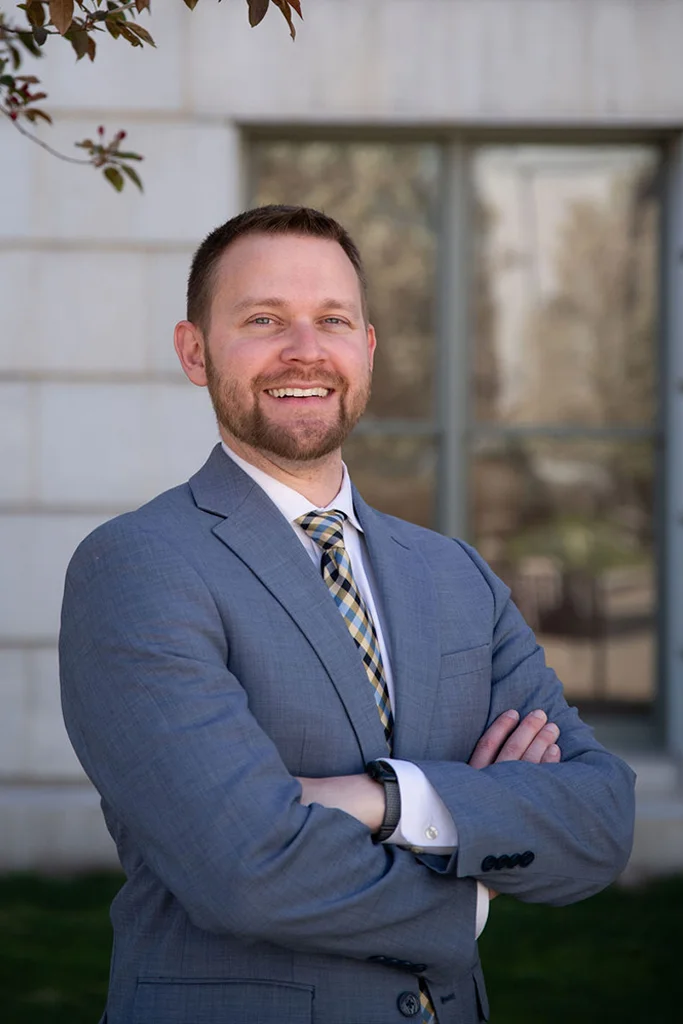
DeChant Law handles probation violation cases for clients in Lakewood and throughout Jefferson County. Attorney Reid DeChant brings former public defender experience from courtrooms across the Denver metro region, including Jefferson County, and understands how probation officers, prosecutors, and judges approach these hearings. If a violation complaint has been filed against you or you have reason to believe one is coming, the time to build your response is now, not the morning of the hearing.
What Probation Violations in Jefferson County Actually Look Like
Probation in Colorado comes with a list of conditions set at sentencing. Some are standard across virtually every case, others are tailored to the specific offense and circumstances of the defendant. Violating any single condition, even one that seems minor, can trigger a revocation complaint. The Jefferson County Probation Department supervises thousands of offenders across Lakewood, Wheat Ridge, Arvada, Golden, Littleton, and surrounding communities. Probation officers carry large caseloads, and when a violation is reported, the department has an obligation to act on it. That process moves quickly and the results of inaction can be severe.
- Missed Check-Ins: Failing to report to a probation officer as scheduled is one of the most common technical violations. Under Colorado law, courts treat this seriously because supervision contact is a core condition of nearly every probation order, and even a single missed appointment can be used to support a revocation motion.
- Failed or Refused Drug and Alcohol Tests: Colorado probation orders frequently include random urinalysis requirements. A positive test for any controlled substance, including alcohol if prohibited, or a refusal to submit to testing, can be filed as a violation regardless of whether new criminal charges result.
- New Criminal Arrest or Charge: Being arrested for a new offense while on probation is classified as a substantive violation and almost always triggers immediate action. The new arrest does not need to result in a conviction for the probation violation to proceed.
- Failure to Complete Court-Ordered Programs: Many Jefferson County probation orders require completion of specific treatment programs, including alcohol education, domestic violence counseling, community service hours, or mental health treatment. Missing sessions, being discharged from a program, or failing to enroll constitutes a violation.
- Travel Violations: Leaving Jefferson County or the state of Colorado without prior written approval from a probation officer violates standard travel conditions. This includes situations where a defendant traveled for legitimate work or family reasons without obtaining the necessary permission.
- Failure to Pay Fines, Fees, or Restitution: Courts can find a violation based on non-payment of court-ordered financial obligations, though Colorado courts must consider whether the failure to pay was willful before revoking probation solely on this basis.
- Contact with Prohibited Persons: In domestic violence, harassment, and certain other cases, probation conditions prohibit contact with specific individuals. Any communication, whether in person, by phone, or through social media, can be charged as a violation.
What to Do When You Receive a Probation Violation Notice in Lakewood
If your probation officer has informed you that a complaint is being filed, or if you have received a summons or been told to appear at Jefferson County District Court on a probation violation matter, your first priority is securing legal representation before that hearing date. Jefferson County District Court handles felony probation matters at the courthouse in Golden, which is the primary venue for serious probation revocation proceedings involving Lakewood defendants. Misdemeanor probation violations may be handled in Jefferson County courts at various locations depending on the originating case. Knowing where your case is being processed and what judge is assigned matters for building your response strategy.
Gather everything relevant before meeting with an attorney. This means collecting documentation that might explain the alleged violation: medical records if an illness prevented you from checking in, proof of employment conflicts, evidence of enrollment in required treatment programs, receipts for any payments made toward fines or restitution, and any written communication with your probation officer. Even if you believe the violation cannot be disputed on its merits, context and mitigation matter enormously at these hearings. Judges have discretion in what they impose after a violation finding, and presenting a compelling picture of your overall compliance and circumstances can make the difference between continued probation and a prison sentence.
Do not contact your probation officer to explain yourself without first speaking with an attorney. Statements you make to a probation officer can be used against you in the revocation hearing. This is not the moment to try to smooth things over informally. The violation complaint has already been set in motion, and anything you say from this point forward should be made with the guidance of a defense attorney who knows what arguments are viable in Jefferson County. One of the most common mistakes people make in this situation is attempting to resolve it through conversation with their PO rather than treating it as the formal legal proceeding it is.
How Revocation Hearings Differ from Criminal Trials in Jefferson County
Probation revocation is a contested hearing, not a trial, and the differences have real consequences for how a defense is built. In a Colorado revocation hearing, the standard of proof is preponderance of the evidence rather than beyond a reasonable doubt. That lower threshold means the state has an easier path to a violation finding. Additionally, certain evidentiary rules that protect defendants at trial are relaxed at revocation hearings. Hearsay evidence may be admissible in ways it would not be at a criminal trial, which means probation officers and others can sometimes testify to things they did not personally witness.
That said, defendants retain meaningful rights at revocation hearings. You have the right to be represented by counsel, the right to present evidence and call witnesses, and the right to cross-examine the witnesses against you. A Lakewood probation violation attorney who understands how Jefferson County judges approach these hearings can use those rights strategically. Challenging the reliability of drug test results, questioning whether a technical violation was willful, presenting evidence of overall compliance, and advocating for alternative outcomes like probation modification rather than revocation are all legitimate approaches that require advance preparation.
Outcomes at revocation hearings are not binary. A judge who finds a violation has options ranging from reinstating probation with a warning, to modifying conditions such as adding treatment requirements or extending the probation period, to revoking probation and imposing all or part of the original suspended sentence. At DeChant Law, Reid’s approach in these hearings is to go into the courtroom with a clear argument for why revocation is not the appropriate outcome, backed by documentation and a factual narrative the judge can actually credit.
Why DeChant Law Is the Right Choice for Lakewood Probation Violation Defense
Reid DeChant built his criminal defense practice on a foundation of public defender work in courts across the Denver metro area, including Jefferson County. That background means he has appeared in Jefferson County courtrooms on a high volume of cases, developed familiarity with local judicial temperament and prosecutorial tendencies, and handled cases spanning from traffic offenses to felony-level charges. The experience of defending clients at both the trial level and in post-conviction proceedings gives Reid a perspective that is valuable in probation violation cases, where courtroom presence and credibility with the bench can influence outcomes as much as legal argument.
Reid is a graduate of the Trial Lawyers College, the training program founded by legendary attorney Gerry Spence, which focuses on authentic storytelling and human connection in the courtroom. In probation revocation hearings, that approach translates into a presentation that goes beyond the technical legal arguments and addresses who the client is, what they have done to comply, and why continued probation serves the goals the original sentence was designed to achieve. Judges making discretion calls in revocation hearings respond to fully developed, credible advocacy, not just procedural arguments.
Reid is a member of the National Association of Criminal Defense Lawyers and the Colorado Criminal Defense Bar, maintaining connections to the broader defense community and staying current with developments in Colorado criminal law including changes in probation enforcement practices and available alternatives to incarceration. Clients consistently describe Reid’s approach as treating them as partners in their own case, with direct communication and clear explanations of every option at each stage. When your probation is at risk, that kind of direct engagement with your specific circumstances matters.
Questions People Ask About Probation Violations in Lakewood
Can a probation violation send me to prison even if my original sentence was suspended?
Yes. When a judge grants probation, the prison or jail sentence is typically suspended on the condition that you comply with probation terms. If the court finds you violated those terms, the judge can impose all or part of that suspended sentence. For felony probation violations in Jefferson County, that can mean prison time through the Colorado Department of Corrections.
Do I get a hearing before my probation is revoked?
Colorado law requires a revocation hearing before probation can be revoked. You have the right to contest the alleged violation at that hearing and present evidence on your behalf. In some cases, a defendant may be held in custody pending the hearing, depending on the nature of the alleged violation and whether the judge issued a warrant.
What is the difference between a technical violation and a substantive violation?
A technical violation involves breaking a condition of probation without committing a new crime, such as missing a check-in or failing a drug test. A substantive violation involves being charged with a new criminal offense while on probation. Substantive violations typically result in more aggressive prosecution responses and are harder to defend because the new conduct itself is the violation.
Can my probation violation case be dismissed?
Yes, in some circumstances. If the evidence supporting the violation is insufficient, procedurally flawed, or if the alleged violation can be explained by circumstances outside your control, the court may find that no violation occurred. An experienced probation violation attorney in Jefferson County can evaluate the strength of the revocation complaint and identify viable challenges before the hearing.
What happens if I pick up a new charge in Lakewood while on probation for a Jefferson County case?
A new arrest triggers a probation violation complaint separate from the new criminal case. You will be dealing with two legal proceedings simultaneously: the new criminal matter and the revocation hearing on your existing probation. These cases need to be managed in coordination, because how you handle one can affect the other, particularly in terms of what you say and what evidence is introduced at each proceeding.
Can the probation violation hearing happen before my new criminal case is resolved?
Yes. Colorado courts are not required to wait for a new criminal case to be resolved before proceeding with a probation revocation hearing. This creates strategic considerations, because a finding at the revocation hearing could affect how you approach the new case, and admissions made in one proceeding could have implications in the other. Coordinating the defense across both matters is one of the more complex aspects of this situation.
What if I failed a drug test but I am in treatment and trying to address my substance use?
Active participation in treatment and evidence of genuine effort to address substance use issues are exactly the kind of mitigation that can influence a judge’s decision at a revocation hearing. A positive drug test does not automatically result in incarceration. Jefferson County courts have access to a range of alternatives, including modified probation conditions, increased supervision, or residential treatment programs. Documenting your treatment engagement and presenting it effectively at the hearing can shift the outcome.
My probation officer seems to have it out for me. Can I challenge the officer’s credibility at the hearing?
Yes. Cross-examination of the probation officer is one of the tools available to the defense at a revocation hearing. If there are inconsistencies in what the officer documented versus what actually occurred, or if the officer failed to follow proper procedures in filing the complaint, those issues can be raised. The right to confront and cross-examine witnesses applies to these hearings.
Will a probation violation stay on my record permanently?
The probation violation proceeding itself becomes part of your criminal record. Whether the underlying conviction can later be sealed depends on the offense and outcome under Colorado’s sealing statutes. A revocation finding followed by a prison sentence generally makes sealing more difficult or impossible depending on the offense classification. Your attorney can advise you on how the outcome of the revocation hearing affects your long-term record.
How quickly does Jefferson County move on probation violation hearings?
The timeline can vary, but Jefferson County courts move relatively quickly once a violation complaint is filed. If you were taken into custody on a warrant, a hearing may be scheduled within days. If you received a summons to appear, you may have more time, but not much. Regardless of the timeline, the preparation that matters happens before the court date, not on the day of the hearing.
DeChant Law’s Probation Violation Representation Across Lakewood and Jefferson County
DeChant Law represents clients facing probation revocation proceedings throughout Lakewood and the broader Jefferson County area. From the established neighborhoods of Green Mountain and Belmar through the communities of Wheat Ridge, Arvada, Golden, and Edgewater, Reid DeChant works with clients across every part of Jefferson County. The firm also extends its representation to clients in nearby communities including Littleton, Morrison, Evergreen, Conifer, and Ken Caryl, as well as clients in adjacent Denver County and Broomfield County whose probation matters intersect with Jefferson County proceedings. Whether you are serving probation from a case filed in Lakewood’s portion of Jefferson County District Court or from a jurisdiction whose supervision has transferred to Jefferson County, DeChant Law can step into your case at any stage of the revocation process. Clients from Applewood, Mountair, Eiber, Lakewood Hills, and the wider Lakewood metro region have worked with Reid on criminal matters at every level, and that familiarity with the area and its courts is part of what he brings to every probation defense representation.
Speak with a Lakewood Probation Violation Attorney Before Your Hearing Date
A Lakewood probation violation attorney from DeChant Law will review what you have been accused of, what the hearing process looks like in your specific case, and what options exist for contesting the violation or presenting mitigation that changes the outcome. Revocation hearings move faster than most people expect, and the preparation window is often shorter than it seems from the moment you receive notice. Reid DeChant takes a direct, thorough approach to these cases, building a factual and legal response before you ever walk into Jefferson County District Court. Reach out to DeChant Law to schedule a consultation and start working on your defense now.