Lakewood Driver’s License Lawyer
Your driver’s license touches nearly every part of your daily life. Getting to work, dropping kids at school, running errands across Jefferson County, these things depend on your ability to drive legally. When that ability is threatened, whether through a DUI arrest, accumulation of points, a chemical test refusal, or a DMV hearing notice, the clock starts immediately. A Lakewood driver’s license lawyer who understands both the criminal side and the DMV administrative side of Colorado’s license law can be the difference between keeping your driving privileges and losing them entirely.
Colorado’s license system involves two separate processes that can run simultaneously after a DUI or DWAI arrest. The criminal case happens in court. The administrative action against your license happens through the DMV’s Express Consent hearing process. These are not the same proceeding, and winning one does not automatically resolve the other. Most people arrested for DUI in Lakewood, along US-6, Wadsworth Boulevard, or Kipling Street, do not realize that they have a narrow window to request a DMV hearing. Miss that window, and your license may be revoked before your criminal case is even close to resolution.
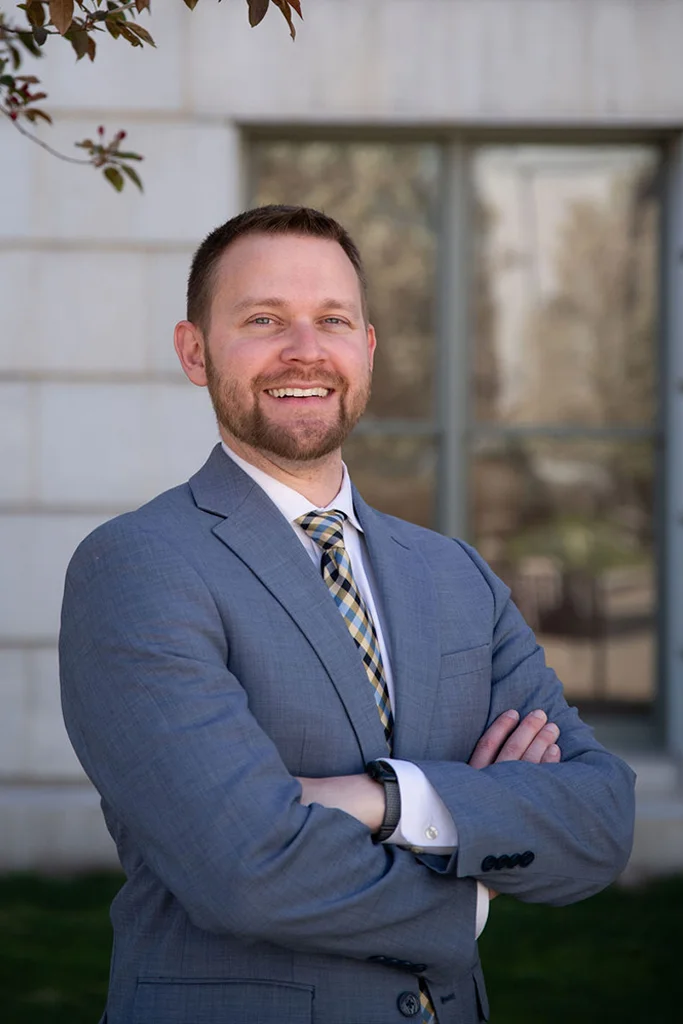
DeChant Law represents clients throughout the Lakewood area in both criminal court proceedings and DMV administrative hearings related to license suspensions and revocations. Attorney Reid DeChant has built a practice specifically focused on the intersection of impaired driving charges and license consequences, and his record in DMV Express Consent hearings reflects exactly how seriously he takes this area of law.
What Puts a Colorado Driver’s License at Risk in Lakewood
- DUI and DWAI Arrests: A DUI or DWAI arrest in Lakewood triggers an Express Consent administrative action that can result in license revocation independent of your criminal case. Under Colorado’s Express Consent law, drivers are deemed to have consented to chemical testing, and a refusal or a test result at or above the legal limit initiates an automatic process through the DMV.
- Chemical Test Refusals: Refusing a breath or blood test in Colorado comes with its own separate set of consequences, including a longer revocation period than a first-offense DUI. The DMV handles refusal cases as a distinct category, and a driver’s license attorney in Lakewood who understands the procedural rules around refusal advisements may find grounds to challenge the revocation.
- Point Accumulation Suspensions: Colorado uses a point system tied to various traffic offenses. Younger drivers face lower point thresholds than adult drivers. Accumulating too many points within a set period triggers a suspension notice from the DMV, and drivers often do not realize how close they are to the threshold until the notice arrives.
- Habitual Traffic Offender Status: Drivers who accumulate multiple serious convictions within a five-year period can be declared Habitual Traffic Offenders under Colorado law, resulting in a lengthy revocation. Offenses like DUI, reckless driving, and hit-and-run can contribute to this designation if they repeat.
- Drug-Related Revocations: A drug conviction, including charges involving marijuana, methamphetamine, or other controlled substances when connected to driving, can trigger license consequences separate from the criminal sentence. Colorado courts and the DMV work in parallel here, and not addressing both tracks can leave a driver without a license even after resolving the criminal case.
- Out-of-State Violations: Colorado shares information with other states through the Interstate Driver’s License Compact. A serious traffic conviction in another state can follow you back to Colorado and affect your license standing here. Drivers who commute or travel frequently along I-70 or across state lines need to understand this connection.
- Failure to Appear or Pay Fines: Missing a court date in Jefferson County or failing to pay traffic fines can result in a hold being placed on your license, sometimes without any prior notice that a suspension is coming. Clearing these holds often involves both the court and the DMV, and the process is not always straightforward.
Why DeChant Law Is the Right Choice for a Lakewood License Case
Reid DeChant’s background as a public defender gave him something rare: volume. He handled an enormous number of cases in Denver, Broomfield, and Adams County courtrooms before building his private practice, which means he has spent significantly more time in front of judges and against prosecutors than many private attorneys accumulate over an entire career. That courtroom experience carries directly into DMV hearings, where procedure, evidence, and officer conduct matter just as much as they do in a criminal trial.
Reid is a graduate of the Trial Lawyers College, an intensive program founded by legendary attorney Gerry Spence focused on authentic advocacy, storytelling, and human connection in the courtroom. His work there shaped a practice built on understanding the full picture of a client’s situation and presenting that picture in a way that resonates with the people making decisions, whether those people are jurors, judges, or DMV hearing officers. This approach reflects throughout DeChant Law’s case results, which include multiple DMV Express Consent actions dismissed on grounds ranging from improper advisements to violations of the two-hour chemical test rule, as well as not-guilty verdicts at trial in DUI and DWAI cases filed in counties throughout the Denver metro area.
Reid holds membership in the National Association of Criminal Defense Lawyers and the Colorado Criminal Defense Bar. These are not incidental credentials. Staying current with the evolving body of Colorado DUI and license law, recent decisions from the appellate courts, changes in DMV hearing procedures, these require active engagement with the defense community. Clients facing license proceedings in Lakewood benefit from that ongoing investment in current, specific knowledge about how these cases are actually decided in Colorado.
What to Do After a License Suspension or Revocation Notice in Colorado
The first thing to understand is that deadlines are real and short. If you were arrested for DUI or DWAI in Lakewood and given an Express Consent advisement, you have a limited number of days from the arrest to request a hearing with the Colorado DMV. Waiting even a few extra days can forfeit your right to contest the revocation. If you were issued a notice of suspension for point accumulation, that notice contains its own deadline for requesting a hearing. These windows do not extend automatically because you hired a lawyer after the deadline passed.
Your criminal case is handled at Jefferson County District Court, located at 100 Jefferson County Parkway in Golden. Jefferson County handles the criminal prosecution for DUI and other traffic offenses occurring in Lakewood. Your DMV administrative case is entirely separate, handled through the Colorado Division of Motor Vehicles under the Department of Revenue. These two tracks require coordination, because what happens at the DMV hearing, including what officers testify to and what documents are introduced, can affect strategy in the criminal case, and vice versa. A Lakewood driver’s license attorney who handles both simultaneously puts you in a far stronger position than trying to manage one track at a time with different counsel.
Gather documentation early. If you were arrested, get the police report and any dashcam or bodycam footage as soon as your attorney requests it. In DMV Express Consent hearings, the hearing officer is looking at whether the stop was lawful, whether the advisement was properly given, whether the test was administered within the required timeframe, and whether the equipment was functioning properly. Evidence gaps or procedural failures in any of those areas can support a motion to dismiss the DMV action. DeChant Law’s case results include multiple Express Consent dismissals based on exactly these kinds of issues, including cases dismissed because the chemical test was not administered within the required window and cases dismissed due to problems with how officers gave the Express Consent advisement.
One common mistake is assuming that resolving the criminal case also resolves the license issue. It does not. A plea to a lesser charge or even an outright acquittal does not automatically restore a license that was revoked through the DMV administrative process. The two systems operate on separate tracks with separate standards of proof, and each requires its own resolution. Overlooking this is one of the most costly errors a driver facing these charges can make.
How Colorado’s Express Consent Law Actually Works in Lakewood Cases
When a law enforcement officer in Lakewood, whether Lakewood Police, Jefferson County Sheriff deputies, or Colorado State Patrol working along US-6 or I-70, arrests a driver for DUI or DWAI, they are required to advise that driver of the consequences of refusing or failing a chemical test. This advisement is what triggers the Express Consent process. If the driver refuses, or if the test result meets the threshold for revocation, the officer typically confiscates the license and issues a temporary driving permit while the DMV administrative process proceeds.
The DMV hearing that follows is not a criminal proceeding, but it functions like one in important ways. The driver or their attorney can cross-examine the arresting officer, challenge the foundation for the traffic stop, question whether the chemical test equipment was properly calibrated and maintained, and raise procedural errors in how the advisement was given. Reid DeChant has obtained dismissals in DMV Express Consent cases on grounds including officers who failed to properly advise drivers of their rights before asking about consent, and cases where the timeline between driving and chemical testing exceeded what Colorado law permits.
One nuance that matters specifically in Jefferson County: Lakewood sits in a jurisdiction where I-70 and US-6 are heavily patrolled, and DUI enforcement operations near Red Rocks and along Colfax Avenue into western Jefferson County generate a significant volume of arrests. The officers involved in these arrests vary in their familiarity with the precise requirements of the Express Consent advisement, and that variation creates opportunities for experienced defense counsel to identify procedural deficiencies that the average driver would never know to look for.
Questions About Lakewood Driver’s License Cases
How long do I have to request a DMV hearing after a DUI arrest in Lakewood?
After a DUI arrest in Colorado, you have a very short window to request an Express Consent DMV hearing. The exact number of days is tied to when you received the revocation notice from the officer. Missing this deadline typically results in automatic revocation taking effect without any hearing. Contact an attorney immediately after an arrest, not days later, because this deadline is one of the most consequential in your entire case.
Can I drive while my license case is pending?
When an officer takes your license after a DUI arrest, they typically issue a temporary driving permit that remains valid for a short period while the DMV process is initiated. If you timely request a hearing, the revocation may be stayed pending the outcome of the hearing. Whether you can continue driving legally during this period depends on requesting that hearing within the required window and the hearing officer’s decision about a stay. An attorney can clarify exactly what your permit covers and for how long.
What is the difference between a license suspension and a license revocation in Colorado?
A suspension is a temporary withdrawal of driving privileges for a defined period, after which the license can typically be reinstated upon payment of fees and satisfaction of any other requirements. A revocation is more serious and involves the termination of driving privileges. Reinstatement after revocation often requires reapplication, additional testing, and sometimes installation of an ignition interlock device. DUI-related revocations in Colorado frequently require ignition interlock installation for a period after reinstatement.
If I win my criminal DUI case, will my license be automatically reinstated?
No. The DMV administrative process and the criminal court process are legally independent. A not-guilty verdict in Jefferson County District Court does not cancel a revocation that was imposed through the DMV hearing process. You can prevail at trial and still lose your license through the administrative track if you did not separately contest the DMV action. This is one of the most important reasons to work with counsel who handles both tracks simultaneously.
What happens to my commercial driver’s license if I get a DUI in Lakewood?
Colorado applies stricter standards to commercial drivers. A DUI or DWAI conviction, or even a first-offense DMV revocation, can result in disqualification from holding a commercial driver’s license for a year or more, even if the underlying incident happened in a personal vehicle. Repeat offenses can result in lifetime disqualification. For anyone who drives commercially, the stakes in a DUI license case are substantially higher than for a standard Class R license holder.
Can I get a restricted license to drive to work while my license is suspended?
Colorado does offer restricted licenses in certain circumstances that allow driving for limited purposes such as work, school, or medical appointments during a suspension period. Whether you qualify depends on the nature and cause of the suspension, your driving history, and whether you have completed or are enrolled in required evaluations or treatment. An interlock requirement may be part of the restricted license conditions. Not every suspension qualifies for a restricted license, and the application process has its own requirements.
I refused the breath test. Is my situation worse than if I had taken it?
A refusal comes with a longer initial revocation period than a first-offense DUI test failure, and the refusal itself can be used as evidence in the criminal case. However, a refusal also means there is no chemical test result for the prosecution or DMV to rely on, which creates a different factual picture than a case with a high BAC reading. The procedural requirements around how an officer must advise a driver before a refusal counts as valid are specific, and errors in that advisement have been the basis for DMV dismissals in cases where Reid DeChant represented the driver.
Does a DUI from another state affect my Colorado driver’s license?
Colorado participates in the Interstate Driver’s License Compact, which means serious convictions from other states are reported to Colorado and can affect your driving record and license standing here. A DUI conviction from another state may trigger Colorado DMV action, and it will likely count as a prior offense if you are subsequently arrested for DUI in Colorado. If you hold a Colorado license and received a DUI in another state while traveling, the issue needs to be addressed through both the other state’s process and your Colorado license status.
How does the DMV hearing officer’s decision get made, and how is it different from a judge?
DMV hearing officers are employees of the Colorado Division of Motor Vehicles, not judges. They apply administrative law standards, not criminal law standards. The burden of proof and the rules of evidence differ from what you see in criminal court. That said, the hearing is a real proceeding where officers testify, documents are admitted, and legal arguments are made. An attorney who understands administrative hearing procedure, including how to effectively cross-examine an officer in that setting, is invaluable. The hearing officer has the authority to dismiss the action entirely if the evidence or the procedure does not support the revocation.
What should I bring to my first meeting with a driver’s license attorney in Lakewood?
Bring any paperwork you received from the officer at the time of your arrest, including the temporary driving permit, any notice of revocation, the Express Consent advisement form, and your citation. If you received a notice from the DMV regarding point accumulation or another type of suspension, bring that as well. If you have prior driving history or prior license actions you are aware of, that context is useful. The sooner your attorney can review the actual documents, the sooner they can identify whether deadlines have passed, whether procedural issues exist, and what strategy makes the most sense for your situation.
Serving Lakewood and the Surrounding Jefferson County Area
DeChant Law represents clients facing driver’s license issues throughout Lakewood and the broader Jefferson County region. From the Belmar neighborhood through the Union Boulevard corridor and into the Edgewater, Wheat Ridge, and Applewood communities, clients across western Jefferson County rely on this firm for both their criminal defense and their DMV administrative proceedings. The firm also serves clients in Golden, Arvada, Littleton, Morrison, Evergreen, Conifer, and the mountain communities along US-285 and I-70, including Kittredge, Indian Hills, and Genesee. Representation extends north through Westminster and Broomfield, east into the Lakewood bordering communities of Denver’s Westwood and Villa Park neighborhoods, and south toward Ken Caryl and Columbine Valley. Whether your arrest happened on Kipling Street, Sheridan Boulevard, Wadsworth Avenue, or out on the ramps and on-ramps along I-70 heading toward the foothills, the firm knows the roads, the patrol patterns, and the courts where these cases are heard.
Talk to a Lakewood Driver’s License Attorney Before Another Deadline Passes
License cases in Colorado move on their own schedule, and that schedule does not pause while you figure out your next step. A Lakewood driver’s license attorney from DeChant Law can review the specific circumstances of your arrest or suspension notice, identify whether any deadlines require immediate action, and begin building a response to both the DMV administrative action and any related criminal charge. Reid DeChant has obtained dismissals in DMV Express Consent hearings on multiple grounds and has taken DUI cases to not-guilty verdicts at trial across the Denver metro area. That record matters when you are choosing who to trust with your ability to drive legally. Call DeChant Law and have a real conversation about where you stand before any more time passes.