Loveland Felony Lawyer
A felony charge in Loveland changes everything fast. Your freedom, your job, your ability to own a firearm, and your standing in the community all hang in the balance the moment prosecutors decide to file. The Larimer County District Attorney’s Office pursues felony convictions aggressively, and the range of charges that qualify as felonies under Colorado law is broader than most people realize. From drug possession above a certain threshold to assault, theft, menacing, and sex offenses, the felony classification system in Colorado carries consequences that extend far beyond any sentence a judge hands down. A Loveland felony lawyer who has actually tried these cases to verdict is a different resource than one who handles the occasional felony between traffic tickets and misdemeanors.
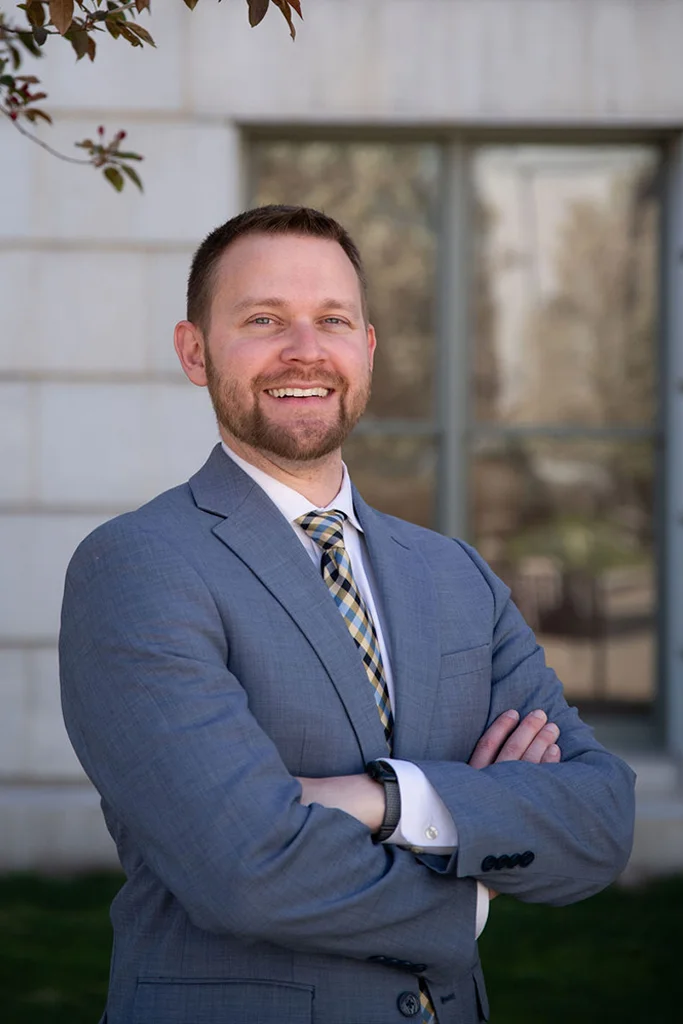
Reid DeChant of DeChant Law has defended clients against the full range of criminal charges, from minor traffic matters to homicides. That breadth of experience matters specifically for felony cases because the tactics that win misdemeanor resolutions do not always translate to the high-stakes environment of felony proceedings. Felony cases in Larimer County move through the 8th Judicial District Court in Fort Collins, and understanding how prosecutors, judges, and juries in that courthouse think is part of what an effective defense requires.
Colorado felonies are classified in six levels, with Class 1 carrying the most severe penalties and Class 6 representing the least serious felony tier. Even a Class 6 felony conviction can result in more than a year in prison and a permanent record that follows a person through employment screenings, housing applications, and professional licensing for life. The time to build a defense is before any plea is entered, not after.
What Felony Charges Actually Look Like in the Loveland Area
- Drug Felonies: Colorado’s drug laws treat possession and distribution of controlled substances differently, but quantities involving methamphetamine, cocaine, heroin, and fentanyl can push charges into felony territory quickly. The Loveland Police Department and Larimer County Sheriff’s Office both conduct active narcotics enforcement, and charges frequently arise from traffic stops along U.S. 34, U.S. 287, and the surrounding highway corridors.
- Assault Charges: Second and first degree assault are felonies under Colorado law. These charges often arise in domestic situations, bar altercations in downtown Loveland, or incidents involving alleged use of a weapon. A prior conviction can elevate a subsequent assault into a higher felony class.
- Theft and Property Crimes: Colorado felony theft thresholds apply when the alleged value of stolen property exceeds a statutory dollar amount. Organized retail crime, embezzlement, and identity theft allegations regularly produce felony charges across Larimer County.
- Weapons Charges: Possession of a firearm by a prohibited person, menacing with a deadly weapon, and certain unlawful discharge charges carry felony exposure. These cases often intersect with domestic violence allegations, which triggers mandatory arrest policies and adds layers of complexity to the defense.
- Sex Offense Allegations: Sexual assault and related charges are among the most serious felonies prosecuted in Colorado. Convictions carry mandatory registration requirements and lengthy prison terms. Defense in these cases requires a lawyer who understands how to challenge forensic evidence, complainant credibility, and investigative procedures.
- Vehicular Crimes: Vehicular assault and vehicular homicide are felony offenses in Colorado when prosecutors allege impairment or reckless driving caused injury or death. Incidents on U.S. 34 near Lake Loveland and Interstate 25 near the southern Loveland exchanges have generated these charges in recent years.
- Felony DUI: A fourth DUI conviction in Colorado triggers felony prosecution regardless of how much time has passed since prior offenses. Loveland’s proximity to Fort Collins and its active nightlife corridors means repeat DUI charges arise with regularity in Larimer County courts.
Why DeChant Law Handles Loveland Felony Defense Differently
Reid DeChant’s background as a public defender gave him something most private criminal defense attorneys simply do not have: volume. He handled criminal cases in Denver, Broomfield, and Adams County courtrooms across a wide range of charge types, accumulating courtroom time and trial experience at a pace that private practice rarely allows early in a career. That experience included felony trials where the consequences for his clients were measured in years, not days.
Reid is a graduate of the Trial Lawyers College, founded by legendary trial attorney Gerry Spence. The program focuses on psychodrama, authentic courtroom storytelling, and genuine human connection with juries. In felony cases, where a jury’s perception of the defendant as a person often determines the outcome, this training is directly relevant. Reid does not argue legal points at jurors and hope for the best. He works to help them understand the full human context of what happened, which is what moves verdicts.
DeChant Law has documented dismissals and not guilty verdicts across a range of serious cases, including assault charges, DUI trials, domestic violence matters, and sex offense allegations. Results from past cases do not guarantee future outcomes, but they do reflect a practice built around serious adversarial advocacy, not plea negotiation alone. Reid also maintains active membership in the National Association of Criminal Defense Lawyers and the Colorado Criminal Defense Bar, which keeps his practice connected to the latest developments in defense strategy, evidence law, and constitutional litigation.
For someone facing a felony charge in Loveland, the question is not whether to hire a lawyer. It is whether to hire one who treats the case as a serious fight. DeChant Law does.
Colorado Felony Sentencing and What Drives Outcomes
Colorado uses a presumptive sentencing range system for felonies. Each class carries a minimum and maximum prison term, and courts generally sentence within those ranges unless aggravating or mitigating factors justify a departure. Extraordinary risk felonies carry higher maximum sentences. Crimes of violence carry mandatory prison terms under Colorado law, meaning probation is generally not available for convictions that qualify. Understanding which sentencing provisions apply to a specific charge at the outset is essential because it directly shapes the defense strategy.
Drug felonies in Colorado operate under a parallel felony drug offense classification system, separate from the general felony classes. This means the available sentences and mandatory treatment provisions differ from standard violent or property felonies. Colorado has emphasized treatment diversion programs for certain drug offenders, and an experienced felony attorney in Loveland can identify whether those programs apply and how to position a client to access them.
Prior criminal history is one of the most significant drivers of felony outcomes. Colorado prosecutors review a defendant’s history carefully, and prior felony convictions can trigger sentence enhancements and eliminate eligibility for probation in otherwise borderline cases. Identifying and challenging prior convictions that may have been improperly obtained, or that do not qualify as enhanceable, is a technical but genuinely impactful part of felony defense work.
Plea agreements resolve the majority of felony cases before trial, but the terms of those agreements vary enormously depending on how strong the defense appears. A prosecutor facing a defense attorney with a demonstrated record of taking cases to trial and winning operates differently than one who expects every client to plead guilty. Preparation for trial, even in cases that ultimately resolve short of one, produces better outcomes than assuming a plea is inevitable.
What to Do After a Felony Arrest in Loveland
The first and most critical step after a felony arrest in Loveland is to stop talking. Not to police. Not to family members in a jail call that gets recorded. Not to anyone except a lawyer. Statements made during or after arrest are routinely used by prosecutors to support charges, fill evidentiary gaps, and undermine defenses that would otherwise succeed. The right to remain silent exists precisely for this situation. Exercise it completely.
Felony cases in Loveland proceed through the 8th Judicial District Court, located in Fort Collins at the Larimer County Justice Center on Laporte Avenue. Initial appearances happen quickly, often within 48 hours of arrest, and bail is set at that hearing. The bail determination can be contested, and having an attorney present at the initial appearance gives a defendant a meaningful opportunity to argue for lower bail or release on personal recognizance. Appearing at that hearing without representation is one of the most common and most costly mistakes people make in felony cases.
Preserve everything. If there is any physical evidence, surveillance footage, text message history, or witness contact information relevant to what happened, secure it before it disappears. Surveillance footage from businesses along Eisenhower Avenue, the Outlets at Loveland, or surrounding commercial areas has a limited retention window. Once it is gone, it cannot be recovered. A Loveland felony attorney can send preservation letters to businesses and law enforcement agencies quickly, but that only works if someone acts before footage is overwritten.
Contact DeChant Law as soon as possible after an arrest or after learning that law enforcement is investigating you. Many felony charges are filed after an investigation period during which police seek additional statements or evidence. Speaking to an attorney before charges are formally filed can sometimes change the course of the case significantly.
Questions About Loveland Felony Cases, Answered
What is the difference between a felony and a misdemeanor in Colorado?
Colorado classifies crimes as petty offenses, misdemeanors, or felonies based on the maximum authorized sentence. Felonies carry potential prison sentences served in state correctional facilities, while misdemeanor sentences are served in county jail. Beyond incarceration, felony convictions carry permanent collateral consequences including loss of the right to possess firearms, potential deportation for non-citizens, and mandatory registration requirements for certain offenses.
Will I go to prison if convicted of a felony in Colorado?
Not automatically. Colorado offers probation as an alternative to prison for many felony classes, particularly Class 5 and Class 6 felonies without violent offense designations. Whether a judge imposes probation depends on the specific charge, the defendant’s criminal history, the presence of any mandatory minimum provisions, and how the case is presented at sentencing. Crimes of violence carry mandatory prison terms regardless of other factors.
Can a felony charge in Colorado be reduced to a misdemeanor?
Yes, in many cases. Prosecutors have discretion to offer amended charges as part of plea negotiations. Defense attorneys also file motions challenging the sufficiency of evidence, which can result in charge reductions or dismissals. Colorado also has deferred judgment and sentence agreements that, when successfully completed, allow a defendant to withdraw a guilty plea and avoid a felony conviction entirely.
How long does a felony case typically take in Larimer County?
Simple felony cases in the 8th Judicial District can resolve in a few months. Complex cases involving significant investigation, multiple witnesses, or forensic evidence can take a year or more from arrest to resolution. Trial scheduling in Larimer County depends on court availability and the nature of the case. An attorney familiar with that courthouse can give a more accurate timeline based on the specific charges and the current court calendar.
What happens to my driver’s license if I’m convicted of a felony in Colorado?
It depends on the felony. A felony DUI conviction triggers mandatory revocation through the Colorado DMV, separate from any criminal sentence. Other felonies may not directly affect driving privileges unless the charge relates to driving conduct. However, a felony conviction that results in a prison sentence will obviously prevent a person from driving during incarceration. An attorney handling the criminal case should also address any DMV action that runs parallel to the criminal proceedings.
Can a Colorado felony conviction affect a professional license?
Yes. Many Colorado licensing boards for healthcare professionals, teachers, attorneys, real estate agents, financial advisors, and other regulated occupations require disclosure of felony convictions and have authority to suspend or revoke licenses. The specific impact depends on the licensing board, the nature of the felony, and whether it relates to the professional’s area of work. This collateral consequence is often more immediately devastating than the criminal sentence itself, and it should be discussed with a felony attorney early in the case.
I was arrested in Loveland but I live in another county. Does that change anything?
The case will be prosecuted in Larimer County regardless of where you live. You will need to appear in the 8th Judicial District Court in Fort Collins for hearings, and your attorney must be admitted to practice in Colorado and familiar with that court. Where you live does not affect jurisdiction. It does affect the practical logistics of appearing for court dates, which an attorney can often manage to reduce the number of appearances the client must personally make.
What makes a felony charge a “crime of violence” in Colorado?
Colorado law designates certain felonies as crimes of violence when they involve the use, possession, or threatened use of a deadly weapon, or result in serious bodily injury or death. The crime of violence designation triggers mandatory prison sentencing provisions that remove the judge’s discretion to impose probation. If a charge carries a crime of violence allegation, that designation must be challenged aggressively because it fundamentally limits sentencing options if a conviction occurs.
If the police did not read me my Miranda rights, does my case get dismissed?
Not necessarily the entire case, but statements made during a custodial interrogation without Miranda warnings can be suppressed, meaning the prosecution cannot use them as evidence. If those statements form a significant part of the prosecution’s case, suppression can substantially weaken or end the prosecution. Whether Miranda applies depends on whether you were in custody at the time of questioning, which is a legal determination that requires analysis of the specific facts.
What should I do if I think I am under investigation for a felony but have not been arrested yet?
Retain a felony defense attorney immediately. This is actually the most advantageous position to be in because a lawyer can intervene before charges are filed, before statements are made, and before investigative steps are taken that might otherwise strengthen the prosecution’s case. An attorney can communicate with law enforcement on your behalf, evaluate the evidence that may exist, and in some cases engage with prosecutors before formal charges to present exculpatory information.
Felony Defense Representation Across Loveland and Northern Colorado
DeChant Law represents clients facing felony charges throughout the Loveland area and across the broader northern Colorado region. From the neighborhoods surrounding Lake Loveland and the Centerra development corridor to the communities of Berthoud, Johnstown, and Milliken to the south, the firm handles cases that arise throughout southern Larimer County and northern Weld County. Clients come from the Fort Collins urban area, including Old Town Fort Collins, Midtown, and the areas near Colorado State University, as well as from Timnath, Windsor, and Severance. The firm also represents clients from Estes Park and the mountain communities along U.S. 34 heading into Rocky Mountain National Park, where law enforcement encounters during tourist season regularly generate criminal charges. Beyond Larimer County, DeChant Law serves clients in the Denver metro area including the communities of Westminster, Thornton, Broomfield, Northglenn, and Commerce City in Adams County, as well as clients in Jefferson County communities including Lakewood, Arvada, Wheat Ridge, and Golden. For any felony matter in these areas, the firm works to connect the specific courtroom and prosecutorial environment with a defense built for that context.
Speak With a Loveland Felony Attorney Before the Next Court Date
Felony prosecutions move on their own timeline, and every court appearance, every filing, and every conversation with law enforcement shapes what happens next. A Loveland felony attorney at DeChant Law can step into the case at any stage, but the earlier that happens, the more options remain available. Reid DeChant has stood beside clients facing the most serious charges Colorado prosecutors file, and he brings genuine trial experience combined with the analytical rigor that complex felony defense requires.
Do not wait until a plea deadline arrives to find out what your defense options actually are. Contact DeChant Law to schedule a consultation and get a clear picture of where your case stands and what fighting it looks like.