Fort Morgan Felony Lawyer
A felony charge in Morgan County is not a temporary problem. A conviction follows you into every job application, housing search, professional license renewal, and background check for the rest of your life. Beyond the permanent record, felony convictions in Colorado carry prison sentences measured in years, not days, along with mandatory parole periods, fines that can reach tens of thousands of dollars, and the loss of civil rights including the right to possess firearms. If you are dealing with a Fort Morgan felony lawyer search right now, you are looking for someone who can stand between you and those consequences with actual courtroom skill, not just a law office phone number.
Morgan County cases are prosecuted through the 13th Judicial District, which covers a rural stretch of northeastern Colorado including Morgan, Logan, Sedgwick, Phillips, Washington, and Yuma counties. The prosecutors in this district handle cases across a large geographic area, and they pursue felony convictions with the same resources and determination you would find in a major metropolitan courthouse. The difference is that rural districts often have tighter community ties between law enforcement, prosecution, and the bench, which makes it all the more important that your defense comes from someone who understands how to operate effectively in that environment and who is not intimidated by it.
Colorado felonies are divided into six classes, with Class 1 carrying the most severe penalties and Class 6 representing the lower end of felony exposure. But even a Class 6 felony conviction can mean a prison sentence and years of parole supervision. The gap between a felony conviction and a reduced misdemeanor, or between a conviction and a dismissal, often comes down to the quality of the defense work done in the weeks and months before trial.
What Reid DeChant Brings to a Morgan County Felony Defense
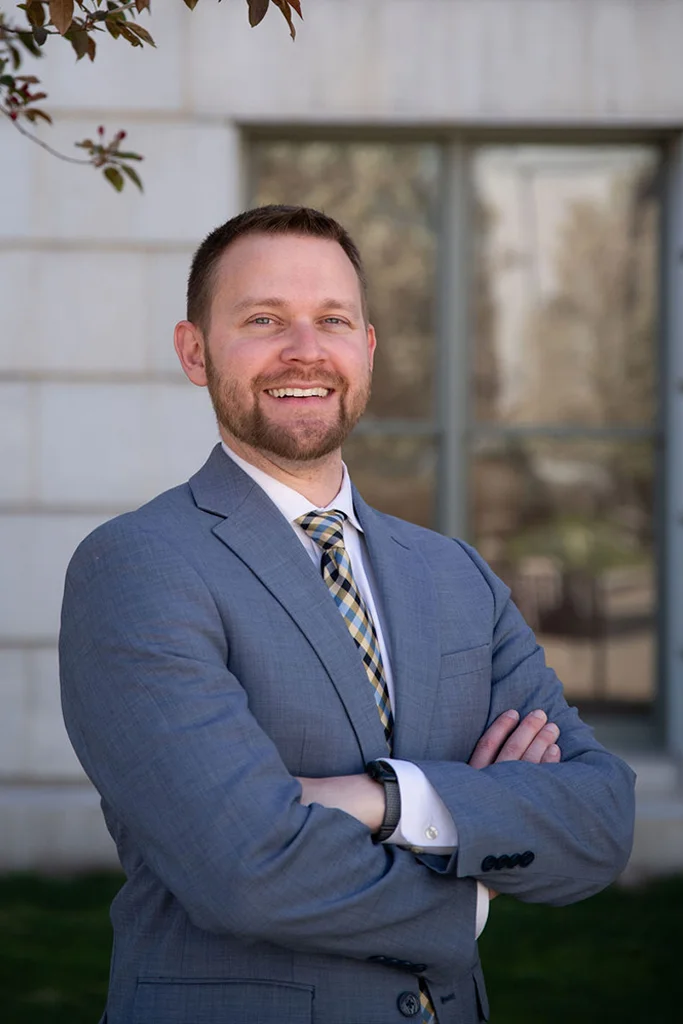
DeChant Law was built around the kind of courtroom experience that most private defense attorneys simply do not have. Reid DeChant came out of public defender work in Denver, Broomfield, and Adams County, where he handled massive caseloads defending clients on charges ranging from traffic offenses and DUI all the way through felony assault, sexual assault, and homicide. That volume of courtroom time means Reid has cross-examined law enforcement officers hundreds of times, argued suppression motions in contested evidentiary hearings, and taken cases to verdict in front of juries. Those skills are not theoretical. They were built in actual courtrooms, against actual prosecutors, in cases where real people’s freedom was on the line.
Reid is a graduate of the Trial Lawyers College, a selective program founded by legendary defense attorney Gerry Spence. The program trains lawyers in storytelling, psychodrama, and human connection in the courtroom, disciplines that matter enormously in felony trials. Juries decide cases based on whether they understand and believe the person in front of them. Reid’s training in that method shapes how he prepares every case, from the first client meeting through closing argument. He is also a member of the National Association of Criminal Defense Lawyers and the Colorado Criminal Defense Bar, professional associations that reflect an ongoing commitment to the highest standards of defense practice.
The firm’s case results include felony-level wins that demonstrate what this approach produces in practice: not guilty verdicts on two counts of assault with a deadly weapon, a not guilty verdict on failure to register as a sex offender, dismissals of felony menacing charges after successful motions, and multiple DUI trial acquittals in counties across the Denver metro area and beyond. Those results do not guarantee any particular outcome, but they reflect a lawyer who has been tested in serious cases and has delivered for clients when the stakes were highest. For someone facing felony charges out of Fort Morgan or anywhere else in Morgan County, that track record matters.
Felony Charges Commonly Filed in Morgan County
- Drug Felonies: Morgan County law enforcement actively pursues drug distribution and possession with intent charges, particularly involving methamphetamine, fentanyl, and other controlled substances. Colorado law establishes drug felony levels based on substance type and quantity, with distribution and manufacturing charges carrying significantly heavier exposure than simple possession.
- Felony Assault: Assault charges rise to felony level when a deadly weapon is involved, when the victim suffers serious bodily injury, or in domestic violence contexts involving strangulation or prior assault convictions. Third-degree assault is a misdemeanor, but second-degree and first-degree assault are Class 4 and Class 3 felonies respectively under Colorado law.
- Felony DUI (Persistent Drunk Driver): A third or subsequent DUI conviction in Colorado constitutes a Class 4 felony. Given the long distances between towns in Morgan County and the frequency of travel along Interstate 76, law enforcement patrols that corridor heavily, and repeat DUI exposure is a real concern for residents of this region.
- Theft and Property Crimes: Colorado’s theft statute creates a felony when the value of property taken or services received exceeds a threshold established by statute. Agricultural equipment theft is a persistent issue in rural Morgan County, and felony theft charges arising from farm-related incidents are handled in the 13th Judicial District.
- Weapons Offenses: Felony weapons charges in Colorado include possession by a prohibited person, illegal discharge, and use of a weapon during the commission of another felony. These charges frequently arise as add-ons to other offenses and can dramatically increase the sentence exposure of an underlying case.
- Sexual Assault and Sex Offenses: Sexual assault is prosecuted as a Class 3 or Class 4 felony depending on circumstances, and convictions trigger mandatory sex offender registration requirements that persist for decades. These cases demand careful attention to how evidence was gathered and whether constitutional protections were respected throughout the investigation.
- Vehicular Assault and Homicide: Accidents on I-76, US-34, and the county roads that connect Fort Morgan to rural communities throughout Morgan County sometimes result in vehicular assault or vehicular homicide charges when impairment or reckless driving is alleged. These are serious felonies that require immediate and thorough defense from the moment the investigation begins.
How Felony Cases Move Through the 13th Judicial District
After an arrest in Fort Morgan or elsewhere in Morgan County, the formal process begins with an advisement hearing at the Morgan County Combined Courts, located at 400 Warner Street in Fort Morgan. At this hearing, the charges are read and bond is addressed. For serious felonies, prosecutors may request high bond amounts or specific conditions of release, and having a defense attorney present at this stage can directly affect whether you remain in custody while your case proceeds.
A preliminary hearing follows for felony charges, unless it is waived. This hearing requires the prosecution to show probable cause that a crime was committed and that you committed it. It is not a trial, but it is an opportunity to test the prosecution’s evidence early and potentially expose weaknesses before the case progresses further. Skilled defense attorneys pay close attention to preliminary hearings because the testimony offered there can become critical material for cross-examination at trial.
After the preliminary hearing, the case moves to arraignment and then into the pretrial phase, where motions are filed, discovery is exchanged, and plea negotiations occur. In Morgan County, as in most rural Colorado districts, the local dynamics of the courthouse community can influence how cases resolve at this stage. An attorney who has experience navigating both urban and rural Colorado courtrooms is better positioned to read those dynamics accurately and advise you on whether a negotiated resolution or a trial is the stronger path.
One of the most common mistakes people make after a felony arrest is waiting too long to retain counsel. The earliest stages of a felony case, including the investigation phase before charges are even filed, can be the most consequential. Statements made to law enforcement, physical evidence collected at the scene, and witness contacts made by police in those first days can either be preserved or challenged most effectively when a defense attorney is involved immediately. Reaching out as early as possible gives your defense the most options.
Questions About Fort Morgan Felony Cases
What is the difference between a felony and a misdemeanor in Colorado?
Colorado separates criminal offenses into petty offenses, misdemeanors, and felonies based on the severity of the conduct and the potential sentence. Felonies are the most serious category and are punishable by imprisonment in the Colorado Department of Corrections rather than a county jail. Misdemeanors are punishable by up to 364 days in county jail. The line between felony and misdemeanor can depend on factors like the value of property taken, whether a weapon was used, or the severity of injury to a victim, which is why the specific facts of a case matter enormously to how charges are classified.
Can a felony charge in Fort Morgan be reduced to a misdemeanor?
Yes, in many cases. Charge reductions through plea negotiation or deferred sentencing agreements are common outcomes in Colorado felony cases, particularly for first-time offenders or cases where the evidence is contested. Colorado also has specific statutory provisions that allow some drug felony convictions to be treated as misdemeanors under certain conditions. Whether a reduction is achievable depends on the specific charge, the evidence, the prosecutor’s posture, and the strength of the defense built around the case.
Will I go to prison if convicted of a felony in Colorado?
Not necessarily. Colorado law provides for probation sentences on many felony convictions, particularly Class 4, 5, and 6 felonies where the defendant has limited or no prior criminal history. However, certain felonies carry mandatory prison terms or presumptive prison sentences that the court cannot deviate from without specific findings. The applicable sentencing range depends on the class of felony, whether it is designated a crime of violence, whether mandatory sentencing provisions apply, and the defendant’s prior record.
How does a felony conviction affect my rights in Colorado?
A Colorado felony conviction results in the loss of certain civil rights, including the right to possess firearms under both state and federal law. Voting rights are affected during incarceration and parole but are restored upon completion of sentence under Colorado law. Professional licenses in fields like healthcare, education, law, and finance may be revoked or denied based on a felony conviction. Felony convictions also affect eligibility for federal student financial aid, public housing, and certain federal benefits. These collateral consequences often outlast the criminal sentence itself.
How long does a felony case take to resolve in Morgan County?
Felony cases in the 13th Judicial District vary significantly in timeline depending on complexity, the volume of discovery involved, whether expert witnesses are needed, and court scheduling. A straightforward case might resolve in a few months through a negotiated plea. A contested case that goes to trial could take a year or more from arrest to verdict. The 13th Judicial District covers a large geographic area with limited judicial resources compared to urban districts, which can extend scheduling timelines. Your attorney can give you a realistic estimate once the specifics of your case are understood.
What happens to my driver’s license if I am convicted of a felony DUI in Fort Morgan?
A felony DUI conviction in Colorado triggers both criminal sentencing consequences and a separate administrative action through the Colorado Division of Motor Vehicles. License revocation periods increase significantly for a third or subsequent DUI offense, and the DMV process runs parallel to, not after, the criminal case. DMV hearings have their own deadlines and procedural requirements entirely separate from the criminal court timeline. Failing to request a DMV hearing within the required window can result in automatic revocation regardless of how the criminal case resolves.
Can felony charges be filed after I was released without charges at the scene?
Yes. Law enforcement sometimes releases individuals at the scene while an investigation continues. A district attorney’s office can file felony charges weeks or even months after the underlying incident once they have reviewed the investigation. If you were involved in an incident in Morgan County and believe charges may be coming, consulting a defense attorney before charges are filed gives you the strongest possible starting position, because certain evidence preservation and constitutional challenge opportunities exist only early in the process.
Does it matter that Fort Morgan is a smaller community when it comes to my felony case?
It can. In smaller jurisdictions, the local legal community is tightly knit, and the same judges, prosecutors, and law enforcement officers interact repeatedly over many cases. This can create dynamics that differ meaningfully from an anonymous urban courthouse. Reputation within the local bar, familiarity with how local judges think about sentencing, and understanding of how rural prosecutors approach negotiation all factor into case strategy. This is one reason having a defense attorney with both urban and rural Colorado experience can serve clients in Morgan County well.
What should I do if law enforcement wants to question me about a felony in Fort Morgan?
Do not answer questions without speaking to a defense attorney first. This is not a matter of appearing guilty. Under the United States Constitution, you have the right to remain silent and the right to counsel before and during any custodial interrogation. Law enforcement are trained to gather evidence in these interactions, and statements made voluntarily to police can be used against you even if you believe you are explaining something innocent. Politely decline to answer questions, state that you wish to speak with an attorney, and contact a defense lawyer immediately.
Can juvenile felony charges in Morgan County affect an adult record?
Colorado law provides some protections for juvenile records, but serious offenses committed by juveniles can result in direct filing in adult court under Colorado’s direct file provisions. When a juvenile is charged as an adult in a felony case, the proceedings and consequences mirror those of adult criminal prosecution, including adult sentencing and adult record consequences. Even cases that remain in juvenile court can have lasting effects depending on the charge and how the case resolves. Families dealing with serious juvenile felony allegations should treat those cases with the same seriousness as adult charges.
DeChant Law Serves Clients Throughout Northeastern Colorado
DeChant Law represents clients facing felony charges across Morgan County and the broader northeastern Colorado region. From Fort Morgan itself through the communities of Brush, Wiggins, and Log Lane Village in Morgan County, the firm is available to defend cases arising anywhere in this part of the state. The firm also handles felony defense in Logan County communities including Sterling, Iliff, Merino, and Fleming, as well as in the Washington County seat of Akron and the surrounding rural communities of Otis, Cope, and Last Chance. Clients in Phillips County, including Holyoke and Haxtun, and in Yuma County including Wray and Yuma, are also served. Sedgwick County residents in Julesburg and Ovid have the same access to DeChant Law representation through the 13th Judicial District.
Beyond the 13th Judicial District, the firm represents clients in the Denver metropolitan area courts and in cases arising in Adams County, Jefferson County, Arapahoe County, Douglas County, and Broomfield County. A felony charge in any of these jurisdictions receives the same level of focused attention and trial-ready preparation. The firm’s geographic reach is driven by where clients have cases, not by where it is convenient to appear.
Speak With a Fort Morgan Felony Attorney About Your Case
A felony case in Morgan County deserves defense counsel that has actually tried difficult cases in front of juries, not someone who settled everything and hopes yours resolves without a fight. DeChant Law’s approach is built on real trial experience, genuine preparation, and honest communication about what your case involves and what the options are. Every client is a partner in their own defense, not a passive bystander waiting to hear what happened.
Reid DeChant is a Fort Morgan felony attorney who has handled serious cases from minor felonies through homicide charges, and who brings the training of the Trial Lawyers College into every case he prepares. If you are facing felony charges in Morgan County or anywhere in the 13th Judicial District, contact DeChant Law today to schedule a consultation and start building a defense from the ground up.