Commerce City Felony Lawyer
A felony charge in Commerce City lands in Adams County District Court, and the moment it does, the weight of the Colorado criminal justice system begins moving against you. Prosecutors in Adams County are aggressive, case volumes are high, and the consequences of a felony conviction extend far beyond any sentence a judge imposes. A Commerce City felony lawyer has to understand not just the statute you are charged under, but how Adams County prosecutors build their cases, how local law enforcement documents evidence, and what arguments actually move juries in that courthouse.
Colorado classifies felonies across a range from class 6, the lowest tier, through class 1, which carries the most severe penalties. Even at the low end, a class 6 felony conviction can mean a year or more in state prison, thousands of dollars in fines, and a permanent mark on your record that follows you into every job application, housing search, and professional licensing inquiry for the rest of your life. At the high end, the sentences are measured in decades. The gap between a felony conviction and a negotiated outcome can be the difference between staying with your family and losing years of your life.
Commerce City sits in Adams County, a jurisdiction that has seen significant population growth and corresponding increases in prosecutorial resources. Local law enforcement agencies including the Commerce City Police Department work closely with the Adams County District Attorney’s Office. When that coordination is focused on building a case against you, you need a defense that can identify the weaknesses in that investigation before the case ever reaches trial.
Felony Charges Commonly Filed in Adams County
- Drug Felonies: Commerce City’s location along I-76 and its proximity to major distribution routes means drug cases frequently involve allegations of possession with intent to distribute or actual distribution charges, which can trigger mandatory minimum sentencing under Colorado law depending on the substance and quantity involved.
- Felony Assault: Colorado’s assault statutes distinguish between first, second, and third degree assault, with first and second degree carrying felony classifications. Cases involving weapons, serious bodily injury, or assaults on peace officers receive especially aggressive prosecution in Adams County.
- Domestic Violence Felonies: A domestic violence designation attached to any felony charge adds mandatory conditions, affects bond eligibility, and can trigger federal firearms prohibitions under federal law. Felony menacing and felony assault both carry DV enhancements that prosecutors routinely pursue.
- Motor Vehicle Theft: Auto theft is prosecuted as a felony in Colorado when the vehicle value meets the statutory threshold, and Adams County sees a significant volume of these cases given its geography and population density.
- Weapons Charges: Felony weapons charges in Colorado include unlawful possession by a prohibited person, possession of a weapon by a previous offender, and certain assault-related firearm charges. These cases often involve Fourth Amendment suppression issues tied to the initial stop or search.
- Felony Menacing: When a menacing charge involves a deadly weapon, Colorado law elevates it to a class 5 felony. These charges frequently arise from disputes that escalated quickly and where the surrounding facts are more complicated than the initial police report reflects.
- Burglary and Robbery: First and second degree burglary are class 3 and class 4 felonies respectively, while robbery and aggravated robbery carry even heavier classifications. Evidence issues in these cases, including eyewitness identification reliability and surveillance footage quality, can be central to the defense.
What to Do After a Felony Arrest in Commerce City
The actions you take in the first hours and days after a felony arrest in Commerce City will shape everything that follows. The most important thing to understand is that anything you say to law enforcement will be documented and potentially used against you. Invoking your right to remain silent is not an admission of guilt, and it is not obstruction. It is the single most protective decision most people can make at the moment of arrest.
Felony cases in Adams County proceed through the Adams County District Court, located at 1100 Judicial Center Drive in Brighton. After an arrest, you will typically be brought before a judge for an advisement hearing within a short window. This first court appearance is where bond is set, and the arguments made at that hearing can determine whether you are held in custody or released while your case moves forward. Having an attorney present at or engaged before that advisement, even if it requires an emergency call, matters far more than most people realize.
Colorado has deadlines that run from the date of filing, not from the date of arrest, but the evidence you need to preserve starts disappearing immediately. Surveillance footage from businesses along 96th Avenue, Quebec Street, or other Commerce City corridors gets overwritten. Witnesses move or their memories shift. Cell phone records require preservation requests to carriers that have their own timelines. An attorney engaged early can send preservation letters, gather evidence before it is lost, and begin building the defense narrative while the facts are still fresh.
Do not make the common mistake of speaking with investigators, detectives, or even family members about the substance of your case before speaking with an attorney. Jailhouse phone calls are recorded. Statements made to detectives without counsel are preserved. A conversation that feels like explaining yourself can become the centerpiece of the prosecution’s case at trial. Protect yourself by saying nothing substantive until you have counsel engaged.
How Felony Cases Actually Move Through Adams County District Court
Understanding the structure of a felony prosecution helps you make informed decisions at every stage. After the initial advisement, most Colorado felony cases move to a preliminary hearing or are sent to a grand jury, where the prosecution must demonstrate probable cause that a crime occurred and that you committed it. This is not a trial, and the standard is far lower than proof beyond a reasonable doubt, but it is the first opportunity for a skilled defense attorney to challenge the sufficiency of the evidence and begin exposing weaknesses in the government’s case.
Between the preliminary hearing and trial, the discovery phase produces the evidence the prosecution intends to use: police reports, body camera footage, witness statements, lab results, forensic analyses, and any other materials gathered during the investigation. Reviewing this evidence carefully is where cases are often won or lost before they ever reach a jury. Suppression motions challenging unlawful stops, improper searches, or Miranda violations can eliminate key evidence. Expert challenges to forensic methods can undercut the prosecution’s scientific claims. Timeline inconsistencies in police reports can create reasonable doubt when exposed systematically.
Most felony cases resolve through negotiation rather than trial, but the quality of your negotiating position depends entirely on the strength of your defense. Prosecutors offer more favorable plea agreements when they face a defendant represented by a lawyer who is genuinely prepared to try the case. That preparation is not theater. It has to be real, and it has to be visible to the other side. The Adams County District Attorney’s Office knows which defense attorneys will take cases to verdict and which ones will push toward a plea regardless of the facts. That reputation affects every negotiation.
Why DeChant Law Is Built for Adams County Felony Defense
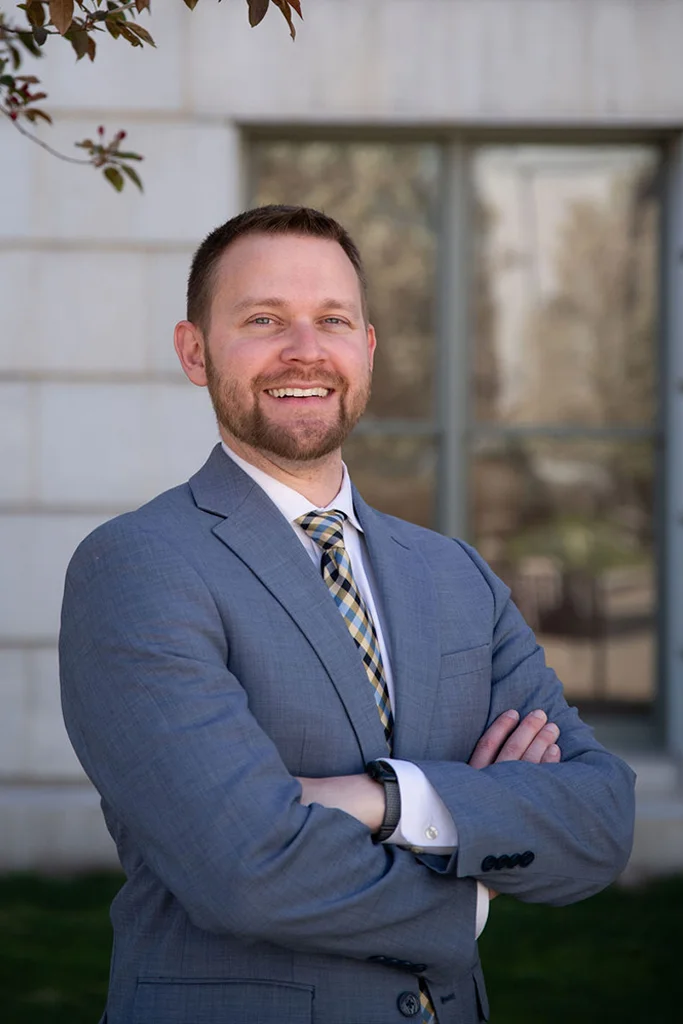
Reid DeChant’s experience defending felony cases is not theoretical. As a former public defender, he handled cases in Adams County courtrooms regularly, including serious felony charges across the full spectrum from assault and domestic violence to drug offenses and weapons charges. That volume of trial work in the exact courthouse where your case will be heard means Reid understands the local culture, the prosecutors, the judges, and the tactical realities that no amount of legal education alone can provide.
Reid is a graduate of the Trial Lawyers College, founded by legendary trial attorney Gerry Spence. The training there focuses on authentic storytelling and genuine human connection in the courtroom, the recognition that juries decide cases based on whether they understand and believe the person sitting at the defense table, not just whether they find the legal arguments compelling. This approach has shaped how Reid builds every defense, starting with understanding the client as a full human being whose story deserves to be heard honestly.
The case results listed on DeChant Law’s record include not guilty verdicts at trial for DUI cases, assault charges, domestic violence charges, and sex offense charges, as well as trial dismissals and DA dismissals in cases that could have resulted in serious consequences. A domestic violence harassment case out of Adams County was dismissed at trial by the DA. An Adams County assault case resulted in a not guilty verdict. These outcomes reflect what happens when a defense attorney prepares completely and refuses to accept an outcome that does not serve the client.
Reid maintains active membership in the National Association of Criminal Defense Lawyers and the Colorado Criminal Defense Bar, keeping current with evolving defense strategies and connecting with the strongest defense minds nationally. For a felony case with the kind of stakes your case carries, that depth of preparation and professional engagement is the standard you should demand from your Commerce City felony attorney.
Questions Commerce City Residents Ask About Felony Defense
What is the difference between a class 4, class 5, and class 6 felony in Colorado?
Colorado’s felony classification system runs from class 1 at the most serious level down to class 6. Class 6 felonies carry presumptive sentencing ranges around one year in prison, while class 4 felonies can carry two to six years in the presumptive range. Class 5 felonies fall between them. The specific sentence a judge imposes depends on the charge, any extraordinary circumstances, and your criminal history. These ranges can shift dramatically based on aggravating factors or mandatory sentencing provisions attached to the particular statute.
Can a felony charge in Commerce City be reduced to a misdemeanor?
Yes, in appropriate cases. Whether a reduction is available depends on the specific charge, the facts of the case, your prior record, and the strength of the defense. Some Colorado statutes include provisions allowing felony charges to be reduced upon completion of certain conditions. In other cases, prosecutors negotiate charge reductions as part of plea agreements. The strength of your defense directly influences whether prosecutors are willing to offer a reduction at all.
What happens to my driver’s license if I am convicted of a felony in Colorado?
A felony conviction does not automatically revoke your driver’s license in most cases, but specific felony convictions do carry license consequences. Felony DUI, vehicular homicide, and vehicular assault convictions carry mandatory license revocation periods. Drug felonies can also trigger license suspension under certain circumstances. The collateral consequences of any specific felony conviction are worth discussing in detail with your attorney before any plea is entered.
Will a felony conviction prevent me from owning or possessing a firearm?
Under federal law, a felony conviction results in a lifetime prohibition on possessing firearms or ammunition. This applies regardless of which state the conviction occurs in and regardless of whether Colorado state law would otherwise permit firearm possession. For anyone who currently owns firearms legally or who values that right for any reason, this collateral consequence alone can be one of the most significant long-term effects of a conviction.
How does a prior criminal record affect a felony charge in Adams County?
Colorado’s sentencing guidelines account for criminal history through a structured system that can increase the presumptive sentencing range for defendants with prior felony or misdemeanor convictions. A record with prior felonies can elevate a charge from ordinary felony sentencing into an aggravated sentencing range. Prior convictions for similar offenses or convictions involving violence can significantly limit plea options and make prosecutors less likely to offer favorable resolutions.
What role does the preliminary hearing play in a Commerce City felony case?
The preliminary hearing is an early adversarial proceeding where the prosecution must produce evidence establishing probable cause for each charged offense. Unlike many states, Colorado allows defense attorneys to cross-examine witnesses at the preliminary hearing, which provides an early window into the prosecution’s evidence and gives defense counsel an opportunity to lock in witness testimony before trial. Preliminary hearings are a meaningful strategic tool in felony cases, not just a procedural formality.
Can charges be dismissed if the police violated my constitutional rights during the arrest or investigation?
Yes. Evidence obtained through an unlawful stop, an unconstitutional search, or a violation of your Miranda rights can be suppressed, meaning excluded from use at trial. If the suppressed evidence is central to the prosecution’s case, suppression can result in dismissal. Commerce City cases frequently involve traffic stops on major roadways like 96th Avenue or I-76, and the legality of those stops is always a threshold question worth examining carefully.
How long does a felony case typically take in Adams County District Court?
Timelines vary considerably based on the complexity of the charge, the volume of discovery, whether pretrial motions are filed, and court scheduling. Simple felonies may resolve in a few months. Complex cases involving serious violent charges, multiple defendants, or extensive forensic evidence can take a year or more from arrest to resolution. Delays are common in busy courts, and understanding the realistic timeline helps you plan accordingly for work, family, and other obligations.
What happens if the alleged victim in a domestic violence felony case does not want to cooperate with prosecution?
In Colorado, the decision to prosecute belongs to the Adams County District Attorney, not to the alleged victim. Prosecutors frequently pursue domestic violence felony cases even when the complaining witness recants or refuses to cooperate, using other evidence including 911 recordings, officer observations, photographs, and medical records. A non-cooperative witness does not automatically mean a dismissal. The defense still needs to be prepared for trial, and the prosecution will often attempt to subpoena the alleged victim to testify regardless of their stated wishes.
Is it possible to have a felony conviction expunged or sealed in Colorado?
Colorado allows record sealing for certain felony convictions after a waiting period, but not all felonies qualify. Drug felonies have a specific sealing pathway under Colorado statute. Violent felonies and sexual offense convictions are generally not eligible for sealing. The rules are charge-specific and depend on the outcome of the case, so discussing the long-term record implications of any resolution is an important part of the conversation with your attorney before any plea is entered.
Representing Commerce City and Adams County Felony Defendants Across the Region
DeChant Law represents clients facing felony charges throughout Commerce City and the surrounding Adams County communities. That includes clients from Thornton, Northglenn, Westminster, Brighton, and Federal Heights, as well as residents of Aurora neighborhoods that fall within Adams County jurisdiction. Clients from Derby, Henderson, and the Green Valley Ranch area who face charges filed in Adams County District Court receive the same level of defense. Beyond Commerce City and its immediate neighbors, DeChant Law extends representation to clients throughout the Denver metropolitan area, including Denver County, Jefferson County, Arapahoe County, Douglas County, and Broomfield County. Whether your charges originate from an arrest on a Commerce City roadway, a business district along Quebec or 72nd Avenue, or anywhere else in the region where Adams County jurisdiction applies, the defense approach remains the same: thorough preparation, honest client communication, and a genuine commitment to the best available outcome.
Commerce City Felony Attorney Ready to Evaluate Your Case
A felony prosecution is not a situation where waiting to act serves any purpose. Evidence has a shelf life, witnesses are most accessible early, and the decisions made at the beginning of a case shape every option that comes later. Reid DeChant is a Commerce City felony attorney who has defended cases at every level of severity in Adams County and across the Denver metro, from cases that resolved through negotiated agreements to charges that went to jury trial and ended in not guilty verdicts. That range of experience reflects a practice built on genuine readiness to fight, not just negotiate. If you are facing a felony charge in Commerce City or anywhere in Adams County, contact DeChant Law today to discuss your situation and understand your options.