Centennial Felony Lawyer
A felony charge in Centennial carries consequences that can follow someone for the rest of their life. Unlike a misdemeanor, a felony conviction can cost you your job, your housing, your professional license, and in some cases your right to vote or possess a firearm. The Arapahoe County District Attorney’s Office prosecutes felony cases with serious resources and experienced prosecutors. When you are on the receiving end of that, you need a Centennial felony lawyer who has spent real time in felony courtrooms and understands exactly how these cases are built and how they fall apart.
Colorado divides felonies into six classes, with Class 1 being the most serious and carrying the harshest penalties. Even a Class 6 felony, the lowest tier, can mean a prison sentence and a permanent record that affects nearly every part of your future. The difference between a prison sentence and a probationary outcome, or between a felony conviction and a reduced charge, very often comes down to how the defense was prepared before anything went to trial. Early, strategic work matters more in felony cases than in almost any other area of criminal law.
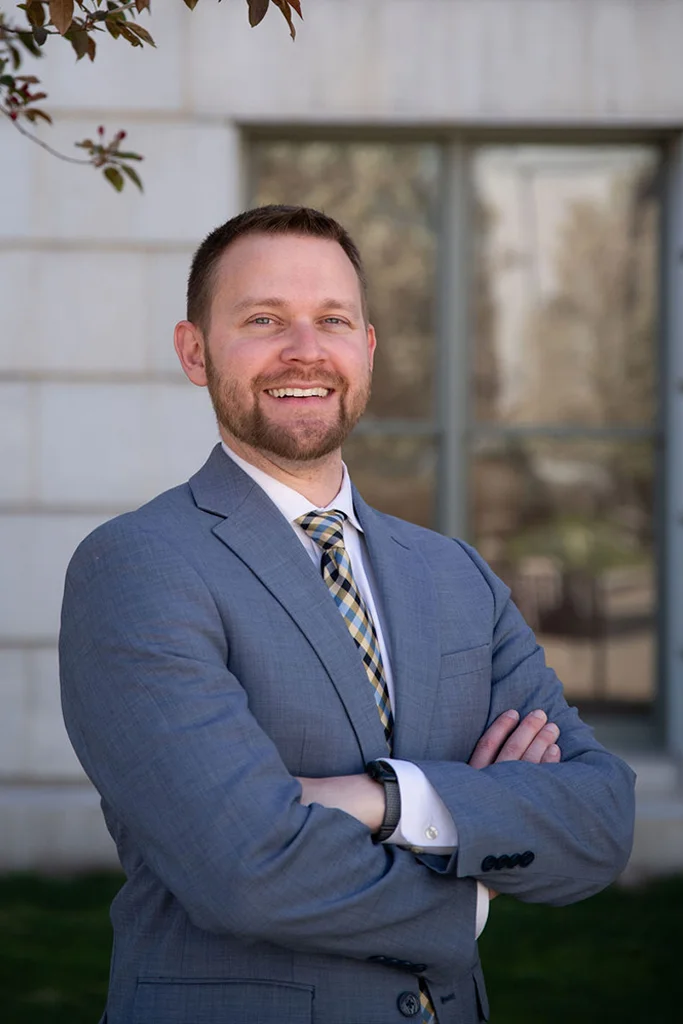
At DeChant Law, Reid DeChant brings public defender trial experience across Denver, Arapahoe, Adams, Broomfield, Jefferson, and Douglas County courtrooms to every felony defense he handles. He has defended clients against charges ranging from assault with a deadly weapon to drug felonies to serious domestic violence allegations, and has taken cases to verdict when the evidence warranted it. For Centennial residents facing felony charges, that track record of courtroom experience is not just a credential. It is the practical foundation of an effective defense.
What Felony Cases in Centennial Actually Look Like
Centennial sits within Arapahoe County, and felony cases filed here are prosecuted through the Arapahoe County District Attorney’s Office. The courthouse where most of these cases are handled is the Arapahoe County Justice Center located on South Potomac Street in Centennial. This is where arraignments, preliminary hearings, motions hearings, and trials take place for felony defendants from across the county.
Understanding the local prosecution environment matters. Arapahoe County prosecutors handle a high volume of cases and have significant experience with certain charge types that come up repeatedly in the Centennial and south metro area. DUI-related felony charges, drug distribution cases, felony assault arising from domestic incidents, and theft and property crime felonies are among the most common. The way a case is handled from the moment of arrest through the preliminary hearing and into trial preparation can determine whether a defendant ends up convicted, whether charges are reduced, or whether a case gets dismissed entirely.
Colorado’s felony sentencing framework includes both presumptive and aggravated sentencing ranges. Certain charges carry mandatory minimums, and some offenses involving weapons, repeat convictions, or vulnerable victims trigger enhanced penalties. A felony defense attorney in Centennial needs to understand not just the charged offense, but the full range of outcomes, including diversion programs, deferred judgments, and plea agreements, that may be available depending on the facts and the client’s background.
Felony Charges Commonly Defended in Centennial and Arapahoe County
- Felony Assault: Charges ranging from second-degree assault to assault with a deadly weapon arise frequently in Centennial, often from altercations at local establishments or domestic disputes. Colorado’s assault statutes carry different penalty classes depending on intent, the presence of a weapon, and whether the victim is a protected person such as a police officer or medical provider.
- Drug Felonies: Possession with intent to distribute, distribution, or manufacturing of controlled substances such as methamphetamine, cocaine, or fentanyl can result in felony charges with significant prison exposure. Centennial’s proximity to major transportation corridors along I-25 and E-470 makes it a common location for drug interdiction stops that lead to felony charges.
- Domestic Violence Felonies: When an assault or menacing charge is enhanced with a domestic violence designation in Arapahoe County, it triggers mandatory arrest policies, mandatory protection orders, and significant collateral consequences including federal firearms prohibitions. Felony domestic violence charges require defense work that addresses both the criminal case and the domestic violence proceedings simultaneously.
- Felony DUI: A fourth DUI charge in Colorado is a Class 4 felony. Centennial and Arapahoe County enforcement along roads like South Parker Road, Arapahoe Road, and Highway 83 regularly produces DUI arrests, and defendants with prior DUI convictions face felony-level exposure that requires specific courtroom strategy.
- Theft and Property Felonies: Colorado’s theft statute charges by value, meaning that theft of items valued above a certain threshold becomes a felony. Shoplifting from retail centers, identity theft, and motor vehicle theft are common felony categories in the Centennial area, each carrying different sentencing considerations.
- Sexual Assault and Sex Crime Felonies: These cases are among the most complex and highest-stakes in the entire criminal system. A conviction carries mandatory sex offender registration, potential lifetime supervision, and the practical destruction of someone’s livelihood and relationships. The defense of these cases requires careful attention to the evidence, the investigation, and the credibility of all parties.
- Weapons Offenses: Felony charges for illegal weapons possession, prohibited use of a firearm, or possessing a weapon after a prior conviction are serious matters under Colorado law and can interact with federal firearms statutes in ways that dramatically increase the stakes of the case.
What to Do After a Felony Arrest in Centennial
The hours immediately following a felony arrest are critical, and what you do or say during that time can directly affect your case. The most important thing to understand is that anything you say to law enforcement, even if you believe you are clarifying a misunderstanding, will be documented and can be used against you. Politely declining to answer questions without a lawyer present is not an admission of guilt. It is a constitutional right, and exercising it is one of the most protective steps you can take.
After an arrest in Centennial, you will typically be booked at the Arapahoe County Detention Facility. Depending on the charge, you may be held until a bond hearing or released on a personal recognizance bond. That bond hearing is often the first opportunity a defense attorney has to argue for reasonable release conditions and set the tone for how the case will proceed. Having an attorney retained before or shortly after that hearing can make a meaningful difference in what happens at that stage.
Once you or a family member can make contact with a criminal defense attorney, begin that conversation as soon as possible. Avoid discussing the facts of your case with anyone other than your lawyer, including family members, because those conversations are not protected by attorney-client privilege. Do not post anything related to the incident on social media. Preserve any text messages, photographs, or other documentation that might be relevant to your defense, and write down everything you remember about the events surrounding the arrest while the details are still fresh.
Your first formal court date will be an arraignment at the Arapahoe County Justice Center, where you will enter a plea. Before that happens, a preliminary hearing may be held to determine whether probable cause exists to proceed with the felony charges. This is a critical opportunity that a well-prepared defense attorney can use to challenge the prosecution’s evidence and, in some cases, secure a dismissal or reduction of charges before the case goes further.
Why Choose DeChant Law for Centennial Felony Defense
Reid DeChant’s background as a former public defender gave him something that private practice alone rarely produces: the volume and variety of real felony cases needed to understand how the system actually operates from the inside. He has defended clients accused of assault with a deadly weapon, strangulation, felony menacing, failure to register as a sex offender, and a range of other serious charges. His case results include not-guilty verdicts at trial on two counts of assault with a deadly weapon, a trial acquittal on a felony strangulation domestic violence case, and a not-guilty verdict on charges of failure to register as a sex offender. These are not the results of plea-driven case management. They are the product of genuine trial preparation and courtroom advocacy.
Reid is a graduate of the Trial Lawyers College, founded by legendary trial attorney Gerry Spence, where lawyers train in the methods of storytelling, psychodrama, and human connection that separate effective courtroom advocates from those who simply process cases. Juries decide cases based on what they believe about the people in front of them. Reid’s training in that approach shapes how he prepares every client and every case. He is also a member of the National Association of Criminal Defense Lawyers and the Colorado Criminal Defense Bar, organizations that reflect a commitment to staying current on defense strategy and legal developments at the state and national level. For someone facing a felony charge in Centennial, that combination of trial experience, specialized training, and professional engagement represents a genuinely different kind of representation than most local criminal defense attorneys can offer.
Questions About Felony Charges in Centennial
What is the difference between a Class 4 and a Class 6 felony in Colorado?
Colorado felonies are ranked from Class 1, the most serious, through Class 6, the least serious among standard felonies. A Class 4 felony generally carries a presumptive sentencing range of two to six years in the Colorado Department of Corrections, while a Class 6 felony carries a presumptive range of one to eighteen months. Both are felonies with permanent consequences, but the sentencing exposure and plea negotiation dynamics differ significantly based on the class.
Can a felony charge in Centennial be reduced to a misdemeanor?
In some cases, yes. Charge reductions can happen through plea negotiations with the Arapahoe County District Attorney’s Office, through diversion programs for eligible defendants, or through deferred judgment agreements. Whether a reduction is available depends heavily on the specific charge, the defendant’s criminal history, the strength of the evidence, and how effectively the defense was argued throughout the case. A felony attorney in Centennial who knows how Arapahoe County prosecutors approach particular charges can assess this realistically.
What is a preliminary hearing and should I waive it?
A preliminary hearing is a proceeding before a judge where the prosecution must show that probable cause exists to support the felony charges. It is not a trial, but it is a meaningful opportunity to test the prosecution’s evidence, cross-examine witnesses, and create a record that can be used later in the case. Whether to waive a preliminary hearing is a strategic decision that depends on the facts of the case. Waiving sometimes produces a benefit, such as a plea offer, but proceeding can expose weaknesses in the prosecution’s evidence. This is a conversation worth having carefully with your attorney.
How long will my Centennial felony case take to resolve?
Felony cases in Arapahoe County typically take longer than misdemeanor cases, often several months to over a year depending on the complexity of the charges, the volume of evidence, and whether the case proceeds to trial. Cases with multiple charges, significant discovery materials like surveillance footage or digital evidence, or issues requiring pretrial motions take longer. Your attorney should be able to give you a realistic timeline based on your specific circumstances and the current docket conditions at the Arapahoe County Justice Center.
Will a felony conviction affect my professional license in Colorado?
Yes, and often significantly. Many Colorado licensing boards for professions such as nursing, real estate, law, teaching, financial advising, and contracting have provisions that allow or require license suspension or revocation following a felony conviction. The specific impact depends on the profession, the nature of the charge, and whether the conviction is considered directly related to the licensed profession. This consequence is one reason why fighting for a reduction, dismissal, or acquittal matters so much beyond just the criminal sentence itself.
Can I be sentenced to probation instead of prison on a felony in Colorado?
Many Colorado felony convictions allow for probationary sentences rather than incarceration, particularly for Class 5 and Class 6 felonies and for defendants without prior felony records. However, certain charges carry mandatory prison terms, and aggravating factors can eliminate probation eligibility. A deferred judgment is another option in some cases, which allows a defendant to avoid a final conviction entirely if they complete a probationary period without violations. Understanding which outcomes are realistically available in your case requires a careful analysis of the charge, your background, and the specific facts.
If law enforcement violated my rights during the arrest or investigation, does that help my case?
Potentially, yes. Evidence obtained through an unlawful search, a stop without reasonable suspicion, or a confession taken in violation of Miranda rights may be suppressible under the Fourth and Fifth Amendments. If key evidence gets suppressed, it can significantly weaken the prosecution’s case and sometimes lead to dismissal. This kind of analysis, reviewing the police report, the body camera footage, the search warrant affidavit if one exists, is part of the pretrial work that matters most in felony cases. It requires a lawyer who is willing to file and argue motions, not just process pleas.
What happens to my right to possess a firearm if I am convicted of a felony in Colorado?
A felony conviction under Colorado law and federal law prohibits you from legally owning, possessing, or purchasing firearms. This prohibition is not automatic when charges are filed; it attaches upon conviction. If you are convicted of a felony domestic violence offense, the prohibition applies even if the underlying charge would otherwise have been a misdemeanor, because federal law separately bars persons convicted of domestic violence misdemeanors from possessing firearms. These consequences are serious and permanent absent specific relief from the court.
Does the immigration status of a defendant affect how a Centennial felony case is handled?
Yes. A felony conviction can trigger severe immigration consequences for non-citizens, including removal proceedings, inadmissibility, or the loss of lawful permanent resident status. Certain offenses are categorized as aggravated felonies or crimes of moral turpitude under federal immigration law, and a plea that resolves a criminal case favorably in the Colorado courts may still carry devastating immigration consequences. Any non-citizen facing felony charges in Centennial should ensure their criminal defense attorney understands these intersecting concerns or consults with an immigration attorney before any plea is entered.
Is it worth going to trial on a felony charge or should I always consider a plea deal?
This is one of the most important strategic decisions in any felony case, and the answer depends entirely on the facts. A plea agreement can offer certainty and a known outcome. A trial offers the possibility of acquittal but carries the risk of a harsher sentence if convicted. At DeChant Law, Reid evaluates this decision based on the strength of the prosecution’s evidence, the quality of the defense, what the plea offer actually involves, and what the client wants. He has taken cases to verdict and secured not-guilty findings when the evidence and circumstances warranted it. The decision to go to trial is never reflexive; it is always deliberate and based on a realistic assessment of the full picture.
Defending Felony Clients Across Centennial and the South Metro Area
DeChant Law represents clients facing felony charges throughout Centennial and across the broader south Denver metro area. This includes representation for residents of Greenwood Village, Englewood, Aurora, Parker, Lone Tree, Highlands Ranch, Littleton, Castle Rock, and the communities of Douglas County. We also regularly handle cases arising in the neighborhoods within Centennial itself, including the areas near Arapahoe Road, Dry Creek, and the South Suburban corridor. Our representation extends north into Denver and Adams County, west into Jefferson County, and throughout the range of courts where Arapahoe County residents may face charges. Whether the case originates from a traffic stop on I-25, an incident near one of the major retail and commercial districts along the Centennial-Parker corridor, or a domestic matter anywhere within the county, we are prepared to represent you in the Arapahoe County Justice Center and the surrounding courts that serve this region.
Talk to a Centennial Felony Attorney Before Your Next Court Date
Reid DeChant is a Centennial felony attorney who takes every case seriously from the first conversation. Whether you have just been arrested, are facing a preliminary hearing, or have already been through several court dates without a clear path forward, it is not too late to get representation that actually prepares and fights for you. The Arapahoe County justice system moves on its own schedule, and the earlier a defense attorney is involved, the more options remain available.
Contact DeChant Law to schedule a consultation. There is no obligation, and what you share is confidential. Come prepared with whatever documents or details you have, and Reid will give you an honest assessment of where your case stands and what a real defense looks like from here.