Centennial Drug Crimes Lawyer
Arapahoe County prosecutors handle drug charges with consistency and aggression, and cases that originate in Centennial move through a courthouse system that has little tolerance for delay and even less sympathy for defendants without representation. Whether the charge involves possession of a controlled substance found during a traffic stop on E-470, distribution allegations stemming from an investigation near the Centennial area’s retail corridors, or something more serious involving manufacturing or trafficking, the path from arrest to resolution is shaped almost entirely by the decisions made in the first days after the charge. A Centennial drug crimes lawyer who understands how Arapahoe County prosecutors build these cases, where the evidence is weakest, and what arguments carry genuine weight in that courthouse can mean the difference between a conviction and a dismissal.
Colorado’s drug laws distinguish between levels of drug felony and misdemeanor, with consequences that scale sharply based on the type of substance, quantity, and whether there is any allegation of distribution or intent to distribute. Even a possession charge, when it involves a Schedule I or Schedule II controlled substance, can carry sentencing exposure that affects employment, housing, professional licensing, and immigration status for years beyond the actual legal case. These are not abstract risks. They are practical realities that land on real people who made a mistake, were in the wrong place, or were caught up in a situation they did not fully control.
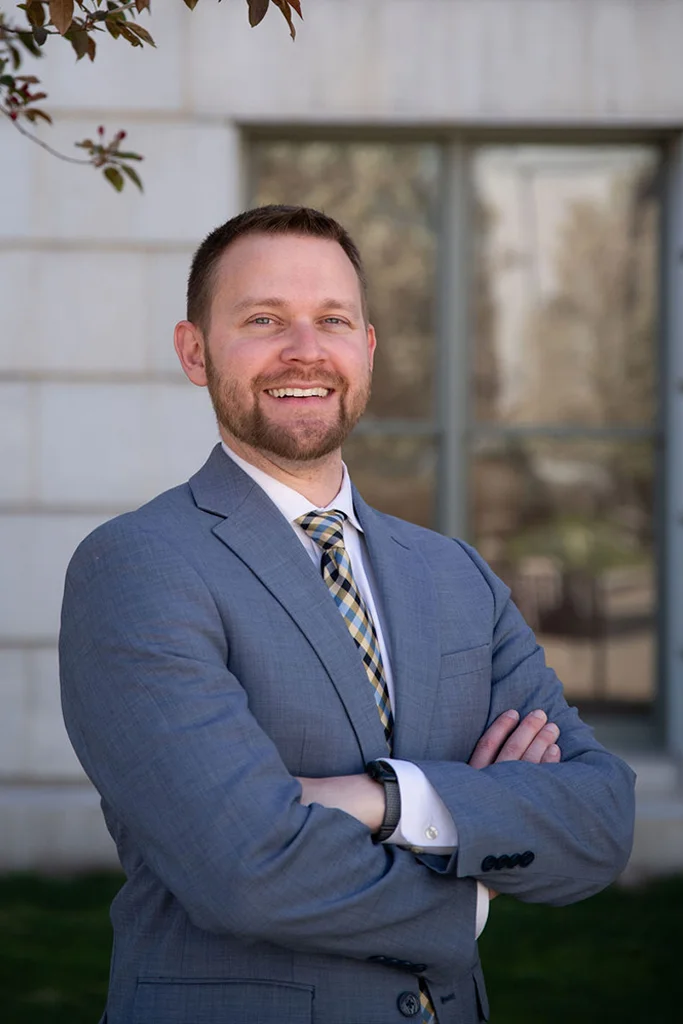
At DeChant Law, Reid DeChant represents clients facing drug charges throughout the Centennial area and across Arapahoe County. His background as a public defender, where he handled everything from misdemeanor possession to serious felony drug allegations, gives him a working knowledge of how Colorado prosecutors approach these cases from the inside. He knows what the state has to prove, where investigations typically fall short, and how to build a defense rooted in the actual facts of your specific situation.
Drug Charges Filed in Centennial and Arapahoe County Courts
- Possession of a Controlled Substance: Colorado criminalizes possession of Schedule I and Schedule II controlled substances including cocaine, methamphetamine, heroin, and fentanyl. The severity of the charge depends on the classification and quantity of the substance involved, and even first-time possession charges can result in felony filings in Arapahoe County.
- Possession with Intent to Distribute: When law enforcement observes factors like packaging, scales, large quantities of cash, or multiple phones alongside a controlled substance, they typically charge possession with intent to distribute rather than simple possession. This distinction carries significantly greater sentencing exposure and changes the entire defense calculus.
- Distribution and Sale of Controlled Substances: Direct distribution charges often arise from controlled buys conducted by undercover officers or confidential informants. Challenging the reliability of informants and the methodology of law enforcement operations is central to defending these cases.
- Drug Trafficking: Trafficking charges typically involve larger quantities and carry the most serious penalties in Colorado’s drug offense framework. Federal charges may accompany state charges when the alleged conduct crosses jurisdictional lines or involves organized distribution networks.
- Prescription Drug Offenses: Charges involving opioids, benzodiazepines, or other controlled substances obtained without a valid prescription or through fraud are increasingly prosecuted aggressively in Colorado, particularly given the fentanyl-related enforcement priorities across the Front Range.
- Drug Paraphernalia Charges: Often filed alongside possession charges, paraphernalia offenses involve items used or intended to be used in connection with controlled substances. While these charges may appear minor, they frequently appear in the record in ways that complicate expungement and future employment.
- Manufacturing and Cultivation: Cases involving the production or cultivation of controlled substances, including illegal THC concentrate operations, involve complex evidence questions related to lab analysis, chain of custody, and the probable cause underlying any search of a residence or property.
Why Reid DeChant Is the Right Choice for Centennial Drug Crime Defense
When you are looking at a drug charge in Arapahoe County, credentials matter less than actual courtroom experience, and Reid DeChant’s record reflects both. As a former public defender, Reid handled a high volume of criminal cases across Denver, Adams, and Broomfield County courtrooms, building the kind of trial fluency that only comes from repeated courtroom appearances, not from seminars. The firm’s results page includes a DUI-Drugs case out of Jefferson County taken to trial and won as a not guilty verdict, along with dismissals of DUI-Drugs charges in Broomfield County, reflecting Reid’s ability to challenge the evidence in drug-related prosecutions where scientific testing and police procedure are central battlegrounds.
Reid’s training at the Trial Lawyers College, the program founded by legendary trial attorney Gerry Spence, shaped a defense philosophy grounded in authentic storytelling and genuine human connection with judges and juries. Drug cases are often prosecuted using lab reports, officer testimony, and procedural evidence that can feel overwhelming on paper. Reid’s ability to deconstruct that evidence, humanize his clients, and present a coherent counter-narrative has been a consistent theme throughout his practice. He maintains active membership in the National Association of Criminal Defense Lawyers and the Colorado Criminal Defense Bar, organizations that keep him current on evolving drug law, suppression strategies, and sentencing alternatives as Colorado’s legal landscape around controlled substances continues to shift.
Clients working with Reid describe a relationship where they actually understand what is happening in their case and why. That transparency is not accidental. Reid treats the people he represents as partners in their own defense, which is particularly important in drug cases where the client’s own account of what happened, what officers said, and how the search was conducted can be the most important evidence in the entire file.
What the Defense of a Drug Case in Arapahoe County Actually Looks Like
Drug cases are among the most defensible categories of criminal charges, because they almost always depend on physical evidence obtained through law enforcement action, and that action has to comply with constitutional standards at every step. The Fourth Amendment governs searches and seizures, and it applies fully to traffic stops on Quebec Street, searches of apartments in the Centennial area, and investigative detentions anywhere in Arapahoe County. If the stop was unlawful, if the search exceeded its authorized scope, or if officers collected evidence without a valid warrant where one was required, that evidence may be suppressible. When evidence is suppressed in a drug case, the prosecution frequently cannot proceed, and charges are dismissed.
Beyond suppression, the state must prove that the substance was what officers say it was, that the defendant knowingly possessed it, and that the quantity and circumstances match the charge. Lab testing is not infallible. Chain of custody documentation can contain gaps. Constructive possession allegations, where the substance was found in a shared space rather than on the defendant personally, require the prosecution to prove dominion and control in ways that are not always straightforward. A drug crimes attorney in Centennial who dissects each layer of the state’s case from arrest through lab analysis puts the prosecution to its full burden of proof at every stage.
Colorado also has structured sentencing provisions and diversion programs that may be available depending on the specific charge, the defendant’s history, and the facts of the case. Drug offender surcharges, treatment-based alternatives to incarceration, and deferred judgments are all tools that a defense attorney familiar with Arapahoe County’s prosecution practices and judicial preferences can pursue aggressively. The goal in every case is the best possible outcome, and in drug cases, that often means exploring every alternative before accepting a conviction.
If You Were Arrested for a Drug Offense in Centennial, Here Is What Matters Now
The Arapahoe County Justice Center in Centennial, located at 7325 S. Potomac Street, is where drug cases originating in Centennial and the surrounding Arapahoe County communities are filed and adjudicated. Arraignments typically occur within a short window after arrest, and the charging documents filed at that stage set the formal accusations you will need to respond to. The initial appearance is not the time to discuss your case or make statements about what happened. Anything said to law enforcement before or after arrest can be used in the prosecution, and people who believe they are helping themselves by explaining the situation are almost always making things harder for their defense.
Preserving your right to remain silent is not a sign of guilt; it is the legally sound choice from the moment of contact with law enforcement through resolution. If you have already spoken to officers, a defense attorney can assess what was said and whether it creates any issues. What matters is stopping that flow of information going forward and starting to build a defense based on the actual evidence in the case.
Documentation is important from the client’s side as well. If you remember details about the stop or the search, including what the officer said, what justification was given, whether consent was requested or demanded, and exactly what was found and where, write those things down while they are fresh. Those details become the raw material for suppression arguments and cross-examination. In drug cases, the difference between charges that hold and charges that collapse often lives in those granular facts about how law enforcement conducted themselves.
Do not accept a public defender assignment without considering your options, particularly if the charges are serious or if you have prior history that elevates the sentencing range. The Arapahoe County public defender’s office handles an enormous caseload, and while those attorneys are often talented, the volume of cases they carry limits the depth of attention any single case receives. Consulting with a private drug crimes attorney in Centennial before your arraignment costs you nothing and gives you a clearer picture of what you are actually facing.
Questions People Ask About Centennial Drug Charges
Can drug charges in Colorado be expunged from my record?
Colorado has expanded access to record sealing in recent years, and many drug offenses are eligible for sealing after a waiting period. The specific eligibility depends on the level of the offense, whether a conviction resulted, and whether you completed any required conditions. Drug petty offenses and some drug misdemeanors may be sealable sooner than drug felonies. An attorney can walk you through the specific timeline and requirements based on your actual case outcome.
What is the difference between a drug felony and a drug misdemeanor in Colorado?
Colorado uses a tiered system for drug offenses, ranging from drug petty offenses through drug misdemeanors and up through four levels of drug felony. The level is determined primarily by the type and quantity of the substance. Level 1 drug felonies involve the largest quantities or most serious circumstances and carry the most substantial sentencing exposure. Even Level 4 drug felonies carry a potential prison sentence, making the distinction from a misdemeanor significant for anyone facing charges.
What happens if drugs were found in a car I was a passenger in?
Being present in a vehicle where drugs are found does not automatically mean you will be charged with possession. The prosecution must prove that you had knowledge of the substance and some degree of control over it. If the substance was found in someone else’s bag, in a part of the vehicle you did not control, or if there is no evidence connecting you specifically to it, those facts are central to your defense. Officers sometimes charge everyone in a vehicle and let prosecutors sort it out, but that does not mean the charges will hold.
Will a drug conviction affect my professional license in Colorado?
Yes, in many cases. Colorado licensing boards for healthcare, law, education, real estate, and numerous other professions conduct background checks and have independent authority to discipline or revoke licenses based on criminal convictions. The professional licensing consequences can sometimes be more lasting than the criminal sentence itself. This is one reason why the disposition of a drug case, whether it results in a conviction, a deferred judgment, or a dismissal, matters so much beyond the courthouse.
Can a drug charge affect my immigration status?
Drug offenses carry some of the most serious immigration consequences of any category of criminal charge. Even misdemeanor drug convictions can trigger deportability or inadmissibility under federal immigration law, and this applies regardless of how Colorado state law treats the offense. If you are not a U.S. citizen, this dimension of a drug charge requires immediate attention, and any plea or disposition needs to be evaluated through an immigration law lens before you agree to anything.
How does a confidential informant affect my drug case?
Many drug prosecutions depend in whole or in part on information from confidential informants. The reliability of that informant, the details they provided, and whether law enforcement adequately corroborated their information before acting on it are all legitimate areas of challenge. Informants are often individuals with their own criminal history and motives to cooperate with law enforcement, and those motivations are fair game for defense scrutiny. Compelling disclosure of an informant’s identity is a complex legal question, but it is one that defense attorneys pursue when the informant’s credibility is central to the case.
What is the typical timeline for a drug felony case in Arapahoe County?
Drug felony cases in Arapahoe County can take anywhere from several months to well over a year depending on the complexity of the charge, the volume of evidence, and whether the case goes to trial. Cases involving laboratory analysis of substances typically take longer because of the time needed to receive and review those results. Pretrial motions, including suppression hearings, add time but also create opportunities for dismissal or favorable rulings that reshape the case before trial.
Is there any way to avoid a conviction if I have a prior drug record?
Prior history affects sentencing exposure and can limit some diversion options, but it does not eliminate the defense possibilities in the current case. Suppression arguments, challenges to the sufficiency of the evidence, and negotiations that account for your full personal history, including any treatment completed or steps taken since a prior conviction, are all still available. Reid DeChant evaluates every case based on its actual facts, not just a criminal history summary.
What role does the quantity of drugs found play in how I am charged?
Quantity is one of the primary factors that determines the level of drug felony charged in Colorado. Above certain thresholds, the law creates presumptions of intent to distribute rather than personal use, which escalates both the charge and the sentencing range. These quantity thresholds are defined in Colorado statute and differ by substance. Challenging the weight or purity measurement from the laboratory analysis, or demonstrating that the quantity reflects personal use patterns rather than distribution, can be central to how the case is framed and argued.
Do I have to go to trial to get a good outcome on a drug charge?
No. Many drug cases resolve through negotiated dismissals, deferred judgments, or charge reductions that do not require a trial. The strength of the suppression arguments, the quality of the prosecution’s evidence, and the prosecutor’s assessment of how the case would play at trial all shape what kind of resolution is achievable through negotiation. Having an attorney who is a genuine trial threat, not just a negotiator, changes the dynamic of those conversations because prosecutors factor in the risk of going to trial when deciding what to offer.
Representing Drug Offense Clients Across Centennial and Arapahoe County
DeChant Law represents clients facing drug charges throughout the Centennial area and across the communities that surround it. This includes clients from Greenwood Village, Englewood, Littleton, Sheridan, and Cherry Hills Village, as well as those from the Aurora neighborhoods that fall within Arapahoe County’s jurisdiction. The firm also handles cases originating in the Parker and Foxfield areas to the southeast, along with clients from Columbine Valley, Bow Mar, and the unincorporated Arapahoe County communities that sit between the major municipalities. Clients from the Highlands Ranch area who face charges in Arapahoe County courts are also represented, along with those from Lone Tree, the Willow Creek and Meridian neighborhoods, and the broader south Denver suburban corridor. Cases frequently arise from traffic enforcement activity on E-470, I-25, and South Parker Road, all of which see consistent patrol presence and generate a significant share of Arapahoe County’s drug charge filings. Wherever in this region your charges originated, the cases land in the same Arapahoe County Justice Center, and familiarity with that courthouse and its prosecutors is what makes local representation matter.
Contact a Centennial Drug Crime Attorney at DeChant Law
A drug charge in Arapahoe County carries real consequences that extend beyond the courtroom, and the decisions you make right now about how to respond to those charges shape what those consequences ultimately look like. Reid DeChant is a Centennial drug crime attorney who has handled these cases at every level, from possession misdemeanors to serious felony allegations, and who approaches each one with the trial readiness and personal attention that the situation demands. Reach out to DeChant Law to schedule a consultation and get a clear picture of where your case stands and what your options actually are.