Boulder Felony Lawyer
A felony charge in Boulder County carries weight that extends far beyond a courtroom verdict. Convictions can result in years in the Colorado Department of Corrections, mandatory parole supervision after release, permanent damage to professional licenses, loss of firearm rights, and immigration consequences that can follow someone for the rest of their life. The 20th Judicial District, which covers Boulder County, prosecutes felony cases aggressively, and the prosecutors there are experienced, well-resourced, and oriented toward securing convictions rather than finding resolutions that actually fit the facts of a case. When the government is coming at you with that kind of institutional force, the defense attorney standing beside you matters enormously. A Boulder felony lawyer from DeChant Law brings the kind of courtroom preparation and client-centered advocacy that the stakes of a felony demand.
Colorado felony offenses are classified in tiers ranging from class 6, the least serious, up through class 1, which carries the most severe penalties including life imprisonment. Between those poles sit a wide range of charges including drug distribution, assault, sexual assault, burglary, weapons offenses, vehicular assault, and felony DUI. Each tier brings mandatory sentencing ranges that judges have limited discretion to depart from, which means the outcome of your case is shaped not just by what happened, but by how the charge is framed, whether it can be reduced, and whether the prosecution can actually prove what it alleges. These are the pressure points where a defense built on real trial experience can change everything.
Boulder is a university city with a complicated relationship with its criminal justice system. The presence of the University of Colorado creates a large population of young people who can find themselves facing felony charges for conduct that spun out of control at a party, a bar on Pearl Street, or a sporting event at Folsom Field. At the same time, Boulder County sees serious violent felonies, drug trafficking cases, domestic violence felonies, and white-collar charges that have nothing to do with student life. Whatever brought you here, DeChant Law treats your situation with the individualized attention it deserves.
What Colorado Felony Charges Actually Mean for Your Future
There is a common misunderstanding that felony charges are simply serious misdemeanors with bigger fines and longer jail sentences. In Colorado, a felony conviction fundamentally changes your legal status as a person. Beyond the sentence itself, a felony on your record can eliminate access to certain professional licenses in Colorado, disqualify you from federal student aid, bar you from owning or possessing firearms under both state and federal law, and create immigration consequences including deportation, inadmissibility, or ineligibility for naturalization if you are not a U.S. citizen. Employers, landlords, and licensing boards conduct background checks, and a felony conviction often surfaces as a permanent barrier regardless of how long ago the conviction occurred or how a person has rebuilt their life since then.
Colorado’s felony sentencing framework also includes aggravating and mitigating factors that can shift the applicable sentence range upward or downward from the presumptive range. A charge that comes with aggravators, such as prior felony convictions, use of a weapon, or commission of the offense while on parole, can push a sentence significantly above what a first-time offender would face for the same conduct. This is why understanding the full sentencing picture early in the case, before plea negotiations begin or a trial date is set, can be the difference between a sentence that preserves some future and one that closes off most of it.
The Range of Felony Charges DeChant Law Defends in Boulder County
- Felony DUI Charges: Colorado elevates DUI to a felony offense when a driver has three or more prior DUI convictions or certain other aggravating factors are present. Felony DUI cases in Boulder often arise from traffic stops on Highway 36, US-36 near Broomfield, Broadway, and Arapahoe Road, and they carry the potential for multiple years in the Department of Corrections in addition to DMV license revocation proceedings that run on a separate track from the criminal case.
- Drug Distribution and Trafficking: Possession with intent to distribute controlled substances, including methamphetamine, cocaine, heroin, fentanyl, and prescription medications, is charged as a felony in Colorado. The quantity of the substance, the circumstances of the alleged distribution, and whether a weapon was involved all affect the severity of the charge and the applicable sentencing range.
- Assault and Violent Felonies: First and second degree assault charges carry mandatory prison terms in Colorado under what are called crime of violence sentencing provisions. These cases often arise from disputes at venues near the Pearl Street Mall, on-campus altercations, or domestic incidents that escalate to serious bodily injury. Defense requires a thorough investigation of the physical evidence, witness accounts, and whether self-defense or defense of others applies.
- Domestic Violence Felonies: When a domestic violence incident results in allegations of serious bodily injury, strangulation, or use of a deadly weapon, the charge escalates to a felony. Colorado’s mandatory arrest policy means these cases often proceed even when the alleged victim later recants or declines to cooperate. Prosecutors in Boulder can pursue these cases independently, making early and aggressive defense intervention critical.
- Sexual Assault Charges: Sexual assault under Colorado law is a class 4 felony in baseline form, with sentence enhancements that can push the offense to a class 2 felony depending on the circumstances. Convictions also carry sex offender registration requirements that can last decades or a lifetime. These cases frequently involve contested consent, credibility disputes, and forensic evidence that requires careful analysis.
- Burglary and Theft Felonies: Colorado’s felony theft threshold and burglary statutes cover a wide range of conduct, from retail theft involving high-value merchandise to first-degree burglary of an occupied dwelling. The distinction between degrees of burglary and the presence of any weapon can dramatically change the sentence exposure a person faces.
- Weapons Charges: Felony menacing with a deadly weapon, illegal discharge of a firearm, and possession of a weapon by a previous offender are among the felony weapons charges filed regularly in Boulder County. These charges often arise alongside other alleged offenses and require attention to Fourth Amendment search and seizure issues, particularly whether the weapon was discovered during a lawful stop.
Why DeChant Law Brings Something Different to Boulder Felony Defense
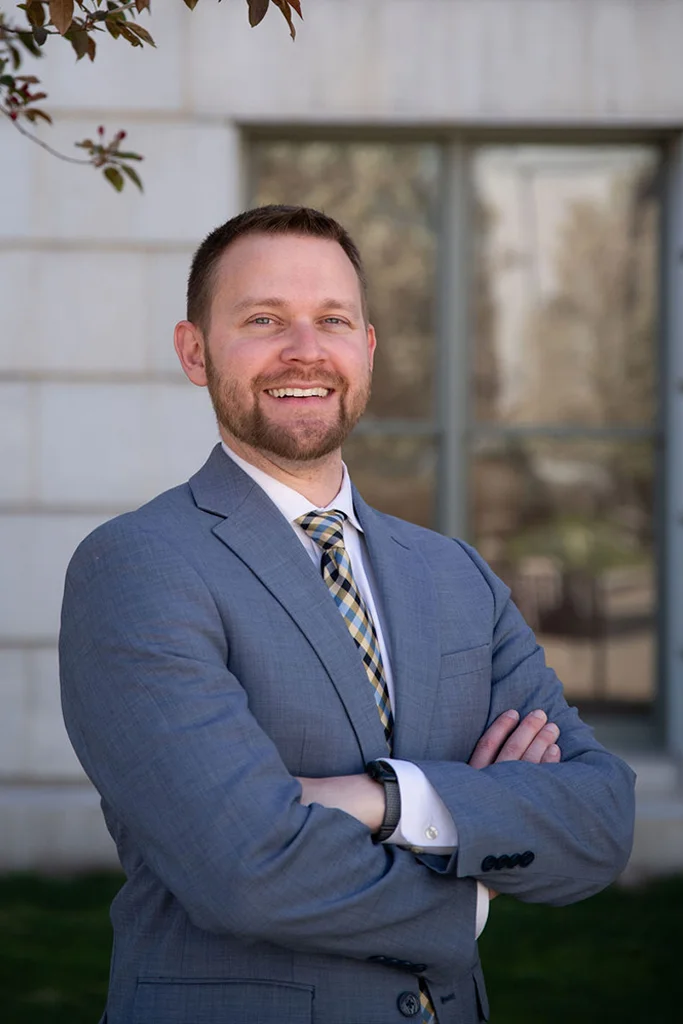
Reid DeChant’s background is not a standard private practice biography. Before building DeChant Law, Reid worked as a public defender, handling an enormous volume of cases across Denver, Broomfield, and Adams County courtrooms. That experience covered the full range of Colorado criminal charges, from traffic offenses up through homicide, and it produced something that no number of years in a firm can replicate: real courtroom trial time. Reid has cross-examined police officers, challenged forensic evidence, argued suppression motions, and tried cases to verdict in front of Colorado juries. For someone facing a felony in Boulder County, that trial record is not a nice credential. It is the practical guarantee that if a case needs to go to trial, the attorney standing beside them has been there before and knows what that demands.
Reid is also a graduate of the Trial Lawyers College, founded by legendary attorney Gerry Spence, which trains lawyers in narrative advocacy, psychodrama, and genuine human connection in the courtroom. Felony cases that go to trial are decided by juries who are asked to find reasonable doubt in a story the prosecution has carefully constructed. The way a defense lawyer tells the defendant’s story, reveals the gaps and overreach in the government’s case, and connects authentically with jurors is not something that comes from legal textbooks. It comes from focused, experiential training in exactly those skills, and Reid carries that training into every courtroom appearance he makes.
Reid’s memberships in the National Association of Criminal Defense Lawyers and the Colorado Criminal Defense Bar reflect an ongoing engagement with the broader community of defense attorneys who are pushing the field forward. These are not passive affiliations. They reflect access to the latest developments in suppression law, forensic science challenges, and sentencing strategy that the best defense attorneys share with each other. For a felony client in Boulder, that network means their lawyer is bringing current, sharpened tools to their defense rather than relying on approaches that worked a decade ago.
When You’re Charged: How to Move Through the Boulder County Court System
Felony cases in Boulder County are processed through the Boulder County Justice Center, located at 1777 6th Street in Boulder. After arrest, most felony defendants face an advisement hearing where bond conditions are set, followed by a preliminary hearing or grand jury proceeding to establish probable cause, and then formal arraignment before the case moves toward either a plea resolution or trial setting. The timeline from arrest to resolution varies considerably depending on the complexity of the case, the court’s docket, and what defense investigation uncovers, but felony cases in Boulder County routinely span many months. Understanding what is happening at each stage, and why it matters, is part of what a defense attorney should be making clear to you throughout the process.
One of the most common and damaging mistakes people make after a felony arrest is waiting too long to retain defense counsel. Bond hearings happen quickly, and the conditions set at an early advisement can affect whether someone can return to work, maintain housing, or have contact with their family while the case is pending. Evidence that matters to the defense, including surveillance video, witness statements, and law enforcement body camera footage, can disappear or become unavailable if it is not requested promptly. Hiring a Boulder felony attorney early in the process is not just about preparing for trial. It is about preserving options that close off permanently if the early stages of the case are left uncontested.
If you have been released on bond, comply fully with every condition the court has imposed. Bond revocations in Boulder County can result in pretrial detention that lasts through the entire case resolution, which undermines your ability to assist in your own defense, maintain your employment, and present yourself credibly at sentencing if needed. The period between arrest and resolution is one where every decision either strengthens or undermines your position, and having counsel who can advise those decisions as they arise matters from the first day.
Questions About Boulder Felony Charges, Answered Directly
What is the difference between a class 4 and a class 3 felony in Colorado?
Colorado’s felony classes reflect increasingly severe sentencing ranges. A class 4 felony carries a presumptive sentence range of two to six years in the Department of Corrections, while a class 3 felony carries a presumptive range of four to twelve years. Both can be pushed into an aggravated range if certain factors apply, such as prior convictions or commission of the offense while on parole. The classification also affects parole eligibility and mandatory supervision periods after release, so the distinction between a class 4 and class 3 charge is not merely symbolic.
Can a felony charge in Boulder be reduced to a misdemeanor?
Yes, in some cases. Whether a reduction is available depends on the specific charge, the facts of the case, the defendant’s prior record, and what the prosecution is willing to agree to. Some Colorado felonies are designated as “wobblers” where the statute provides a path to misdemeanor sentencing. Others can be reduced through plea negotiations as part of a global resolution. An experienced Boulder felony attorney will analyze whether charge reduction is a realistic goal early in the case and pursue it where the facts and law support that strategy.
What happens to my driving privileges if I am convicted of a felony DUI in Colorado?
A felony DUI conviction in Colorado triggers consequences in two separate tracks. The criminal conviction itself carries a sentence that may include prison time, probation, fines, and mandatory alcohol treatment. Separately, the Colorado DMV can revoke your driver’s license through an administrative process that runs parallel to the criminal case. The revocation period for felony DUI is more severe than for first or second offense misdemeanor DUI, and reinstatement requires meeting specific DMV conditions including installation of an ignition interlock device. Both tracks must be addressed, which is why DeChant Law handles both the criminal defense and any related DMV proceedings.
Will a Colorado felony conviction affect my professional license?
It can, significantly. Colorado licensing boards for professions including medicine, nursing, law, real estate, financial services, education, and many others have authority to discipline, suspend, or revoke a license upon a felony conviction. The specific consequences depend on the nature of the felony and the standards of the relevant licensing board. For clients who hold or are pursuing professional licenses, the plea or conviction strategy must account for licensing consequences, not just criminal sentencing, which is one reason why early and thorough defense evaluation matters.
How does a domestic violence designation affect a felony case in Boulder?
When a felony charge carries a domestic violence designation, it triggers mandatory consequences beyond what the criminal sentence alone would require. Federal law prohibits anyone convicted of a domestic violence offense from possessing firearms or ammunition, regardless of whether the offense was a misdemeanor or felony. Colorado law also requires mandatory treatment upon conviction and imposes mandatory protection order conditions during the case. The DA’s office in Boulder can pursue domestic violence felony cases even without victim cooperation, meaning the defense cannot rely on the alleged victim’s refusal to testify as a resolution strategy without a broader plan in place.
What does it mean if my felony case has a “crime of violence” sentence enhancer?
Colorado’s crime of violence statute requires mandatory prison sentences for certain felonies where a weapon was used or threatened, or where the victim suffered serious bodily injury. When this enhancer applies, the judge must sentence within a specific range and cannot suspend the sentence or impose only probation. This is one of the most significant sentencing mechanisms in Colorado felony law because it removes much of the judge’s discretion. Defense strategy must account for whether the crime of violence enhancer actually applies under the facts of the case, and challenging it where the evidence does not support it can make a substantial difference in outcome.
Can someone charged with a felony in Boulder get deferred adjudication or a deferred sentence?
Colorado allows for deferred prosecution agreements and deferred sentencing in some felony cases, which can result in the charge being dismissed after successful completion of conditions rather than a formal conviction entering on the record. Not every charge or defendant qualifies, and the prosecution’s willingness to agree to a deferred resolution depends on the nature of the offense, the defendant’s background, and the specific circumstances. Where it is available, a deferred resolution can preserve employment, housing, and licensing consequences that a conviction would trigger. Evaluating this option requires understanding both the law and how the Boulder County DA’s office approaches these negotiations in practice.
How long will a felony case in Boulder County typically take to resolve?
There is no fixed timeline. Less complex felony cases may resolve in four to eight months through a negotiated plea. Cases involving serious charges, contested evidence, substantial discovery, or a trial setting can take a year or more. Cases that go to trial often take the longest because trial scheduling in the 20th Judicial District depends on court availability and the complexity of preparation required. Understanding this timeline matters for practical planning around employment, housing, and family obligations during the period the case is pending.
Is it possible to seal or expunge a felony conviction in Colorado?
Colorado law allows sealing of certain criminal records, but the rules for felony convictions are more restrictive than for misdemeanors. Many serious felonies are not eligible for sealing, and for those that are, significant waiting periods typically apply after the completion of the sentence. Drug felony convictions have their own sealing framework. A case that results in a dismissal or a deferred adjudication that is completed successfully may be sealable under different and more favorable rules. The question of whether a record can eventually be sealed is worth discussing at the outset of a case because it can influence which resolution options are most valuable in the long run.
What should I do if I was contacted by Boulder police but not yet charged with a felony?
Contact a defense attorney immediately and do not speak to law enforcement without counsel present. The investigative phase of a felony case, before formal charges are filed, is often where the most damaging evidence is gathered. Police investigators are skilled at eliciting statements that can later be used against you, and the fact that you have not been charged yet does not mean your words cannot contribute to building a case against you. An attorney retained at the investigative stage can intervene, communicate with detectives on your behalf, and sometimes influence whether or how charges are filed.
DeChant Law Represents Felony Defendants Across Boulder and Surrounding Communities
DeChant Law defends clients facing felony charges throughout Boulder County and the broader Front Range region. In Boulder itself, clients come from neighborhoods including University Hill, Whittier, Martin Acres, Newlands, Gunbarrel, and the areas surrounding the Pearl Street corridor. The firm also represents clients from Longmont, Lafayette, Louisville, Superior, Broomfield, Erie, Lyons, Nederland, Ward, Jamestown, and the mountain communities of Boulder County’s western reaches. Beyond the county borders, DeChant Law serves clients from Westminster, Thornton, Arvada, Wheat Ridge, Lakewood, Golden, and the broader Jefferson County and Adams County areas. Reid DeChant’s former public defender work in Adams County and Denver courts means he already has deep familiarity with the prosecutors and judicial procedures in those surrounding jurisdictions. Whether a case is filed in the Boulder County Justice Center or a neighboring district court, DeChant Law approaches it with the same preparation and commitment that felony-level stakes require.
Speak with a Boulder Felony Attorney About Your Case
A felony charge in Colorado is not the kind of situation where a wait-and-see approach serves anyone well. The evidence picture solidifies, the court process moves forward, and options that exist early in a case can close off permanently as time passes. Reid DeChant is a Boulder felony attorney whose trial experience, Trial Lawyers College training, and genuine commitment to each client’s outcome make DeChant Law the kind of representation these charges demand. Call DeChant Law today to schedule a consultation and get a candid assessment of where your case stands and what can be done about it.