Aurora Felony Lawyer
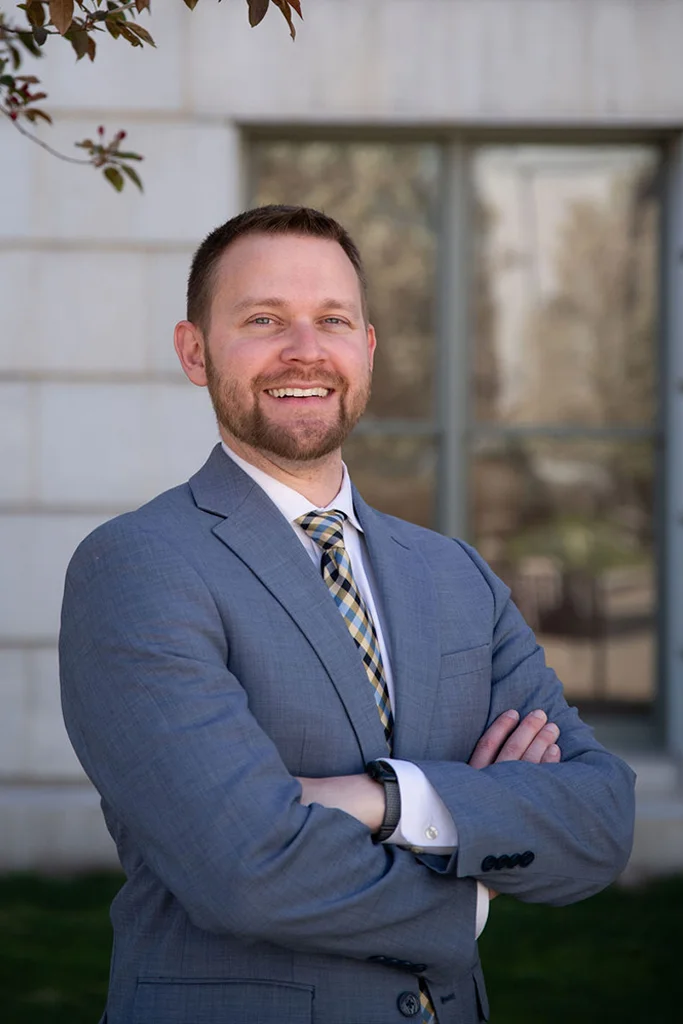
A felony charge in Aurora carries consequences that extend far beyond whatever sentence a judge might impose. We are talking about permanent criminal records that appear in background checks, the loss of voting rights and firearm rights, disqualification from professional licenses, and in many cases, years of imprisonment at a Colorado Department of Corrections facility. The distance between a felony conviction and a dismissed or reduced charge often comes down to who is representing you and what that attorney actually does with your case before it ever reaches a jury. Aurora felony lawyer Reid DeChant of DeChant Law has spent years inside Colorado courtrooms defending clients against precisely the kinds of charges that can permanently alter the course of a person’s life.
Aurora sits within Arapahoe County, and felony cases filed there move through the Arapahoe County Combined Courts at the Judicial Center in Centennial. The Arapahoe County District Attorney’s Office prosecutes these cases, and their felony division is well-resourced and experienced. That office handles everything from Class 6 felonies, the lowest tier, all the way up to Class 1 felonies, which carry the most severe penalties under Colorado law. The prosecutors on the other side of your case have handled hundreds of felony matters. Matching that level of preparation and courtroom experience requires a defense attorney who has actually litigated felony cases through to verdict, not one who resolves everything with a plea and calls it a day.
What matters in felony defense is not credentials on a wall. It is whether your attorney can stand up in a suppression hearing and effectively challenge the legality of a traffic stop, whether they can cross-examine a police officer in front of a jury without flinching, and whether they have the experience to recognize when the prosecution’s case has weaknesses that can be exploited. Reid DeChant’s background as a public defender gave him the kind of high-volume trial exposure that most private attorneys simply do not accumulate, and his training at the Trial Lawyers College sharpened that courtroom skill into something more than technical competence.
Felony Charges Most Commonly Filed in Aurora and Arapahoe County
- Felony DUI (Driving Under the Influence): Colorado treats a fourth or subsequent DUI as a felony offense regardless of whether prior offenses occurred in-state or out of state, and Aurora’s major corridors along E-470, Iliff Avenue, and Havana Street are active enforcement zones. A felony DUI conviction carries mandatory prison time and permanent license consequences that go far beyond what a misdemeanor DUI involves.
- Drug Felonies: Possession with intent to distribute, distribution itself, and manufacturing of controlled substances such as methamphetamine, cocaine, heroin, or fentanyl are charged as felonies under Colorado law. Proximity to Aurora’s commercial districts and transportation hubs along I-225 and I-70 makes drug interdiction a priority for local law enforcement.
- Assault in the First and Second Degree: Colorado distinguishes among degrees of assault based on the severity of injury and the use of a deadly weapon. First-degree assault is a Class 3 felony; second-degree assault is a Class 4 felony. Both carry significant mandatory sentencing components, particularly when charged as crimes of violence.
- Felony Domestic Violence: When an assault, menacing, or strangulation charge involves an intimate partner or household member, Colorado’s domestic violence designation adds mandatory consequences including treatment requirements and a lifetime federal firearm prohibition upon conviction.
- Weapons Charges: Felony menacing with a deadly weapon, possession of a weapon by a previous offender, and unlawful discharge of a firearm are among the weapons-related felonies filed regularly in Arapahoe County. These charges often accompany other felony allegations and require careful untangling of the facts.
- Theft and Property Crimes: Colorado’s theft statute escalates to felony status based on the value of the property involved. Charges like aggravated motor vehicle theft, burglary, and robbery are classified as felonies from the outset and carry substantially different penalties than misdemeanor theft.
- Sexual Assault and Sex Offenses: Sexual assault charges in Colorado are Class 3 or Class 4 felonies depending on the circumstances, and a conviction typically requires registration as a sex offender, which carries its own sweeping restrictions on where you can live and work long after any sentence is served.
What Reid DeChant Actually Does in a Felony Case
There is a tendency to assume that felony defense consists mainly of negotiating a plea deal and advising a client to accept it. That assumption works in the prosecution’s favor, and it fails defendants. Reid DeChant’s approach starts at the beginning of the case, not at the moment a plea offer arrives. That means reviewing every piece of discovery that the prosecution is required to disclose, including police reports, body camera footage, forensic lab reports, witness statements, and any electronic evidence gathered during the investigation.
One of the most consequential stages in any felony case is the preliminary hearing, where the prosecution must establish probable cause to proceed on the charges. This is not a rubber stamp. An effective defense attorney uses the preliminary hearing to lock witnesses into their testimony under oath, to expose inconsistencies in the prosecution’s evidence, and to test the strength of the government’s case before trial. Reid understands how to use every procedural opportunity to build toward the best possible outcome for his clients.
Motions practice is another area where felony defense is won or lost long before a jury is seated. Motions to suppress evidence obtained through unlawful searches, motions challenging the admissibility of statements made during custodial interrogation, and motions attacking the sufficiency of the charging document are tools that can dramatically change the shape of a case. If the prosecution’s case depends on evidence that was gathered in violation of the Fourth Amendment, a successful suppression motion can leave them without enough to proceed. That outcome, a case dismissed on a motion rather than won at trial, often represents the most practical path to protecting a client’s future.
When a case does go to trial, Reid’s training at the Trial Lawyers College becomes particularly relevant. That program, founded by legendary attorney Gerry Spence, trains lawyers to connect with juries through authentic storytelling rather than technical argument. Juries are composed of people, and they decide cases based on whether they understand and believe the story they are being told. Reid has developed the ability to present a client’s narrative with both honesty and power, and that approach has produced not-guilty verdicts in cases where the evidence appeared formidable at the outset.
Why DeChant Law for an Aurora Felony Defense
Reid DeChant built his practice on the kind of trial experience that only comes from actually trying cases. As a former public defender in Denver, Broomfield, and Adams County courts, Reid handled an enormous volume of criminal cases across the full spectrum of charges, from traffic offenses through DUI, assault, theft, sexual assault, and homicide. That background means he has stood in front of judges and juries more often than most private defense attorneys will in entire careers, and it means he understands how Colorado’s felony system actually operates from the inside out.
Reid’s recognition from the National Association of Criminal Defense Lawyers and the Colorado Criminal Defense Bar reflects a commitment to being at the front of criminal defense practice, not just maintaining competency in it. His case results reflect that commitment as well. DeChant Law has secured not-guilty verdicts at trial in cases involving two counts of assault with a deadly weapon, DUI offenses at the third-offense level, and domestic violence-related strangulation charges. Cases have been dismissed at the preliminary stage and at trial in multiple jurisdictions. These outcomes, which are documented on the firm’s website, are the product of preparation, strategic thinking, and a willingness to take difficult cases the full distance when that is what a client’s situation demands.
For someone facing a felony charge in Aurora, the quality of their defense attorney will likely be the single most consequential decision they make. Reid approaches every client as a person with a story worth telling and a future worth defending. Clients are kept informed at every stage of the process, consulted on every significant decision, and never left wondering what is happening in their case.
After an Aurora Felony Arrest: What the First Days Actually Require
The period immediately following a felony arrest in Aurora is the most critical window in the entire case, and it is also the period when people most often make mistakes that follow them for years. The first thing to understand is that anything you say to law enforcement from the moment of arrest forward can be used against you. This is not a formality. Detectives and officers are trained to conduct post-arrest interviews designed to elicit statements, and those statements routinely appear in prosecutorial filings months later. The correct response at every stage before speaking with an attorney is silence, not hostility, not explanation, just silence and a clear request to speak with a lawyer.
After an arrest in Aurora, you will typically be booked at the Aurora Detention Center before appearing before a judge for your advisement hearing, where bail is set and charges are formally read. Felony arraignments and subsequent hearings in Arapahoe County take place at the Arapahoe County Combined Courts located at 7325 S. Potomac Street in Centennial. Getting a defense attorney involved before that first advisement, or as close to it as possible, gives your lawyer the ability to advocate for favorable bail conditions and begin building a defensive strategy from the start rather than playing catch-up after the prosecution has already laid groundwork.
You should also avoid discussing the facts of your case with anyone other than your attorney. Jail and detention facility phone calls are recorded, and text messages, social media posts, and communications with family members have all been used as evidence in Colorado felony cases. The instinct to explain yourself to people who care about you is natural, but it creates real risk. Let your attorney do the communicating that needs to happen.
Document everything you can remember about the circumstances of your arrest, what was said, what happened, and in what order. Write it down privately and give it to your attorney. Memory fades quickly, and those details can matter enormously when your lawyer is reviewing police reports for inconsistencies or preparing to cross-examine officers about what they claim happened during the stop or arrest.
Questions Aurora Residents Have About Felony Charges
What is the difference between a Class 4, Class 5, and Class 6 felony in Colorado?
Colorado’s felony classification system runs from Class 1, which is the most serious and includes first-degree murder, through Class 6, which is the least serious felony level. Class 4 felonies generally carry presumptive sentences in the range of two to six years in the Department of Corrections, Class 5 felonies carry one to three years, and Class 6 felonies carry twelve to eighteen months. However, sentencing in Colorado felony cases is significantly affected by factors such as prior criminal history, whether the offense is designated as a crime of violence, and whether mandatory minimums apply. These ranges are starting points, not guarantees, and an attorney’s work during the pre-sentencing phase can substantially influence where within a range a judge lands.
Can a felony charge in Aurora be reduced to a misdemeanor?
Yes, and this happens with some regularity in Arapahoe County cases. Prosecutors have discretion to amend charges in exchange for a guilty plea, particularly when the evidence has weaknesses or when a defendant has no significant prior criminal history. In other situations, deferred judgments or deferred prosecutions may be available, which allow a defendant to complete certain conditions and have the case dismissed entirely. Not every felony is reducible, and some carry mandatory minimum sentences that limit the court’s discretion, but an experienced Aurora felony attorney will identify the negotiating positions that are realistic in a given case and pursue them aggressively.
Will I go to prison if convicted of a felony in Colorado?
Not necessarily, though it is a real possibility depending on the class of felony and your history. Colorado law provides for probation in many felony cases, particularly for lower-level felonies and first-time offenders. Some felonies, particularly those designated as crimes of violence or those involving mandatory minimums, do require mandatory prison sentences upon conviction. The sentencing judge has discretion in many cases, which is why the work that happens between charges being filed and a sentencing hearing matters so much. Mitigation, character evidence, treatment records, and the quality of legal advocacy at sentencing all factor into where a defendant ends up.
What happens to my gun rights if I am convicted of a felony in Colorado?
A felony conviction in Colorado results in the permanent loss of the right to possess firearms under both Colorado and federal law. This includes the right to purchase firearms through licensed dealers, which runs a federal background check through NICS. For people who hunt, work in fields that involve firearms, or simply value that right, the collateral consequence of losing it permanently is often one of the most significant impacts of a felony conviction beyond the criminal sentence itself. This consequence is another reason why fighting the charge rather than accepting a quick plea is worth serious consideration.
Can a felony conviction in Colorado be sealed from my record?
Colorado law allows for sealing of certain criminal records, but the rules for felonies are more restrictive than for misdemeanors. Many felony convictions are eligible for sealing only after a significant waiting period following completion of the sentence, and some categories of offenses, particularly sexual offenses and crimes of violence, have different rules or are not eligible for sealing at all. Charges that were dismissed or resulted in acquittal are generally sealable. An attorney can evaluate whether and when sealing might be available in a specific case, but the better outcome is avoiding a conviction in the first place.
How does a felony domestic violence designation affect my case differently than a regular felony?
When a felony charge is accompanied by a domestic violence designation in Colorado, the consequences multiply in several ways. The domestic violence designation triggers mandatory treatment requirements as a condition of any sentence, including probation. It creates a mandatory hold after arrest that prevents release until a judge has reviewed the case and considered protection order conditions. Most significantly, a domestic violence conviction results in a lifetime prohibition on firearm possession under federal law, even for offenses that might otherwise carry relatively minor penalties. These cases also tend to proceed differently because alleged victims in domestic violence cases are frequently contacted and sometimes pressured by prosecutors even when the alleged victim does not wish to cooperate.
What if law enforcement searched my car or home without a warrant before the Aurora felony arrest?
Fourth Amendment protections against unreasonable searches and seizures apply in Colorado cases, and evidence obtained in violation of those protections can be suppressed, meaning the prosecution cannot use it at trial. Whether a particular search was lawful depends on the specific circumstances: whether there was a warrant, whether an exception to the warrant requirement applies, whether consent was truly voluntary, and whether the scope of any search exceeded what law enforcement was authorized to do. These are exactly the kinds of issues that require careful legal analysis, and they can result in the exclusion of the prosecution’s core evidence if handled correctly. If you believe law enforcement searched your property without proper legal authority, that detail is one of the first things to discuss with your attorney.
How long does a felony case in Arapahoe County typically take from arrest to resolution?
Felony cases in Arapahoe County move through a series of mandatory hearings, including advisement, preliminary hearing, arraignment, pre-trial conferences, and trial. Straightforward cases may resolve within several months through a negotiated outcome. Cases that proceed to trial often take a year or more, depending on the complexity of the charges, the volume of discovery, and the availability of court dates. There is no universal timeline. Some cases benefit from moving quickly, particularly when the goal is getting a client back to their normal life as fast as possible. Others benefit from patience, allowing time for discovery review, witness investigation, and the filing of pretrial motions. Your attorney should discuss realistic expectations for your specific situation.
Can I lose my professional license because of a felony charge in Colorado?
Yes, and for many people this is one of the most devastating collateral consequences of a felony case. Colorado’s professional licensing boards for occupations including nursing, real estate, contracting, teaching, law, medicine, and many others have independent authority to discipline or revoke licenses when a licensee is charged with or convicted of a criminal offense. The standard each board applies varies, but a felony conviction almost always triggers a licensing proceeding. Even a deferred judgment or plea to a lesser charge may have licensing implications. Anyone holding a professional license who is facing a felony charge should raise that concern explicitly with their defense attorney from the first meeting, because the decisions made in the criminal case can have direct consequences for their career.
Does it matter that my arrest happened in Aurora even though the court is in Centennial?
The location of the courthouse does not affect the substance of your defense, but it does affect the practical details of how your case moves through the system. Arapahoe County Combined Courts, located in Centennial, handles all felony cases arising from Aurora and from other communities within Arapahoe County. This means your hearings, motions, and trial will all take place at that courthouse. Local knowledge of that court’s procedures, its judges, and the practices of the Arapahoe County District Attorney’s Office is a genuine asset in felony defense. Attorneys who regularly appear in Arapahoe County courts understand the particular rhythms and tendencies of that jurisdiction in ways that affect case strategy.
DeChant Law Handles Felony Defense Across Aurora and the Surrounding Region
DeChant Law represents clients facing felony charges throughout Aurora and across the broader Arapahoe County region. Whether the case originates in Aurora’s neighborhoods along Havana Street, Peoria Street, or the Fitzsimons area near the medical campus, or in communities further from Aurora’s center, the firm’s representation extends across the jurisdiction. This includes clients in Centennial, Englewood, Greenwood Village, Cherry Hills Village, and Littleton within Arapahoe County, as well as clients from Denver, Lakewood, and Thornton who have cases flowing into Arapahoe County courts. Across the south metro area, including Parker, Castle Rock, and communities along the I-25 and E-470 corridors, DeChant Law handles the full range of felony matters that state prosecutors bring to court. The firm also serves clients from Adams County, Jefferson County, Broomfield, and Douglas County when representation carries into those jurisdictions.
Speak with an Aurora Felony Attorney Before Making Any Decisions
The early decisions in a felony case, what to say, whether to accept an initial plea offer, how to approach the preliminary hearing, which pretrial motions to file, shape everything that comes afterward. Working with an Aurora felony attorney who has the trial background and the case-specific focus to make those decisions thoughtfully can change the entire trajectory of a case. Reid DeChant has tried felony cases to verdict and secured dismissals and acquittals in some of the most difficult circumstances that Colorado courts present. If you or someone you know is facing felony charges in Aurora or Arapahoe County, call DeChant Law and speak directly with Reid about the facts of your situation. A direct conversation about what you are facing, with an attorney who will give you honest analysis rather than reassurances, is the most useful thing you can do right now.