Aurora Drug Crimes Lawyer
Drug charges in Aurora carry consequences that extend far beyond the courtroom. A conviction can determine where you live, where you work, whether you can obtain a professional license, and how immigration authorities view your status in this country. The Arapahoe County District Attorney’s Office and the Adams County DA, depending on which side of Aurora your arrest occurred, aggressively prosecute drug offenses at every level, from simple possession to large-scale distribution allegations. If you are looking for an Aurora drug crimes lawyer, the representation you choose in the days immediately following an arrest will shape everything that comes after.
Aurora sits at the intersection of several major law enforcement jurisdictions. E-470, Colfax Avenue, Alameda Avenue, and the stretches of I-225 and I-70 that cut through the city are regular enforcement corridors. The Aurora Police Department runs dedicated narcotics units, and traffic stops along these routes frequently escalate into drug searches, sometimes based on odor, sometimes based on evidence that a defense attorney would challenge vigorously. The difference between a charge that gets reduced and one that sticks often comes down to what happened during the stop and whether law enforcement followed proper constitutional procedures.
Colorado’s drug laws have evolved significantly in recent years, but evolution does not mean leniency. Possession of certain controlled substances can still result in felony charges. Drug distribution, conspiracy, and trafficking allegations carry multi-year prison sentences. Understanding the specific charge you are facing, and what the prosecution actually has to build its case around, is the starting point for any serious defense.
Drug Offenses Commonly Prosecuted in Aurora
- Possession of a Controlled Substance: Colorado law divides controlled substances into schedules, and the schedule classification of the drug found in your possession determines the severity of the charge. Fentanyl, methamphetamine, cocaine, and heroin possession are treated with particular seriousness, and even small quantities can trigger felony-level prosecution depending on prior history and circumstances.
- Possession with Intent to Distribute: Aurora law enforcement frequently upgrades possession charges to distribution charges based on circumstantial evidence including quantity, packaging, the presence of scales, or cash. This upgrade transforms a misdemeanor or lower-level felony into a charge with substantially greater prison exposure, and the evidence supporting that upgrade is often worth challenging.
- Drug Trafficking and Transportation: Given Aurora’s position along major highway corridors connecting Denver to the eastern plains, interstate trafficking investigations are not uncommon. Federal agencies sometimes become involved when quantities or geographic scope trigger federal jurisdiction, which changes the procedural landscape and the sentencing exposure entirely.
- Prescription Drug Offenses: Possession of prescription medications such as opioids, benzodiazepines, or stimulants without a valid prescription is a criminal offense under Colorado law. These cases often arise from traffic stops or DUI investigations where officers find pill bottles that do not belong to the driver.
- Drug Paraphernalia Charges: Paraphernalia charges frequently accompany possession charges and, while lower-level, they affect criminal records, can complicate probation terms, and sometimes serve as leverage in plea negotiations. They should not be dismissed as minor without understanding their downstream consequences.
- Marijuana-Related Offenses: Despite Colorado’s legalization of recreational cannabis, marijuana offenses still exist. Possession in excess of legal limits, distribution without a license, and possession by minors remain criminal matters. Driving under the influence of cannabis is a separate and common charge along Aurora’s enforcement corridors.
- Conspiracy and Manufacturing Charges: Aurora cases occasionally involve allegations that a defendant participated in manufacturing controlled substances, particularly methamphetamine, or conspired with others in drug distribution networks. These charges are complex, often involve recorded communications or confidential informants, and demand careful scrutiny of how the investigation was conducted.
Why DeChant Law Handles Aurora Drug Cases Differently
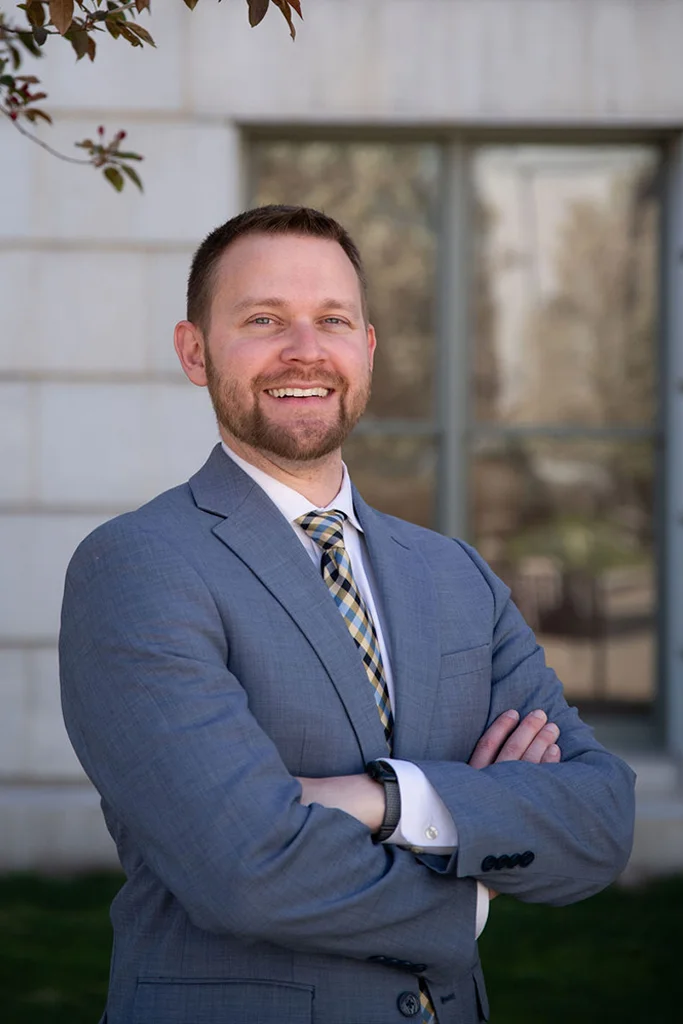
Reid DeChant built his practice on a foundation that most private defense attorneys cannot replicate. Before entering private practice, Reid worked as a public defender in Denver, Broomfield, and Adams County courtrooms, handling a volume and variety of criminal cases that private practice alone rarely provides. Drug cases were a significant part of that caseload. He handled possession charges, distribution allegations, paraphernalia matters, and the full range of narcotics-related prosecution. That experience means he has been inside these courtrooms, cross-examined the police officers, and challenged the evidence types that appear in drug prosecutions, long before a client’s case ever reached his desk.
Reid is also a graduate of the Trial Lawyers College, founded by Gerry Spence, which trains attorneys in authentic courtroom advocacy and the kind of narrative storytelling that actually moves juries. Drug cases that go to trial are not won by reciting legal standards. They are won by connecting the facts of a real person’s situation to the constitutional principles that govern law enforcement conduct. Reid’s training shapes how he approaches every stage of a drug case, from the initial suppression motion to the closing argument, if the case goes that far.
His membership in the National Association of Criminal Defense Lawyers and the Colorado Criminal Defense Bar keeps him current on shifting drug laws, evolving case law on search and seizure, and the defense strategies being used successfully across the country. For someone facing drug charges in Aurora, that connection to the broader defense community matters. Drug law is not static, and neither is the law governing how police are permitted to search a vehicle, a home, or a person’s belongings.
Peer recognition and professional affiliations are worth noting, but what clients consistently describe matters most: Reid treats clients as partners in their own defense. You will know what is happening with your case, why certain decisions are being made, and what your realistic options look like at every stage.
What the Evidence in an Aurora Drug Case Actually Looks Like
Aurora drug prosecutions are built on physical evidence, and physical evidence requires a lawful foundation. Before any controlled substance becomes admissible proof of guilt, the prosecution must establish that the evidence was obtained in a constitutionally permissible way. That is where drug defense work actually happens, not in abstract arguments about guilt or innocence, but in concrete challenges to the stop, the search, and the seizure.
When Aurora Police or Arapahoe County deputies conduct a traffic stop, they need reasonable articulable suspicion that a traffic violation occurred. When they search a vehicle, they generally need either a warrant, consent, or a recognized exception to the warrant requirement. The plain smell doctrine, the automobile exception, and consent searches are among the most commonly used justifications, and all of them are subject to challenge. If the stop was pretextual, if consent was obtained through coercion, or if the officer’s account of what justified the search does not hold up under cross-examination, the evidence may be suppressible. Evidence that cannot be used at trial often means charges that cannot be proven at trial.
Drug cases also frequently involve questions about who actually possessed the substance found. Constructive possession, the legal theory that someone controlled or had access to a drug even without it being on their person, is a common prosecution theory in vehicle and residence cases where multiple people were present. Challenging the prosecution’s ability to connect a specific individual to drugs found in a shared space is a legitimate and often effective defense strategy.
Confidential informants present another set of evidentiary questions. Many Aurora drug investigations, particularly those involving distribution allegations, rely at least in part on information provided by informants whose credibility, reliability, and potential bias are rarely disclosed without vigorous defense effort. Challenging the basis for a warrant that relied on informant information, or probing the informant’s history in cross-examination, can expose weaknesses in the prosecution’s foundation.
After an Aurora Drug Arrest, Timing Matters
Drug charges in Aurora are processed through two possible court systems depending on where the arrest occurred and the nature of the charge. The Arapahoe County Justice Center in Centennial handles cases arising from the portions of Aurora within Arapahoe County, which covers most of the city’s core and southern areas. Cases arising in the northern portions of Aurora, which fall within Adams County, are handled through the Adams County Justice Center in Brighton. Understanding which courthouse will handle your case matters because procedural timelines, local practices, and the assigned prosecutors differ between the two jurisdictions.
After a drug arrest, the typical sequence includes a bond hearing, an advisement of charges, preliminary hearings in felony cases, and then either negotiation toward a resolution or preparation for trial. Certain felony drug charges require early filing decisions, and the defense investigation should begin as soon as possible while witness memories are fresh, surveillance footage has not been overwritten, and documentation from the arrest can still be obtained. Waiting is one of the most common mistakes people make after an arrest, and it can meaningfully limit defense options.
If you are currently on probation or parole when a drug arrest occurs, the urgency is compounded. A new drug charge can trigger a revocation proceeding that operates on a different evidentiary standard than a criminal trial, meaning the prosecution does not need to prove the new charge beyond a reasonable doubt to have your supervision revoked. Handling both the new charge and any revocation proceeding simultaneously requires careful coordination from the outset.
Documentation from the arrest, including any paperwork you were given, any recorded conversations you remember, and information about who was present and what officers said, can be important. Preserving that information before consulting with a drug crimes attorney serving Aurora is worthwhile. Do not discuss the facts of your arrest on social media or with anyone other than your attorney.
Questions About Aurora Drug Charges, Answered
What is the difference between a misdemeanor and a felony drug charge in Colorado?
Colorado law classifies drug offenses based on the type and quantity of the controlled substance involved and on the conduct alleged. Simple possession of smaller quantities of certain drugs may be charged as a misdemeanor, while possession of Schedule I or II substances in larger amounts, possession with intent to distribute, and distribution charges typically constitute felonies. Felony drug convictions carry longer potential prison sentences, more significant fines, and broader collateral consequences including impacts on housing, employment, and professional licensing.
Can a drug charge in Aurora affect my ability to obtain or keep a professional license?
Yes. Colorado licensing boards for healthcare workers, attorneys, real estate agents, teachers, contractors, and many other professions have the authority to investigate, suspend, or revoke licenses based on drug convictions. The specific impact depends on the profession and the nature of the conviction, but a felony drug conviction in particular can trigger mandatory reporting obligations and licensing board proceedings that run parallel to, and sometimes longer than, the criminal case itself.
Will a drug conviction affect my immigration status?
Drug convictions can have severe immigration consequences, including deportation, inadmissibility, and bars to naturalization. Federal immigration law treats drug offenses seriously, and certain convictions are categorized as deportable offenses regardless of the sentence actually imposed. This is an area where the intersection of state criminal law and federal immigration law creates significant risk, and it is critical that any non-citizen facing drug charges in Aurora have an attorney who understands these consequences before agreeing to any plea.
What happens if police searched my car without a warrant and found drugs?
Law enforcement has several recognized exceptions to the warrant requirement for vehicle searches, but those exceptions have limits. If officers searched your vehicle without a warrant, without valid consent, or without facts that would support a recognized exception, the evidence obtained in that search may be subject to a motion to suppress. If the motion succeeds and the drugs are excluded from evidence, the prosecution may not be able to proceed with the charge. The legality of the search is one of the first things a drug defense attorney should evaluate.
Is there a diversion program available for first-time drug offenders in Aurora?
Both Arapahoe and Adams County have drug diversion options available for certain defendants, typically those facing first-time possession charges without aggravating circumstances. These programs vary in structure and eligibility requirements, and not every case or defendant will qualify. Successfully completing a diversion program can result in dismissal of the underlying charge, which avoids a conviction record. Whether diversion is available and advisable in a specific case depends on the facts, the charge, and the prosecutor’s position.
Can I be charged with drug distribution even if I was not selling drugs?
Yes. Colorado law allows distribution charges based on circumstantial evidence of intent to distribute, rather than requiring proof of an actual completed sale. Large quantities, packaging in individual portions, the presence of scales or large amounts of cash, and communications referencing drug transactions have all been used to support distribution charges even where no sale was witnessed. Challenging whether that circumstantial evidence actually supports the required intent is a central defense strategy in many Aurora distribution cases.
How long will an Aurora drug case take to resolve?
The timeline varies significantly depending on the severity of the charge, whether the case proceeds to trial, and the court’s docket. A misdemeanor drug charge may resolve in a matter of months. A felony distribution or trafficking case, particularly one involving significant investigation or multiple defendants, can take a year or more before reaching a final resolution. Cases handled in Arapahoe County at the Justice Center in Centennial and those handled at the Adams County Justice Center in Brighton operate on their own scheduling timelines, and local court practices can affect pacing.
If I had drugs on me but they were prescribed to someone else, is that still a crime?
Generally, yes. Possessing a prescription controlled substance without a valid prescription in your name is a criminal offense under Colorado law. The fact that the drugs belong to someone else or that you had permission from the prescription holder does not create a legal defense. There may, however, be factual and legal arguments available depending on how the drugs were found and what the prosecution can actually prove about knowing possession.
What role does the quantity of drugs play in determining the charge level?
Quantity is significant throughout Colorado’s drug statutes. It can determine whether a possession charge is a misdemeanor or a felony, whether possession is charged as simple possession or possession with intent to distribute, and the sentencing range within a given charge level. Quantity thresholds differ by controlled substance. For certain substances, relatively small amounts trigger felony-level prosecution, while for others, the line is higher. The specific quantity alleged in your case, and whether that quantity is accurate based on the evidence, is worth examining carefully.
Can a drug conviction be expunged or sealed in Colorado?
Colorado has provisions allowing certain drug convictions to be sealed under specific conditions, including completing all terms of a sentence and waiting the required statutory period. Not all drug convictions are eligible, and the eligibility rules differ depending on the nature of the offense and the resolution. Avoiding a conviction in the first place through dismissal, acquittal, or diversion is the most straightforward path to keeping your record clean, which is one reason why the outcome of the initial defense matters so much.
DeChant Law Represents Drug Offense Clients Across Aurora and Surrounding Communities
Aurora is a large city that stretches across Arapahoe, Adams, and Douglas Counties, and DeChant Law represents clients from across that entire geographic footprint. From the Stapleton and Central Park neighborhoods on Aurora’s western edge through the Quincy Highlands and Murphy Creek areas to the south, and from the Montbello and Green Valley Ranch communities in the northern reaches through the Aurora Hills corridor and Meadowood areas near the city’s center, we work with clients wherever their charges originated. We also represent clients from Centennial, Englewood, Commerce City, Brighton, Thornton, and the communities along the I-70 and I-225 corridors where traffic enforcement activity generates a significant number of drug-related arrests. Whether your case is heading to the Arapahoe County Justice Center, the Adams County Justice Center, or another nearby court, DeChant Law is familiar with the prosecutors, the judges, and the procedural landscape in each venue.
Talk to an Aurora Drug Crimes Attorney Before Making Any Decisions
The decisions you make in the immediate aftermath of a drug arrest, what you say to officers, whether you consent to searches, and who you call first, will influence your case. An Aurora drug crimes attorney at DeChant Law can review the facts of your arrest, evaluate the strength of the prosecution’s evidence, identify any constitutional issues with how that evidence was obtained, and give you an honest assessment of where your case stands. Reid DeChant has the courtroom experience, the training, and the genuine commitment to clients that this kind of representation demands. Reach out to DeChant Law to schedule a consultation and get a clear-eyed picture of your options.