Adams County Drug Crimes Lawyer
Drug charges in Adams County move fast. From the moment of arrest, prosecutors begin building their case, evidence gets processed, and deadlines start running. Whether the charge involves possession of a controlled substance, distribution near a school zone, or a large-scale trafficking allegation, what happens in the first hours and days shapes how the entire case unfolds. Working with an Adams County drug crimes lawyer from the start, before a plea is ever discussed, gives you the clearest picture of your options and the strongest foundation for your defense.
Adams County has its own prosecutorial culture and its own law enforcement priorities. The Adams County Sheriff’s Office, Commerce City Police, Thornton Police, Westminster Police, and other local agencies conduct narcotics operations with regularity, including traffic stops along I-76 and I-270, controlled buys, and longer-running investigations. The charges that follow range from simple possession misdemeanors to class 2 felony distribution counts that carry years in the Department of Corrections. The gap between those outcomes is often determined by the quality of the defense.
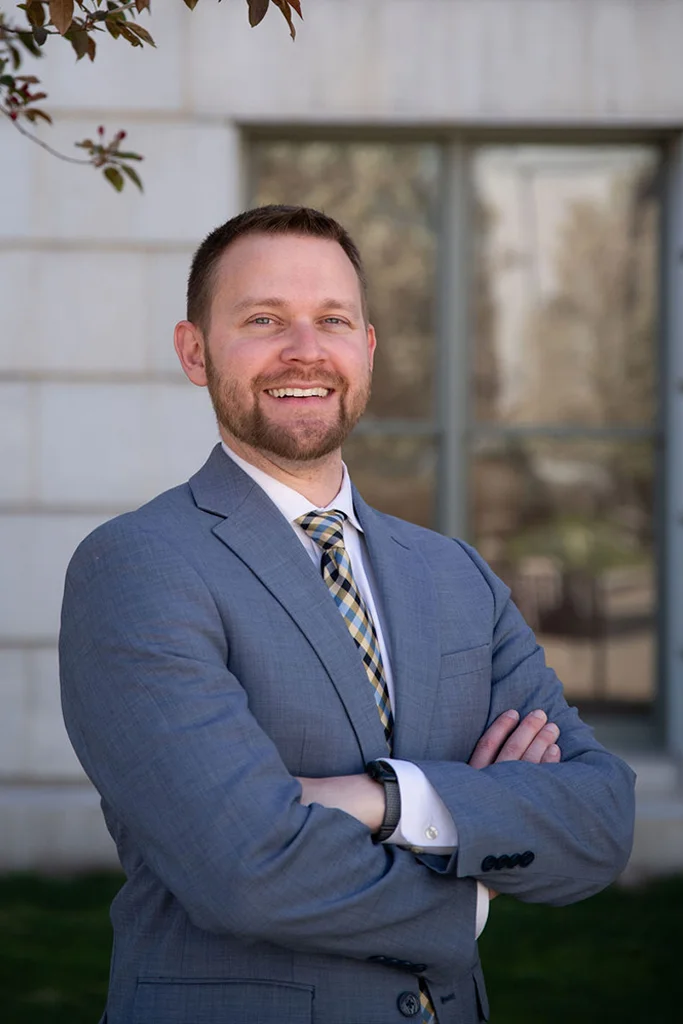
Reid DeChant has defended clients facing drug charges in Adams County courtrooms. His background as a former public defender means he handled high-volume caseloads across Denver, Broomfield, and Adams County, including drug cases at every level of severity. He knows how local prosecutors approach these charges, what evidence matters, and where defenses actually arise from the facts rather than wishful thinking.
Drug Offenses Prosecuted in Adams County: What You Are Actually Facing
- Felony Drug Possession: Colorado classifies controlled substance possession primarily as a level 4 drug felony for larger quantities or certain substances, with penalties including prison time, fines, and mandatory surcharges. Substances like methamphetamine, cocaine, heroin, and fentanyl are treated with particular seriousness, and fentanyl charges have escalated in priority across all Front Range jurisdictions.
- Misdemeanor Possession: Possession of small amounts of certain substances may be charged as a level 1 or level 2 drug misdemeanor. While these are not felonies, a conviction still carries consequences for employment, housing, and certain professional licenses in Colorado.
- Possession With Intent to Distribute: Prosecutors use quantity, packaging, digital communications, and cash found at the scene to argue that possession was intended for distribution rather than personal use. These cases are charged as level 1 or level 2 drug felonies and carry substantially harsher penalties than straight possession.
- Drug Distribution and Delivery: Actual sale or delivery of a controlled substance, whether confirmed through a controlled buy or alleged based on surveillance or informant testimony, is prosecuted aggressively in Adams County. Distribution near schools, parks, or public housing adds sentence-enhancing factors.
- Drug Trafficking: Cases involving large quantities, transportation across county or state lines, or alleged leadership in a distribution network can result in federal or state trafficking charges with mandatory minimum sentencing considerations under Colorado law.
- Prescription Drug Offenses: Possession of opioids, benzodiazepines, stimulants, or other scheduled medications without a valid prescription, or obtaining prescriptions by fraud, generates serious criminal exposure even when the person does not think of themselves as a drug offender in the traditional sense.
- Drug Paraphernalia Charges: Often added alongside possession or distribution charges, paraphernalia counts can compound the record consequences and, in certain contexts, trigger additional sentencing exposure.
Why DeChant Law for Adams County Drug Defense
Reid DeChant built his practice on real courtroom experience, not the kind accumulated through plea deals alone. As a former public defender, he regularly appeared in Adams County courts defending clients against the full range of drug charges filed by the district attorney’s office. That background is different from an attorney who has spent years doing primarily civil or transactional work. It means Reid has cross-examined narcotics officers, challenged search warrant affidavits, litigated suppression hearings, and tried drug cases in front of juries.
Reid is a graduate of the Trial Lawyers College, a selective program founded by Gerry Spence that trains attorneys in storytelling, psychodrama, and the human dimensions of courtroom advocacy. This training matters in drug cases because juries bring assumptions about drug offenders into the courtroom. Breaking through those assumptions, showing a jury who a client actually is and why the evidence does not support conviction, requires more than reciting legal arguments. Reid’s case results include acquittals and dismissals in Adams County, among them assault cases out of Adams County that ended not guilty at trial and charges dismissed outright. His track record reflects what actual engagement in local courtrooms produces.
Reid maintains active membership in the National Association of Criminal Defense Lawyers and the Colorado Criminal Defense Bar, which keeps him current on evolving drug law, sentencing policy, and defense strategies being used across the state. Those connections are not ceremonial. They translate into defense approaches that reflect current law and current tactics.
How Drug Cases in Adams County Actually Move Through the System
After an arrest on drug charges in Adams County, the case is assigned to the 17th Judicial District Court, which sits in Brighton at the Adams County Justice Center. Your first appearance before a judge typically happens within days of arrest. At that hearing, bond is set, and the court schedules future proceedings. Bond amounts in drug cases can be substantial, particularly for felony charges, which makes having representation early, sometimes before or at that first hearing, meaningfully important.
The district attorney’s office reviews the arrest reports and lab results and decides what charges to formally file. That filing decision is a negotiating point in itself. A defense attorney who communicates early with the prosecutor, who can present facts that complicate a simple charging narrative, may be able to influence what gets charged and how severely. Waiting until after formal charges are filed removes that window.
Discovery, the process of obtaining the prosecution’s evidence, follows filing. In drug cases, discovery typically includes police reports, body camera footage, dashcam footage, search warrant applications and supporting affidavits, laboratory reports on the substance, and any recorded communications used to build the case. Each of these documents is a potential source of defense. Gaps in chain of custody, errors in the warrant affidavit, constitutional problems with the stop or search, lab testing failures, and informant reliability issues all surface in discovery review. This is not a paperwork exercise. It is where cases are won or lost before anyone walks into a courtroom.
If a suppression motion is appropriate, that hearing takes place before trial and can result in evidence being excluded entirely. Excluding the drugs themselves, or the statements made at the time of arrest, can effectively end the prosecution’s case. Even when suppression is not available, the evidence review shapes plea negotiations. If the government’s case has weaknesses, a defense attorney who has identified and articulated those weaknesses to the prosecutor is in a fundamentally different position than one who has not. Do not gather evidence, meet with witnesses, or make any statements to investigators or law enforcement without first consulting a drug crimes attorney in Adams County. Those actions can close off defenses before they are even identified.
Colorado Drug Law and Sentences That Apply in Adams County Prosecutions
Colorado’s controlled substances act organizes drugs into schedules based on potential for abuse and accepted medical use. The scheduling of a substance directly affects what charge can be filed and what sentence is available. Fentanyl, heroin, methamphetamine, and cocaine sit in the highest schedules. MDMA, ketamine, and certain prescription drugs occupy middle schedules. Cannabis is no longer a controlled substance for adults under Colorado law in personal use quantities, but distribution without proper licensing remains criminally prosecuted.
Colorado law has moved toward treatment-oriented sentencing for lower-level drug offenses, and diversion programs, deferred judgments, and drug court exist in the 17th Judicial District. These options are not automatic. They require application, negotiation, and in many cases a defense attorney willing to present a client’s circumstances in a way that makes the program appropriate. Prosecutors do not volunteer these alternatives. They are tools available to people who know to request them and have representation that supports the request credibly.
For higher-level drug felonies, particularly those involving distribution, trafficking, or prior convictions, sentence ranges escalate substantially. Prior drug convictions increase exposure under Colorado’s habitual offender provisions. Cases with co-defendants introduce additional complexity, including questions of cooperation, proffer agreements, and what information the government is seeking. These are situations where the difference between counsel who has actually handled these fact patterns and counsel who has not shows up directly in outcomes.
Questions People Ask About Drug Charges in Adams County
Will a drug conviction stay on my record permanently in Colorado?
A drug conviction in Colorado generally remains on a person’s criminal record unless sealed. Colorado has a record sealing process for drug offenses, and eligibility depends on the specific charge and disposition. For some drug petty offenses and misdemeanors, sealing is available after a waiting period. For felony drug convictions, eligibility and timing vary based on the level of the offense and the sentence received. An attorney can explain what sealing options apply to your specific charge and what timeline applies.
Does Colorado’s drug sentencing treat all controlled substances the same way?
No. Colorado’s sentencing structure distinguishes between substances based on scheduling, quantity, and conduct. A small amount of a schedule IV substance may result in a misdemeanor, while a larger quantity of a schedule I or II substance results in felony charges with prison exposure. Fentanyl cases are particularly seriously treated under current Colorado law, reflecting statewide legislative attention to fentanyl-related deaths. The specific substance involved in your charge has a direct and significant effect on what penalty range applies.
Can the police search my car during a traffic stop for drugs without a warrant?
Law enforcement has legal authority to search a vehicle during a traffic stop in certain circumstances, including when they have probable cause to believe the vehicle contains contraband. Drug dogs, observations of paraphernalia in plain view, statements made by the driver, or odor of certain substances are commonly cited as probable cause bases. Whether the search that produced the evidence in your case was legally justified is one of the first things a defense attorney examines. If the search violated your constitutional rights, the drugs found may be suppressible.
What is the difference between a deferred judgment and a not guilty verdict?
A not guilty verdict at trial means the jury found the prosecution did not prove its case, and the charge is resolved in your favor with no conviction on your record. A deferred judgment is an agreement in which you plead guilty, but the court defers entering a conviction while you complete conditions such as probation, treatment, or community service. If you successfully complete the conditions, the plea is withdrawn and the case is dismissed. A deferred judgment avoids a conviction if completed, but it is not the same as winning at trial, because you have entered a guilty plea that remains on record until dismissal is granted and certain consequences may attach during the deferral period.
Can drug charges affect my immigration status?
Yes. Drug offenses carry serious immigration consequences for non-citizens, including lawful permanent residents. Even misdemeanor drug convictions can trigger removal proceedings or render a person inadmissible. Certain drug offenses are categorized under federal immigration law as aggravated felonies or crimes of moral turpitude regardless of how Colorado classifies them. Anyone who is not a U.S. citizen and is facing drug charges should ensure their criminal defense attorney understands the potential immigration consequences before any plea is entered.
What happens if the drug amount on the lab report is different from what the officer wrote in the report?
Discrepancies between officer estimates at the scene and formal laboratory measurements are common and can be legally significant. The formal lab report typically governs what can be proven for sentencing purposes. If a lab report reflects a quantity that places the offense in a lower sentencing range than the charge filed, that is a fact worth raising with the prosecutor and the court. Defense attorneys review lab reports carefully not just for what substances were found, but for testing methodology, chain of custody, and quantity results.
How long does a felony drug case take to resolve in Adams County?
Felony drug cases in the 17th Judicial District typically take several months to over a year from filing to resolution, depending on the complexity of the case, the volume of discovery, whether motions are filed, and court scheduling. Cases that proceed to trial take longer than cases resolved by plea or dismissal. Cases involving co-defendants, wiretap evidence, or multi-agency investigations can extend significantly beyond that range. Your attorney should be able to give you a realistic timeline after reviewing your specific case and the current court docket.
Does it matter that I did not know what substance I was holding?
Knowledge of the nature of the substance is an element the prosecution must prove in most drug possession charges. If you genuinely did not know you possessed a controlled substance, that can be a defense. However, this argument is heavily fact-dependent. Courts and prosecutors are skeptical of claimed ignorance when the person had physical possession of a packaged substance. The strength of this defense turns on the specific facts: how the substance came to be in your possession, what you were told about it, and what the surrounding circumstances show about your knowledge.
Can I face drug charges based on someone else’s drugs found in my car or home?
Constructive possession is the legal theory that allows prosecutors to charge a person with possessing drugs they did not physically hold, based on control over the space where the drugs were found. Shared vehicles and shared residences create real complexity. If drugs were found in a car you share with two other people, or in a common area of a home, the prosecution must still prove that you had knowledge of and control over the specific contraband. Defense attorneys challenge constructive possession arguments by identifying other people who had equal or greater access and showing that the evidence does not support attributing the drugs specifically to the defendant.
Is drug court available in Adams County, and who qualifies?
Adams County does have a drug court program within the 17th Judicial District, designed for defendants whose drug use is connected to their criminal conduct and who meet eligibility criteria. Participation typically requires non-violent offense history, willingness to engage in treatment, and acceptance of close court supervision. Not all drug cases qualify, and entry into drug court is not guaranteed. An attorney can assess whether you might be eligible and advocate for placement in the program as part of a defense strategy.
Adams County Drug Defense Representation Across the Region
DeChant Law represents clients facing drug charges throughout Adams County and the surrounding Front Range region. Within Adams County, this includes clients from Thornton, Westminster, Commerce City, Brighton, Northglenn, Federal Heights, Derby, Henderson, and Bennett. Reid also handles drug cases in communities along the I-76 and I-270 corridors, including those originating from enforcement activity at the borders of Weld County and the Denver metro area. Cases arising from Aurora at the Adams County boundary, from Broomfield County, and from Denver County are all within the geographic reach of this practice.
Beyond Adams County, DeChant Law defends clients across Jefferson County, Arapahoe County, Douglas County, and Denver County courts. Cases that begin in one jurisdiction but connect to conduct in another are handled by Reid with an understanding of how each district attorney’s office approaches drug prosecution and how local court cultures differ. Whether the charge was filed in Brighton at the Adams County Justice Center or in another Front Range courthouse, the defense approach starts with the same foundation: an honest assessment of the evidence, identification of the strongest available defenses, and representation built for the specific facts of your case.
Talk to an Adams County Drug Crime Attorney About Your Case
Drug charges carry real consequences in Adams County, and the path through the system is rarely straightforward. Reid DeChant is an Adams County drug crime attorney who has defended these cases at trial, in suppression hearings, and through negotiated resolutions that reflect what the evidence actually supports. His background as a former public defender in these courts and his training through the Trial Lawyers College shape a defense approach that takes your case, and your life, seriously. Call DeChant Law to schedule a consultation and talk through what happened, what the charges mean, and what your defense looks like from here.