Broomfield DWAI Lawyer
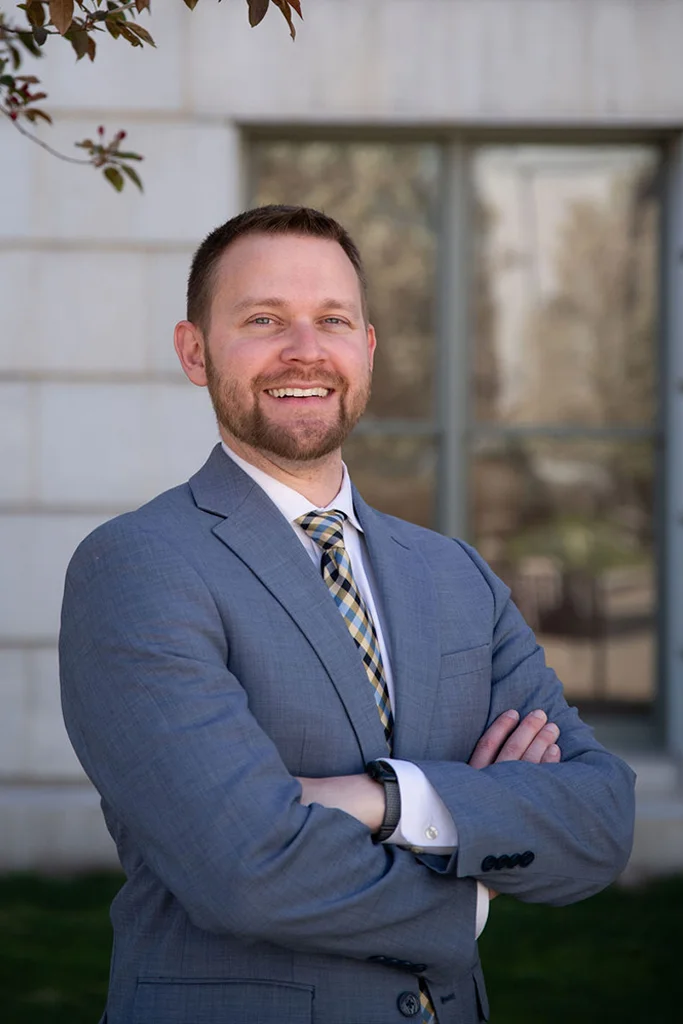
A DWAI charge in Broomfield sits in an uncomfortable middle ground that catches people completely off guard. You weren’t legally drunk. Your blood alcohol content came back below 0.08. And yet you’re facing criminal charges, potential license consequences, and a record that follows you if this goes wrong. Broomfield DWAI lawyer Reid DeChant at DeChant Law understands exactly why this charge feels disorienting, and exactly how to defend against it.
Colorado’s DWAI statute, driving while ability impaired, covers a BAC range of 0.05 to 0.079, as well as any impairment by drugs or alcohol, even a single drink, if it affected your ability to drive to even the slightest degree. That last phrase, “to the slightest degree,” is where cases get won or lost. Prosecutors in Broomfield County cases, handled through Jefferson County District Court, pursue these charges aggressively, and the evidence they rely on is often far more contestable than it looks at first glance.
DWAI is not a lesser version of DUI that you should just plead out and move on from. A conviction carries real consequences: fines, points on your driving record, potential jail time for repeat offenses, and a permanent mark on your criminal history. The difference between a conviction and a dismissal is almost always the quality of the defense mounted on your behalf.
What Makes DWAI Different From DUI, and Why That Difference Matters in Your Defense
Colorado treats DWAI and DUI as separate offenses under the same statutory framework, but the evidentiary dynamics are genuinely different. A DUI prosecution often rests heavily on a chemical test result above 0.08, which creates a presumption in law that the driver was impaired. DWAI prosecutions, particularly those based on BAC readings between 0.05 and 0.079, rest on a much softer evidentiary foundation. There is no legal presumption of impairment at those BAC levels. The state must actually prove, through other evidence, that your driving ability was affected.
That other evidence is typically the arresting officer’s observations: how you drove, how you performed on standardized field sobriety tests, how you appeared and spoke during the stop. Each of those categories has real vulnerabilities. Field sobriety tests are notoriously sensitive to factors that have nothing to do with alcohol, including fatigue, medical conditions, footwear, uneven road surfaces, and anxiety caused by the stop itself. Driving behavior observations depend entirely on the officer’s training, perspective, and what they documented. And chemical test results, even when below 0.08, can be affected by how quickly you drank, how long ago you ate, your body composition, and whether the testing equipment was properly calibrated and administered.
A DWAI attorney in Broomfield who understands these evidentiary vulnerabilities approaches your case very differently than one who simply negotiates a plea. The charge may be technically lesser than DUI, but the defense it requires is not.
Charges Commonly Associated With Broomfield DWAI Cases
- DWAI by Alcohol: Colorado law defines DWAI as operating a vehicle when alcohol has impaired ability to operate the vehicle to the slightest degree, covering BAC readings of 0.05 to 0.079 and any observable impairment below those levels.
- DWAI by Drugs: Colorado’s DWAI statute also covers driving while impaired by any drug, including prescription medications, cannabis, and over-the-counter substances, regardless of the amount detected in a chemical test.
- DWAI by Combined Substances: Prosecutors frequently file DWAI charges based on a combination of alcohol and drugs, even where neither substance alone would clearly establish impairment, which adds complexity to both the charges and the defense.
- Careless Driving: Often added to DWAI charges when the stop involved a traffic accident or erratic driving pattern observed along roads like US-36, Wadsworth Boulevard, or Interlocken Loop near the Broomfield business corridor.
- Underage DWAI: Colorado law sets a lower per se BAC threshold for drivers under 21, meaning a young driver can face charges at BAC levels that would not trigger any impairment charge for an adult.
- DWAI with Prior Offenses: A second or third DWAI or DUI offense triggers enhanced penalties under Colorado law, and the look-back period for prior convictions is long enough that offenses many years old can still elevate the current charge.
- DMV Express Consent Hearing: Separate from the criminal charge, any DWAI arrest triggers a DMV administrative action against your driver’s license under Colorado’s Express Consent law, and you have a very short window after your arrest to request a hearing.
What to Do in the Days After a Broomfield DWAI Arrest
The clock starts moving the moment you’re arrested. Colorado’s Express Consent law requires that you request a DMV hearing within seven days of your arrest to contest the automatic revocation of your driver’s license. That deadline is not flexible. Missing it means losing your license without any hearing. The DMV process runs entirely parallel to the criminal case, and the outcomes are independent, which means you need to address both from the start.
Your criminal case will be processed through Jefferson County District Court, which serves Broomfield along with Jefferson County. The Broomfield Justice Center handles local matters, but district court cases move to the Jefferson County courthouse in Golden. Understanding this structure matters because it affects where your hearings occur, who the assigned prosecutors are, and what the local court culture looks like for these cases. A DWAI defense attorney in Broomfield who has practiced in these specific courts regularly will navigate that environment very differently than someone appearing there for the first time.
In the immediate days after your arrest, preserve everything. Write down exactly what you remember about the stop: where it happened, what time, what you had eaten and drunk and when, what the officer said, what tests were administered, and whether you were given a breath test or blood draw. If it was a blood test, be aware that Colorado law gives you the right to obtain an independent test of a retained sample, and that right is time-sensitive. Do not discuss the facts of your case with anyone other than your attorney. What you say to friends, family, or on social media can surface in unexpected ways.
Common mistakes people make after a DWAI arrest include missing the DMV deadline entirely, assuming a low BAC number means the charge will go away on its own, accepting a plea without understanding the full consequences to their record and license, and waiting weeks before contacting a lawyer. The early stages of a case, before any court dates occur, are when the most important defense decisions get made.
Why DeChant Law Handles DWAI Defense Differently
Reid DeChant built his practice on impaired driving defense after years as a public defender handling DUI and DWAI cases in Broomfield, Denver, and Adams County courtrooms. That volume of courtroom experience, cross-examining arresting officers, challenging chemical test results, and trying cases in front of juries, gives him a working knowledge of how these prosecutions are built and where they are vulnerable. Reid is not learning on the job with your case. He has seen these fact patterns many times, and he knows which arguments move juries and which ones don’t.
Reid is also a graduate of the Trial Lawyers College, the program founded by Gerry Spence that trains lawyers in narrative advocacy and genuine client connection. DWAI cases that go to trial require more than a technical challenge to the evidence. Juries respond to people, not legal arguments, and Reid’s training shapes how he presents clients’ stories in ways that resonate with the people sitting in judgment. The firm’s track record includes not-guilty verdicts in DUI trials across Jefferson County, Douglas County, and Arapahoe County, as well as multiple DMV Express Consent hearing dismissals, including cases dismissed for improper advisements and for chemical tests not administered within the required two-hour window.
Reid maintains active membership in the National Association of Criminal Defense Lawyers and the Colorado Criminal Defense Bar, keeping his defense strategies current and connected to the best thinking in this field. When you work with DeChant Law as your Broomfield DWAI attorney, you are not a file being processed. Reid will explain where your case stands, what options exist, and what the realistic outcomes look like, and he will keep you informed at every stage rather than leaving you to wonder what is happening.
Questions People Have About DWAI Cases in Broomfield
Is DWAI a misdemeanor or a felony in Colorado?
A first-offense DWAI is a misdemeanor traffic offense in Colorado. However, repeat offenses can elevate the charge, and a DWAI conviction still carries real consequences including fines, points on your driving record, potential jail time, and a permanent criminal record. It is not a minor citation.
What happens to my driver’s license after a DWAI arrest?
Colorado’s Express Consent law triggers an automatic license revocation process upon arrest for any impaired driving offense, including DWAI. You have seven days from your arrest to request a DMV hearing to contest that revocation. If you miss that deadline, the revocation takes effect automatically regardless of how your criminal case resolves.
Can I refuse the breath or blood test during a DWAI stop in Colorado?
Colorado’s Express Consent law means that by driving on Colorado roads, you have already consented to chemical testing if lawfully arrested for impaired driving. Refusing a test results in automatic license revocation and can be used against you in the criminal case. The consequences of refusal are significant and should be understood before any stop occurs, not during one.
My BAC was only 0.06. Will the DWAI charge just get dropped?
Not automatically. A BAC reading between 0.05 and 0.079 does not carry a legal presumption of impairment the way a DUI reading does, but prosecutors will still pursue DWAI charges using officer observations, field sobriety test results, and other evidence. The charge requires active defense, not passive waiting.
Will a DWAI conviction affect my job or professional license?
It can. Many employers conduct background checks that include criminal records, and a DWAI conviction is a criminal record. Certain professional licenses, including those in healthcare, law, commercial driving, and education, have reporting requirements and potential disciplinary consequences tied to criminal convictions. If you hold or are applying for a professional license, this question deserves a direct conversation with your attorney before any plea is entered.
How does a DWAI affect my CDL or commercial driving career?
Commercial driver’s license holders face stricter standards under both federal regulations and Colorado law. A DWAI conviction in a personal vehicle can still trigger CDL consequences, and the BAC thresholds that apply to commercial vehicles are lower than for regular drivers. Anyone who drives commercially for a living should treat a DWAI charge as an immediate professional emergency.
What if the DWAI charge involved marijuana rather than alcohol?
Colorado is a legal cannabis state, but driving while impaired by marijuana remains a crime. DWAI by drugs cases often involve a blood test rather than a breath test, and the science around cannabis impairment and driving is genuinely contested. THC levels in blood do not correlate with impairment the same way BAC does, which creates real defense opportunities that a knowledgeable DWAI defense lawyer in Broomfield will know how to pursue.
Can a DWAI charge be reduced to a lesser offense or dismissed entirely?
Yes, either outcome is possible depending on the facts. Cases have been dismissed based on improper stops, faulty chemical test procedures, improper Express Consent advisements, and other procedural and evidentiary problems. Charges have also been reduced through negotiation when the evidence supports a lesser resolution. The path your case takes depends entirely on what the specific evidence shows and how aggressively it is challenged.
How long does a Broomfield DWAI case typically take to resolve?
A DWAI case in Jefferson County court can range from a few months to over a year depending on whether it goes to trial, the court’s docket, and how complex the defense becomes. The DMV process runs on a separate, faster timeline. Most cases reach some resolution within six to twelve months, though cases that go to trial take longer. Your attorney should give you a realistic timeline based on your specific circumstances.
If I was stopped on US-36 near the Broomfield interchange, does that affect which court handles my case?
Broomfield sits in a unique jurisdictional position as its own county. Criminal cases arising within Broomfield County are processed through Jefferson County District Court. The specific road or location of your stop matters for factual purposes in your defense, particularly in understanding patrol patterns and enforcement zones, but the court handling the case will depend on whether it is a municipal, county, or district court matter based on the nature of the charge.
DeChant Law’s DWAI Defense Representation Across Broomfield and Surrounding Communities
DeChant Law represents clients facing DWAI and related impaired driving charges throughout Broomfield and the surrounding region. This includes clients from throughout Broomfield County itself, from the Interlocken technology corridor through the Broadlands and Anthem neighborhoods, and into the areas surrounding Flatiron Crossing. Reid regularly handles cases for clients from Westminster and Thornton to the east, Arvada and Wheat Ridge to the south, and Louisville and Lafayette to the northwest. Clients from Superior, Erie, and the communities along the US-36 corridor between Broomfield and Boulder frequently turn to DeChant Law when facing impaired driving charges in Jefferson County and neighboring courts.
The firm also serves clients from Northglenn, Commerce City, and the Adams County communities that border Broomfield to the east, as well as clients from Longmont, Firestone, and Frederick who face charges arising from travel through the Broomfield area. Whether you were stopped near the 120th Avenue corridor, along Wadsworth, on the I-25 frontage roads, or anywhere within reach of the Jefferson County or Broomfield court system, DeChant Law handles DWAI cases across this entire region.
Speak With a Broomfield DWAI Attorney Before Your Next Court Date
The window between your arrest and your first court appearance is the most important time in your case, and it moves fast. A Broomfield DWAI attorney at DeChant Law can review what happened, identify where the prosecution’s case is weakest, address your DMV deadline, and give you a clear picture of what comes next. Reid DeChant has taken these cases to trial across Jefferson County and the surrounding courts, and he knows what it takes to achieve real results, not just a faster plea. Contact DeChant Law to schedule a consultation and get an honest assessment of where your case stands.