Littleton Felony DUI Lawyer
A felony DUI charge carries a different weight than the misdemeanor version. We are talking about potential prison time, not just jail. A permanent felony record that follows you to every job application, housing search, and professional licensing board for the rest of your life. Mandatory parole. Possible vehicle forfeiture. And that is before the Department of Revenue begins separate administrative proceedings to revoke your driver’s license. If you are searching for a Littleton felony DUI lawyer, you already understand that the situation is serious. The next decision you make, whether to fight this charge and how to do it, is the one that matters most.
Felony DUI cases in Littleton are handled in Arapahoe County District Court, located at 7325 S. Potomac Street in Centennial. The Arapahoe County District Attorney’s Office prosecutes these cases, and their felony DUI prosecutors are experienced and well-resourced. The evidence typically includes law enforcement dash cam and body cam footage, standardized field sobriety test documentation, breath or blood test results, and officer testimony. Each of those elements can be challenged, and in many cases, the defense begins with understanding exactly what happened during the traffic stop and arrest, before a single document is filed in court.
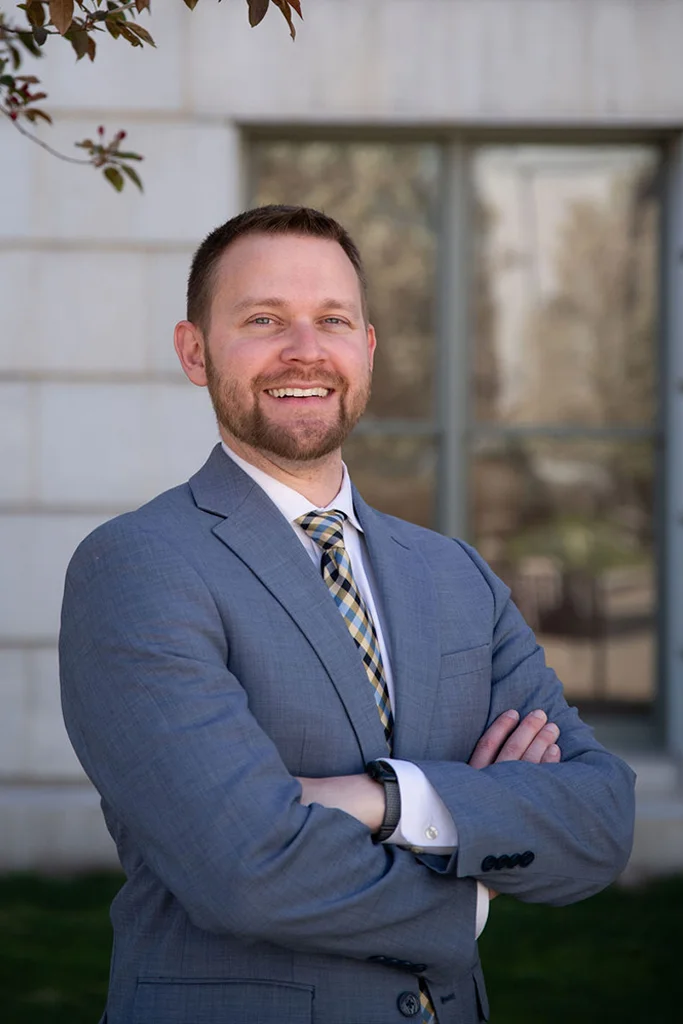
DeChant Law represents clients facing felony DUI charges in Littleton, Arapahoe County, and throughout the Denver metropolitan area. Attorney Reid DeChant brings public defender trial experience, private practice focus, and advanced courtroom training to every client he represents. For someone standing at this crossroads, that combination matters.
What Elevates a DUI to a Felony in Colorado
Colorado law draws a clear line between misdemeanor and felony DUI, and understanding where you fall on that line shapes everything about your defense strategy.
The most common path to a felony DUI charge is a prior conviction history. Under Colorado law, a fourth DUI or DWAI offense is charged as a Class 4 felony, regardless of how long ago the prior offenses occurred. Colorado’s lookback period for DUI purposes has no time limit, which means a conviction from decades ago can count toward felony elevation. If you have three prior DUI or DWAI convictions anywhere in the country, a new arrest in Littleton puts you squarely in felony territory.
A DUI charge can also become a felony when a crash causes serious bodily injury or death. Vehicular assault while under the influence is a Class 4 felony in Colorado. Vehicular homicide while under the influence is a Class 3 felony, carrying significantly higher sentencing exposure. These cases involve additional complexity, often including accident reconstruction experts, civil litigation running parallel to the criminal case, and victim impact considerations that can influence plea negotiations and sentencing.
The practical difference between a misdemeanor DUI and a felony DUI is not just the label. Colorado felony DUI convictions carry presumptive prison sentences, mandatory parole supervision, and consequences that can strip you of civil rights including the right to possess a firearm. Probation is sometimes available for a first felony DUI, but it is not guaranteed, and the terms are demanding.
What a Littleton Felony DUI Defense Actually Looks Like
- Challenging Prior Convictions: If the felony elevation is based on prior DUI or DWAI convictions, those priors can sometimes be challenged. Uncounseled guilty pleas, constitutional defects in prior proceedings, or out-of-state convictions that do not qualify under Colorado’s counting rules may be grounds to argue that the charge should not have been elevated to felony status in the first place.
- Blood and Breath Test Suppression: Colorado’s Express Consent law requires specific advisements and procedures when officers request a chemical test. If officers failed to properly advise you of your rights under Express Consent, administered the test outside the required timeframe, or handled the blood draw improperly, the test result may be subject to a suppression motion. DeChant Law has successfully challenged Express Consent procedures in multiple cases, resulting in dismissed DMV actions and weakened prosecutions.
- Unlawful Traffic Stop: Every felony DUI begins with a traffic stop or encounter. If law enforcement lacked reasonable suspicion to stop your vehicle, everything that came after may be suppressible. This includes observations of impairment, field sobriety test performance, and any chemical test result. Suppression of the stop itself can collapse the prosecution’s case entirely.
- Field Sobriety Test Reliability: Standardized field sobriety tests are not infallible. Medical conditions, fatigue, anxiety, footwear, road surface conditions, and improper officer administration all affect performance. Cross-examining the arresting officer on the proper administration protocols is a central part of DUI trial defense.
- Crash-Related Felony Charges: In cases involving vehicular assault or vehicular homicide allegations, causation is a critical element. Prosecutors must prove that your impairment caused the accident and the resulting injury or death. Independent accident reconstruction, witness interviews, and careful review of all physical evidence can challenge the causation narrative.
- Plea Negotiations and Sentencing Arguments: Not every case goes to trial. When negotiation is the right strategy, having a lawyer who understands what prosecutors value and what judges respond to makes a measurable difference. Mitigating factors, treatment participation, and a client’s full personal history can all influence whether a sentence involves prison or intensive probation.
- DMV Express Consent Proceedings: A Littleton felony DUI triggers both a criminal case in Arapahoe County District Court and a separate DMV Express Consent hearing that can revoke your driver’s license independently of what happens in criminal court. These are separate proceedings with separate deadlines. Missing the DMV hearing request window can cost you your license even if the criminal case is eventually resolved favorably.
What You Should Do After a Felony DUI Arrest in Littleton
The 72 hours after a felony DUI arrest are not the time for research and deliberation. They are the time for action, because deadlines run fast and early decisions shape the entire case.
After an arrest, you will typically be taken to the Arapahoe County Detention Facility. Bond will be set, and depending on your prior record and the circumstances of the arrest, that bond may be substantial. Once you are released, the countdown on critical deadlines begins. For DMV Express Consent proceedings, the window to request a hearing is short. Missing that deadline results in automatic license revocation without any chance to contest it. A felony DUI defense attorney in Littleton can file the hearing request immediately and begin preserving your driving privileges while the criminal case proceeds.
In Arapahoe County District Court, felony DUI cases move through arraignment, advisement, and then into the pretrial motions phase. This is where the real defense work happens. Your attorney should be requesting discovery immediately, meaning all police reports, dash cam and body cam footage, chemical test records, and any maintenance records for the testing equipment. Evidence gets lost, recordings get overwritten, and witnesses’ memories fade. Early action on discovery is not a formality. It is how cases get won.
Do not speak to law enforcement investigators, insurance adjusters, or anyone else about the facts of your case before speaking with an attorney. This applies whether your case involves only a DUI or whether there was an accident with injuries. Anything you say will be documented and can be used against you. Colorado law does not require you to answer questions beyond basic identification, and you are not helping yourself by explaining your side of the story to investigators at this stage.
Common mistakes in felony DUI cases include missing the DMV hearing deadline, assuming that a prior attorney who handled a misdemeanor DUI has felony trial experience, and waiting too long to hire counsel because of financial concerns. Felony DUI defense requires someone who has actually tried these cases, not someone who primarily handles them through early guilty pleas. The difference shows up at sentencing, and it shows up at trial.
Why DeChant Law for Felony DUI Defense in Arapahoe County
Reid DeChant built his practice on trial work. As a former public defender, he defended clients in Denver, Broomfield, and Adams County courtrooms across the full range of criminal charges, including DUIs at every level, felony assault, and homicide. That volume of courtroom time, cross-examining officers, arguing suppression motions, and trying cases to verdict, gives him a different kind of foundation than attorneys who built their practice primarily on negotiated pleas.
Reid is a graduate of the Trial Lawyers College, the program founded by attorney Gerry Spence that trains lawyers in courtroom storytelling, genuine client connection, and authentic advocacy. The practical result of that training is a lawyer who understands how to present a client’s full human story to a judge or jury, not just recite legal arguments. Juries in Arapahoe County, like juries everywhere, respond to people they understand. That is what Reid’s approach is built around.
DeChant Law’s case results reflect this approach. The firm has achieved not-guilty verdicts at trial in DUI cases including DUI-drugs cases, a third DUI out of Jefferson County, and a third DUI out of Douglas County. DUI charges have been dismissed in Arapahoe County, Jefferson County, Douglas County, and Broomfield County. Multiple DMV Express Consent revocation actions have been dismissed, including cases dismissed for improper Express Consent advisement and for failure to administer the chemical test within the required timeframe. These are the kind of results that come from attorneys who understand the technical requirements of DUI law and are willing to litigate them.
As a member of the National Association of Criminal Defense Lawyers and the Colorado Criminal Defense Bar, Reid stays current on developing DUI defense strategies, changes in Colorado law, and the evolving science behind chemical testing and field sobriety evaluations. For someone facing a felony DUI in Littleton, that ongoing investment in the craft of defense matters.
Questions About Felony DUI Charges in Littleton
What is the difference between a misdemeanor and felony DUI in Colorado?
In Colorado, a DUI or DWAI becomes a felony when it is a fourth or subsequent offense, or when the incident caused serious bodily injury or death to another person. First, second, and third DUI offenses without aggravating circumstances are generally charged as misdemeanors. Felony DUI carries potential prison sentences and mandatory parole, as opposed to county jail and probation.
Can I get probation instead of prison on a felony DUI in Colorado?
It is possible, but it is not guaranteed, and it requires a strong defense and sentencing presentation. For a fourth-offense felony DUI, Colorado law allows for probation with conditions including intensive supervision, alcohol monitoring, and treatment requirements. However, the court has significant discretion, and the prosecution may argue for a prison sentence, particularly if there is an extended prior record or if the circumstances of the current offense were serious.
How long does a felony DUI case take in Arapahoe County?
Felony cases in Arapahoe County District Court typically take longer than misdemeanor matters. Depending on complexity, the number of pretrial motions filed, and court scheduling, a felony DUI case can take anywhere from several months to over a year from arrest to resolution. Cases involving crashes, injuries, or contested trial proceedings take longer. Starting the defense process early keeps your attorney ahead of critical deadlines and gives maximum time for investigation and motion practice.
What happens to my driver’s license after a felony DUI arrest?
The DMV Express Consent process runs on a completely separate track from the criminal case. After a DUI arrest, you typically have a limited window to request a DMV hearing to contest the revocation of your license. If you miss that window, your license is revoked automatically. Even if the criminal case is later dismissed, the DMV revocation can remain in place unless the hearing was requested and won. Your attorney should file the hearing request as soon as possible after retention.
Does a DUI conviction in another state count toward a Colorado felony DUI charge?
Generally, yes. Colorado counts prior DUI and DWAI convictions from other states when determining whether a new charge qualifies as a felony. There is no time limit on how far back Colorado looks when counting prior offenses. However, the specific offense from the other state must be substantially equivalent to a Colorado DUI or DWAI. In some cases, the comparability of the out-of-state offense can be challenged, which may affect whether the charge is properly elevated to felony status.
Can a felony DUI conviction affect my professional license in Colorado?
Yes. Many licensed professionals in Colorado, including healthcare workers, educators, real estate agents, contractors, and others, are required to report criminal convictions to their licensing boards. A felony DUI conviction can trigger a disciplinary investigation and, depending on the profession and the circumstances, result in suspension or revocation of a professional license. The impact on your license is entirely separate from the criminal case and is governed by the rules of your specific licensing board. This is a serious collateral consequence that should factor into your decision about how aggressively to fight the charge.
If I was involved in an accident, will there also be a civil lawsuit?
A crash resulting in injury or death can generate both criminal charges and a separate civil personal injury or wrongful death lawsuit. The criminal case and the civil case proceed independently. A conviction in the criminal case can be used as evidence in the civil case, which is one reason why the outcome of the criminal defense matters beyond the criminal penalties alone. An attorney defending the criminal case should be aware of this dynamic, and you should inform your criminal defense attorney about any civil claims that have been filed or threatened.
What if I refused the blood or breath test?
Refusing a chemical test in Colorado triggers an automatic DMV action under the Express Consent law, with a revocation period that may be longer than the revocation for a failed test. The refusal can also be used as evidence in the criminal case. However, a refusal also means the prosecution has no chemical test result showing a specific BAC, which can affect their ability to prove impairment to a jury. The refusal scenario presents a distinct set of defense considerations that differ from cases where a test was taken.
What should I look for in a Littleton felony DUI attorney?
Look for actual trial experience in DUI cases, not just negotiated resolutions. Ask specifically whether the attorney has tried DUI cases to verdict, whether they have handled felony-level DUIs, and whether they have experience in Arapahoe County District Court. Experience with DMV Express Consent hearings, suppression motions, and chemical test challenges is also important. The felony DUI process involves distinct technical and procedural layers that require specific preparation, not general criminal defense familiarity.
Is there any benefit to entering a plea early in a felony DUI case?
Not necessarily, and not without fully investigating the case first. Early plea agreements are sometimes favorable, particularly if the evidence is overwhelming and the prosecution offers a significant concession. But many felony DUI cases have viable defense issues that only emerge after discovery is reviewed and motions are researched. Entering a plea before that investigation is complete means potentially giving up a suppression argument, a challenge to a prior conviction, or a trial strategy that could result in a much better outcome. The right time to consider a plea, if at all, is after a thorough case evaluation.
Felony DUI Defense Representation Across Littleton and the South Metro
DeChant Law represents clients charged with felony DUI throughout Littleton and the broader Arapahoe County area, including Centennial, Englewood, Cherry Hills Village, Greenwood Village, Sheridan, and Columbine. The firm also handles cases in unincorporated Arapahoe County and in the communities along the US-85 and C-470 corridors where DUI enforcement is active. Representation extends south into Douglas County, covering Highlands Ranch, Castle Rock, Parker, and Lone Tree, and north into Denver County, Jefferson County, Broomfield, and Adams County. For clients in areas such as Ken Caryl, Roxborough, Bow Mar, and Lakewood whose cases land in Arapahoe or Jefferson County court, DeChant Law handles the full spectrum of felony DUI defense from arrest through trial or resolution.
Littleton Felony DUI Attorney Ready to Defend Your Case
A felony DUI charge in Arapahoe County is not a situation where waiting makes anything better. Evidence needs to be preserved. DMV deadlines need to be met. Defense strategy needs to begin before the prosecution builds its case. If you are looking for a Littleton felony DUI attorney who has actually tried these cases and understands what it takes to win, contact DeChant Law to schedule a consultation. The conversation is confidential, and it starts the process of building a real defense.