Centennial DWAI Lawyer
A DWAI charge in Centennial carries consequences that most people do not fully appreciate until they are already facing them. Driving While Ability Impaired sits just below DUI on Colorado’s impaired driving spectrum, but the penalties, the DMV process, and the long-term record implications are serious enough to demand the same level of attention you would give a full DUI charge. If your blood alcohol content registered between .05 and .079, or if law enforcement concluded your driving was impaired to the slightest degree by alcohol, drugs, or both, you are looking at a DWAI, and the Arapahoe County courts handle these cases aggressively.
A Centennial DWAI lawyer who understands how these cases actually move through the Arapahoe County court system, and who knows the specific ways local prosecutors approach impaired driving allegations, can make a meaningful difference in whether you walk away with a conviction on your record or whether the case gets reduced, dismissed, or acquitted at trial. The distinction between a solid defense and a passive one becomes clear the moment the evidence gets examined closely: field sobriety tests have known reliability problems, roadside breath instruments have calibration histories, and traffic stops can be challenged on constitutional grounds. Every piece of the prosecution’s case deserves scrutiny.
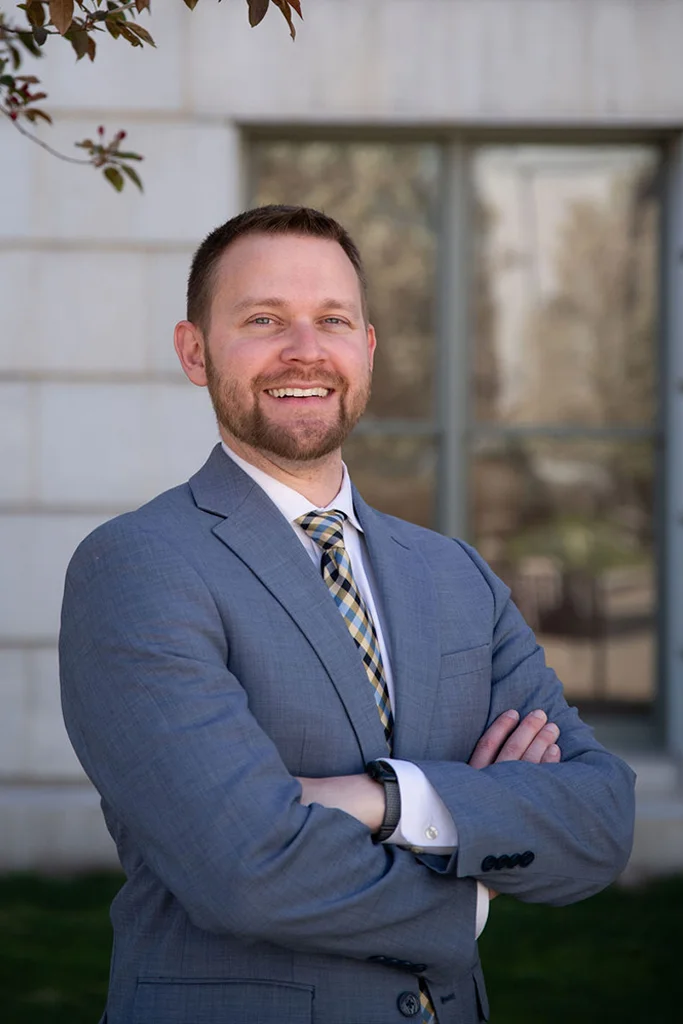
At DeChant Law, attorney Reid DeChant has built a defense practice with impaired driving at its center. His background as a former public defender handling high volumes of DUI and DWAI cases in Jefferson, Arapahoe, Adams, and Broomfield County courts gave him a ground-level understanding of how prosecutors and law enforcement build these cases, and, more importantly, where those cases fall apart. If you have been cited or arrested for DWAI in Centennial or the surrounding Arapahoe County area, the time to act is now, before arraignment, before the DMV hearing window closes, and before evidence starts to disappear.
What a DWAI Charge Actually Looks Like in Centennial
Colorado uses a tiered framework for impaired driving. DUI applies when a driver’s BAC is .08 or above, or when impairment is substantial. DWAI applies at a lower threshold, where impairment is present “to the slightest degree,” a phrase that gives law enforcement and prosecutors wide latitude. This lower standard is actually one of the reasons DWAI cases are worth fighting hard: the evidence required to support the charge is often thinner than people expect, and thin evidence can be attacked effectively.
In Centennial, DWAI arrests frequently happen along Arapahoe Road, South Parker Road, University Boulevard, and the E-470 corridor, particularly on weekend nights and after events at nearby venues. The South Metro area sees regular DUI enforcement operations, including sobriety checkpoints and saturation patrols. Officers are trained to look for minor traffic infractions as a basis for a stop, and from there, any observation of impairment, a faint odor of alcohol, slightly slow speech, or eyes that appear bloodshot, can be enough to initiate a field sobriety evaluation.
A first-offense DWAI in Colorado can result in fines, possible jail time, points against your license, and a conviction that becomes part of your permanent criminal record. Subsequent DWAI convictions carry escalating penalties. Importantly, a prior DUI or DWAI conviction can elevate the consequences of a current charge significantly, which is why understanding your actual exposure from the start matters so much.
Common DWAI Situations and Charges in Arapahoe County
- Standard alcohol-based DWAI: Colorado statute sets the DWAI threshold at a BAC between .05 and .079, with penalties including fines, possible jail time, and license points, even for a first offense with no prior record.
- DWAI-Drugs: Impairment by marijuana, prescription medication, or other controlled substances can support a DWAI charge even when no alcohol is involved, and the “to the slightest degree” standard makes these cases highly fact-specific.
- Combined alcohol and drug DWAI: When law enforcement alleges impairment from both substances simultaneously, prosecutors often treat the case more seriously, and the evidence analysis becomes more complex.
- DWAI with a prior DUI or DWAI on record: Repeat impaired driving offenses in Colorado escalate in severity, with longer license revocations, mandatory treatment requirements, and enhanced penalties at sentencing.
- DWAI following an accident: When a DWAI arrest follows a collision on roads like Arapahoe Road or C-470, additional charges such as careless driving may be added, and the prosecution’s leverage often increases because of the presence of apparent harm.
- DWAI with passengers under 18: The presence of a minor in the vehicle at the time of a DWAI arrest can result in additional charges and considerably more aggressive prosecution in Arapahoe County court.
- Express Consent and DMV hearings: Colorado’s Express Consent law requires drivers to submit to chemical testing or face a license revocation through a separate DMV proceeding, which runs parallel to the criminal case and has its own tight deadline for requesting a hearing.
Why DeChant Law Belongs on Your Side for an Arapahoe County DWAI
Reid DeChant’s background separates him from attorneys who handle impaired driving cases occasionally. He trained as a public defender and spent years inside courtrooms across the Denver metro area defending clients on DUI and DWAI charges, among virtually every other criminal offense. That volume of trial experience is not something that can be replicated through classroom training alone. It comes from standing in front of judges, cross-examining officers, challenging breath test results, and learning exactly what makes a case defensible and what makes it vulnerable.
Beyond volume, Reid is a graduate of the Trial Lawyers College, the training program founded by legendary attorney Gerry Spence, which focuses on authentic storytelling, human connection, and courtroom advocacy that speaks to juries on a level that pure legal argument rarely reaches. Reid has obtained dismissals and not-guilty verdicts in DUI and DWAI cases in Jefferson, Douglas, Arapahoe, Broomfield, and other Colorado counties, including cases where the evidence initially looked difficult. Those results reflect consistent, focused work across impaired driving defense, not occasional wins in passing. Past results do not guarantee future performance, but they do reflect a pattern of preparation and advocacy that matters when your record and your license are on the line.
Reid also maintains membership in the National Association of Criminal Defense Lawyers and the Colorado Criminal Defense Bar, keeping him connected to the latest developments in DUI defense science, including changes to breathalyzer technology standards and evolving case law around field sobriety testing. For someone facing a DWAI charge in Centennial, that means working with a DWAI attorney in Centennial whose knowledge of the area and the law is current, not outdated.
What to Do After a DWAI Arrest Near Centennial
The actions you take in the first few days after a DWAI arrest shape the options available to you later. There are two parallel processes to understand: the criminal case and the DMV administrative proceeding. Colorado’s Express Consent law means that within seven days of receiving your revocation notice, you or your attorney must request a hearing with the Colorado DMV to preserve your right to contest the license suspension. Miss that window and the revocation proceeds automatically, regardless of what happens in the criminal case. Do not wait to see how the criminal case plays out before addressing the DMV side.
The criminal case for a Centennial DWAI will be handled through the Arapahoe County Court or the Arapahoe County District Court depending on how the charges are filed. The courthouse is located at the Arapahoe County Justice Center in Centennial. Your first court appearance is the arraignment, where you will enter an initial plea. This is not the moment to make uninformed decisions. Entering a guilty plea at arraignment without having consulted with a DWAI defense attorney in Centennial means forfeiting the opportunity to investigate whether the stop was lawful, whether the chemical test was properly administered, and whether field sobriety testing followed established protocols.
Preserve every piece of documentation you have from the night of the arrest. Keep your arrest paperwork, any receipts that might show when and where you were before the stop, and any physical evidence. If the stop occurred on a road that has surveillance cameras or businesses nearby, that footage may not exist for long. The sooner your attorney can investigate, the more complete the picture will be. Avoid discussing the incident on social media, with coworkers, or with anyone other than your attorney, since statements made outside the attorney-client relationship can and do surface in court.
Questions People Ask About Centennial DWAI Cases
What is the difference between a DUI and a DWAI in Colorado?
Colorado separates impaired driving into two primary categories. DUI applies when a driver’s BAC is .08 or higher or when impairment is substantial. DWAI applies at a lower BAC range, generally .05 to .079, or when impairment exists “to the slightest degree.” Both are criminal charges with real consequences, but DWAI penalties for a first offense are somewhat lower than DUI penalties, though still significant enough to warrant a serious defense.
Can a DWAI conviction be expunged from my record in Colorado?
Colorado’s expungement laws are limited when it comes to adult criminal convictions, and DWAI is generally not eligible for expungement for adults. This makes the outcome of the case itself critically important. A dismissal or acquittal avoids a conviction that would otherwise remain on your record permanently, which is one of the strongest reasons to pursue a full defense rather than assuming a plea is the only option.
Will a DWAI affect my driver’s license even if it is a first offense?
Yes. A DWAI conviction results in eight points against your Colorado driver’s license, which can trigger an administrative review by the DMV depending on your point history. If you refused or failed a chemical test, the license revocation proceeding through the DMV is separate and automatic unless you request a hearing within the required window.
How is a DWAI-Drugs case different from an alcohol-based DWAI?
In a DWAI-Drugs case, there is no equivalent of the per se BAC standard that applies to alcohol. Law enforcement typically relies on Drug Recognition Expert (DRE) evaluations, blood test results, and officer observations to establish impairment. These cases can be harder for the prosecution to prove and harder to defend in different ways, since the science around drug impairment is less standardized and more subject to challenge than breathalyzer results.
What happens at an Express Consent DMV hearing in Colorado?
The DMV hearing is an administrative proceeding separate from the criminal case. A hearing officer reviews whether the stop was lawful, whether the officer followed Express Consent procedures correctly, and whether the test was properly administered. Your attorney can challenge the evidence presented, call witnesses, and cross-examine the officer. Winning the DMV hearing preserves your driving privileges independent of the criminal outcome.
What if the officer stopped me for a minor traffic violation, like drifting briefly over a line?
The legality of the initial traffic stop is one of the first things to examine in any impaired driving case. Colorado and federal constitutional law require that a stop be based on reasonable suspicion of a traffic violation or criminal activity. Stops based on extremely minor infractions, or on officer observations that do not actually constitute a violation, can be challenged. If the stop is found to be unlawful, evidence gathered as a result may be suppressed.
Can a DWAI conviction affect my professional license in Colorado?
Depending on your profession, yes. Many Colorado licensing boards for healthcare workers, teachers, attorneys, financial professionals, and others require disclosure of criminal convictions, including DWAI, and have authority to discipline or revoke licensure based on those convictions. If you hold a professional license, the criminal outcome carries consequences that extend beyond fines and DMV points, which adds another layer of importance to pursuing a strong defense.
How long does a DWAI case typically take in Arapahoe County?
The timeline varies based on how the case develops. Some cases resolve relatively quickly through negotiation if the evidence supports a favorable plea. Cases that proceed toward trial or involve contested motions can take several months. The DMV process runs on a different, faster timeline. Your attorney can give you a more accurate picture once the specific facts of your case are reviewed.
Is a DWAI a misdemeanor or a felony in Colorado?
A first or second offense DWAI is typically a misdemeanor. However, a third DWAI or DUI conviction becomes a felony in Colorado, with significantly harsher potential consequences. If your current DWAI charge comes with prior impaired driving convictions on your record, understanding how your history affects the charge level and the potential penalties is essential from the outset.
If I refused the chemical test, is there anything a lawyer can still do for me?
Yes. A refusal triggers an automatic license revocation through the DMV, but that revocation can still be challenged at a hearing if the officer failed to properly advise you of your Express Consent obligations, or if there are other procedural problems. On the criminal side, a refusal removes the breath or blood test from the prosecution’s case, which can actually complicate their ability to prove impairment, even though prosecutors will argue the refusal itself as evidence of consciousness of guilt. Both angles deserve a careful look.
Serving Centennial and Surrounding Arapahoe County Communities
DeChant Law represents clients facing DWAI and related impaired driving charges throughout Centennial and the broader Arapahoe County area. From the Highlands Ranch area and Lone Tree through Cherry Hills Village and Greenwood Village, through Englewood, Sheridan, and Littleton, Reid DeChant takes on cases across this entire region. The firm also handles DWAI matters in Aurora, Parker, and the communities along the E-470 and I-25 corridors, including unincorporated Arapahoe County areas where county sheriff deputies conduct patrols. If you were stopped on South Parker Road, Arapahoe Road, University Boulevard, Yosemite Street, or anywhere in the southeastern Denver metro, Reid is familiar with the enforcement patterns and the courts that handle those cases. DeChant Law’s representation extends beyond Arapahoe County as well, including Jefferson County, Douglas County, Adams County, Broomfield County, and Denver County, making it possible for clients across the Front Range to work with the same attorney regardless of where their DWAI charge was filed.
Talk to a Centennial DWAI Attorney Before You Make Any Decisions
The choices you make in the days following a DWAI arrest are not reversible. Entering a plea without a full investigation of the stop, the testing procedures, and the DMV timeline is a decision you cannot undo. Reid DeChant is a Centennial DWAI attorney who takes each case apart from the ground up, looking at the officer’s conduct, the instrument calibration records, the field sobriety testing, and the specific facts of what happened on the road that night. That kind of preparation is what separates cases that end in convictions from cases that do not.
Do not assume that a DWAI is “not that serious” or that the evidence is too strong to fight. Call DeChant Law and have a real conversation about what your case actually looks like, what the defense options are, and what you should do next.