Thornton DMV Hearing Lawyer
A DMV hearing in Colorado is not a formality. It is a separate legal proceeding from your criminal DUI case, one with its own rules, its own deadlines, and its own power to take your license away before a single day passes in court. For Thornton residents who commute along I-25 to Denver, use US-36 to Boulder, or depend on their vehicles to reach employers in Adams County and across the metro, losing a license is not an inconvenience. It is a direct threat to employment, family logistics, and every aspect of daily life that depends on the freedom to drive. A Thornton DMV hearing lawyer who understands Colorado’s Express Consent law, the administrative revocation process, and the specific procedural pressure points that can lead to a dismissal is exactly what stands between you and a license suspension that could last months or longer.
Colorado law requires that when you are arrested for DUI or DWAI, law enforcement read you an Express Consent advisement and request that you submit to a chemical test. The moment you either refuse or take the test and register above the legal limit, the clock starts ticking on an administrative action against your license. You have seven days from the date of your arrest to request a DMV hearing. Miss that window, and your license will be automatically revoked. No extension, no appeal, no second chance at that deadline. This is why the hours and days immediately following a DUI arrest in Thornton carry weight that most people do not fully appreciate until it is too late.
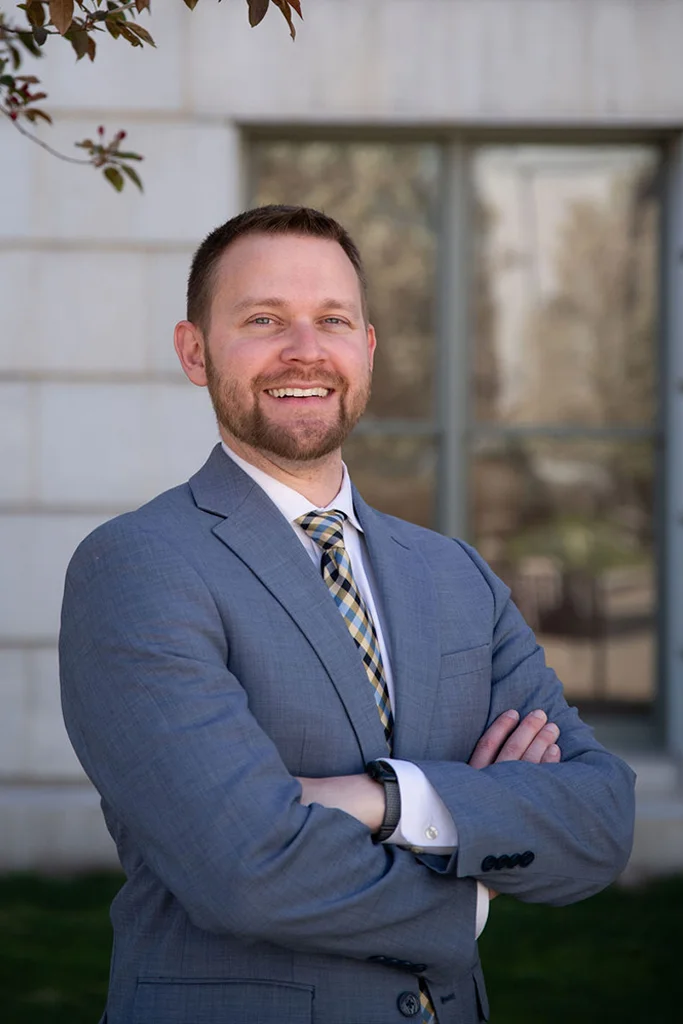
DeChant Law has handled DMV Express Consent hearings across Adams County and the greater Denver metro with results that speak to the level of technical preparation and procedural knowledge this kind of defense requires. Reid DeChant’s approach treats the DMV hearing not as a box to check before the criminal case but as a genuine opportunity to protect a client’s driving privileges and, in some cases, expose weaknesses in the government’s case that carry forward into criminal court as well.
What Actually Happens at a Colorado DMV Express Consent Hearing
Unlike a criminal trial, a Colorado DMV Express Consent hearing takes place before a hearing officer at the Colorado Division of Motor Vehicles, not in a courthouse. The rules of evidence are relaxed, the standard of proof is lower than in criminal court, and the entire proceeding often takes less than an hour. That does not mean it is easy to win. It means that experience with the specific procedural posture of these hearings, and familiarity with the arguments that actually move hearing officers, matters enormously.
The hearing officer’s job is to determine a narrow set of questions: whether the officer had probable cause to believe you were driving a vehicle; whether you were lawfully arrested; whether you were properly advised of the Express Consent law; and whether you refused or took the test and registered above the legal limit. Each of these elements represents a potential vulnerability in the government’s case. A hearing officer cannot deviate from the record before them, which means that if the arresting officer failed to properly advise you, administered the test outside the required timeframe, or lacked genuine probable cause for the stop, those failures may be enough to get the revocation dismissed.
DeChant Law’s record on these hearings reflects how seriously Reid takes each of these procedural questions. The firm’s case results include multiple DMV Express Consent actions dismissed for improper Express Consent advisement, dismissed because Miranda warnings were given before the Express Consent advisement was read (which under Colorado law can create a legal conflict), and dismissed for failure to administer the chemical test within two hours of driving. These are not technicalities in any dismissive sense. They are the specific rules Colorado law imposes on law enforcement, and when officers do not follow them, the revocation should not stand.
Why DeChant Law Handles Thornton DMV Cases Differently
Reid DeChant’s background as a former public defender gave him something that most private practice attorneys never fully develop: the kind of volume and variety of courtroom and hearing experience that only comes from handling hundreds of cases across Adams County, Denver, and Broomfield before a single day in private practice. DMV hearings in Adams County, where Thornton is situated, follow their own procedural rhythms, and familiarity with how local law enforcement agencies document their stops, conduct chemical testing, and complete their Express Consent advisements is directly relevant to how a DMV hearing defense is built.
Beyond raw experience, Reid trained at the Trial Lawyers College, the program founded by Gerry Spence that focuses on authentic human advocacy and the ability to tell a client’s story in a way that connects with the decision-maker in front of you. That training shaped a practice where preparation is thorough, client communication is genuinely transparent, and the hearing officer or jury is treated as a person capable of understanding why the legal standards that protect you actually matter. Reid is a member of the National Association of Criminal Defense Lawyers and the Colorado Criminal Defense Bar, affiliations that reflect an ongoing investment in staying current with the strategies and legal developments that drive outcomes in DUI and DMV defense.
For clients in Thornton facing both a DMV hearing and a parallel criminal DUI case, the decision to work with a Thornton DMV hearing attorney who handles the entire case, rather than treating the administrative proceeding as a standalone event, is a strategic one. Information developed in the DMV hearing, including officer testimony and the documentary record, can directly inform how the criminal case is approached. Having one attorney manage both proceedings ensures that the defense is coherent from the first hearing officer to the final court date.
The DMV Hearing Issues That Determine Whether Your License Survives
- Express Consent Advisement Defects: Colorado law requires that the arresting officer read you a specific advisement before requesting a chemical test. If the advisement was incomplete, given in the wrong order, or given after Miranda warnings were administered, the resulting revocation may be vulnerable to dismissal, a result Reid has achieved for clients in multiple Adams County cases.
- Two-Hour Rule Compliance: Colorado’s Express Consent law requires that the chemical test be administered within two hours of the time you were last observed operating a vehicle. If processing delays, officer decisions, or other circumstances pushed the test beyond that window, the results may not support a valid revocation.
- Probable Cause for the Stop or Arrest: A DMV hearing officer must find that the officer had reasonable grounds to believe you were driving under the influence. Stops made on vague observations, without supporting evidence, or following equipment checks on vehicles parked in Thornton neighborhoods rather than moving on the road can be challenged on this basis.
- Refusal vs. Failure Distinctions: There is a legal difference between refusing to take a chemical test and a test that was not properly completed due to a medical condition or officer error. How a refusal is documented and communicated matters, and those distinctions can affect both the DMV result and the criminal case.
- Chemical Test Accuracy and Maintenance Records: Breathalyzer instruments used by law enforcement must be properly calibrated and maintained. Records of calibration, maintenance, and the administering officer’s certification are obtainable and reviewable. A result generated by a malfunctioning or improperly maintained device should not automatically be treated as valid.
- Driver’s License Revocation Periods and Interlock Requirements: Colorado’s revocation periods vary depending on whether the driver refused the test or registered above the limit, and whether prior DUI-related actions are on the driver’s record. Understanding the specific exposure at stake for a Thornton driver with a particular record helps shape how aggressively to pursue the hearing and what alternatives, including early interlock installation, may preserve limited driving privileges during the process.
What to Do in Thornton After a DUI Arrest and Before the Hearing
The seven-day deadline to request a DMV hearing is the most important procedural fact any Thornton driver should know after a DUI arrest. If you were arrested in Thornton or elsewhere in Adams County and you did not receive a pink temporary driving permit at the scene, that does not necessarily mean the deadline does not apply. Contact a DMV hearing attorney in the Thornton area immediately to determine the status of your license and whether a hearing request needs to be filed.
Once a hearing is requested, the Colorado Division of Motor Vehicles will schedule a proceeding that typically occurs over the phone or, in some cases, in person. The hearing is conducted under the rules of the DMV, not the district court, which means the typical Adams County District Court, located in Brighton, is not the venue for this proceeding. The relevant DMV regional office for Adams County residents handles the administrative side. Your criminal case, however, will move through Adams County District Court, which is a separate and parallel track that also requires prompt attention.
In the days before your hearing, gather everything you received at the time of your arrest: the Express Consent advisement form, your temporary permit if one was issued, any paperwork provided by the arresting officer, and anything documenting the location and time of the stop. Notes about what the officer said, the sequence in which advisements were given, and whether you experienced any difficulty providing a breath sample are all potentially relevant. You do not need to organize this material, but preserving it so your attorney can review it thoroughly is important.
A common mistake Thornton residents make after a DUI arrest is assuming that the DMV proceeding is either automatic or unwinnable and deciding not to request a hearing at all. That assumption has a direct cost: anyone who does not request a hearing within seven days gives up the opportunity to contest the revocation entirely. Even in cases where the hearing is difficult, the information developed during the process often has value for the criminal defense that follows. There is rarely a strategic reason to skip it.
Questions About Thornton DMV Hearings, Answered
How long do I have to request a DMV hearing after a DUI arrest in Thornton?
You have seven days from the date of your arrest. This deadline applies regardless of whether you took the chemical test or refused it. Missing this deadline results in automatic revocation of your license without any opportunity to challenge it administratively.
What is the difference between the DMV hearing and my criminal DUI case?
They are entirely separate proceedings. The DMV hearing is an administrative action conducted by the Colorado Division of Motor Vehicles to determine whether your license should be revoked. The criminal case is prosecuted in Adams County District Court and addresses potential criminal penalties including fines, probation, and incarceration. You can win the DMV hearing and still face criminal charges, or have the criminal case dismissed while your license is still revoked. Managing both effectively requires handling them as connected but distinct matters.
Can I drive while my DMV case is pending?
Generally, yes. If you were issued a pink temporary permit at the time of your arrest, it allows you to drive for the period specified on that document while the DMV process is pending. Once you request a hearing, the effective revocation date is typically held in abeyance until the hearing is decided. Specific circumstances vary, so confirming your current driving status with a Thornton DMV hearing attorney early is the right approach.
What happens if I lose the DMV hearing?
Your license will be revoked for the applicable period under Colorado law. Depending on the facts of your case and your driving history, you may be eligible for an early reinstatement option through the interlock ignition device program, which allows limited driving privileges during the revocation period. An attorney familiar with Colorado’s reinstatement options can walk you through the specific path available after a revocation.
If I refused the chemical test, is my case harder to win at the DMV?
Refusal cases carry a longer revocation period under Colorado law than cases involving a failed test, and the legal framework is somewhat different. However, refusal cases still present opportunities to challenge whether the Express Consent advisement was properly given, whether the officer had proper grounds for the arrest, and whether what the officer characterized as a refusal was actually a refusal under the legal definition. These are fact-specific questions that require a careful review of the record.
Can the testimony from my DMV hearing be used in my criminal DUI case?
Yes. This is one of the strategic complexities of running a DMV hearing defense alongside a criminal defense. Officer testimony given at a DMV hearing is recorded, and that testimony can later be used to cross-examine the same officer at trial if the testimony is inconsistent. This is one reason why having the same attorney handle both proceedings provides a coherent strategic advantage that two separate attorneys would struggle to replicate.
Does a DMV revocation show up on my driving record separately from a criminal DUI conviction?
Yes. The administrative revocation and any criminal conviction are separate records. A revocation can appear on your Colorado motor vehicle record even if the criminal charges are later reduced or dismissed. This matters for insurance rates, commercial driving licenses, and professional licensing situations where driving history is reviewed.
What if my BAC result was just slightly above the legal limit?
The threshold under Colorado’s Express Consent law for an administrative revocation is a BAC of 0.08 or above. Even a result of 0.081 triggers the same revocation as a result of 0.15, although a higher result may have additional consequences in the criminal case. Results close to the limit raise questions about the margin of error in the testing instrument and the specific conditions under which the test was administered, both of which are relevant to how the DMV hearing is defended.
Does it matter that I was stopped on a Thornton road versus a highway in Adams County?
For purposes of the DMV hearing, the geographic location of the stop matters primarily in terms of which agency conducted the arrest and how that agency’s documentation and testing procedures are typically structured. Thornton Police Department stops, Colorado State Patrol stops on I-25 through Thornton, and Adams County Sheriff stops each have their own procedural patterns. Familiarity with how each of those agencies processes DUI arrests is relevant to identifying where in the record there may be procedural vulnerabilities.
If my criminal DUI case is dismissed, will my license automatically be reinstated?
No. The DMV proceeding and the criminal case are independent. A dismissal of the criminal charges does not reverse a DMV revocation that was not separately contested and won. This is why addressing the DMV hearing promptly and aggressively is important even when the criminal defense is strong.
Representing DMV Hearing Clients Across Thornton and the Surrounding Region
DeChant Law represents clients facing DMV Express Consent hearings and parallel DUI criminal cases throughout Thornton and the broader Adams County area. Clients come from neighborhoods throughout Thornton, including areas near Eastlake, the Hunters Glen community, Thorncreek, and the corridors along 104th Avenue and 120th Avenue. The firm also represents drivers from neighboring communities including Northglenn, Westminster, Federal Heights, Commerce City, Brighton, and Broomfield, as well as clients from Arvada and the communities along US-36 who were arrested on roads that cross county lines.
Beyond Adams County, DeChant Law handles DMV hearing matters for clients in Denver, Arapahoe County, Jefferson County, Douglas County, and throughout the broader Denver metro area. Whether a client was stopped on I-25 through Thornton, on 120th Avenue approaching a Thornton checkpoint, or on a suburban street well off the main corridors, the legal issues in a Colorado Express Consent hearing are fundamentally the same, and the preparation required to present a real defense at that hearing does not change based on which road the arrest happened on.
Talk to a Thornton DMV Hearing Attorney Before That Seven-Day Window Closes
A Thornton DMV hearing attorney can only help you if you reach out before the deadline has passed. Reid DeChant and DeChant Law are available to review the facts of your arrest, evaluate whether a hearing request makes sense, and build the most thorough defense possible within Colorado’s administrative process. The firm’s record of dismissed DMV actions in Adams County and across the metro reflects what genuine preparation and knowledge of Colorado’s Express Consent framework can accomplish in these hearings. Call DeChant Law to schedule a consultation and understand exactly where you stand before any deadlines pass.