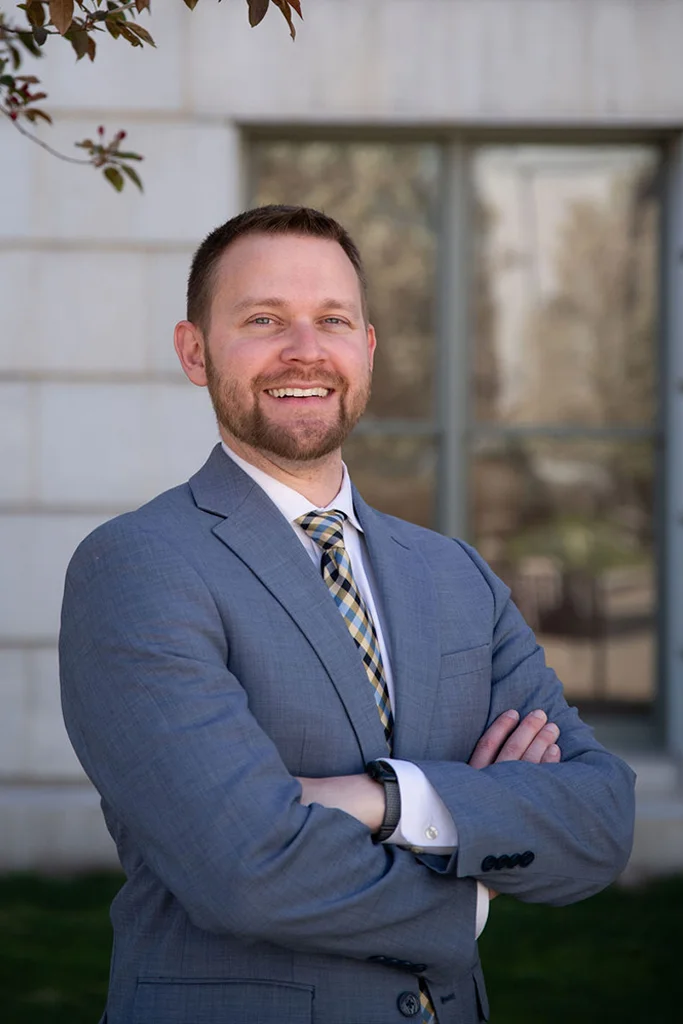
Westminster DMV Hearing Lawyer
A DMV hearing in Colorado is not a formality. It is a separate legal proceeding that runs parallel to your criminal DUI case, and it carries its own set of consequences that have nothing to do with whether you are ultimately convicted in court. When law enforcement serves you with an express consent advisement and your license is flagged for revocation, the clock starts immediately. You have a narrow window to request a hearing before the Department of Motor Vehicles, and if that window closes, your license is revoked automatically. For Westminster residents navigating this process, working with a Westminster DMV hearing lawyer who understands how these proceedings actually work can be the difference between keeping your license and losing it for months.
The DMV hearing system confuses people precisely because it sits outside the criminal courts. You might hire a criminal defense attorney, show up to your arraignment, and feel like you are handling things, only to realize your license was already revoked because nobody filed the DMV hearing request in time. These are two parallel tracks that require attention simultaneously. The hearing officer at the DMV is not a judge, the rules of evidence are relaxed compared to a courtroom, and the burden the state carries is different from what a prosecutor must prove beyond a reasonable doubt. That does not mean the hearing is easy to win. It means it requires a different kind of preparation.
Westminster sits in Adams County, which means DMV cases arising from traffic stops on Federal Boulevard, 120th Avenue, Sheridan Boulevard, or any of the surrounding arterials feed into a system where local law enforcement practices, breathalyzer maintenance records, and express consent advisement procedures all become relevant. A DMV hearing attorney who knows this jurisdiction and has stood in front of Colorado hearing officers before brings something that generalist representation simply cannot match.
What Actually Happens at a Colorado DMV Express Consent Hearing
When a Colorado driver is arrested for DUI or DWAI and either takes or refuses a chemical test, the arresting officer is required to serve them with an express consent advisement. That advisement triggers a potential license revocation. For a first-time test failure, revocation can begin within a matter of weeks if you do not act. For a refusal, the consequences can be even harsher and faster.
Requesting a hearing pauses the automatic revocation while the proceeding is scheduled. The hearing itself is conducted before a hearing officer employed by the Colorado DMV, not a judge. The officer reviews whether the stop was lawful, whether the express consent advisement was properly given, whether the chemical test was administered correctly and within the required timeframe, and whether the results were properly recorded. These technical requirements are exactly where experienced representation can create openings.
Reid DeChant’s case results reflect what this kind of attention to procedure looks like in practice. His record includes multiple DMV express consent cases dismissed for improper express consent advisements, cases dismissed because the chemical test was not administered within two hours of driving as Colorado law requires, and additional dismissals based on Miranda advisement issues arising before the express consent was given. These are not lucky outcomes. They are the product of knowing what to look for and being prepared to challenge the government’s compliance with the rules it wrote for itself.
If the hearing officer rules against you, your license is revoked according to the applicable period for your situation. You may be eligible for reinstatement through an interlock-equipped license depending on the circumstances, but the administrative record from the hearing can also affect how a criminal court views subsequent proceedings. Winning the DMV hearing does not guarantee a dismissal of the criminal charges, and vice versa, but losing it quickly when the hearing could have been won is a consequence that follows a driver for a long time.
Why DeChant Law Handles Westminster DMV Hearings Differently
Reid DeChant built his practice on the kind of trial experience that most private defense attorneys accumulate slowly over decades. His time as a public defender handling cases across Denver, Broomfield, and Adams County courts meant he cross-examined police officers and challenged the state’s evidence in volume, developing the instincts for weak points in law enforcement procedure that direct-to-private-practice attorneys often lack. That background transfers directly to DMV hearing work, where the entire case often turns on how carefully you examine the officer’s conduct and the technical documentation surrounding the stop and the test.
Reid is also a graduate of the Trial Lawyers College, a program founded by Gerry Spence that trains lawyers in authentic human advocacy and the kind of deep case preparation that surfaces facts other attorneys miss. While DMV hearings do not involve juries, the discipline of thorough preparation and targeted questioning shapes how Reid approaches every proceeding, whether it is in a courtroom or before a hearing officer. His membership in the National Association of Criminal Defense Lawyers and the Colorado Criminal Defense Bar keeps him current on the evolving strategies and legal developments that affect how these cases are best handled.
For Westminster clients specifically, geography matters. Adams County law enforcement agencies have their own practices around express consent advisements, breathalyzer calibration and maintenance, and field sobriety testing. A Westminster DMV attorney who has worked with these agencies and their documentation knows where to focus scrutiny. That local knowledge is not a minor advantage. It is often the difference between a dismissal and a revocation.
What a Westminster DMV Attorney Can Challenge at Your Hearing
- Lawfulness of the traffic stop: Colorado law requires that any stop leading to a DUI arrest be supported by reasonable suspicion of a traffic violation or other criminal activity. Stops on Westminster corridors like Federal Boulevard or Wadsworth Parkway that lack that foundation can be challenged, and a hearing officer who finds the stop unlawful cannot uphold the revocation.
- Proper express consent advisement: Officers are required to follow a specific advisement process after a DUI arrest. Deviations from that required advisement, including the order, timing, or content, have resulted in dismissals in Reid’s own case history and can form the basis for challenging a revocation.
- Two-hour testing window: Colorado requires that the chemical test be administered within two hours of the time of driving. If the timeline from the stop through booking and testing exceeded that window, the test results may be challengeable, and Reid has had cases dismissed on exactly this basis.
- Breathalyzer calibration and maintenance records: The machine used to measure blood alcohol content must be maintained and calibrated according to state standards. Requesting and reviewing maintenance logs is a standard part of DMV hearing preparation and can reveal compliance failures.
- Miranda and advisement sequencing: If an officer advised a driver of Miranda rights before giving the express consent advisement, the sequencing can create a legal issue that affects whether the chemical test result can be used. This is a specific scenario reflected in Reid’s case results.
- Refusal circumstances: In cases where the driver did not complete or refused the test, there are specific procedural requirements the officer must have followed. Whether the driver genuinely understood the consequences of refusal, and whether they were given the full and proper advisement, are questions a hearing can explore.
- Blood draw procedures: For cases involving blood tests rather than breath tests, chain of custody, proper draw procedures, and lab handling all create additional areas for scrutiny that do not arise in breathalyzer cases.
If Your Hearing Request Window Is Closing, Here Is What to Do
The single most important thing to understand is that the deadline to request a DMV hearing in Colorado is not flexible. Once you receive the express consent advisement paperwork at the time of your arrest, you have a limited number of days to contact the DMV and request a hearing. Missing that deadline means automatic revocation with no opportunity to contest it administratively. If you are reading this page and you are not certain whether your deadline has passed, contact a Westminster DMV hearing attorney today, not tomorrow.
When you call DeChant Law, come prepared with the paperwork you were given at the time of arrest. The express consent advisement form contains critical information including the date of the stop, the officer’s name and agency, the type of test administered, and the result or notation of refusal. That document drives the hearing timeline and the substance of what can be challenged.
DMV hearings in Colorado are conducted through the Colorado Department of Revenue, Division of Motor Vehicles. The relevant office for Westminster and Adams County residents is the Colorado DMV’s hearing unit, which schedules proceedings separately from the courthouses handling the criminal side of the case. The criminal case will be processed through Adams County District Court, located in Brighton, but the DMV hearing is a separate administrative proceeding with its own schedule. Managing both tracks at the same time is something Reid’s practice is built to handle.
Gather whatever documentation you have from the night of the stop. If you remember details about the traffic stop, the field sobriety instructions, the testing environment, or any statements made by the officer, write them down now while the details are fresh. Memory fades, and the specific facts of your stop matter enormously when challenging the procedure. Your attorney’s ability to find the winning issue depends in part on having an accurate picture of what happened.
Avoid discussing your case on social media or with anyone other than your attorney. Statements you make in other contexts can surface in ways that complicate both your DMV hearing and your criminal defense.
Questions Westminster Residents Ask About DMV Hearings
How long do I have to request a DMV hearing after a DUI arrest in Colorado?
Colorado law gives you a limited window after receiving the express consent advisement to request an administrative hearing. This period is short, typically counted in days from the date of arrest. If you do not make the request within that window, the DMV will proceed with automatic revocation on the scheduled date. Do not assume you have weeks to decide. Contact an attorney the same day if possible.
Will winning my DMV hearing also get my criminal charges dropped?
No. The DMV hearing and the criminal case are entirely separate proceedings. A successful DMV hearing protects your driving privileges but has no direct bearing on whether the DA’s office pursues or drops the criminal charges. That said, the legal work involved in winning a DMV hearing, such as exposing a flawed stop, an improper advisement, or a testing error, can inform strategy in the criminal case and may have indirect benefits.
What happens if I refused the chemical test?
Refusing a chemical test in Colorado triggers its own set of consequences under the express consent statute, and those consequences can be more severe for refusals than for test failures, particularly for repeat situations. A refusal also creates a separate set of challenges at the DMV hearing, focused on whether the advisement was properly given and whether the driver genuinely understood what refusal meant. Refusal cases are winnable but require careful preparation.
Can I drive while my DMV hearing is pending?
When you request a hearing, the revocation is typically stayed until the hearing is resolved. Whether you can continue driving during that period depends on the specific circumstances of your case and what documentation you have. Your attorney can clarify your current status and ensure you are not driving on a revoked license while your case is pending.
Is the DMV hearing officer the same as a judge?
No. DMV hearing officers are employees of the Colorado Department of Revenue, not members of the judiciary. They operate under administrative rules rather than courtroom rules of evidence, which changes the dynamics of how the hearing proceeds. An attorney who has appeared before hearing officers before understands how to present challenges effectively in that forum, which differs from standard courtroom advocacy.
I blew under 0.08 but was still charged. Does the DMV hearing still apply to me?
Colorado law creates consequences at multiple BAC levels. A result between 0.05 and 0.08 can support a DWAI charge without supporting a per se DUI, but the express consent statute and the DMV hearing process apply based on the circumstances of the arrest, not just the numerical result. Whether and how the DMV can revoke your license at lower BAC levels depends on specific facts of your stop. This is exactly the kind of situation where legal analysis of your particular case matters before assuming no hearing is necessary.
What if the officer did not read me my rights before the chemical test?
The relationship between Miranda warnings and express consent advisements is a nuanced area of Colorado law. In some circumstances, receiving Miranda rights before the express consent advisement creates an issue that can affect the admissibility of the test result in the DMV context. Reid DeChant has obtained dismissals in cases involving this exact sequencing issue. Whether it applies to your situation requires a review of the specific facts and the order in which things were said to you.
Can the DMV hearing be done remotely, or do I have to appear in person?
Colorado has allowed remote DMV hearing proceedings in certain situations. The availability of remote appearances can depend on the nature of the case and the current administrative procedures of the hearing unit. Your attorney can clarify how the hearing will be conducted and ensure you are properly prepared regardless of format.
How does a prior DUI affect my DMV hearing outcome if I win this one?
Prior DUI history affects the potential length of revocation and the conditions for reinstatement if you lose the hearing, but it does not change the substantive grounds on which the current hearing can be won or lost. The hearing officer examines the lawfulness of this stop, this advisement, and this test. A prior history is relevant to what follows a loss, not to whether the hearing officer must rule in the state’s favor.
Does it matter which Westminster law enforcement agency made the stop?
It can. Westminster Police Department, Adams County Sheriff’s Office, Colorado State Patrol, and other agencies that operate in and around Westminster each have their own procedures, training records, equipment, and documentation practices. An attorney familiar with how these agencies operate and document DUI arrests is better positioned to identify irregularities in your specific stop than one approaching the case without that context.
DeChant Law’s DMV and DUI Defense Coverage Across the Westminster Area
DeChant Law represents clients facing DMV hearings and DUI charges throughout Westminster and the surrounding communities. Westminster itself spans both Adams and Jefferson counties, and Reid’s defense work covers both jurisdictions seamlessly. Clients come to the firm from throughout the Westminster area, including the neighborhoods surrounding 92nd Avenue, the Bradburn area, Legacy Ridge, and the commercial corridors along Sheridan and Federal. The firm also regularly represents clients from Broomfield, Thornton, Northglenn, Arvada, and Commerce City, all communities where residents frequently travel through Westminster and encounter law enforcement on shared roadways.
To the east, the firm serves clients from Brighton and the communities along the I-76 corridor in Adams County. To the south, representation extends into Lakewood, Wheat Ridge, and the Jefferson County communities along Wadsworth Boulevard and Kipling Street. Clients from Louisville, Superior, Erie, and Lafayette in Boulder County also work with the firm when their DMV or criminal cases are heard in the Denver metropolitan area courts. Westminster DUI defense matters arising from stops on U.S. 36, I-25, or the US-287 corridor are well within the geographic reach of the firm’s practice.
Talk to a Westminster DMV Defense Attorney Before Your Deadline Passes
Reid DeChant is a Westminster DMV defense attorney who has built a track record of dismissals in exactly the kinds of cases where other attorneys accept revocations as inevitable. The technical requirements surrounding express consent advisements, chemical test timing, and stop legality are real procedural obligations, and when the state fails to meet them, those failures matter. But none of that analysis happens unless you contact an attorney before your hearing request window closes. Call DeChant Law today and get the conversation started while there is still time to act.