Fort Collins DWAI Lawyer
A DWAI charge in Fort Collins does not get the same attention as a DUI, but it carries real consequences that can follow you for years. Driving While Ability Impaired is a separate offense from DUI under Colorado law, and the distinction matters more than most people realize when they are standing in a parking lot at 2 a.m. with a breath test result in hand. If you were charged after a traffic stop on College Avenue, Mulberry Street, or anywhere else in Larimer County, the lower BAC threshold that makes DWAI possible is also what makes it more defensible than people assume. A Fort Collins DWAI lawyer who understands how these cases are built and where they fall apart can make a meaningful difference in what happens next.
Colorado’s DWAI statute applies when alcohol, drugs, or a combination of both has affected a driver even slightly. The word “slightly” does more legal work than it appears to, because slight impairment is genuinely difficult to prove beyond a reasonable doubt. Breath tests have margins of error. Field sobriety tests depend on officer training, lighting conditions, road surface, and the physical condition of the driver. The stretch from reasonable suspicion to probable cause to a provable conviction is longer than prosecutors sometimes acknowledge, and experienced defense work often finds traction in those gaps.
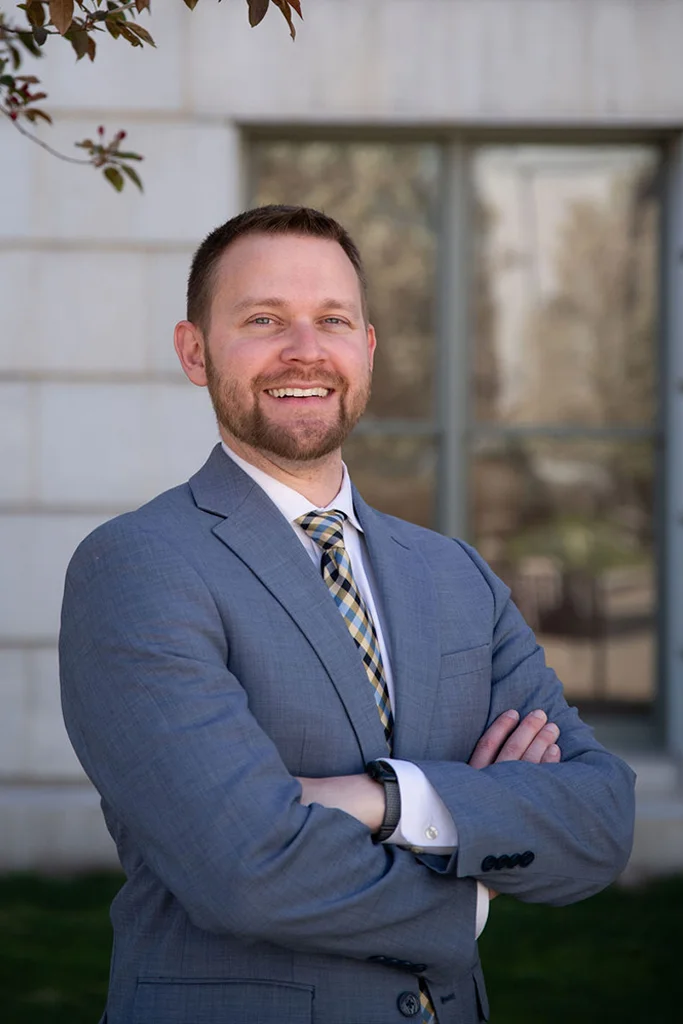
Reid DeChant at DeChant Law has defended impaired driving cases across Colorado’s Front Range courts, including in Larimer County, where Fort Collins cases are prosecuted. His background as a former public defender gave him deep courtroom familiarity with how these cases move through the system, how prosecutors build them, and what judges and juries actually respond to when a case goes to trial. That foundation shapes every DWAI defense he handles.
What Separates a DWAI from a DUI in Colorado, and Why It Matters for Your Defense
Colorado draws a specific line between these two offenses. A DUI requires impairment to a substantial degree. A DWAI requires only that your ability to drive was affected to the slightest degree by alcohol or drugs. In practical terms, a DWAI charge can follow from a BAC measurement as low as 0.05, while a DUI typically applies at 0.08 or above. Between those two numbers sits a zone where the science is genuinely contested and where a defense attorney has real room to work.
For a first offense, a DWAI conviction brings fewer mandatory minimums than a DUI, but it is still a criminal conviction. You are looking at possible jail time, fines, community service hours, and license points that can trigger a DMV action against your ability to drive. A DWAI stays on your driving record and your criminal record. It counts as a prior offense if you are ever charged again, which means its long-term weight is far heavier than its first-offense penalties suggest.
The distinction also affects the DMV side of the case, which runs separately from the criminal prosecution. Under Colorado’s Express Consent law, a breath or blood test refusal or a test result above certain thresholds triggers a separate administrative hearing to revoke your license. Reid DeChant has a documented track record of dismissing DMV Express Consent actions, including cases dismissed for improper advisement, for failure to administer the chemical test within the required window, and for procedural defects in how the test was administered. The criminal case and the license revocation proceeding each require their own strategy.
Common DWAI Charge Situations in Fort Collins and Larimer County
- Nightlife stops near Old Town Fort Collins: The area around Old Town Square, Linden Street, and Jefferson Street sees concentrated law enforcement activity on weekends, and traffic stops following bar closings are common. Officers in these situations often approach vehicles already looking for signs of impairment, which affects how they document what they observe.
- Cannabis-related DWAI charges: Colorado’s recreational cannabis laws create a specific challenge. DWAI based on marijuana impairment does not rely on a simple BAC number. THC levels in blood do not correlate to impairment the same way alcohol does, and this scientific ambiguity can be a critical point in building a defense.
- Prescription medication impairment charges: Taking medication exactly as prescribed does not automatically prevent a DWAI charge. If an officer concludes that a lawfully prescribed drug affected your driving to any degree, charges can follow. These cases often turn on expert testimony about the drug’s actual effects at the measured blood concentration.
- Low BAC results between 0.05 and 0.08: The range where DWAI applies and DUI does not is also the range where individual variation in metabolism, body weight, and testing conditions matters most. Breathalyzer equipment must be properly calibrated and maintained, and its records are subject to challenge.
- Checkpoint and patrol activity on US-287 and I-25: Larimer County law enforcement conducts enforcement on major corridors including US-287 through Loveland and I-25, particularly around holiday periods. Stops on these routes sometimes involve passengers or drivers from Fort Collins, Loveland, Windsor, and surrounding communities.
- College student DWAI arrests: Colorado State University’s presence in Fort Collins means a significant population of young adults who may be first-time offenders with no prior record, facing charges that carry collateral consequences including housing restrictions, scholarship eligibility, and future employment background checks.
- DUI-D charges involving combined substances: When alcohol and drugs are both present, prosecutors sometimes file both DUI-Drugs and DWAI charges together, or they may use the combination to argue that lower alcohol levels are still sufficient to prove impairment. Each substance’s role needs to be analyzed separately.
Why Reid DeChant Handles Fort Collins DWAI Defense Differently
Reid DeChant built his practice around the reality that impaired driving defense requires more than legal knowledge. It requires the ability to stand in a courtroom, face a jury or a judge, and tell a story that makes sense of what actually happened. His training at the Trial Lawyers College, a program founded by legendary defense attorney Gerry Spence, was specifically focused on authentic human connection in the courtroom and the kind of storytelling that resonates when facts are in dispute. For DWAI cases, where the margin between guilt and acquittal often comes down to how persuasively a jury understands the limits of field sobriety tests or breath test science, that training is directly relevant.
His experience as a former public defender means he has handled an enormous volume of DUI and DWAI cases across multiple Colorado counties, including in Denver, Broomfield, and Adams County courtrooms. The case results published on DeChant Law’s website reflect that track record: multiple DUI matters dismissed outright, multiple DMV Express Consent actions dismissed on procedural and legal grounds, and not-guilty verdicts at trial on DUI charges in Jefferson and Douglas Counties. Those outcomes did not happen because the cases were easy. They happened because every angle was evaluated and every weakness in the prosecution’s case was pressed.
Reid maintains membership in the National Association of Criminal Defense Lawyers and the Colorado Criminal Defense Bar, which reflect active engagement with the legal community and access to evolving defense strategies and resources. For someone facing a DWAI charge in Fort Collins, hiring a DWAI attorney in Fort Collins with that foundation means having representation that is current, prepared, and not going through the motions.
What to Do After a DWAI Arrest in Fort Collins
The first decision that matters after a DWAI arrest is whether to request a DMV hearing. Under Colorado’s Express Consent law, you generally have a short window after your license is taken or a revocation notice is issued to request an administrative hearing with the Colorado Division of Motor Vehicles. Missing this deadline means accepting the revocation by default, without ever having the issue reviewed. Requesting the hearing preserves your right to contest it and gives your attorney an opportunity to challenge whether the stop, the advisement, and the testing procedures all complied with Colorado law.
The criminal case proceeds through the Larimer County Justice Center, located at 201 LaPorte Avenue in Fort Collins. This is where Larimer County District Court and Larimer County Court both operate, handling felony and misdemeanor matters respectively. A first-offense DWAI is typically a misdemeanor traffic offense processed in County Court. Your first court appearance will likely be an arraignment where you enter a plea, and how you handle that first appearance sets the tone for everything that follows. Going to arraignment without an attorney leaves you without someone who understands what plea offers at that stage actually mean relative to what a case like yours might look like after full investigation.
Preserve everything from the night of your arrest. If you received paperwork at the scene, keep it. If you remember details about the stop, the location, the road conditions, how long the field sobriety tests lasted, or what the officer said at each step, write those details down while they are fresh. Documentation of the officer’s conduct, the sequence of events, and any inconsistencies you noticed can form the foundation of a challenge later. Do not discuss the facts of your case on social media, with coworkers, or with anyone other than your attorney.
A common mistake people make after a DWAI charge is assuming that because it carries lighter penalties than a DUI, it does not warrant serious legal attention. The criminal conviction itself, the license consequences, and the record it creates all deserve a full defense. Another mistake is waiting too long, because the DMV hearing request deadline is not forgiving and the sooner an attorney can review the evidence and the arrest documentation, the more options remain available.
Questions About DWAI Charges in Fort Collins
What is the difference between a DWAI and a DUI in Colorado?
A DUI in Colorado requires that alcohol or drugs impaired a driver to a substantial degree. A DWAI requires only that the driver’s ability was affected to the slightest degree. The BAC range for DWAI starts at 0.05, while DUI typically attaches at 0.08. Both are criminal charges, but they carry different penalty levels and different implications for how the prosecution builds its case.
Is a DWAI a criminal conviction in Colorado?
Yes. A DWAI is a criminal traffic offense, not just a traffic infraction. A conviction becomes part of your criminal record. It can appear on background checks, affect professional licenses, and count as a prior offense if you face any future impaired driving charges.
Can I lose my driver’s license for a DWAI in Colorado?
Yes. A DWAI can trigger a DMV action against your license through Colorado’s Express Consent law, separate from the criminal case. The DMV proceeding moves on its own timeline, and you generally have a limited window to request a hearing to contest it. Losing that hearing or failing to request one can result in license revocation or suspension.
What happens if I refused the breath or blood test?
Refusing a chemical test triggers its own DMV consequences under Colorado’s Express Consent law, and the refusal can also be used against you in the criminal case. However, refusal does not automatically mean conviction. The circumstances of the stop, the advisement you received, and the manner in which the request was made all remain subject to legal challenge.
Do field sobriety tests actually measure impairment accurately?
Field sobriety tests are standardized physical and cognitive exercises, and their reliability depends heavily on how they are administered. An officer who does not follow the standardized procedures, who conducts tests on uneven pavement or in poor lighting, or who fails to account for physical conditions like leg injuries or inner ear issues may be generating results that do not accurately reflect impairment. These variables are often central to DWAI defense strategies.
How does a DWAI based on marijuana differ from one based on alcohol?
Unlike alcohol, where blood alcohol concentration correlates reasonably well to impairment at certain levels, THC levels in blood do not establish impairment reliably. A person who last used cannabis several days ago may still have detectable THC. Colorado’s per se limits for THC in blood have been contested in courts precisely because the science does not support the same inference from concentration to impairment that applies to alcohol. These cases require careful expert analysis.
Will a DWAI affect my college enrollment or financial aid at Colorado State University?
Potentially yes. Some federal financial aid programs require disclosure of drug-related convictions. Campus housing contracts may have conduct provisions affected by criminal records. The specific consequences depend on the nature of the conviction and the institution’s policies, but a DWAI conviction is a criminal conviction that can carry those collateral effects. This is a reason many students treat even a first-offense DWAI with serious legal attention.
Can a DWAI charge be reduced or dismissed in Larimer County?
Yes. Cases are reduced or dismissed for a range of reasons, including procedural defects in the stop, problems with how the chemical test was administered, failure to properly advise the driver of Express Consent requirements, and evidentiary issues that surface during discovery. Outcomes depend on the specific facts, the quality of the investigation, and how the defense is presented. The case results from DeChant Law demonstrate that dismissals and not-guilty verdicts in impaired driving matters are achievable with the right approach.
How long does a DWAI case typically take to resolve in Larimer County courts?
The timeline depends on whether the case resolves by plea or proceeds to trial, how quickly discovery is produced, and the court’s docket. Misdemeanor matters in Larimer County Court can resolve in a matter of months through a negotiated plea if the facts support that outcome, or can take considerably longer if the case goes to trial. The DMV proceeding has its own separate timeline and typically concludes before the criminal case does.
What if I was charged with DWAI after taking only prescription medication?
Prescription medication can support a DWAI charge if an officer concludes that it affected your driving ability, even if you were taking it as directed. Defending these cases often involves examining what the officer actually observed, whether a Drug Recognition Expert was involved, and what any blood test results actually show relative to the therapeutic dosing range for your specific medication. The fact that a substance was legally prescribed does not prevent charges, but it creates real evidentiary questions for the prosecution.
Does hiring a lawyer make a difference in a DWAI case if the breath test result seems clear?
A breath test result is evidence, not a verdict. How that evidence was obtained, whether the device was properly maintained and calibrated, whether the 20-minute observation period before the test was conducted correctly, and whether there were medical or physiological explanations for the reading are all legitimate areas of inquiry. A Fort Collins DWAI attorney who knows how to challenge the technical side of these cases may find grounds that are not visible to someone reviewing only the surface result.
Serving Fort Collins DWAI Clients Across Northern Colorado
DeChant Law represents clients facing DWAI and impaired driving charges throughout the Fort Collins area and the broader northern Colorado region. This includes clients from the CSU campus area and the neighborhoods around West Elizabeth Street, Prospect Road, and Horsetooth Road, as well as those from the Old Town area, Midtown Fort Collins, and the southeast neighborhoods near Harmony Road and Timberline. Clients from Loveland, Greeley, Windsor, Wellington, Timnath, Severance, Evans, and Johnstown also face their cases in Larimer County and Weld County courts, and DeChant Law serves those communities as well.
The firm also handles cases for clients from communities throughout the Front Range corridor, including those who were stopped on US-287 between Fort Collins and Longmont, on Highway 14 through Ault and Briggsdale, or along the I-25 corridor between Fort Collins and Cheyenne. Whether the arrest happened inside Fort Collins city limits or in an unincorporated part of Larimer County, the court process runs through the Larimer County Justice Center, and DeChant Law’s representation extends to those cases wherever the stop occurred.
Fort Collins DWAI Attorney Ready to Review Your Case
A DWAI charge is not a minor inconvenience to push through the system and forget. It is a criminal matter with license consequences, record consequences, and potential sentencing that deserves a real defense. Reid DeChant is a Fort Collins DWAI attorney who brings public defender courtroom experience, Trial Lawyers College training, and a documented record of results in impaired driving cases to every client he represents. He treats every case as the specific, individual situation it is, not a routine file to dispose of quickly.
If you or someone you know is facing a DWAI charge in Fort Collins or anywhere in northern Colorado, call DeChant Law to schedule a consultation and go over the actual facts of your situation before making any decisions about how to proceed.