Boulder DMV Hearing Lawyer
A DMV hearing in Colorado is a separate legal proceeding from your criminal DUI case, and most people charged with impaired driving in Boulder do not realize this until it is too late. The Colorado Division of Motor Vehicles operates on its own timeline, with its own rules of evidence, and it can revoke your license regardless of what happens in Boulder County District Court. These two processes run simultaneously, and losing track of one while focused on the other is one of the most costly mistakes a driver can make. When you hire a Boulder DMV hearing lawyer, you are not just buying representation at a bureaucratic formality. You are defending your ability to drive to work, to pick up your children, and to function in a city where a suspended license changes everything.
Colorado’s Express Consent Law requires that any driver operating a vehicle on public roads implicitly consents to a chemical test when a law enforcement officer has probable cause to believe the driver is impaired. If you refused that test or if your blood alcohol content registered above the legal limit, the arresting officer likely served you with a notice of revocation at the scene. That notice doubled as a temporary driving permit, valid for a limited number of days. Within seven days of receiving that notice, you or your attorney must request a hearing with the DMV. Miss that window and the revocation takes effect automatically, no hearing, no argument, no second chance.
Boulder presents its own particular dynamics when it comes to impaired driving enforcement. Pearl Street, the Hill neighborhood near CU Boulder, the Flatirons crossings, and Highway 36 heading toward Denver all see elevated patrol activity on weekends and during university events. Officers from Boulder Police Department, the Boulder County Sheriff’s Office, and Colorado State Patrol all operate in the area and all conduct DUI stops that can trigger DMV proceedings. The mechanics of how the stop was conducted, how the Express Consent advisement was delivered, and whether the chemical test was administered correctly all matter in the DMV hearing context, and they matter in ways that experienced representation can exploit.
What Actually Happens at a Colorado DMV Express Consent Hearing
Colorado DMV hearings are administrative proceedings, not criminal trials, but they carry real consequences. A hearing officer, not a judge, presides over the proceeding. The rules of evidence are more relaxed than in district court, which cuts both ways. The DMV can rely on the officer’s sworn report and certified test results without the officer necessarily appearing in person. That sounds like a disadvantage for the driver, but it also means that procedural defects in how evidence was collected and reported create legitimate grounds for dismissal.
The hearing examiner will review whether the officer had reasonable grounds to believe the driver was impaired, whether the driver was properly advised of the Express Consent law and its consequences, whether the driver was given the opportunity to contact an attorney before taking or refusing the test, and whether the test was administered within two hours of the driver’s last operation of the vehicle. Any one of these elements, if not properly documented and supported, can result in the action being dismissed. DeChant Law’s results page reflects exactly this: multiple DMV Express Consent actions dismissed for improper advisement, for failure to administer the chemical test within the two-hour window, and for Miranda-related advisement issues that compromised the Express Consent process.
A revocation for a first DUI offense with a test result over the legal limit typically means a nine-month revocation period, with the possibility of early reinstatement using an ignition interlock device. A refusal to take a chemical test triggers a longer revocation, and the consequences escalate significantly for drivers with prior offenses or prior revocations. Getting into the hearing process with a lawyer who has actually won these hearings is not a luxury. It is the most direct path to keeping your license.
Why DeChant Law Handles Boulder DMV Hearings Differently
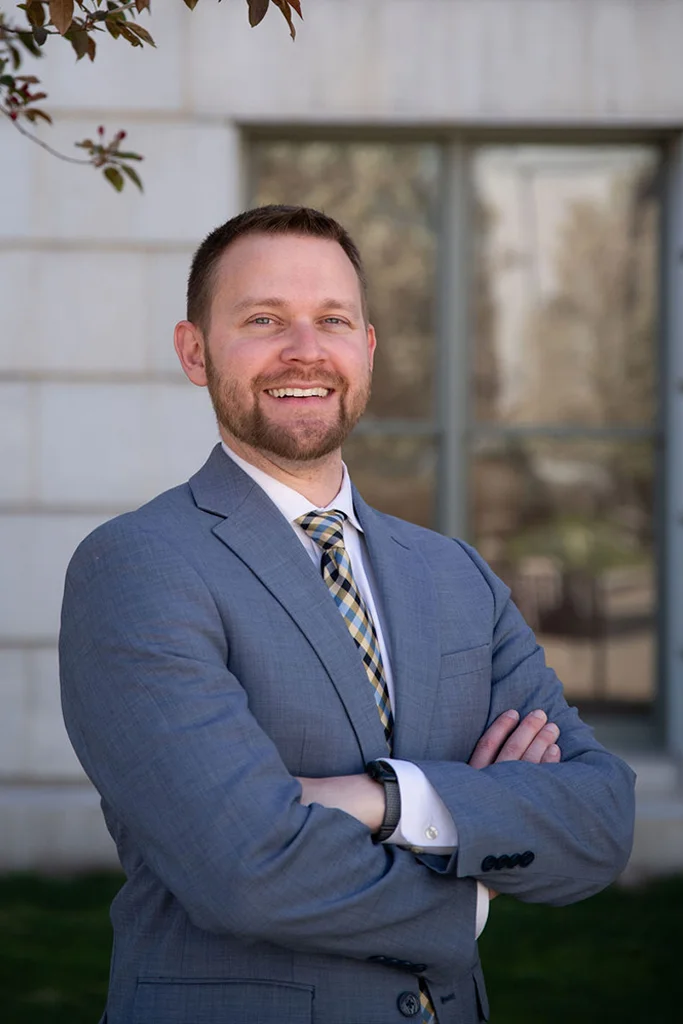
Reid DeChant’s background as a former public defender gave him something that most private defense attorneys in Boulder do not have: volume. He handled an enormous caseload across Denver, Broomfield, and Adams County courtrooms before building his private practice, and that meant dealing with DMV proceedings alongside criminal cases across hundreds of impaired driving matters. He understands how the two processes connect, how a position taken in the DMV hearing can affect the criminal case, and how to build a strategy that defends both tracks simultaneously without the two undermining each other.
Reid is also a graduate of the Trial Lawyers College, founded by attorney Gerry Spence, a program that trains lawyers in the kind of authentic, human-centered advocacy that translates even into administrative hearings. A DMV hearing may not involve a jury, but it involves a human being making a decision, and Reid’s training in how to tell a client’s story clearly and compellingly does not stop at the courthouse door. He is a member of the National Association of Criminal Defense Lawyers and the Colorado Criminal Defense Bar, which means his understanding of DUI defense strategy stays current as the law evolves.
The case results DeChant Law has published speak to this track record directly. Multiple DMV Express Consent actions dismissed across different counties and different grounds. DUI cases dismissed in Arapahoe County, Douglas County, Jefferson County, and Broomfield County. Not Guilty verdicts at trial on DUI charges in Jefferson County and Douglas County. When you are looking for a DMV hearing attorney in Boulder, that kind of documented, real-world record matters more than any marketing claim.
What a Boulder DMV Hearing Actually Covers
- Express Consent advisement defects: Colorado law requires that the advisement given to a driver before the chemical test meets specific standards. If the officer failed to read the advisement correctly, read it at the wrong time, or delivered it while Miranda warnings had already been given, the revocation can be challenged on those grounds alone.
- Two-hour rule violations: Colorado law requires that a blood or breath test be administered within two hours of the driver’s last operation of a motor vehicle. When delays at the scene, at the police station, or in the processing of a blood draw push the test outside that window, the result may not be usable at the hearing.
- Reasonable grounds for the stop: The hearing officer must find that the officer had reasonable grounds to believe the driver was impaired. An unlawful traffic stop, a pretextual stop without sufficient justification, or a stop based on a mistaken belief about traffic law can undermine the basis for the entire proceeding.
- Blood draw procedures: Blood tests must be drawn by qualified personnel using approved methods and stored and transported in ways that preserve the sample’s integrity. Chain of custody issues and improper draw procedures are legitimate hearing arguments, particularly when the margin between the legal limit and the reported result is narrow.
- Refusal hearings: A driver who refused a chemical test faces a separate revocation track with longer mandatory revocation periods. The hearing in a refusal case focuses on whether the driver was properly advised and whether the refusal was actually knowing and voluntary, issues that experienced representation can address.
- Interlock and early reinstatement options: Even when a revocation is upheld, there may be pathways to early reinstatement through Colorado’s ignition interlock program. Understanding those options and how to pursue them can significantly reduce the practical impact of a revocation on daily life in Boulder.
- Prior revocations and license history: Colorado’s DMV maintains a driving record that affects both the length of any revocation and the reinstatement requirements. A lawyer reviewing your full driving history before the hearing can identify how prior actions affect the current proceedings and how to frame the hearing accordingly.
What to Do After a DUI Arrest in Boulder County
The most important thing to understand after a DUI arrest in Boulder County is that you are on two separate clocks simultaneously. The criminal case will move through Boulder County District Court, located at the Boulder County Justice Center at 1777 6th Street in Boulder. That process has its own timeline and milestones. The DMV action runs entirely separately through the Colorado Division of Motor Vehicles, and the seven-day deadline to request a hearing does not pause while you figure out what to do about your criminal case.
The notice of revocation the officer handed you at the scene is your temporary permit. Hold onto it. Read it carefully to confirm how many days it is valid and what restrictions apply. The notice should also include information about how to request a hearing, though navigating that request correctly and ensuring it preserves all your options is something that benefits significantly from attorney involvement. If your attorney files the hearing request, they can ensure it is properly structured and that any necessary subpoenas for the officer and the breath test operator are included from the outset.
Gather everything you have from the arrest: the notice of revocation, any citation or summons, the name and badge number of the arresting officer if you have it, the location and time of the stop, and any observations you have about how the stop, the field sobriety testing, and the chemical test were conducted. These details matter. The time between a stop at the Diagonal Highway and the eventual blood draw at the Boulder County Jail, for example, is exactly the kind of factual detail that can support a two-hour rule argument. Do not wait to pull these facts together.
Do not drive on a suspended license. This sounds obvious, but in a city like Boulder, where many people rely heavily on a vehicle to commute to Denver, reach the mountains, or navigate areas not well-served by public transit, the temptation to take that risk is real. A DWAI or DUI conviction is serious enough. Driving with a revoked license while that case is pending creates additional criminal exposure and eliminates credibility at the DMV hearing.
Questions About Boulder DMV Hearings
How long do I have to request a DMV hearing after a DUI arrest in Colorado?
You have seven days from the date you received the notice of revocation to request a hearing with the Colorado DMV. That seven-day window is strict. If the request is not submitted in time, the revocation goes into effect automatically on the date stated on the notice and there is no right to a hearing on the merits.
What is the difference between the DMV hearing and my criminal DUI case?
The criminal case is filed by the Boulder County District Attorney’s Office in Boulder County District Court and determines whether you face criminal penalties including fines, probation, jail time, and a conviction on your record. The DMV hearing is an administrative proceeding handled by the Colorado Division of Motor Vehicles that determines only whether your driver’s license will be revoked. The two proceedings are independent and can produce different outcomes. You can win your criminal case and still lose your license, or vice versa.
Can I represent myself at a Colorado DMV hearing?
You can, but the procedural and substantive knowledge required to effectively challenge a revocation at a DMV hearing is not intuitive. Knowing which grounds for dismissal apply, how to subpoena the officer and the breath test operator, how to cross-examine witnesses, and how to present certified driving records and testing documentation in a way that supports your case requires experience with these proceedings specifically. Most drivers who represent themselves at DMV hearings lose them.
What happens if I lose my DMV hearing?
If the hearing officer upholds the revocation, your license will be revoked for the applicable period based on the nature of the offense and your prior record. Depending on your circumstances, you may be eligible to apply for early reinstatement using an ignition interlock device, which allows driving under a restricted license before the full revocation period expires. Your attorney can help you understand the reinstatement timeline and the interlock requirements specific to your case.
Does what I say at the DMV hearing affect my criminal case?
This is one of the most important strategic questions in dual-track DUI defense. Statements made at a DMV hearing can potentially be used in the criminal proceeding depending on how they arise and in what context. The relationship between the two proceedings is one reason why having the same attorney handle both matters makes a significant difference. Positions taken in one forum need to be considered in light of the other, and a lawyer managing both can ensure nothing said at the DMV hearing creates problems at the criminal trial or plea stage.
What if the officer does not show up to my DMV hearing?
In Colorado, DMV hearings can sometimes proceed on documentary evidence even without the officer appearing in person. However, if the officer was properly subpoenaed and does not appear, that may be grounds for the action to be dismissed or for the hearing to be continued in a way that affects the revocation timeline. Whether an officer’s absence helps or hurts depends on the specific facts of your hearing, and an attorney familiar with how Boulder County officers and the DMV handle these situations can advise you on the most effective response.
Can a DMV revocation affect my job or professional license?
Yes, in some cases it can. Drivers who operate commercial vehicles hold a CDL, and a DMV action on a regular license can have separate consequences under the commercial driver rules. Professionals in fields that require a valid driver’s license as a condition of employment, or who hold professional licenses subject to background review, should disclose the pending DMV action to their attorney early so that any collateral consequences are part of the overall defense strategy from the beginning.
Is a DMV hearing worth pursuing if I know my BAC was over the limit?
Yes, for several reasons. Even a BAC above the legal limit does not automatically mean the revocation will be upheld. The chemical test must have been administered correctly, the advisement must have been proper, the stop must have been lawful, and the testing must have occurred within the two-hour window. Any one of these elements being defective is grounds to dismiss the action regardless of the test result. Additionally, the hearing itself creates discovery opportunities that can benefit your criminal defense, including testimony from the officer that may reveal inconsistencies with the police report.
How long does a Colorado DMV hearing take to schedule after I request one?
Scheduling timelines can vary, but DMV hearings in Colorado are generally scheduled within several weeks of the request. In the interim, your temporary driving permit remains valid. Your attorney should confirm the permit’s expiration date and ensure the hearing is scheduled before that date or that appropriate steps are taken to extend your driving privileges while the hearing is pending.
What if I need to drive for work while my license is under revocation?
Colorado allows certain drivers to apply for a restricted license or early reinstatement using an ignition interlock device in lieu of serving the full revocation period. The eligibility requirements and waiting periods differ depending on whether the revocation stemmed from a test failure or a refusal, and whether you have prior revocations. Understanding which reinstatement pathway applies to your situation and pursuing it promptly can significantly limit the disruption to your employment and daily life in Boulder.
Representing Clients Across Boulder and the Surrounding Region
DeChant Law represents clients facing DMV hearings and DUI charges across Boulder County and the broader Front Range. From the neighborhoods of North Boulder and Newlands through downtown Boulder and the Hill area near the University of Colorado, and out into the communities of Gunbarrel and Four Mile Canyon, we work with drivers throughout the city. We also represent clients in Lafayette, Louisville, Superior, and Erie, as well as the mountain communities of Nederland, Ward, and Jamestown. Drivers from Longmont and Lyons in northern Boulder County and from the Eldora corridor to the west regularly face DMV proceedings arising from stops on canyon roads and mountain highways.
Beyond Boulder County, DeChant Law handles impaired driving defense and DMV hearings across Jefferson County, Broomfield County, Adams County, Arapahoe County, Douglas County, and the Denver metropolitan area. Whether a stop happened on the Boulder Turnpike, on Canyon Boulevard heading toward the foothills, or on the highway south toward Denver, the DMV hearing process is the same and the stakes are the same regardless of which county’s law enforcement made the arrest. The firm’s documented results across these jurisdictions reflect consistent, effective advocacy in the administrative and criminal courts of the entire Front Range region.
Speak with a Boulder DMV Hearing Attorney Before That Seven-Day Window Closes
The overlap between your criminal DUI case and your DMV revocation proceeding is not something to manage on your own or to address after the fact. The decisions made in the first days after a DUI arrest in Boulder shape both proceedings, and the seven-day deadline to request a hearing does not move. Reid DeChant is a Boulder DMV hearing attorney with the trial background, the specific DUI expertise, and the documented results to give you the best realistic chance of keeping your license and resolving your criminal case on the best available terms.
Contact DeChant Law today to discuss your DMV hearing request, your criminal case, and how Reid approaches both simultaneously. The conversation is the first concrete step toward protecting your license and your future.