Boulder DUI Second Offense Lawyer
A second DUI in Colorado is not simply a repeat of the first. The moment prosecutors see a prior conviction on your record, the calculus shifts entirely. Mandatory minimums kick in, jail time becomes a near-certainty without skilled advocacy, and the license consequences compound in ways that can upend your ability to work, take care of your family, and move forward with your life. Searching for a Boulder DUI second offense lawyer means you already sense what is coming. The right response is not to hope the system treats you fairly. The right response is to build the strongest possible defense before you set foot in Boulder County District Court.
Boulder County runs its DUI enforcement differently than some neighboring jurisdictions. Colorado State Patrol maintains a heavy presence along US-36 and Highway 119, particularly during late weekend hours and around University of Colorado events. The Pearl Street Mall corridor, the Hill neighborhood, and areas near Baseline Road see significant enforcement activity tied to bar and restaurant traffic. Law enforcement in this market knows how to build a DUI case, and prosecutors in the Boulder County DA’s Office have experience pushing for the harshest outcomes available under Colorado law for repeat offenders. That is the environment your defense has to navigate.
What most people do not realize when they come in for a consultation is how much of a second DUI case is actually winnable or reducible through technical defense work. Prior conviction enhancement depends on how that prior conviction is documented and classified. The stop itself may have lacked legal justification. The chemical test may have procedural defects. The DMV action against your license runs separately from the criminal case and has its own deadlines and hearing procedures. None of these paths closes without someone who genuinely understands how Colorado DUI law operates in Boulder’s specific legal environment.
What Colorado Law Actually Does to a Second DUI Conviction
Colorado treats a second DUI conviction as a serious misdemeanor, but the practical consequences reach far beyond the courtroom. Under current Colorado law, a second DUI conviction carries a mandatory minimum of ten days in jail, with the possibility of up to a year. Courts may allow some of that time to be served through community service or house arrest in certain circumstances, but those alternatives are not guaranteed, and Boulder County judges have discretion in how they apply them. Fines escalate significantly from the first offense, and the surcharges layered on top of base fines can push the financial impact well past what most people anticipate.
The license consequences are where the real long-term damage often lands. A second DUI conviction triggers a longer revocation period than the first, and reinstatement requires jumping through additional hoops including extended ignition interlock requirements. The DMV process runs simultaneously with the criminal case. Colorado law requires that you request a DMV hearing within a very short window after the arrest to contest the automatic express consent revocation. Missing that deadline means the revocation proceeds regardless of what happens in criminal court. This is not a technical formality. It is a real, separate fight with its own timeline and its own consequences.
For defendants with professional licenses, the stakes extend even further. Teachers, nurses, real estate agents, contractors, and others licensed by Colorado professional boards face the possibility of disciplinary action triggered by a second DUI conviction, independent of any sentence imposed by the criminal court. A Boulder DUI attorney who handles only the criminal side without thinking about these downstream consequences is not giving you the full picture of what your defense strategy needs to accomplish.
Why DeChant Law for a Boulder Second Offense DUI
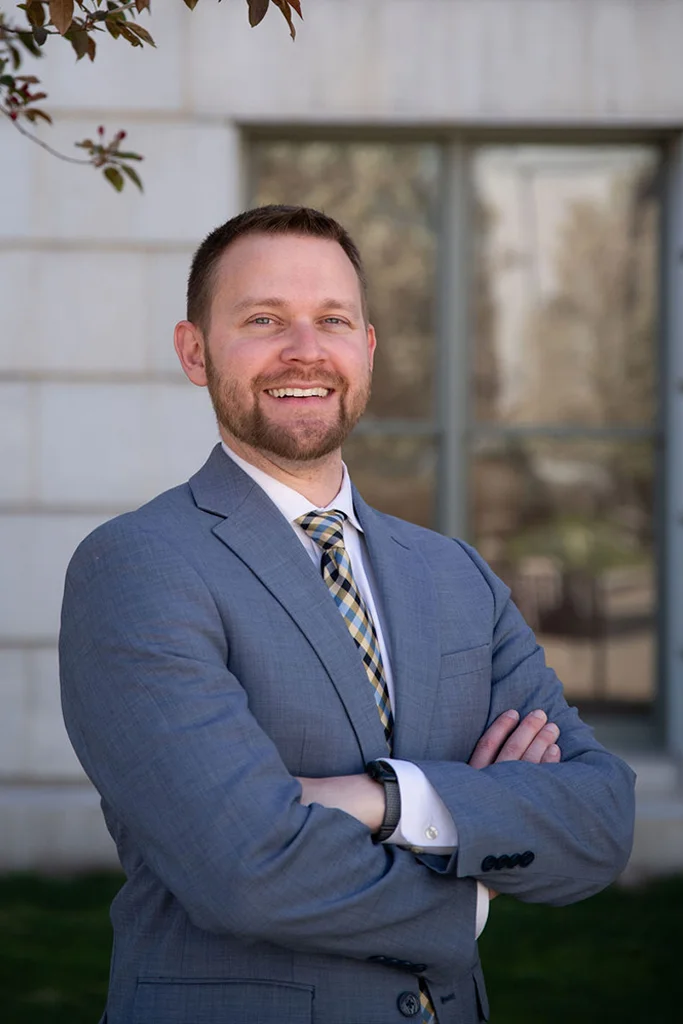
Reid DeChant built his practice specifically around trial-ready DUI defense. Before entering private practice, Reid worked as a public defender in Denver, Broomfield, and Adams County courtrooms, handling an unusually high volume of DUI cases, including trials. Most private criminal defense attorneys accumulate trial experience slowly over a career. Reid arrived in private practice having already stood before judges and juries in courtrooms across the metro area, cross-examining officers and challenging chemical test evidence repeatedly. That matters in DUI cases because the defense is often technical, and technical defenses require someone who has actually tested those arguments at trial.
Reid is a graduate of the Trial Lawyers College, founded by legendary trial lawyer Gerry Spence. That program is not a CLE seminar. It is an intensive, selective training in the kind of courtroom storytelling and authentic advocacy that changes how juries see a case. When prosecutors push for maximum jail time on a second DUI, the response cannot be purely procedural. Reid’s training allows him to present clients as full human beings, not just defendants with a prior record, and that approach resonates with Boulder County juries in ways that affect outcomes.
DeChant Law’s case results reflect a consistent pattern of fighting DUI charges at every stage of the process. Multiple DMV express consent hearings have been dismissed, including dismissals for improper advisement, failure to administer the chemical test within the required time window, and procedural violations in the advisement process itself. DUI criminal cases have been won at trial and dismissed before trial in Jefferson, Arapahoe, Douglas, and Broomfield counties in addition to Denver. Reid is a member of the National Association of Criminal Defense Lawyers and the Colorado Criminal Defense Bar, which keeps him connected to the current state of DUI defense science and strategy. That network matters when cases involve novel evidentiary questions or recent shifts in how courts are handling specific suppression arguments.
The Specific Charges and Consequences Second-Offense DUI Clients Face in Boulder
- DUI Second Offense (BAC 0.08 or above): Colorado classifies this as a misdemeanor but imposes mandatory minimum incarceration, elevated fines, and extended probation, with prosecutors in Boulder County frequently seeking incarceration near or at the upper range of what the statute allows.
- DWAI Second Offense: Driving While Ability Impaired carries its own enhancement penalties for repeat offenders, and while the base offense is treated differently than DUI, a second DWAI or a prior DUI combined with a DWAI can still trigger serious consequences under Colorado’s repeat offender framework.
- DUI Per Se: Colorado law separately defines a per se DUI based solely on measured blood alcohol content, meaning the prosecution does not need to establish impairment through field sobriety tests if the chemical test result meets the statutory threshold.
- DUI-Drugs Second Offense: Boulder County sees a meaningful number of DUI cases involving cannabis, prescription medication, or controlled substances. Colorado law applies the same repeat offender framework to drug-related DUI charges, and the absence of a defined per se impairment threshold for cannabis creates distinct evidentiary battles worth fighting.
- Express Consent Revocation (DMV Action): Colorado’s express consent law requires drivers to submit to chemical testing. Refusal or test results above the legal threshold trigger an automatic administrative license revocation that runs independently of the criminal case, with a short statutory window to request a hearing and challenge the action.
- Ignition Interlock Requirements: Second offense convictions bring extended mandatory interlock periods. Violations of interlock requirements can extend the restriction period and create additional legal exposure.
- Persistent Drunk Driver Designation: Colorado law assigns this designation to drivers who register a BAC above 0.15 or who have prior DUI-related convictions. The designation carries additional requirements including level II alcohol education and therapy and affects the reinstatement pathway significantly.
What to Do Right Now If You Are Facing a Second DUI in Boulder
The DMV hearing deadline is the most time-sensitive obligation you face. Colorado requires that you request a DMV hearing within seven days of your arrest to contest the express consent revocation of your license. That window does not extend. If you miss it, the revocation becomes automatic regardless of the strength of your underlying defense. The moment you are released after a second DUI arrest in Boulder County, the clock is already running. Contact a Boulder DUI defense attorney immediately so that hearing request gets filed in time.
Boulder County criminal cases are handled at the Boulder County Justice Center at 1777 Sixth Street in Boulder. The District Attorney’s Office for the 20th Judicial District prosecutes DUI cases in Boulder County, and your case will move through arraignment, a pre-trial conference, and potential motions hearings before any trial date is set. Understanding that timeline matters because the defense work that determines the outcome often happens long before trial. Suppression motions challenging the validity of the stop, the field sobriety test administration, or the chemical test procedures are typically filed and argued well before any jury is seated.
Do not discuss the facts of your case with anyone other than your attorney. This includes people you trust. Statements made to friends, family, or on social media can become evidence. Anything you said to the arresting officer has already been documented in the police report, and your attorney needs to see that report before any strategic decisions are made. Gather whatever documentation you have from the night of the arrest, including any receipts, witness contact information, or photographs. Your attorney will know what is useful and what is not, but having more information available is always better than having less.
If you submitted to a blood test rather than a breath test, request that the preserved blood sample be independently tested. Colorado law gives you the right to an independent analysis of the blood draw. This is not a formality. Independent testing has produced results that contradicted the state lab’s findings in documented cases, and that kind of evidence can be critical to a second offense defense where the stakes are highest.
Boulder DUI Second Offense Questions Answered
Will I definitely go to jail for a second DUI in Colorado?
Colorado law sets a mandatory minimum jail sentence for a second DUI conviction, and courts cannot simply waive that minimum. However, some of that time may be served through alternatives such as work release, house arrest with electronic monitoring, or community service in circumstances where the court finds alternatives appropriate. The critical word is “may.” Boulder County judges have discretion, and the outcome depends heavily on the facts of your case and how it is presented. A dismissal, a reduction to DWAI, or a successful suppression of evidence can each change the picture dramatically.
Can the prior DUI be challenged if it was from another state?
Colorado can use out-of-state prior DUI convictions to enhance a current charge. However, whether a prior out-of-state conviction actually qualifies as a predicate offense under Colorado’s enhancement statute requires legal analysis. The prior conviction must have been for conduct that would constitute a DUI offense in Colorado, and it must be properly documented and authenticated. These are not automatic determinations. Reid reviews every prior conviction carefully to assess whether the enhancement is legally sound.
What happens to my license if I refuse the chemical test on a second offense?
Colorado’s express consent law applies to refusals as well as test results. A refusal on a second offense triggers a revocation period that is longer than a refusal on a first offense, and the revocation proceeds unless you successfully challenge it at a DMV hearing. The DMV process is separate from the criminal case. Winning the criminal case does not automatically restore a license that was revoked through the administrative process, and vice versa. Both must be addressed.
How does a second DUI affect professional licenses in Colorado?
Colorado professional licensing boards treat criminal convictions, particularly repeat convictions, as grounds for disciplinary proceedings. The specific effect depends on the licensing board and profession. Nursing, teaching, law, real estate, contracting, and healthcare licensing are among the categories where a second DUI can trigger mandatory reporting obligations and potential suspension or revocation of the professional license. These proceedings are separate from the criminal case and require their own response strategy.
Can I get a restricted license or interlock during the revocation period?
Colorado provides a pathway for certain restricted driving privileges during a revocation period through an ignition interlock license. Eligibility depends on the specific circumstances, including whether you submitted to or refused the chemical test and the outcome of the DMV hearing. Interlock licenses allow driving to necessary locations such as work, medical appointments, and school but require the interlock device to be installed on any vehicle you drive. Violations of interlock conditions create additional legal exposure and can extend the restriction period.
Is it worth challenging the field sobriety tests in a second offense case?
Absolutely. Standardized field sobriety tests have documented accuracy limitations, and those limitations matter more when the stakes are higher. Officers must administer these tests under specific conditions and following standardized protocols established by NHTSA. Deviations from those protocols, adverse road conditions, lighting, footwear, physical conditions, and nervousness from a DUI stop are all factors that affect test performance and can be challenged. In a second offense case where prosecutors are pushing hard for conviction, successfully undermining the field sobriety evidence can make the difference between a trial win and a plea to a lesser charge.
How long will a Boulder second offense DUI case take from arrest to resolution?
Cases in Boulder County’s 20th Judicial District vary considerably in timeline. A case that resolves through a negotiated plea after pre-trial conferences may conclude in a few months. A case that goes to trial after contested motions hearings on suppression issues can take substantially longer, sometimes over a year from arrest to verdict. The timeline is affected by how crowded the court’s docket is, how complex the evidentiary issues are, and whether the defense pursues motions hearings before trial. Reid evaluates the likely timeline for each case individually and keeps clients informed at every stage so you always know where things stand.
What if the officer did not read me my Miranda rights before questioning me?
Miranda applies to custodial interrogation. Whether you were in custody at the relevant moment, and whether the officer’s questions constituted interrogation, are fact-specific legal questions. If Miranda was required and not given, statements made in response to that questioning may be suppressible. DeChant Law has handled cases where Miranda violations affected the admissible evidence and the ultimate outcome. Whether that applies to your situation is something Reid will assess based on the specific facts documented in the arrest report and any body camera footage.
Can a second DUI charge be reduced to a lesser offense?
Yes, reductions are possible. DWAI carries different penalties than DUI under Colorado law. Reckless driving is a lower-tier charge that resolves some cases in the right circumstances. Whether a reduction is available depends on the evidence, the specific facts of the stop and arrest, the strength of the defense case, and the approach of the prosecutor handling the file. Reductions are not given as a matter of course on second offenses. They are negotiated outcomes that result from building a defense that gives the prosecution a reason to offer something less than the full charge.
Does it matter which court my Boulder DUI case is in?
Yes. Second offense DUI cases in Boulder County are heard in Boulder County District Court at the Boulder County Justice Center. The prosecutors, judges, and procedural culture of that courthouse differ from Denver County, Jefferson County, or other jurisdictions in the metro area. An attorney who primarily practices in other courtrooms and is unfamiliar with how Boulder County handles these cases is at a disadvantage. Reid has practiced across multiple Front Range jurisdictions and understands how local factors affect strategy, plea negotiations, and courtroom dynamics.
Representing Second Offense DUI Clients Across Boulder and Surrounding Communities
DeChant Law represents clients facing second DUI charges throughout Boulder County and the surrounding region. In Boulder itself, clients come from neighborhoods including The Hill, Whittier, University Hill, Mapleton Hill, Wonderland Hills, North Boulder, Gunbarrel, and the areas along Baseline Road and Broadway that see regular enforcement activity. The firm also represents clients from communities throughout Boulder County including Louisville, Lafayette, Superior, Longmont, Lyons, Nederland, Erie, and Niwot. Clients from communities just outside Boulder County, including Westminster, Broomfield, Arvada, Golden, and communities along the US-36 corridor between Boulder and Denver, also benefit from Reid’s representation, given his extensive experience across the Front Range. Whether the stop happened on Canyon Boulevard, 28th Street, the Diagonal Highway, or somewhere along the Peak to Peak Scenic Byway, the geographic specifics of where and how the arrest occurred are part of how a defense is built.
Boulder DUI Second Offense Attorney Ready to Fight Your Case
The difference between a second DUI conviction that costs you your license, your job, and months of your life and a case that ends in a dismissal, reduction, or acquittal often comes down to whether the right attorney was involved from the start. Reid DeChant is a Boulder DUI second offense attorney who has tried these cases, won at trial, and gotten cases dismissed that prosecutors were certain would end in conviction. His background in public defense, his training at the Trial Lawyers College, and his membership in national and state criminal defense organizations reflect a commitment to the kind of representation that actually changes outcomes.
Do not wait on the DMV deadline. Do not assume a second offense is automatically hopeless. Contact DeChant Law to discuss your case and find out what options are actually available to you given the specific facts of your arrest, your prior record, and the evidence the prosecution intends to rely on.