Boulder DWAI Lawyer
Colorado draws a hard line between a standard DUI and a charge many drivers don’t see coming: driving while ability impaired, known as DWAI. The threshold is lower than most people realize. A blood alcohol content as low as 0.05 can support a DWAI charge in Colorado, and prosecutors in Boulder County are well-equipped to pursue these cases. A Boulder DWAI lawyer who understands how these cases are built, and where they fall apart, can be the deciding factor between a conviction that follows you for years and a resolution you can actually live with.
Boulder is a college town, a tech hub, and a destination for outdoor recreation, which means its roads and venues generate a steady stream of impaired driving investigations. Pearl Street, the Hill, Folsom Street, Highway 36, and the stretches of US-36 connecting Boulder to Denver all see law enforcement activity, especially on weekend nights and during CU events. Checkpoint operations, saturation patrols, and increased enforcement around concerts and festivals at Red Rocks and the 1stBank Center nearby are common. Knowing the terrain matters when building a defense.
DWAI carries real consequences in Colorado even though it sits below DUI on the charge scale. Points on your license, fines, possible jail time, mandatory community service, and a permanent mark on your driving record are all part of the picture. For professional license holders, commercial drivers, and people in fields that require background checks, a DWAI conviction can have consequences that extend well beyond the courthouse.
What DWAI Cases in Boulder Actually Look Like
DWAI investigations in Boulder County often begin with a traffic stop that may or may not have been justified. Officers pull drivers over for lane violations, equipment issues, or erratic driving observations. Once stopped, the encounter shifts quickly. Officers look for signs of impairment: odor of alcohol, bloodshot eyes, slurred speech, fumbling for documents. The roadside experience is designed to build a case from the first moment of contact.
Standardized Field Sobriety Tests are administered, typically including the Horizontal Gaze Nystagmus test, the Walk-and-Turn, and the One-Leg Stand. These tests were designed under controlled conditions and assume the subject is reasonably healthy, wearing appropriate footwear, and standing on a flat surface. Boulder’s weather, uneven terrain, and the physical realities of any given driver can affect performance in ways that have nothing to do with impairment. Results that look damning in an officer’s report sometimes look very different when scrutinized against actual NHTSA standards.
Chemical testing follows, either a breath test at the roadside or at the station, or a blood draw if drugs are suspected or if the driver refuses the breath test. Colorado’s express consent law means that holding a Colorado driver’s license comes with an implied agreement to submit to chemical testing when lawfully requested. Refusal triggers its own consequences through the DMV, separate from any criminal charge. But consent to testing doesn’t mean the test results are unassailable. Breath testing equipment must be properly calibrated and maintained. Blood samples must be properly drawn, stored, and analyzed. Chain of custody matters. Lab error happens.
Why DeChant Law Handles DWAI Defense Differently
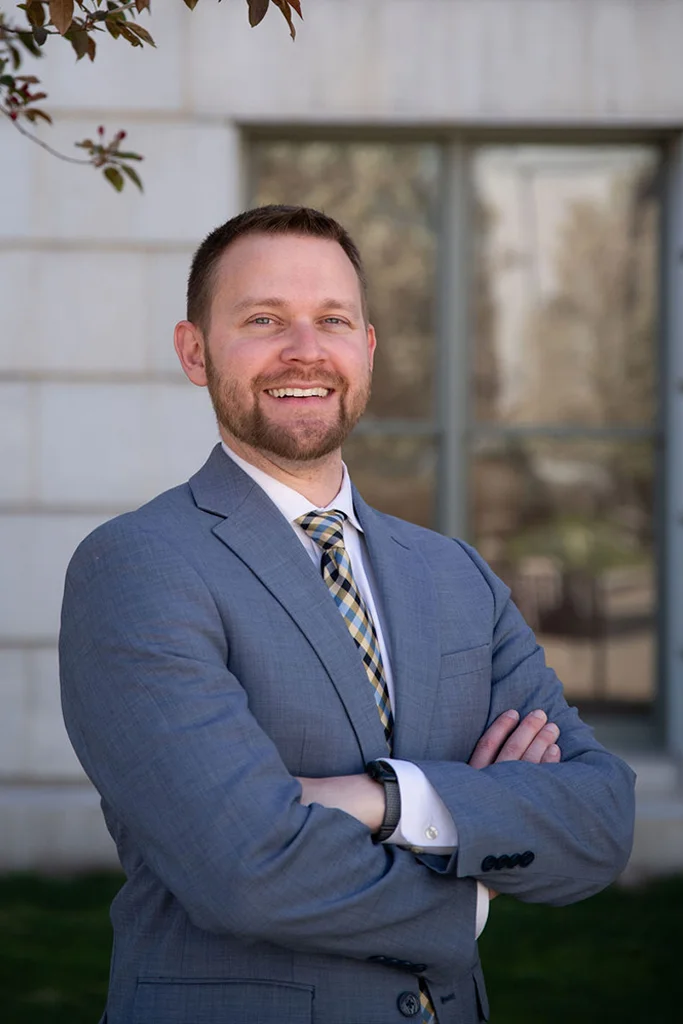
Reid DeChant built his practice around impaired driving defense in a way that reflects genuine depth rather than general familiarity. His background as a public defender gave him volume, real courtroom repetitions with DUI and DWAI cases across Denver, Broomfield, Adams County, and beyond. That experience translates directly into knowing how Boulder County prosecutors approach these cases and where their evidence is most vulnerable.
Reid’s training at the Trial Lawyers College, the program founded by Gerry Spence that focuses on storytelling, authentic advocacy, and genuine human connection, shapes how he approaches every client interaction and every courtroom appearance. DWAI defense isn’t just about attacking lab reports. It’s about making sure the judge or jury understands who you actually are and what actually happened that night. That matters when the case goes to trial, and it matters in plea negotiations.
The case results logged by DeChant Law reflect what focused impaired driving representation looks like in practice. Multiple DMV Express Consent actions dismissed, including cases dismissed for improper advisement and for failure to administer the chemical test within the required two-hour window. DUI and careless driving charges resulting in a not guilty verdict at trial. DUI cases across Jefferson County, Arapahoe County, Douglas County, and Broomfield resulting in dismissals or acquittals. These are the kinds of results that come from knowing how these cases are built and where they break. For someone facing a DWAI charge in Boulder, that record is directly relevant.
Reid is a member of the National Association of Criminal Defense Lawyers and the Colorado Criminal Defense Bar, affiliations that keep him connected to the latest developments in DUI and DWAI defense strategy, suppression law, and scientific challenges to chemical testing evidence. Boulder DWAI defense is not a sideline for this firm. It is central to what Reid does.
The Charges and Consequences Facing Boulder DWAI Defendants
- First-offense DWAI: Colorado treats a first DWAI as a traffic offense rather than a criminal misdemeanor, but that distinction doesn’t make the consequences trivial. Fines, up to eight points on your license, mandatory community service hours, and potential jail time are all possible outcomes under Colorado law.
- DWAI with prior DUI or DWAI convictions: Prior impaired driving convictions, whether DWAI or DUI, count against you on subsequent charges. A second or third impaired driving offense escalates penalties substantially and can push the case toward a criminal conviction with mandatory minimum jail requirements.
- DWAI-drugs charges: Colorado’s DWAI statute applies to impairment by drugs, not just alcohol. Marijuana, prescription medications, and controlled substances can all support a DWAI-drugs charge even without a detectable BAC, and these cases are increasingly common in Boulder given the state’s cannabis laws.
- DMV Express Consent proceedings: A separate administrative action runs parallel to any criminal case. The DMV can move to revoke your license based on your BAC result or your refusal to test, and you typically have a short window to request a hearing. Missing that window can mean automatic revocation.
- Commercial driver consequences: DWAI charges hit commercial license holders especially hard. The federal standards governing commercial driving are stricter, and a DWAI conviction can affect your livelihood even when your private driving privileges survive.
- Professional licensing implications: Nurses, teachers, attorneys, real estate agents, and others holding professional licenses in Colorado may be required to report criminal charges or convictions to their licensing board. A DWAI conviction that seems minor in the criminal context can trigger a separate licensing review.
- Student and campus-related consequences: With the University of Colorado Boulder’s campus directly in the mix, many DWAI defendants are students who face university disciplinary proceedings that run entirely apart from the criminal case and can affect academic standing, financial aid, and housing.
What to Do After a DWAI Stop in Boulder
The most important thing you can do after a DWAI stop in Boulder County is not talk yourself into a worse position. Officers conducting traffic stops are trained to gather statements that support a prosecution. Politely declining to answer questions about where you were, what you drank, or how you feel is not an admission of guilt. It is a protected right, and exercising it will not make things worse.
If you were arrested, your DMV hearing request deadline runs fast. Colorado law generally requires you to request an administrative hearing within a short window of your arrest date. Missing that deadline results in an automatic license revocation that proceeds without any hearing. This is a separate process from your criminal case, and handling both simultaneously requires someone who knows how they interact.
Criminal DWAI cases in Boulder County are handled at the Boulder County Justice Center, located at 1777 6th Street in Boulder. The Boulder County District Attorney’s Office prosecutes these cases, and their prosecutors are experienced with impaired driving law. Your first court appearance, the arraignment, will happen there, and decisions made at that early stage can shape how the entire case proceeds.
Gather whatever information you can recall about the stop itself: the time, your location, what the officer said, what tests were requested, what you were told about express consent, and anything about the breath or blood testing process. Do not reconstruct or fabricate details. Just write down what you actually remember while it is fresh. That information may become relevant when evaluating whether the stop was legally justified, whether the testing was properly administered, or whether your advisements were legally sufficient.
Avoid the temptation to research your own case outcome online or base expectations on what happened to a friend. DWAI cases turn on specific facts: the reason for the stop, the officer’s training and compliance with testing protocols, the calibration records for any testing equipment, and the circumstances of your express consent advisement. General information is no substitute for an attorney who has actually reviewed your arrest report, watched the body camera footage, and assessed the specific weaknesses in the evidence against you.
Boulder DWAI Questions That Deserve Straight Answers
What is the difference between DUI and DWAI in Colorado?
DUI in Colorado generally requires a BAC of 0.08 or higher, or evidence that alcohol or drugs substantially impacted the driver’s ability to operate safely. DWAI covers the lower range, from 0.05 BAC upward, where the evidence shows that the driver’s ability was impaired to the slightest degree. DWAI is treated as a traffic offense on a first offense rather than a criminal misdemeanor, but it carries real penalties and a permanent record entry.
Can I be charged with DWAI for marijuana use in Colorado?
Yes. Colorado’s impaired driving laws apply to any substance that impairs your ability to drive, including cannabis. Colorado has a permissible inference standard tied to THC blood levels, but prosecutors can pursue a DWAI-drugs charge even without a specific numeric threshold if other evidence supports impairment. Drug recognition evaluators are sometimes used in these cases, and the science behind their evaluations is worth scrutinizing carefully.
What happens if I refused chemical testing during my Boulder traffic stop?
Refusing a chemical test in Colorado triggers an automatic DMV revocation process under the state’s express consent law. The refusal can also be used as evidence in your criminal case. However, refusal does not guarantee conviction, and there are situations where the advisement given before the test was legally deficient, which can affect the outcome of both the DMV proceeding and the criminal case. DeChant Law has had DMV Express Consent actions dismissed based on improper advisement and procedural errors.
Will a DWAI show up on my background check?
A DWAI conviction becomes part of your driving record and may appear in criminal background checks depending on how the disposition is categorized. For most employers conducting standard background checks, a DWAI conviction will be visible. The record impact is one reason that resolving the charge favorably, through dismissal, acquittal, or a deferred judgment if available, matters significantly.
How long does a Boulder County DWAI case typically take to resolve?
Timeline varies based on how contested the case is and how the courthouse’s docket is moving. Cases that involve motions to suppress evidence, requests for discovery materials like body camera footage and lab records, and negotiations over amended charges tend to take longer than straight pleas. An uncontested first-offense DWAI might resolve within a few months. A case that goes through suppression hearings or trial will take considerably longer. Boulder County’s court schedule and the specific facts of your case drive the actual timeline.
Can a DWAI charge be reduced or dismissed entirely?
Yes. DWAI charges can be dismissed outright when the evidence doesn’t support the charge, when the stop was unlawful, or when testing procedures were defective. They can also be reduced to charges like careless driving in appropriate cases, depending on the strength of the evidence and the specific facts. There is no universal outcome, but the cases Reid DeChant has handled in Colorado courtrooms demonstrate that dismissals and not-guilty verdicts are real possibilities, not just aspirational outcomes.
What is the two-hour rule and how does it affect my case?
Colorado law requires that a chemical test be administered within two hours of the person’s driving. If the test was administered outside that window, the results may not carry the same legal weight or may be challenged in both the criminal case and the DMV proceeding. DeChant Law has secured DMV Express Consent dismissals specifically because the chemical test was not administered within the required two-hour period, which is exactly the kind of technical issue that requires a lawyer who knows where to look.
I was only driving on private property in Boulder. Does DWAI still apply?
Colorado’s DWAI statute applies to driving on public roads. The question of whether a particular location qualifies as a public road or a private way open to public use is sometimes a legitimate legal issue worth exploring depending on where your stop occurred. Parking structures, private lots, and other non-public areas can create factual questions that affect how the statute applies. This is a fact-specific analysis that your attorney should evaluate based on where you were stopped.
Can a CU Boulder student face university discipline in addition to the criminal charge?
The University of Colorado Boulder has its own conduct code that operates independently of the criminal courts. An arrest or criminal charge can trigger a separate university process, which may result in academic consequences, housing restrictions, or other disciplinary outcomes. The criminal case and the university process do not resolve together, and a favorable outcome in one does not automatically mean a favorable outcome in the other. Students facing both tracks benefit from an attorney who understands that the two proceedings require separate attention.
If my license gets revoked through the DMV process, can I still drive to work or school?
Colorado law allows for a restricted license, sometimes called a probationary license, in certain revocation situations, which permits driving to work, school, medical appointments, or other designated purposes. Whether you qualify depends on the specific circumstances of your revocation. An ignition interlock device is often required as part of the reinstatement process. These licensing consequences and restoration paths are worth discussing early, not after revocation has already taken effect.
Serving Boulder and the Surrounding Communities
DeChant Law represents clients facing DWAI charges throughout Boulder County and the broader Front Range region. From the neighborhoods closest to the University of Colorado campus, through the Hill and East Boulder, to the residential communities of Gunbarrel and Niwot, the firm handles cases originating throughout the Boulder area. Clients from Longmont, Lafayette, Louisville, Superior, and Erie are regularly served, as are those from the mountain communities along Boulder Canyon, including Nederland and Ward.
The firm also represents clients in cases originating in Jefferson County, including Arvada, Lakewood, Westminster, and Golden, as well as Adams County and Broomfield. Denver and the surrounding metro areas of Englewood, Greenwood Village, Centennial, and Littleton all fall within the firm’s coverage area. Whether the stop happened on Boulder’s Pearl Street, on the Table Mesa Drive corridor, or along US-36 heading toward Westminster, Reid DeChant is prepared to handle the case wherever it lands in the Colorado court system.
Speak With a Boulder DWAI Attorney Before Your Next Court Date
A DWAI charge in Boulder does not have to define what comes next. The evidence in these cases is frequently more contestable than defendants initially assume, and the difference between a conviction and a dismissal often comes down to whether the defense was built carefully or accepted passively. Reid DeChant, as a Boulder DWAI attorney with real trial experience and a track record of results across Colorado’s impaired driving courts, is the kind of representation this situation calls for.
DeChant Law takes every client’s case seriously from the first conversation. Call today to schedule a consultation and get an honest assessment of where things stand and what options are actually available to you.