Lakewood DUI Second Offense Lawyer
A second DUI conviction in Colorado carries consequences that are qualitatively different from a first offense. We are not talking about a more serious version of the same situation. We are talking about mandatory jail time, longer license revocations, ignition interlock requirements measured in years rather than months, and a prosecutor who will treat you not as someone who made a mistake but as a repeat offender who needs to be punished. For anyone facing a Lakewood DUI second offense, the margin for error in how you respond is essentially zero.
Lakewood sits in Jefferson County, and the courts there handle a substantial volume of DUI cases given the city’s proximity to Denver, the major corridors along Colfax Avenue, Wadsworth Boulevard, and West Sixth Avenue, and the concentration of bars and restaurants around Belmar and the surrounding commercial districts. Jefferson County prosecutors and judges are familiar with second-offense cases, and they approach them with that familiarity. What that means for you is that the default trajectory of a second DUI case, if you do nothing, bends toward a result you do not want.
There is real work that can be done on a second DUI case. Field sobriety tests can be challenged on administration grounds. Chemical test results can be attacked based on instrument calibration, chain of custody, and the timing of the test relative to the stop. The traffic stop itself can be scrutinized for constitutional defects. At DeChant Law, Reid DeChant approaches every second DUI case in Lakewood as a case that can be defended, not just pled out at whatever terms the prosecution offers.
What a Second DUI Actually Costs You in Colorado
Colorado’s DUI statutes impose escalating penalties for repeat offenses, and the jump from first to second is significant. A second DUI conviction within a seven-year lookback period triggers mandatory minimum jail time. Even a judge who would otherwise be inclined toward leniency is constrained by what the statute requires. Beyond jail, you are looking at a longer period of supervised probation, higher fines and surcharges, mandatory alcohol education and treatment programs, and a multi-year ignition interlock requirement on your vehicle.
The Colorado DMV runs a parallel process entirely separate from the criminal case. Under Colorado’s Express Consent law, a second refusal or a second test above the legal limit triggers administrative license revocation. The DMV hearing to contest that revocation must be requested within seven days of your arrest, or you waive the right to a hearing entirely. Many people facing a second DUI do not realize the DMV process is separate and that silence is treated as forfeiture. That seven-day window is one of the most critical deadlines in your entire case.
A second conviction also affects your insurance at a level that compounds the financial damage for years. SR-22 filing requirements, drastically elevated premiums, and in some cases policy cancellation create a financial drag that extends well beyond the sentence itself. And if your job involves driving, a commercial driver’s license, or any professional license subject to disciplinary review, the collateral consequences of a second conviction can reshape your entire career.
How a Lakewood DUI Second Offense Defense Actually Works
- The traffic stop: Every DUI case begins with a stop, and that stop must be legally justified. Colorado law requires reasonable articulable suspicion before an officer can pull you over. If the stop in your case was pretextual, unjustified, or based on an anonymous tip that was not sufficiently corroborated, a motion to suppress can challenge everything that followed. On Wadsworth Boulevard or Colfax Avenue at 2 a.m., officers sometimes rely on ambiguous driving behavior that does not actually meet the legal threshold.
- Field sobriety test administration: The Standardized Field Sobriety Tests recognized by the National Highway Traffic Safety Administration are only valid when administered correctly. Deviation from NHTSA protocols on the Walk-and-Turn, One-Leg-Stand, or Horizontal Gaze Nystagmus tests can undermine the evidentiary value of the results, and in Lakewood, road conditions, lighting, and surface grade near areas like West Colfax can affect performance independent of impairment.
- Breathalyzer accuracy and maintenance records: The Intoxilyzer devices used in Colorado require regular calibration and maintenance. Records of those calibrations are discoverable. A device that was not properly maintained or that was tested with a solution outside acceptable tolerance ranges can produce unreliable results that are subject to challenge.
- Blood test chain of custody: When a blood draw is taken, the sample must be collected, stored, and tested according to specific protocols. Breaks in the chain of custody, improper storage temperatures, or lab handling errors can all create legitimate questions about whether the result accurately reflects your blood alcohol content at the time of driving.
- The two-hour rule: Colorado law requires that the chemical test be administered within two hours of driving. If the test was taken outside that window, the result may be subject to challenge. DeChant Law has obtained DMV hearing dismissals on exactly this basis.
- The prior conviction: For a second-offense enhancement to apply, the prosecution must be able to prove the prior DUI conviction. That means examining the prior record carefully. If the prior conviction was in another state or was for a closely related but technically distinct offense, there may be arguments about whether the enhancement actually applies under Colorado’s statute.
- Express Consent advisement: Colorado’s Express Consent law requires officers to provide a specific advisement before requesting a chemical test. DeChant Law has obtained DMV hearing dismissals based on improper Express Consent advisements. If the advisement in your case was defective, that creates grounds to challenge the DMV revocation.
The Seven Days After a Second DUI Arrest in Lakewood
The first and most time-sensitive thing you need to do after a second DUI arrest in Lakewood is request a DMV hearing. You have seven days from the date of arrest. That request goes to the Colorado Department of Revenue’s Division of Motor Vehicles. If you miss that window, the DMV treats it as a waiver and proceeds with the revocation without a hearing. Requesting the hearing also temporarily stays the revocation while the case is pending, which means you may be able to continue driving legally during that period.
Your criminal case will be set in Jefferson County District Court, which handles felony matters, or Jefferson County Combined Court, which handles misdemeanors, depending on how the charges are filed. The courthouse is located in Golden, Colorado. Most second DUI offenses in Colorado are charged as misdemeanors unless there are aggravating factors such as a very high blood alcohol content, the presence of a minor in the vehicle, or an accident causing injury. Knowing which courthouse and which division will handle your case matters because local practice, judicial temperament, and the specific deputy district attorneys assigned to those divisions all affect how your case will move.
Do not speak with law enforcement or prosecutors about your case without an attorney present. This is not abstract advice. It is concrete, practical, and the single most common mistake people make after a second arrest when they think that being cooperative or providing context will help them. It will not. What you say will be recorded and used in the prosecution. Exercise your right to remain silent and ask to speak with a lawyer.
Gather whatever documentation you can about the circumstances of your arrest. The location of the stop, the lighting, the weather, whether you were tired or ill, any medications you are taking, the last time you ate or drank before driving. These details matter more than most people realize when evaluating whether the officer’s observations are accurate and whether any legitimate defenses exist.
Why DeChant Law for a Second-Offense DUI in Lakewood
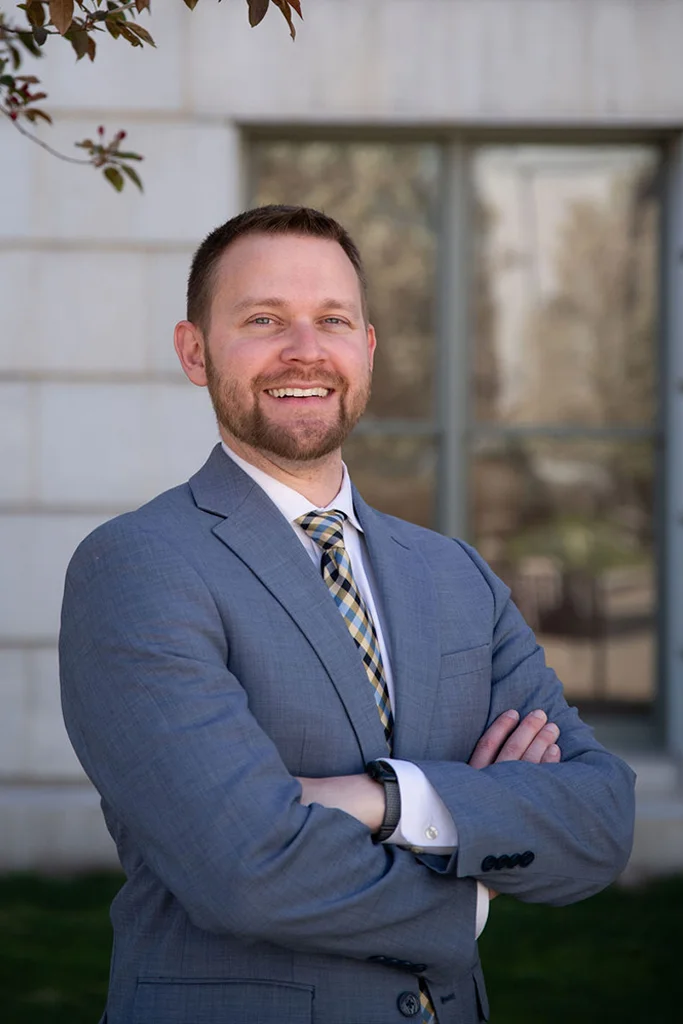
Reid DeChant built his criminal defense practice on the kind of trial experience that most private attorneys accumulate slowly over decades. As a former public defender, he handled an enormous volume of cases across Denver, Broomfield, and Adams County courts, defending clients in matters ranging from traffic offenses and DUI to assault, felonies, and homicide. That volume of actual courtroom time means Reid has cross-examined police officers on DUI stops more times than most Lakewood DUI attorneys have even observed. He knows how officers describe their observations, how they frame field sobriety test results, and where their testimony tends to reveal its vulnerabilities.
Reid is a graduate of the Trial Lawyers College, founded by legendary trial attorney Gerry Spence. That training shapes how he approaches every case, including second DUI cases that many defense attorneys treat as foregone conclusions. A case that can be taken to trial should be evaluated for trial. A jury that understands who you are as a person, not just what the prosecution says happened that night, is a very different audience than a judge reviewing a plea agreement. Reid’s approach to narrative advocacy, developed through that training, means your defense is built around your story, not just a legal argument.
The firm’s published case results include multiple DMV Express Consent hearing dismissals, including one dismissed because the officer provided Miranda advisements before the Express Consent advisement, altering the legal framework, one dismissed for improper Express Consent advisement procedure, and one dismissed because the chemical test was not administered within the required two-hour window. These are not technicalities. They are the result of careful case review and the willingness to fight for every available defense. Reid is a member of the National Association of Criminal Defense Lawyers and the Colorado Criminal Defense Bar, which means he stays current on the evolving strategies and legal developments that shape how these cases are defended.
Questions About Second DUI Cases in Lakewood
Is a second DUI automatically a felony in Colorado?
Not automatically. A second DUI in Colorado is typically charged as a misdemeanor. However, certain circumstances can elevate the charge, including a prior felony DUI conviction, causing serious bodily injury or death while driving under the influence, or having a child under fifteen in the vehicle at the time of the offense. A straightforward second DUI without aggravating factors will generally remain a misdemeanor, though the penalties are substantially more serious than a first offense.
What is the mandatory jail time for a second DUI conviction in Colorado?
Colorado law imposes mandatory minimum incarceration for a second DUI conviction. Judges cannot simply sentence you to probation without any jail component. The actual duration depends on the specifics of your case and how the prior conviction interacts with the current charge. If your prior offense falls within the relevant lookback period under Colorado statute, the mandatory minimums apply. Your attorney can walk you through the precise range based on the facts of your case.
Can I refuse a breathalyzer or blood test on a second offense?
You can refuse, but refusal on a second offense carries its own consequences under Colorado’s Express Consent law. A second refusal triggers a longer administrative license revocation than a first refusal. Refusal also does not necessarily prevent prosecution. Officers can seek a search warrant for a blood draw, and juries can be instructed that they are permitted to draw an inference from your refusal. Whether refusal is strategically advantageous depends entirely on the facts of the stop and the strength of the other evidence.
How long will an ignition interlock device be required after a second DUI?
For a second DUI conviction in Colorado, the ignition interlock requirement extends for a substantially longer period than after a first offense. The device requirement applies both as a condition of getting a restricted license during any revocation period and as a condition of full license reinstatement. The specific duration is tied to the outcome of both the DMV administrative process and the criminal case, and it can be affected by whether you submitted to or refused a chemical test.
What happens to my driver’s license if I am convicted of a second DUI?
A second DUI conviction in Colorado results in license revocation through the DMV administrative process, separate from any criminal sentence. The revocation period for a second offense is longer than for a first, and reinstatement requires satisfying specific conditions including completion of required education and treatment programs, proof of SR-22 insurance filing, and ignition interlock installation. The DMV process and the criminal case run on parallel tracks, which is why requesting a DMV hearing immediately after arrest is critical.
Does a DUI from another state count as a prior offense in Colorado?
Colorado law generally allows out-of-state DUI convictions to count as prior offenses when enhancing the current charge. If you have a prior conviction from another state, the prosecution will examine that conviction to determine whether it qualifies as a predicate offense under Colorado’s statute. There are arguments that can be made about the comparability of the out-of-state offense to Colorado law, and those arguments deserve careful analysis rather than automatic concession.
Will a second DUI in Lakewood affect my professional license?
Certain professional licenses in Colorado carry reporting requirements for criminal convictions, including DUI. Medical professionals, nurses, teachers, attorneys, contractors, real estate agents, and others licensed through state regulatory boards may face separate disciplinary proceedings if convicted of a second DUI. The specific consequences depend on the licensing board’s rules and the nature of the conviction. This is one of the reasons that avoiding a conviction, or minimizing the charge through negotiation, matters beyond just the criminal sentence itself.
Can a second DUI charge be reduced to a lesser offense?
It is possible, depending on the facts of the case and the evidence available. A second DUI can sometimes be resolved through a negotiated plea to a lesser charge, particularly if there are evidentiary weaknesses in the prosecution’s case. Prosecutors in Jefferson County will evaluate the strength of their evidence before agreeing to any reduction. Cases where the stop is questionable, the field sobriety tests were poorly administered, or the chemical test results are subject to legitimate challenge offer more leverage in negotiations than cases with clean evidence.
Is there any way to expunge a second DUI conviction in Colorado?
Colorado’s expungement laws are more limited for DUI convictions than for some other offense types. Adult DUI convictions generally cannot be sealed or expunged. This is one of the strongest reasons to fight a second DUI charge aggressively rather than accept a conviction as inevitable. A conviction that cannot be removed from your record will follow you through background checks, professional licensing reviews, and future interactions with law enforcement for years.
How long does a second DUI case in Jefferson County typically take to resolve?
Second DUI cases in Jefferson County Combined Court or Jefferson County District Court typically move through arraignment, preliminary proceedings, pretrial motions, and either plea or trial over a period of several months. Cases where there are active suppression motions or other pretrial litigation may take longer. The DMV administrative case runs on its own separate timeline and often resolves before the criminal case. Your attorney should keep you informed at every stage so you understand where things stand and what to expect next.
Defending Second DUI Cases Across Lakewood and the Surrounding Jefferson County Communities
DeChant Law represents clients facing second DUI charges throughout Lakewood and the broader Jefferson County area. From the neighborhoods along Morrison Road and West Alameda Avenue through the Belmar district, Green Mountain, Estes, and the areas bordering Wheat Ridge, Edgewater, and Applewood, clients across Lakewood find themselves navigating Jefferson County courts. The firm also serves clients in Golden, Arvada, Littleton, Westminster, Englewood, Sheridan, and the mountain corridor communities including Evergreen, Conifer, and Morrison. Clients from throughout the greater Denver metro area who were stopped in Jefferson County, on US-40, West Colfax, South Wadsworth, or the C-470 corridor, are all part of the caseload that DeChant Law handles. No matter where in this region you were stopped or where your case will be heard, the approach is the same: thorough case evaluation, active defense strategy, and genuine commitment to your outcome.
Talk to a Lakewood DUI Second Offense Attorney Before You Do Anything Else
The decisions you make in the first week after a second DUI arrest shape almost everything that follows. The DMV hearing deadline, what you say to law enforcement, whether you understand the charges filed against you, and whether you have an attorney who has actually tried DUI cases in Jefferson County courts all matter in ways that compound quickly. A Lakewood DUI second offense attorney at DeChant Law will review your case honestly, explain what the realistic defense options are, and handle both the criminal case and the DMV administrative proceeding so nothing falls through the cracks.
Reid DeChant built this practice on the conviction that every client deserves a real defense, not just someone to manage a plea. If you are facing a second DUI in Lakewood, contact DeChant Law to schedule a consultation and start building that defense now.