Aurora DMV Hearing Lawyer
A DMV hearing in Colorado is not a formality. It is a separate legal proceeding from your criminal DUI case, and it runs on its own timeline, its own rules of evidence, and its own consequences. If you were arrested for DUI or DWAI in Aurora and submitted to, or refused, a chemical test, the Colorado Department of Revenue has already started a clock that could end with your license being revoked before your criminal case ever reaches a courtroom. Working with an Aurora DMV hearing lawyer who understands how these proceedings actually function is one of the most time-sensitive decisions you will face after an arrest.
Colorado’s Express Consent law requires drivers to submit to chemical testing when a law enforcement officer has probable cause to believe they are impaired. When you are arrested and that test is administered, or refused, the arresting agency notifies the Colorado DMV. You then have seven days from the date of arrest to request a hearing. Miss that window, and the revocation becomes automatic. There is no exception for people who did not know about the deadline, did not understand the notice, or were dealing with other urgent matters after the arrest. The deadline is the deadline.
The Arapahoe County and Aurora law enforcement agencies are active along I-225, Colfax Avenue, Havana Street, and the areas surrounding Buckley Space Force Base and Aurora’s entertainment corridors. DUI stops are common in these areas, particularly on weekend nights and around major events at institutions like the Anschutz Medical Campus area or the Aurora Municipal Center district. Wherever your stop occurred, the DMV process that followed is the same, and fighting it requires someone who has done it before, successfully.
What Happens During a Colorado DMV Express Consent Hearing
The DMV hearing is conducted by a hearing officer, not a judge, and it takes place at a Colorado DMV Driver Control office rather than in a courthouse. The hearing officer works for the Department of Revenue, meaning the agency conducting the hearing and the agency seeking the revocation are the same entity. Understanding this structural reality matters. The burden of proof is lower than at a criminal trial, and the rules of evidence are more relaxed. This does not mean the hearing is a rubber stamp, but it does mean the strategy for winning one is different from defending a criminal charge.
At the hearing, the DMV must establish specific facts: that the officer had probable cause to believe you were driving under the influence, that you were lawfully arrested, that you were properly advised of the Express Consent law and its consequences, and that you either failed the test or refused it. Each of those elements is a potential point of challenge. DeChant Law has achieved dismissals in DMV Express Consent hearings by identifying flaws in how advisements were given, how tests were administered, and whether the officer actually had the legal foundation to require the test in the first place.
The firm’s case results include multiple dismissed DMV actions, including cases dismissed because a driver was advised of Miranda rights before receiving the Express Consent advisement (which affects the legal admissibility of that advisement), cases dismissed for improper Express Consent advisement, and cases dismissed for failure to administer the chemical test within the required two-hour window following the driving. These are technical but consequential issues, and they are exactly the kinds of arguments an Aurora DMV hearing attorney needs to know how to raise.
License Consequences That Depend on the Outcome of Your Hearing
- First-offense DUI test failure: A failed breath or blood test with a BAC at or above the legal limit triggers an automatic revocation if you do not request a hearing. The revocation period and any eligibility for a restricted license depends on the specific circumstances of the test result and your driving history.
- Test refusal: Refusing a chemical test triggers its own separate and often longer revocation period under Colorado’s Express Consent statute, and refusal can also be used as evidence against you in your criminal case. Fighting a refusal-based revocation requires a different approach than fighting a failed-test revocation.
- Prior DUI history: If you have prior DUI or DWAI convictions or prior Express Consent actions on your record, the consequences at the DMV level become substantially more severe, including longer revocation periods and more restrictive conditions for license reinstatement.
- Commercial driver’s license (CDL) holders: Drivers who hold a CDL face significantly stricter consequences at the DMV level, including potential disqualification from commercial driving even if the stop occurred in a personal vehicle. Aurora’s proximity to major commercial routes along I-70 and I-225 makes this a recurring issue for professional drivers.
- Interlock requirements: Many Colorado drivers become eligible for a restricted license requiring an ignition interlock device before the revocation period ends. Understanding when and how to pursue this option is part of a complete DMV defense strategy.
- DWAI vs. DUI distinctions: Colorado’s DWAI charge (driving while ability impaired) carries its own DMV consequences separate from DUI. The thresholds, consequences, and hearing procedures differ, and conflating the two can lead to missed arguments at the hearing level.
Why DeChant Law Handles Aurora DMV Hearings Differently
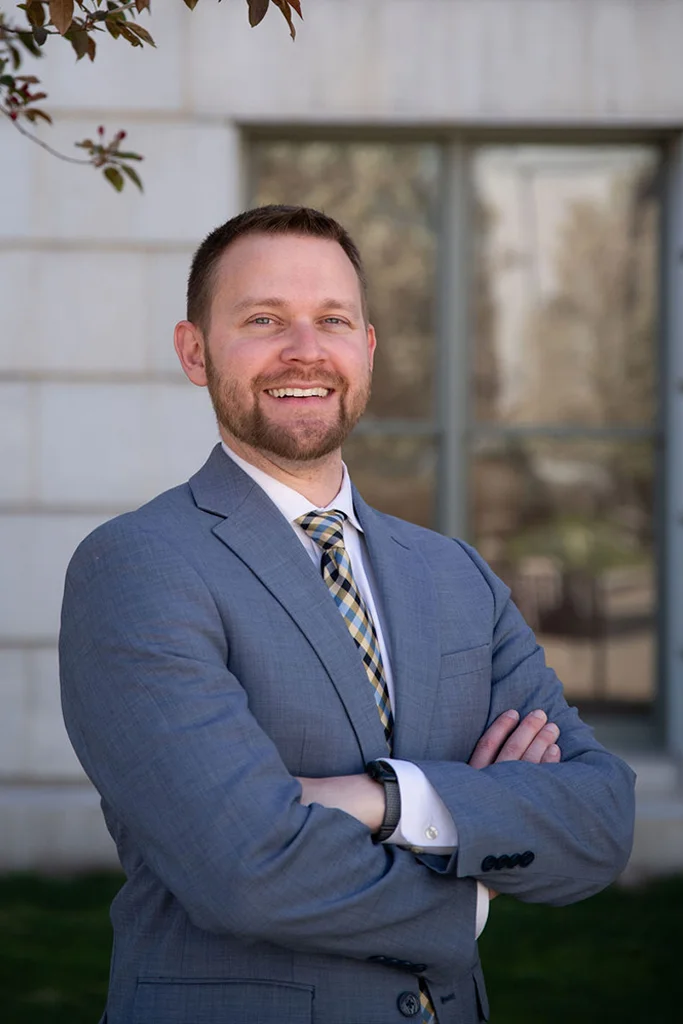
Reid DeChant built his practice through years as a public defender handling DUI, DWAI, and related traffic offenses in Denver, Broomfield, Adams County, and surrounding jurisdictions. That experience means he has appeared before hearing officers, litigated the admissibility of chemical test results, and cross-examined law enforcement witnesses in both criminal courts and DMV proceedings far more times than most private attorneys in the Denver metro area. That volume of experience is not incidental. It is what allows him to spot the arguments that less experienced counsel would miss entirely.
Reid is also a graduate of the Trial Lawyers College, the program founded by Gerry Spence that trains lawyers in the craft of telling a client’s story with authenticity and precision. That training shapes how Reid approaches every hearing, not just jury trials. Even in a DMV proceeding conducted before a hearing officer, the ability to frame a coherent, persuasive argument rooted in the actual facts of a client’s case is what separates a compelling challenge from a mechanical recitation of legal arguments. Reid is a member of the National Association of Criminal Defense Lawyers and the Colorado Criminal Defense Bar, which keeps his practice current on developments in DUI science, chemical testing challenges, and evolving DMV procedures.
For anyone in Aurora facing both a criminal DUI charge and a DMV action, having the same Aurora DMV hearing attorney handling both proceedings creates consistency that matters. Arguments made at the DMV hearing can have implications for the criminal case, and vice versa. Coordination between those two tracks is not optional; it is part of a competent defense strategy.
After the Arrest: What to Do Before Your Window Closes
The seven-day deadline to request a DMV hearing begins the day of your arrest, not the day you receive formal notice, not the day you hire a lawyer. If you were arrested for DUI in Aurora on a Friday night, you do not have until the following Friday at business hours. You have seven calendar days. This is why contacting a DMV hearing attorney in Aurora as soon as possible following an arrest is critical, not for vague strategic reasons, but because the literal deadline to preserve your right to a hearing can expire within days of when you first start thinking about what to do.
The DMV hearing request is made to the Colorado Department of Revenue, Driver Control. A request can be made by phone or in writing. Your attorney can make this request on your behalf, and should, because the process of requesting the hearing also involves obtaining the evidence the DMV intends to use against you, including the officer’s sworn report, the Express Consent advisement form, and the chemical test results. Reviewing those documents before the hearing is not optional; it is the foundation of any meaningful challenge.
While you are gathering information after your arrest, preserve everything you remember about the stop: the location, the time, the reason the officer gave for pulling you over, what was said before and after the arrest, and the specific sequence of how the advisements and test were administered. Details that seem minor, such as whether the officer read from a card or from memory, or whether there was any confusion about which test you were being asked to take, can become legally significant at the hearing. Write it down while it is fresh.
For Aurora residents, the criminal DUI case will typically proceed through the Aurora Municipal Court (for municipal DUI charges) or Arapahoe County District Court, located at 7325 South Potomac Street in Centennial, depending on how the charge is filed. The DMV hearing is a separate proceeding from either of those courts and has nothing to do with your court dates. Do not assume that a continuance in your criminal case buys you more time with the DMV. These are parallel tracks, and they move independently.
Questions About Aurora DMV Hearings
What happens if I miss the seven-day deadline to request a DMV hearing?
If you do not request a hearing within seven days of your arrest, the DMV will proceed with an automatic revocation of your license. There is no general exception or extension available for missing this deadline. In some limited circumstances, there may be grounds to challenge whether proper notice was given, but these situations are narrow. Contacting an attorney before the deadline, not after, is essential.
Is the DMV hearing the same thing as my criminal DUI case?
No. The DMV hearing and your criminal DUI case are entirely separate proceedings. The DMV hearing is an administrative proceeding to determine whether your driver’s license should be revoked. Your criminal case determines whether you are convicted of DUI or DWAI and what criminal penalties apply. You can win your DMV hearing and still face criminal charges, or have your criminal case dismissed while still facing DMV consequences. Both matters require attention.
Can I represent myself at a Colorado DMV hearing?
You can, but the hearing is not designed to be consumer-friendly. The hearing officer is not your advocate. The DMV’s rules of procedure, the relevant statutes governing Express Consent, and the technical arguments that tend to succeed at these hearings require familiarity with how the process actually works. Most people who attempt to represent themselves at DMV hearings do not know which arguments are viable or how to effectively cross-examine a law enforcement witness.
What can actually be challenged at an Express Consent hearing?
Several issues can be raised: whether the officer had reasonable grounds to believe you were driving under the influence; whether the arrest itself was lawful; whether the Express Consent advisement was given correctly and in the right sequence; whether the chemical test was administered within the required timeframe; whether the testing equipment was properly calibrated and maintained; and whether the officer followed required procedures during the test administration. Not every case has viable challenges on all of these points, but reviewing the evidence before the hearing is the only way to know which arguments apply to your specific situation.
If my blood test result was close to the legal limit, does that affect my DMV hearing strategy?
Yes. Results close to the threshold can open arguments about margin of error in testing equipment, proper calibration, the timing of the draw relative to when you were driving, and the reliability of the specific test administered. Blood test results in particular can be challenged based on how the sample was collected, stored, and analyzed. These are science-based arguments that require preparation but can make a significant difference in hearings where the result is near the legal threshold.
Will the outcome of my DMV hearing affect my criminal case?
The two proceedings are independent, and a win at the DMV hearing does not automatically result in a dismissal of your criminal charge. However, the testimony and evidence presented at a DMV hearing can have downstream effects on the criminal case. For this reason, how your attorney handles the DMV hearing, including decisions about whether to subpoena the arresting officer and what arguments to make, should be coordinated with the criminal defense strategy. This is one reason having the same attorney handle both matters is often the most effective approach.
What is an ignition interlock, and when does it apply after a DMV action in Colorado?
An ignition interlock device is a breath-testing instrument installed in a vehicle that prevents the engine from starting if alcohol is detected. Colorado law allows many drivers who have had their licenses revoked to reinstate on a restricted basis earlier than their full revocation period would allow, if they agree to install an interlock device. The specific eligibility requirements and waiting periods depend on the nature of the offense and the driver’s history. Your attorney can advise you on whether early reinstatement through interlock is available and worth pursuing in your specific situation.
Does a DMV revocation show up on my driving record?
Yes. A DMV revocation for an Express Consent violation becomes part of your Colorado driving record and is visible to insurance companies, employers who check driving records, and future courts if you face subsequent DUI charges. Multiple Express Consent actions on your record also significantly increase the consequences of any future DMV proceedings. For professional drivers in Aurora whose employment depends on a clean record, the stakes of losing a DMV hearing extend well beyond the inconvenience of losing a license temporarily.
What happens if the arresting officer does not show up to my DMV hearing?
If the DMV subpoenas the officer and the officer fails to appear without a continuance being granted, that can be grounds to dismiss the action. However, hearing officers have discretion to grant continuances, and the DMV often has procedures in place to avoid this outcome. Whether to subpoena the officer, and what the likely procedural consequences are, is a tactical decision that depends on the specific facts of your case and how the evidence looks going into the hearing.
Can a CDL holder apply for a restricted license during a revocation period?
Colorado’s restricted license provisions that allow operation with an ignition interlock device do not apply to commercial driving. A CDL holder may be eligible to drive a personal vehicle on a restricted license during a revocation period, but cannot operate a commercial vehicle. The consequences for CDL holders under both federal and state regulations following an Express Consent action or DUI conviction are severe enough that fighting the DMV hearing with every available argument is even more critical for professional drivers than for those who drive only personal vehicles.
Aurora DMV Hearing Representation Across the Metro Area
DeChant Law represents clients facing DMV Express Consent hearings across Aurora and the surrounding communities. Aurora itself spans a large geographic area covering parts of Arapahoe, Adams, and Douglas counties, and many clients come from neighborhoods including Stapleton, Montbello, Green Valley Ranch, Havana, Iliff, Quincy Hill, Tallyn’s Reach, Seven Hills, and Saddle Rock. Clients from nearby communities in the same court and DMV jurisdictions, including Centennial, Englewood, Littleton, Parker, Lone Tree, Glendale, Commerce City, Brighton, Thornton, and Westminster, also regularly work with the firm on DMV and DUI matters.
For clients in the eastern Denver metro area whose stops occurred along state routes like Hampden Avenue, Parker Road, Mississipi Avenue, or along the I-270 and E-470 corridors, the firm’s familiarity with local law enforcement practices and the hearing processes applicable to Arapahoe and Adams County matters provides consistent, informed representation regardless of which specific jurisdiction is involved in your case.
Talk to an Aurora DMV Hearing Attorney Before Your Window Closes
The seven-day deadline is not a suggestion, and the consequences of a revocation extend further than most people realize at the time of their arrest. An Aurora DMV hearing attorney from DeChant Law can request your hearing, gather the evidence the DMV plans to use, and assess whether your case has viable grounds for dismissal before you lose your license by default. Reid DeChant has achieved multiple Express Consent hearing dismissals across Colorado’s DMV system, based on real procedural and legal arguments, not just showing up to make a token appearance.
Do not wait until the deadline has passed or until your criminal court date arrives. Contact DeChant Law now to speak with an Aurora DMV hearing attorney about what happened, what your options are, and what a real challenge to the DMV action looks like in your specific case.