Aurora DUI First Offense Lawyer
A first DUI arrest in Aurora carries real consequences that extend well beyond the night of the stop. Colorado treats first-offense impaired driving seriously, and the Arapahoe County and Adams County courts that handle Aurora cases do not automatically offer leniency simply because someone has no prior record. The weeks and months that follow an arrest involve two parallel processes, one criminal and one administrative, and what happens in each one can affect your driving privileges, your employment, your housing applications, and your financial stability for years.
Working with an Aurora DUI first offense lawyer early in this process matters because the window for challenging the evidence, the stop, and the chemical test results is narrow. An attorney who understands how Aurora law enforcement conducts DUI investigations, how the DMV Express Consent hearing process works in Colorado, and what the prosecution typically needs to secure a conviction can identify weaknesses that a general practitioner or a public defender carrying an overwhelming caseload may not have time to find.
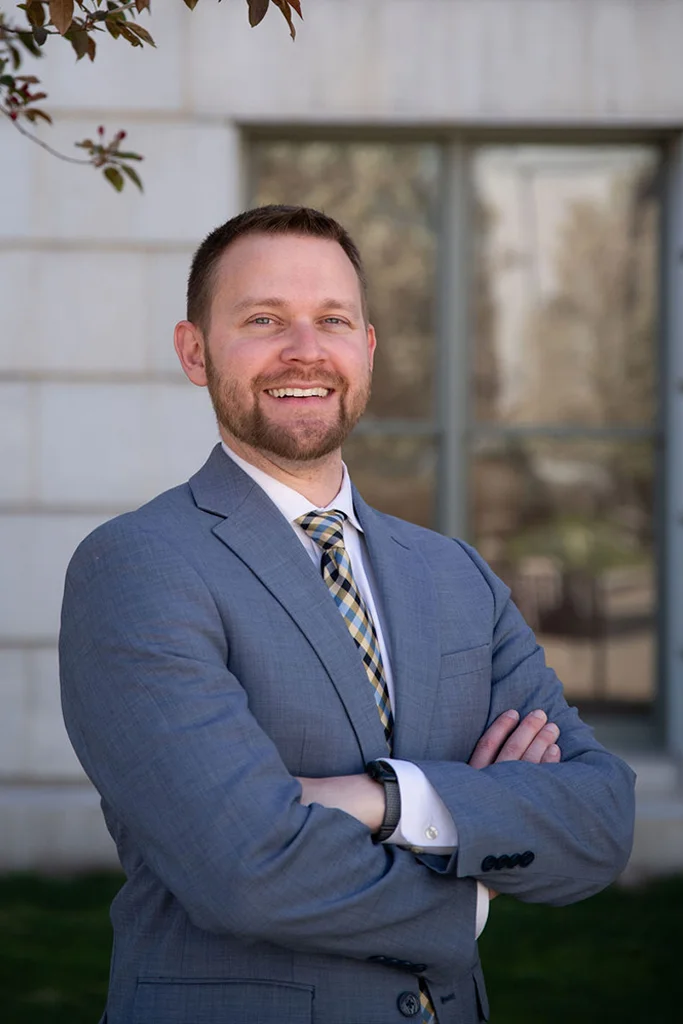
At DeChant Law, Reid DeChant has handled DUI cases in Arapahoe County and the surrounding courts as both a public defender and a private defense attorney. He knows what the government needs to prove, how officers are trained to document these stops, and where those investigations frequently fall apart under real scrutiny.
What Colorado’s First DUI Actually Puts at Stake
First-offense DUI in Colorado is typically a misdemeanor, but misdemeanor does not mean minor. A conviction can result in jail time, fines, mandatory alcohol education classes, community service, probation, and a period of license revocation. Colorado also uses a tiered system that distinguishes between DUI and DWAI (Driving While Ability Impaired), with DWAI applying to lower blood alcohol levels but still carrying criminal penalties and DMV consequences.
Beyond the court-imposed sentence, a DUI conviction creates a permanent criminal record in Colorado. That record appears on background checks. Employers in regulated industries, licensing boards for healthcare workers, teachers, real estate agents, and others can and do use it as a basis for denial. A first offense handled carelessly can close professional doors that would otherwise remain open.
The administrative side runs independently of the criminal case. After a DUI arrest, the Colorado DMV has the authority to revoke your license through the Express Consent process, separate from whatever the court decides. If you do not request a DMV hearing within seven days of your arrest, you lose the right to contest that revocation. DeChant Law has secured dismissals in multiple Express Consent DMV hearings, including cases dismissed for improper Express Consent advisements and for chemical tests not administered within the required two-hour window.
Why Reid DeChant Handles Aurora DUI Cases Differently
Reid DeChant’s background is not a standard private practice biography. Before building DeChant Law, Reid worked as a public defender handling high volumes of DUI, DWAI, and related criminal cases across Denver, Broomfield, and Adams County courtrooms. That experience put him inside more courtrooms, in front of more judges, and across from more prosecutors than most private attorneys see in their first decade of practice.
Reid is also a graduate of the Trial Lawyers College, founded by renowned attorney Gerry Spence. That training shapes how he approaches every case, not as a transaction to resolve efficiently, but as a story to tell honestly and completely. Juries and judges respond to human beings whose situations they understand. Reid’s courtroom approach reflects that directly.
His case results in DUI matters include Not Guilty verdicts at trial, case dismissals in Arapahoe County and Douglas County, and multiple DMV Express Consent hearing dismissals. He is a member of the National Association of Criminal Defense Lawyers and the Colorado Criminal Defense Bar, and he maintains those memberships actively to stay connected to the best current thinking in DUI defense strategy. For someone facing a first-offense DUI in Aurora, this is the level of focused attention that changes outcomes.
Common First-Offense DUI Situations in Aurora and the Charges They Produce
- Traffic stop on E-470 or I-225: Aurora’s major corridors see heavy DUI enforcement, particularly late at night and after events at nearby entertainment venues. Stops that begin with lane changes, speed, or equipment issues can lead to field sobriety tests and chemical testing.
- DUI with a BAC at or above 0.08: Colorado’s per se DUI statute treats any chemical test result at or above this threshold as automatic grounds for the charge, though the accuracy and administration of the test itself can be challenged.
- DWAI at 0.05 to 0.079 BAC: Driving While Ability Impaired carries lower BAC thresholds but still triggers both criminal penalties and DMV action. Many first-offense cases involve this charge either as the primary allegation or as a reduction from DUI.
- DUI-Drugs: Colorado law covers impairment by any substance, including prescription medications, marijuana, or controlled substances. Drug-based DUI cases involve different testing protocols and present distinct evidentiary challenges compared to alcohol cases.
- Refusal to submit to chemical testing: Under Colorado’s Express Consent law, refusing a blood or breath test after a lawful arrest carries automatic DMV consequences, sometimes more severe than what would result from a test showing impairment. The advisement process preceding the refusal is a critical area for defense review.
- DUI after an accident: When a DUI arrest follows a collision, the case typically involves additional charges and more aggressive prosecution. Evidence from the scene, witness statements, and injury factors all become part of a more complex defense strategy.
- Under-21 DUI: Colorado applies a lower BAC threshold for drivers under 21. Cases involving younger drivers often intersect with additional concerns about college enrollment, scholarship conditions, or professional school applications.
The Seven Days After a DUI Arrest in Aurora Matter More Than You Think
When Aurora police or the Aurora Police Department’s Traffic Unit arrests someone for DUI, they typically issue a notice of revocation along with a temporary driving permit. That permit is valid for a limited period, and the seven-day window to request a DMV hearing begins from the date of the arrest. Missing that window means forfeiting the right to contest the administrative license revocation through a hearing, which is a separate and significant loss independent of anything happening in court.
The criminal case will be filed in Arapahoe County District Court, located at the Arapahoe County Justice Center in Centennial, or in Adams County District Court depending on the precise location of the stop. Some Aurora DUI arrests also involve Arapahoe County Sheriff’s Office or Colorado State Patrol, and each agency follows specific protocols for field sobriety testing, breathalyzer administration, and blood draws. Understanding which agency made the arrest and what their specific procedures require is part of building a complete defense.
Do not discuss the facts of your arrest with anyone other than your attorney, including on social media or in text messages. Officers sometimes follow up after an arrest, and anything said can be used in court. Gather any documentation you have from the night of the arrest, including the citation, any receipts showing where you were and when, and the names of anyone who was with you. These details matter during investigation and can support the defense.
One mistake people make with a first offense is assuming the lack of a prior record means the case will resolve itself favorably without significant effort. Prosecutors in Arapahoe County are experienced and consistent. A DUI case does not simply disappear because someone is apologetic, employed, and cooperative. It requires a defense that examines the stop’s legality, the field sobriety testing instructions and conditions, the calibration and certification of the breathalyzer, and the chain of custody for any blood draw.
Questions About Aurora First-Offense DUI Cases
What is the difference between DUI and DWAI in Colorado?
DUI in Colorado generally applies when a driver’s blood alcohol concentration is at or above 0.08, or when the driver is substantially incapable of safely operating a vehicle due to any substance. DWAI applies when the driver is impaired to the slightest degree, which Colorado’s statute places at a BAC between 0.05 and 0.079. DWAI is a lesser charge but still carries criminal penalties and triggers DMV action. A first DUI conviction and a first DWAI conviction produce different penalty ranges, and negotiating a DUI charge down to DWAI is one potential outcome in certain cases.
Will I lose my license after a first DUI arrest in Colorado?
An arrest triggers the DMV’s Express Consent process, which can result in license revocation independently of the criminal case. The length of revocation depends on whether you submitted to chemical testing and what the result showed, or whether you refused. Requesting a DMV hearing within seven days of the arrest allows you to contest the revocation. Even if revocation occurs, an Interlock Restricted License may allow limited driving privileges during the revocation period.
Can a first DUI in Colorado be dismissed or reduced?
Yes. Cases get dismissed when the evidence is legally insufficient, when the stop was unlawful, when the chemical test was improperly administered, or when the prosecution cannot meet its burden. Cases also get reduced when the evidence supports a DWAI rather than a DUI, or when defense investigation reveals weaknesses that create reasonable doubt. Neither outcome is guaranteed, but both are legitimate goals that a defense attorney pursues through investigation and legal argument.
How long does a first DUI case typically take in Arapahoe County court?
A straightforward first-offense DUI can move through the Arapahoe County Justice Center in a few months if it resolves by plea, but cases that involve challenging the evidence, requesting suppression hearings, or going to trial take longer. The timeline depends on court scheduling, the complexity of the evidence, and whether discovery disputes arise. Your attorney can give you a realistic estimate once the case is filed and the initial evidence is reviewed.
Does a first DUI in Colorado show up on a background check?
A DUI conviction creates a permanent criminal record in Colorado. It will appear on standard background checks unless it is sealed. Colorado does allow sealing of some criminal records, but DUI convictions are generally not eligible for sealing under current law. This is one reason why fighting the charge aggressively from the beginning, rather than accepting a quick plea, often serves a person’s long-term interests better than a fast resolution.
What happens if the breathalyzer result was above the limit but I did not feel impaired?
Chemical test results are not beyond challenge. Breathalyzers require proper calibration, maintenance, and operation by certified officers following specific protocols. A test result can be affected by medical conditions, mouth alcohol, the timing of the last drink relative to driving, and the administration procedure itself. An attorney who knows how to request calibration records, maintenance logs, and officer certification can identify whether the test result is legally reliable or subject to suppression.
I was stopped leaving a bar in Aurora’s Havana Street corridor. Does the location of the stop affect my case?
The specific circumstances of any stop matter. Officers who conduct DUI enforcement near commercial corridors like Havana Street, Colfax Avenue through Aurora, or areas near Glendale or the Aurora Entertainment District sometimes make stops based on time, location, and assumptions rather than specific articulable facts about dangerous driving. The legal standard for a traffic stop requires reasonable articulable suspicion of a traffic violation or criminal activity. A stop based on insufficient grounds can result in suppression of all evidence gathered after it.
Can a DUI conviction affect my professional license in Colorado?
For many licensed professionals, yes. Healthcare workers, commercial drivers, teachers, attorneys, real estate agents, and others who hold state-issued professional licenses may face separate licensing board proceedings following a DUI conviction. Some boards require self-reporting within a specific timeframe. The criminal case and the licensing board process are distinct, but they intersect, and handling the criminal matter effectively can affect what the licensing board ultimately decides.
What if I refused the blood or breath test during my Aurora DUI arrest?
Refusal has immediate consequences under Colorado’s Express Consent law, including a longer revocation period than what typically results from a test showing impairment. However, a refusal also means the prosecution does not have a chemical test result to use as evidence in the criminal case, which changes the evidentiary landscape. The lawfulness of the advisement you received before being asked to choose between blood and breath testing, and whether that advisement was properly given, is a critical area to examine in any refusal case.
Is it worth hiring a private attorney for a first DUI in Aurora, or should I take a public defender?
Public defenders are attorneys, and some are excellent. The practical difference for most people is time and attention. Public defenders carry enormous caseloads, which limits how deeply they can investigate individual cases. A private DUI attorney who focuses on this area of law will typically request and review every page of discovery, investigate the officer’s training records, examine the maintenance history of the testing equipment, and attend DMV hearings that a public defender may not have capacity to cover simultaneously. For a charge that carries long-term consequences, the investment in private representation is worth serious consideration.
Representing Aurora DUI Clients Across the Metro Area
DeChant Law represents clients facing first-offense DUI charges throughout Aurora and the surrounding communities. Aurora itself spans parts of Arapahoe, Adams, and Douglas counties, and DUI arrests occur across all of those jurisdictions, from the neighborhoods near Buckley Space Force Base through the Stapleton area and eastward toward the E-470 corridor. We also represent clients from Centennial, Englewood, Sheridan, Glendale, Commerce City, Thornton, Westminster, Northglenn, Littleton, Parker, Highlands Ranch, and Castle Rock.
Whether the arrest happened near the Anschutz Medical Campus area, along Peoria Street, near the Aurora Town Center, in the Quincy Reservoir corridor, or anywhere along the Interstate 70 stretch through Aurora, Reid DeChant handles cases throughout the metro Denver area and its surrounding counties. Clients from Lone Tree, Greenwood Village, Cherry Hills Village, Lakewood, and Golden are also welcome. The DMV hearing process and criminal proceedings in Arapahoe County, Adams County, and Douglas County are all courts Reid has experience in.
Talk to an Aurora DUI Attorney Before Your Next Court Date
The decisions made in the first days after a DUI arrest shape how the rest of the case develops. An Aurora DUI attorney who knows how to move quickly on DMV hearings, how to evaluate the full evidentiary picture before the arraignment, and how to build a defense that works at both the negotiating table and at trial gives you options that disappear if you wait. Reid DeChant has secured case dismissals and Not Guilty verdicts in DUI cases across Arapahoe County and the Denver metro area, and he brings that same focused preparation to every first-offense case he takes. Call DeChant Law today to schedule a consultation and start evaluating your defense.