Arapahoe County DMV Hearing Lawyer
A DUI arrest in Arapahoe County sets two separate legal processes in motion simultaneously. The criminal case filed against you in the Arapahoe County Combined Court is one. The administrative hearing before the Colorado Department of Revenue’s Division of Motor Vehicles is the other. These two proceedings are entirely independent of each other, which means that winning one does not automatically protect you in the other. An Arapahoe County DMV hearing lawyer who understands the express consent framework, the strict procedural rules that govern these hearings, and the specific grounds that lead to dismissal is the only person positioned to protect your driving privileges from the moment of arrest through the resolution of your case.
The DMV hearing process moves fast. After a DUI or DWAI arrest in Arapahoe County, whether on Hampden Avenue, I-25, E-470, or anywhere else in the county, you have a narrow window to request a hearing before your license is automatically revoked. Most drivers do not know this. They assume their criminal defense attorney will handle everything, or they assume the hearing is just a formality. Neither assumption is safe. The DMV hearing is a real proceeding with real consequences, and it has its own rules of evidence, its own legal standards, and its own opportunities to challenge the government’s case against your license.
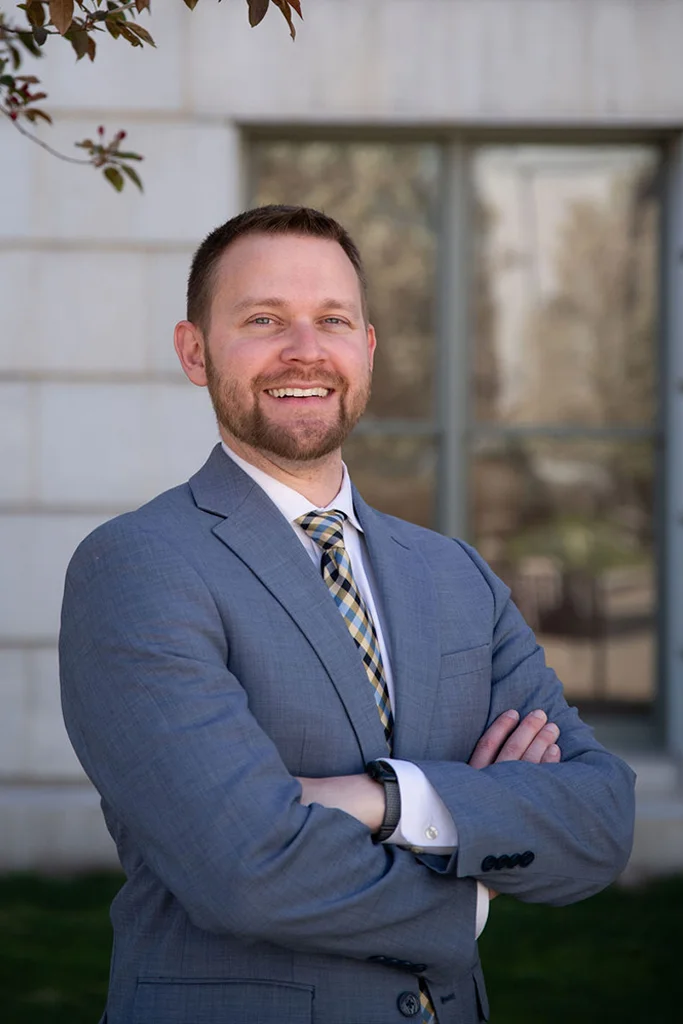
DeChant Law has handled DMV express consent hearings across Arapahoe County and the broader Denver metro region. Attorney Reid DeChant brings a level of familiarity with these hearings that comes from years of defending impaired driving cases in exactly the courtrooms and administrative venues that Arapahoe County drivers face. When your ability to get to work, take your children to school, or simply live your daily life depends on keeping your license, the quality of your representation in that hearing matters enormously.
What Actually Happens at an Arapahoe County Express Consent Hearing
Colorado’s express consent law operates on a specific legal premise: by driving on Colorado roads, you have implicitly consented to chemical testing if law enforcement has probable cause to believe you are impaired. When you are arrested for DUI or DWAI in Arapahoe County and either submit to a chemical test showing a blood alcohol content at or above the legal threshold, or you refuse to take the test entirely, the arresting officer confiscates your license and issues a temporary driving permit on the spot. That permit has an expiration date, and once it expires, your license is revoked unless you have successfully requested and pursued a hearing.
The hearing itself takes place before a DMV hearing officer, not a judge. These officers are employees of the state, and they operate under administrative rules that differ from the rules governing criminal proceedings. The hearing is typically conducted by telephone, though in-person hearings can be requested. The DMV presents the officer’s sworn report, the express consent advisement form, and any chemical test results. Your attorney has the opportunity to cross-examine the officer, challenge the foundation of the stop, contest the validity of the advisement, raise issues with the chain of custody for blood samples, and argue that the test was not administered within the required timeframe after driving. Any one of these challenges, if supported by the evidence, can result in a dismissal of the action against your license.
The results from Reid DeChant’s case history speak to what competent representation in these hearings can accomplish. Multiple DMV express consent actions listed in his case results were dismissed for grounds including improper express consent advisement, Miranda warnings given before the express consent advisement was delivered, and failure to administer the chemical test within the required two-hour window. These are not technicalities invented after the fact. They are legitimate legal grounds that emerge from careful review of the officer’s paperwork, the timeline of events during the arrest, and the precise wording of the advisement given at the time of the stop.
Why DeChant Law for Your Arapahoe County DMV Hearing
Reid DeChant’s background is directly relevant to the kind of representation that produces results in DMV hearings. As a former public defender, he handled an enormous volume of DUI and DWAI cases across Denver, Broomfield, and Adams County, developing a detailed understanding of how Colorado’s express consent framework is applied in practice, where officers make mistakes, and how those mistakes translate into grounds for dismissal at a hearing. That volume of experience means he does not approach a DMV hearing as an abstract legal problem. He approaches it as someone who has reviewed hundreds of officer reports, cross-examined law enforcement witnesses, and identified the pressure points in the state’s case that most attorneys overlook.
Reid is also a graduate of the Trial Lawyers College, the training program founded by Gerry Spence that focuses on genuine human connection and powerful advocacy. That kind of training matters even in administrative hearings. Hearing officers respond to attorneys who are prepared, who know the record cold, and who can make a focused and credible argument. Reid is also recognized by national legal organizations and maintains membership in the National Association of Criminal Defense Lawyers and the Colorado Criminal Defense Bar, giving him access to the latest developments in DUI defense strategy at both the state and national level. His client-centered approach means that throughout the process, you will know where things stand, what arguments are being made on your behalf, and what the realistic range of outcomes looks like.
Grounds That Have Led to Dismissed DMV Actions in Arapahoe County Cases
- Improper express consent advisement: Colorado law requires officers to provide a specific advisement informing the driver of their rights and obligations under the express consent statute. If the advisement was incomplete, inaccurate, or given in a way that fails to comply with the statutory requirements, the hearing officer may have grounds to dismiss the revocation action entirely.
- Miranda given before the express consent advisement: The sequence in which warnings are delivered during a DUI stop matters under Colorado’s legal framework. When Miranda warnings precede the express consent advisement in a way that causes confusion or compromises the validity of the advisement, this sequence can serve as independent grounds for dismissal, as reflected in Reid’s actual case results.
- Chemical test not administered within two hours: Colorado’s express consent law requires that the chemical test be administered within two hours of the driver operating the vehicle. A documented delay beyond that window, whether due to transport time, processing at the station, or other factors, can render the test result inadmissible in the DMV hearing and lead to dismissal.
- Lack of probable cause for the initial stop: If the officer lacked reasonable articulable suspicion to pull the driver over in the first place, the entire sequence of events following that stop may be challengeable. This is particularly relevant along high-traffic corridors in Arapahoe County where aggressive patrol activity occurs near entertainment venues and major roadways.
- Blood test chain of custody issues: When a driver chooses a blood test rather than a breath test, the sample must be collected, stored, transported, and analyzed according to specific protocols. Breaks in the chain of custody or failures in laboratory procedure can undermine the reliability of the result and provide a basis for challenging the revocation.
- Refusal cases with insufficient notice: In situations where a driver refused chemical testing, the DMV must establish that the driver was properly informed of the consequences of refusal. Inadequate notice or an officer’s failure to follow the required advisement protocol in refusal cases creates a distinct line of challenge separate from those available when a test was taken.
- Officer unavailability or subpoena issues: In some hearings, when the arresting officer fails to appear for cross-examination after being subpoenaed, the hearing officer may have grounds to dismiss the state’s case. Knowing how to use subpoena procedures strategically is part of thorough DMV hearing preparation.
What You Should Do Between Your Arrest and Your DMV Hearing
The most important thing to understand is the deadline. After a DUI or DWAI arrest in Arapahoe County, the temporary permit you receive at the scene controls the timeline. You must request a hearing with the Colorado DMV before that permit’s expiration to preserve your right to contest the revocation. Missing that window means the revocation proceeds automatically, and there is no mechanism to undo it after the deadline passes. Contact an Arapahoe County DMV hearing attorney immediately after your arrest, not after your first criminal court date, not once you have thought about it for a week. The window is short.
Once a hearing is requested, the revocation is temporarily stayed while the hearing is pending, which typically allows you to continue driving on your temporary permit. This is one of the concrete reasons why requesting the hearing matters even if you are uncertain whether you have grounds to win. Reid DeChant will review every document from your arrest, including the officer’s sworn report, the express consent advisement form, the chemical test results, and any video from the patrol car or body camera, to identify every available challenge before the hearing takes place.
The DMV hearing in Colorado is conducted through the state’s hearing office, and the Arapahoe County cases are handled through the administrative structure that processes hearings across the Denver metro area. Your criminal case, separately, will be processed through the Arapahoe County Combined Court located in Centennial. These are two distinct venues with distinct processes, and the strategy in each should be informed by what is happening in the other. For example, testimony or positions taken in a DMV hearing can potentially affect the criminal case, which is another reason why having the same attorney handle both proceedings, or at minimum coordinate between them, is important.
Gather everything you can remember about the stop: the time of night, where you were coming from, how long the officer followed you before pulling you over, exactly what you were told and when, and any physical or medical conditions that might have affected your performance on field sobriety tests. This detail matters. A blood test result does not tell the whole story of an arrest, and the more information your attorney has, the more equipped they are to find the arguments that hold up at the hearing.
Questions About Arapahoe County DMV Hearings, Answered
How long do I have to request a DMV hearing after a DUI arrest in Arapahoe County?
The deadline to request a hearing is set by the expiration date on the temporary permit the officer gives you at the time of arrest. This window is typically around seven days from the date of arrest, though the exact date appears on the permit itself. Do not wait. If the request is not received by the DMV before the permit expires, the revocation becomes automatic.
What happens to my license if I do not request a hearing?
The revocation goes into effect automatically on the date the temporary permit expires. The length of revocation depends on factors including whether you took or refused the chemical test, your BAC level if you tested, and your prior driving history. Refusing a test typically carries a longer revocation than a failed test.
Is the DMV hearing the same as my criminal case?
No. These are entirely separate proceedings. The criminal case filed in Arapahoe County Combined Court addresses the charge itself and the potential penalties that come with a conviction. The DMV hearing addresses only your driving privileges. You can win your criminal case and still lose your license, or vice versa. Both proceedings require active attention and, ideally, coordinated representation.
Can I represent myself at a DMV hearing?
Technically, yes. Practically, it is very difficult. DMV hearings involve specific rules of evidence, particular legal standards that differ from criminal court, and the ability to subpoena the arresting officer for cross-examination. An attorney who knows how Colorado’s express consent statute has been interpreted administratively, and who knows how to identify procedural errors in the officer’s paperwork, is positioned to raise challenges that a self-represented driver will almost certainly miss.
What if my BAC was above the legal limit? Do I still have a chance at the hearing?
Yes. The test result is one piece of evidence, but the hearing examines much more than the number on the report. If the stop was improper, if the advisement was defective, if the test was administered outside the required window, or if the chain of custody for a blood sample was compromised, those issues can affect the outcome regardless of what the test showed. A test result above the legal limit does not automatically mean the revocation will be sustained.
What happens if I refused the chemical test?
Refusal triggers its own DMV process, and the hearing on a refusal case focuses on somewhat different legal questions, including whether the officer properly advised you of the consequences of refusal and whether the advisement itself was legally sufficient. Refusal revocations are typically longer than those resulting from a failed test, and the hearing is still worth pursuing because the same types of procedural challenges apply.
Does what I say or do at the DMV hearing affect my criminal case?
It can. Testimony and evidence from a DMV hearing exist in the record and can have implications for the criminal proceedings. This is one reason why the DMV hearing should not be treated as a standalone administrative chore. An attorney who is managing both the administrative and criminal dimensions of your case can make sure that the strategy in one proceeding does not inadvertently undermine the other.
Will I be able to drive while the DMV hearing is pending?
In most circumstances, requesting the hearing before the temporary permit expires results in the revocation being stayed while the hearing is pending. This means you can typically continue driving during the period between your request and the hearing decision, subject to the terms of your temporary permit. This stay is one of the immediate practical benefits of acting quickly.
What if the officer does not show up to the hearing?
Officer appearance can be required through subpoena. If the officer has been properly subpoenaed and fails to appear, the hearing officer may have grounds to dismiss the state’s case. Knowing how to properly subpoena the officer, and how to use their appearance or absence strategically, is part of preparation for these hearings.
Can a dismissed DMV action help my criminal DUI case?
A dismissal at the DMV level does not automatically result in dismissal of the criminal charge, since the two proceedings are legally independent. However, the factual findings and the nature of the dismissal can sometimes be relevant to arguments made in the criminal case, particularly if the dismissal was based on a problem with the stop itself or the testing procedure. Your attorney can assess whether and how the DMV outcome connects to the criminal defense strategy.
Does DeChant Law handle DMV hearings in counties adjacent to Arapahoe?
Yes. Reid DeChant represents clients facing DMV express consent hearings in Arapahoe County as well as neighboring jurisdictions including Denver, Adams County, Jefferson County, Douglas County, Broomfield, and other counties in the metro region. The administrative hearing process applies statewide, and the legal challenges available at the hearing do not vary by county.
Arapahoe County DMV Representation Across the Communities We Serve
DeChant Law represents drivers facing DMV express consent hearings throughout Arapahoe County and the surrounding metro area. Within Arapahoe County itself, Reid works with clients from Centennial, Aurora, Englewood, Littleton, Cherry Hills Village, Greenwood Village, Glendale, Sheridan, and Foxfield. He also serves clients from the eastern portions of the county including Byers, Bennett, Strasburg, and the rural communities along the I-70 corridor where late-night traffic stops are more common than many people realize.
Beyond Arapahoe County’s borders, DeChant Law extends its DMV hearing representation to clients in Denver, Lakewood, Westminster, Thornton, Arvada, Commerce City, Brighton, and Castle Rock. Drivers from the Highlands Ranch area, Parker, Lone Tree, and Meridian, as well as those traveling through the tech corridors and commercial zones near I-25 and E-470, regularly contact the firm following DUI arrests. Wherever the stop occurred and wherever you live, the administrative process runs through the same Colorado DMV structure, and Reid is prepared to appear and advocate on your behalf regardless of where the arrest took place within this region.
Talk to an Arapahoe County DMV Hearing Attorney Before the Deadline Passes
The window to act after a DUI arrest in Arapahoe County is not forgiving. Every day that passes without requesting a hearing is a day closer to an automatic revocation that could have been contested. An Arapahoe County DMV hearing attorney who has actually produced dismissed express consent actions, who understands the specific grounds Colorado law provides for challenge, and who treats you as a partner in your own case, gives you the best chance of keeping your license and your daily life intact during an already difficult time.
Reid DeChant is ready to review your case, explain your options honestly, and begin building a hearing strategy the moment you reach out. Do not wait until your criminal court date to start thinking about the DMV side of this. Call DeChant Law today and take control of your situation while you still have time to do it.