Denver County Court DUI Lawyer
A DUI charge filed in Denver County Court is not a minor inconvenience to be managed quietly. It carries real license consequences, real criminal penalties, and a real record that follows you into job applications, professional licensing reviews, and background checks for years. The moment a Denver officer asks you to step out of your vehicle, a process begins that moves quickly, has strict deadlines, and produces outcomes that are very difficult to undo once they are set. Working with a Denver County Court DUI lawyer who knows how these cases are built, prosecuted, and challenged in this specific courthouse changes what those outcomes look like.
Denver County Court handles the overwhelming majority of first-offense DUI and DWAI cases filed in the city. The Lindsey-Flanigan Courthouse at 520 West Colfax Avenue is where your case will be called, where motions get argued, where prosecutors make offers, and where juries are seated if your case goes to trial. The prosecutors assigned to Denver’s county court DUI docket are experienced and prepared. They rely on a relatively standardized playbook: the officer’s observations, the field sobriety test results, and a breath or blood test reading. A defense attorney who has spent significant time in that same courthouse understands exactly how to read that playbook and where it has weaknesses.
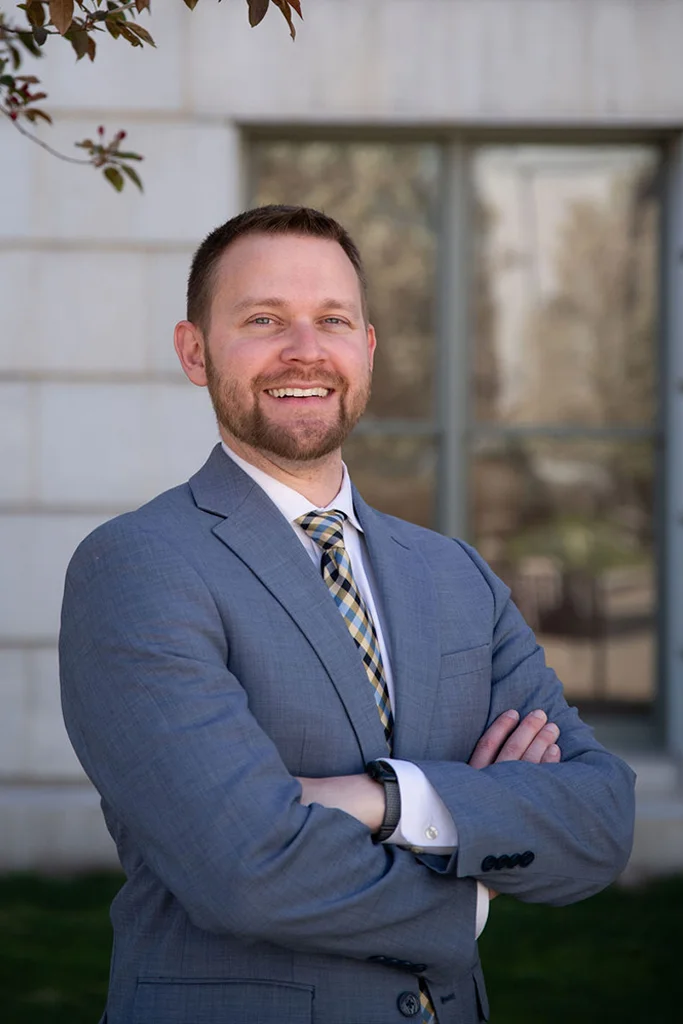
Reid DeChant at DeChant Law has defended DUI and DWAI clients in Denver County and the surrounding jurisdictions as both a public defender and in private practice. That background means he has seen hundreds of these cases from the inside, watched how prosecutors and judges respond to different defense approaches, and developed a precise understanding of where DUI cases actually break down for the government. Whether your case involves a roadside stop on Colfax, a checkpoint near a Nuggets game, or a late-night traffic stop on I-25 through downtown, the defense strategy has to be built around the specific facts of your arrest, not a generic template.
What Happens in Denver County Court DUI Cases
DUI cases in Denver County Court follow a defined procedural path, but within that path there are multiple points where an informed defense can change the direction of the case. After an arrest, you will typically be given a summons to appear in Denver County Court for an arraignment. At that hearing, charges are formally read and you enter a plea. In most DUI cases, the initial plea is not guilty, which preserves your ability to investigate the case fully, file motions, and negotiate before any final resolution.
Discovery comes next. Your attorney requests all of the government’s evidence: the officer’s body camera footage, the dashcam recording, the arrest report, the field sobriety test documentation, the breathalyzer calibration and maintenance records, and if blood was drawn, the laboratory results along with the chain of custody records. This evidence review is where many DUI defenses begin to take shape. Officers sometimes fail to properly administer standardized field sobriety tests. Breathalyzer devices require regular calibration and can produce unreliable readings under certain conditions. Blood samples must be collected, stored, and tested according to strict protocols, and any deviation can be grounds to challenge the result.
Pretrial motions are a critical phase in Denver County Court DUI cases. A motion to suppress evidence, if granted, can knock out the breathalyzer result or even the entire stop if the officer lacked reasonable suspicion to pull you over in the first place. Prosecutors know this, which is why well-argued suppression motions often shift the negotiating dynamic significantly. Plea negotiations happen throughout this process, but the offers tend to improve when the government knows its evidence has been seriously examined and challenged. If no acceptable resolution is reached, the case proceeds to trial, where Reid has a proven record of obtaining not guilty verdicts in DUI cases in multiple counties along the Front Range.
Why DeChant Law Handles Denver DUI Cases Differently
Reid DeChant’s background as a former public defender gave him something that most private DUI defense attorneys never get: volume. He handled cases across Denver, Broomfield, and Adams County courtrooms at a pace that built genuine trial fluency, not just familiarity with the process. He has cross-examined police officers on field sobriety test administration, challenged breathalyzer results, and cross-examined forensic analysts on blood testing methodology. That courtroom experience matters in Denver County Court, where prosecutors and judges have seen enough attorneys to quickly recognize the difference between someone who actually tries cases and someone who primarily negotiates them.
Reid is also a graduate of the Trial Lawyers College, the training program founded by Gerry Spence that focuses on authentic storytelling and genuine human connection in courtrooms. This is not an abstract credential. In a DUI jury trial, the government presents data: a number on a breathalyzer or a blood result from a lab. The defense has to present a person, with context, with a story that makes sense to twelve jurors who came in knowing almost nothing about you. Reid’s training shapes how he prepares clients for their own involvement in their defense and how he presents their circumstances to a jury in a way that resonates beyond the numbers.
The firm’s case results reflect this approach. Among the outcomes listed are multiple DUI acquittals at trial across Jefferson County, Douglas County, and Arapahoe County, along with numerous case dismissals at both the criminal court level and in DMV Express Consent hearings. Those DMV hearing dismissals are significant because they represent Reid’s attention to the license revocation process, which runs parallel to the criminal case and has its own strict timelines and procedural requirements. A Denver DUI attorney who only handles the criminal case and ignores the DMV side is leaving a major exposure unaddressed.
Reid is a member of the National Association of Criminal Defense Lawyers and the Colorado Criminal Defense Bar, connections that keep him current on evolving DUI defense science, including developments in breathalyzer technology challenges and blood testing litigation. These organizations are where the most current and effective DUI defense strategies are developed and shared among the defense community.
The Charges and Consequences You Are Actually Facing
- DUI (Driving Under the Influence): Colorado’s DUI statute applies when a driver’s blood alcohol content reaches 0.08 or above, or when any substance impairs them to the slightest degree. A first DUI conviction in Colorado carries potential jail time, fines, mandatory alcohol education requirements, and a period of license revocation. Repeat offenses escalate these penalties significantly and can result in felony charges after multiple prior convictions.
- DWAI (Driving While Ability Impaired): Colorado’s DWAI threshold is 0.05 BAC, a level lower than most states recognize as a separate offense. A DWAI is still a criminal conviction, still appears on your record, and still triggers DMV action, even though the penalties at the first-offense level are somewhat less severe than a full DUI conviction.
- DUI-D (Driving Under the Influence of Drugs): Colorado prosecutes drug-impaired driving as seriously as alcohol DUI. This includes cannabis, prescription medications, and controlled substances. Unlike alcohol, there is no universally accepted per se threshold for most drugs, which creates both prosecution challenges and specific defense opportunities that an experienced DUI attorney knows how to use.
- Express Consent and DMV Hearings: Colorado’s Express Consent law requires drivers to submit to chemical testing upon a lawful DUI arrest. Refusal or a result above the legal limit triggers a separate administrative proceeding at the DMV, which operates independently of the criminal case. Missing the seven-day deadline to request a DMV hearing after receiving a notice of revocation waives your right to contest the license action entirely.
- Felony DUI: Colorado law provides that a fourth or subsequent DUI conviction can be charged as a Class 4 felony, carrying potential prison time. Charges can also become felonies if the DUI involved an accident causing serious bodily injury or death. These cases are handled in district court rather than county court and require an elevated level of defense preparation.
- Underage DUI and Zero Tolerance: Drivers under 21 face Colorado’s zero tolerance standard, which sets a much lower BAC threshold than the standard DUI level. A charge under this standard still goes through county court and still carries consequences that can affect educational opportunities, scholarships, and professional futures for young drivers.
- Commercial Driver DUI: CDL holders face a lower BAC threshold and face disqualification from commercial driving that can end a career. The stakes in these cases extend far beyond the ordinary criminal and license consequences, making aggressive defense of both the criminal case and the CDL disqualification process essential.
What to Do After a DUI Arrest in Denver
The first thing to understand is that the clock starts running the moment you receive a Notice of Revocation from law enforcement after a DUI arrest. In Colorado, you have seven days from the date of that notice to request a hearing with the DMV. If that deadline passes without a request, your license will be automatically revoked. This is not a bureaucratic technicality; it is a hard cutoff with no exceptions. Contacting a Denver County Court DUI attorney in the first day or two after your arrest is the most important immediate step you can take.
Do not speak to law enforcement about the underlying facts of your arrest without an attorney present. Anything you say can be used in the prosecution’s case, and even well-intentioned explanations often create more problems than they solve. This applies to calls with investigators, conversations at the police station, and follow-up questions that may come after you have been released.
Your criminal case will be filed in Denver County Court at the Lindsey-Flanigan Courthouse, located at 520 West Colfax Avenue in Denver. Arraignment is typically scheduled within a few weeks of the arrest. You will be given a citation or summons indicating when you are required to appear. Missing a court date in Denver County Court results in a bench warrant being issued for your arrest and a default judgment against your driver’s license. Bring your citation to your attorney immediately so those dates can be tracked and properly managed.
Gather everything you remember about your arrest while the details are fresh. What route were you driving? Where exactly did the officer stop you? What did the officer say when explaining why you were pulled over? Did you take field sobriety tests, and if so, where were they conducted? Was it dark, uneven pavement, or a busy road with traffic passing? What happened with the breath or blood test? These details inform the defense investigation and often reveal procedural issues that are not visible in the arrest report alone.
Common mistakes people make in the first days after a Denver DUI arrest include waiting too long to contact an attorney (losing the DMV hearing window), posting about the arrest or the stop on social media, and assuming a breathalyzer reading above 0.08 means the case is already over. A number on a machine is evidence, not a verdict. It can be challenged, suppressed, or contextualized in ways that fundamentally change how a jury or judge views the case.
Questions Denver County DUI Clients Are Actually Asking
What is the difference between DUI and DWAI in Colorado?
DUI in Colorado requires proof that a driver was impaired to a substantial degree or had a BAC at or above 0.08. DWAI applies when driving ability was impaired to the slightest degree, with a BAC between 0.05 and 0.08 creating a rebuttable presumption of impairment. Both are criminal offenses that result in convictions on your record. DWAI at the first-offense level carries somewhat lower penalties, but it is not a minor infraction and should be treated with the same seriousness as a full DUI charge.
Can I refuse a breathalyzer or blood test in Colorado?
You can refuse, but Colorado’s Express Consent law attaches consequences to refusal. Refusing a chemical test after a lawful DUI arrest triggers a license revocation period that is typically longer than the revocation for failing the test, and the refusal can be used as evidence against you in the criminal case. Whether refusal makes strategic sense depends on the specific circumstances of your stop, and it is a decision that ideally should be made with legal guidance before the test is administered, which is why knowing your rights in advance matters.
Will a DUI conviction affect my professional license in Colorado?
Potentially yes, depending on your profession. Many Colorado licensing boards, including those governing healthcare professionals, attorneys, teachers, real estate licensees, financial advisors, and others, have reporting requirements for criminal convictions. Even a misdemeanor DUI can trigger a board inquiry and disciplinary proceedings that are separate from your criminal case. If you hold or are pursuing a professional license, this dimension of a DUI conviction deserves specific attention when evaluating your options.
How long does a Denver County Court DUI case typically take from arrest to resolution?
Most first-offense DUI cases in Denver County Court resolve somewhere between two and six months, depending on whether the case goes to trial, how quickly discovery is produced, and whether suppression motions are filed. Cases that go to a jury trial take longer. Cases where discovery reveals significant evidence problems sometimes resolve faster, because prosecutors adjust their approach when they see a well-prepared defense. There is no universal timeline, but your attorney should be able to give you a realistic projection once discovery has been reviewed.
What happens to my driver’s license during the criminal case?
Your license situation runs through two separate tracks. The DMV Express Consent action moves immediately after your arrest, with a revocation taking effect unless you requested a hearing within seven days and prevailed at that hearing. The criminal court can also impose license-related penalties as part of sentencing. These two tracks do not automatically coordinate. It is possible to resolve one favorably while the other remains pending. Managing both simultaneously is one of the reasons working with a DUI attorney who handles both aspects is so important.
Is it possible to get a DUI dismissed in Denver County Court?
Yes. Case dismissals happen for several reasons: the initial traffic stop lacked reasonable suspicion and the evidence is suppressed, the breathalyzer machine was not properly calibrated or maintained, the officer failed to administer field sobriety tests in accordance with standardized protocols, or the blood test chain of custody was broken. DeChant Law’s case results include multiple DUI dismissals in Denver-area courts. Dismissal is not guaranteed, but it is a realistic outcome when the evidence is carefully examined and challenged.
Can I get a DUI expunged from my record in Colorado?
Colorado’s expungement laws are more limited than many people realize, particularly for adult criminal convictions. A DUI conviction generally cannot be expunged from an adult criminal record under current Colorado law. However, if your case is dismissed or you are acquitted at trial, you may be eligible to seal the arrest record. This is one reason why fighting a DUI charge to a favorable outcome, rather than simply accepting a plea to move on quickly, has long-term consequences worth understanding before making any decision.
What if the DUI stop happened near a Denver checkpoint or special enforcement zone?
DUI checkpoints and saturation patrols in areas like LoDo, RiNo, the South Broadway corridor, or near Ball Arena and Coors Field on event nights are common in Denver. Checkpoints are legal under Colorado law, but they must meet specific constitutional requirements regarding how vehicles are selected and how long they are detained. Saturation patrols in entertainment districts sometimes result in traffic stops that push the boundaries of what actually constitutes reasonable suspicion. Every stop, checkpoint or otherwise, should be analyzed on its own facts to determine whether constitutional standards were met.
If I already took a plea deal, can anything be done?
Once a plea has been entered and accepted by the court, options become significantly more limited. In some circumstances, a motion to withdraw a guilty plea may be available if the plea was not made knowingly, voluntarily, or intelligently, or if there was ineffective assistance of counsel. These motions are difficult to win, and they must typically be filed within a limited timeframe. If you entered a plea without fully understanding the consequences, including the license, record, and professional implications, consulting with an attorney about your post-conviction options is worth doing promptly.
Does having a Colorado medical marijuana card protect me from a DUI-D charge?
No. A valid medical marijuana card does not exempt a driver from Colorado’s DUI-D statute. If law enforcement determines that cannabis use impaired your driving ability, you can be charged regardless of whether your use was legally authorized. The absence of a reliable per se threshold for THC in Colorado law means these cases involve more prosecutorial discretion and more factual dispute than alcohol DUI cases, which creates specific defense opportunities that an attorney familiar with DUI-D litigation can identify and develop.
Denver County DUI Representation Across the Metro Area
DeChant Law represents DUI clients throughout Denver County and the broader Front Range. Within Denver proper, that includes clients from neighborhoods across the city: Capitol Hill, Five Points, Washington Park, Cherry Creek, Stapleton, Montbello, Green Valley Ranch, Baker, Highland, Sloan’s Lake, Cole, Globeville, Sunnyside, and the central downtown core. DUI arrests happen on major corridors including Colfax Avenue, Speer Boulevard, Federal Boulevard, Alameda Avenue, and Colorado Boulevard, as well as on I-25 and I-70 through and around the city. Beyond Denver County, the firm also handles DUI cases filed in Jefferson County, Adams County, Arapahoe County, Douglas County, Broomfield County, and other surrounding jurisdictions along the Front Range. Clients come from communities including Aurora, Lakewood, Littleton, Englewood, Arvada, Westminster, Thornton, Northglenn, Commerce City, Centennial, Parker, and Castle Rock. The specific courthouse varies by jurisdiction, from Denver County Court at Lindsey-Flanigan to the Jefferson County Combined Courts in Golden to the Adams County Justice Center in Brighton, and Reid knows the prosecutors, procedures, and practical dynamics of each.
Talk to a Denver County Court DUI Attorney Before Your Next Court Date
A DUI charge in Denver County Court has more moving parts than most people realize when they first receive a summons. There is the criminal case, the DMV proceeding, the professional license exposure if applicable, and the long-term record consequences. Each of those requires attention, and attention requires time. The earlier a Denver County Court DUI attorney gets involved, the more options exist, including the possibility of requesting and winning a DMV hearing that most people never even realize they had a right to pursue.
Reid DeChant at DeChant Law has handled these cases at trial and at the negotiating table, in Denver County Court and in courthouses across the metro area. If you have been charged with DUI and your case will be heard in Denver County Court, call DeChant Law to schedule a consultation and talk through what your case actually looks like before you make any decisions about how to handle it.