Colorado Probation Guide
Probation in Colorado is not simply a lighter alternative to incarceration. For many people placed on probation, it becomes one of the most demanding and consequential periods of their lives, filled with reporting obligations, conditions they must meet, and consequences that can spiral quickly if anything goes wrong. The Colorado probation guide that follows is designed to give you an honest, practical understanding of what probation actually looks like in this state, what can go wrong, and what decisions you should make carefully from the moment probation is ordered.
Colorado courts impose probation across a wide range of cases, from DUI convictions and drug offenses to assault, theft, and felony charges where a judge has determined that supervised release is more appropriate than a prison term. The specific conditions of probation vary enormously depending on the charge, the county in which you were sentenced, your criminal history, and the individual judge who handled your case. Denver District Court, Jefferson County District Court, Arapahoe County District Court, Adams County District Court, and courts throughout the Front Range each have their own cultures, their own probation departments, and their own norms around enforcement. What passes without issue in one jurisdiction can trigger a revocation hearing in another.
Understanding that difference matters. Colorado law gives probation departments substantial authority over your daily life, and violations, even technical ones that do not involve a new crime, can result in hearings where a judge decides whether to revoke your probation and impose incarceration. Knowing how the system works, what rights you retain, and what a defense attorney can do to help you navigate or challenge probation decisions is not optional knowledge. It is essential.
Standard and Special Conditions of Colorado Probation
Colorado probation orders consist of two layers: standard conditions that apply to virtually every probationer and special conditions that are tailored to the individual case and offense. Standard conditions typically require you to report to your probation officer as directed, remain within the state unless you receive permission to travel, avoid committing new criminal offenses, maintain lawful employment or pursue education, and refrain from possessing firearms. These conditions apply regardless of whether your underlying offense was a misdemeanor DUI or a felony property crime.
Special conditions are where probation becomes significantly more complex. A person convicted of DUI-related offenses may be required to complete alcohol education classes, submit to random urinalysis testing, install an ignition interlock device, and attend treatment programs. Someone convicted of a domestic violence offense will be required to complete a certified domestic violence treatment program, which in Colorado runs for a minimum of 36 weeks and is provided only through state-certified providers. Sex offense convictions trigger some of the most intensive probation conditions in the state, including polygraph examinations, restrictions on internet access, treatment with specialized providers, and prohibitions on contact with minors, even family members in some circumstances.
Drug-related offenses frequently result in probation conditions requiring participation in substance abuse treatment, random drug testing, and sometimes residential treatment placement. Courts may also impose community service requirements, restitution payments to victims, and mandatory mental health treatment depending on the nature of the offense and the recommendations of a presentence investigation report. Failure to complete any of these special conditions, or to report progress toward completing them, can trigger a violation even if you have otherwise lived an entirely law-abiding life during your probation term.
Types of Colorado Probation and How They Differ
- Supervised Probation: The most common form, requiring regular in-person meetings with a probation officer and compliance with all court-ordered conditions. Frequency of reporting varies from weekly contact to monthly check-ins depending on the officer’s assessment of risk and the terms of the order.
- Intensive Supervision Probation (ISP): A more demanding form of supervised probation with significantly higher reporting requirements, mandatory curfews, and more frequent drug testing. Often ordered for felony offenders or those deemed higher risk by probation intake assessments.
- Unsupervised Probation: Typically reserved for misdemeanor offenses with no prior record. The probationer must comply with all conditions but does not report to a probation officer. Courts still retain jurisdiction to revoke if conditions are violated.
- Domestic Violence Probation: Governed by specific Colorado statutory requirements that mandate certified treatment, prohibit victim contact in most circumstances, and require coordination between probation and the prosecution. The 36-week certified treatment requirement is non-negotiable regardless of how cooperative the victim may appear.
- DUI Probation: Includes mandatory alcohol education, MADD victim impact panels, community service, possible ignition interlock, and drug and alcohol treatment depending on the offense level. Multiple DUI convictions escalate the conditions substantially.
- Sex Offense Probation: Governed by Colorado’s Sex Offender Management Board (SOMB) standards, which dictate treatment protocols, testing, and restrictions. These conditions can last for many years and are among the most complex in the state’s probation framework.
- Deferred Judgment Probation: A distinct disposition in which a guilty plea is entered but sentencing is deferred while the defendant completes probation. Successful completion results in withdrawal of the plea and dismissal of charges. Violation results in sentencing on the original charge without trial.
What Happens When You Are Accused of Violating Probation in Colorado
Probation violations in Colorado fall into two broad categories: technical violations and substantive violations. A technical violation occurs when a probationer fails to meet a condition of probation without committing a new crime. Missing an appointment with your probation officer, failing a drug test, not completing required community service hours on time, or failing to enroll in a mandated treatment program are all examples of technical violations. A substantive violation occurs when a probationer is arrested for or convicted of a new offense during the probation period.
When a probation officer reports a violation, the court has several options. The judge can issue a summons requiring the probationer to appear at a hearing, or in more serious cases, issue an arrest warrant. Unlike a criminal trial, a probation revocation hearing does not require the prosecution to prove the violation beyond a reasonable doubt. The standard is a preponderance of the evidence, meaning the judge must simply find that it is more likely than not that a violation occurred. This lower standard makes revocation hearings genuinely dangerous, particularly for technical violations where the documentation is often straightforward.
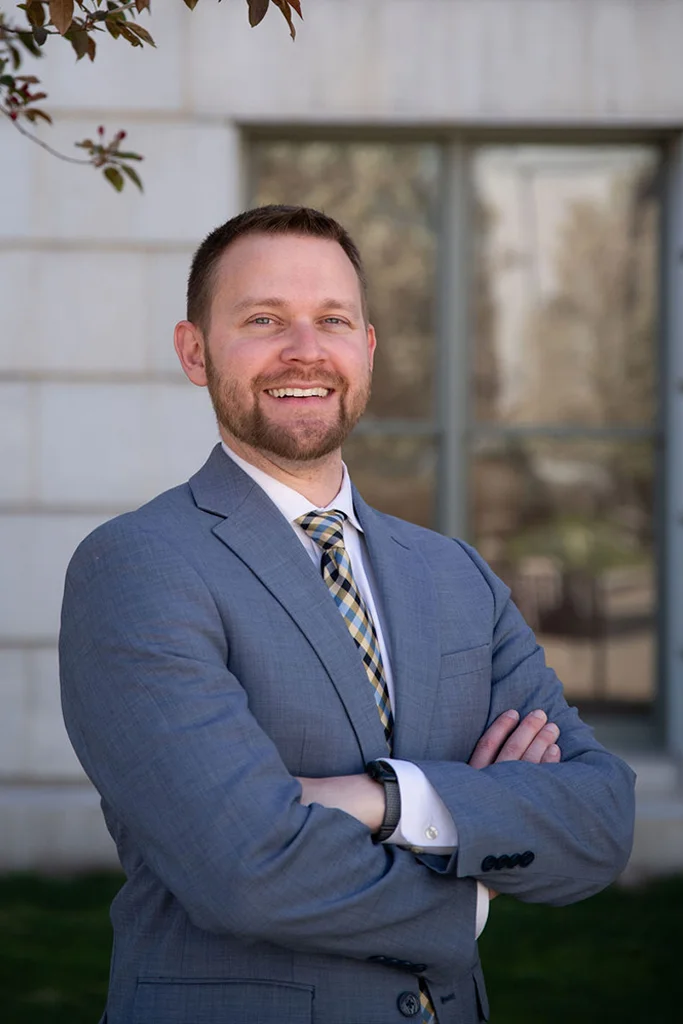
At the revocation hearing, the judge has broad discretion. Sanctions can range from a verbal warning or additional conditions added to the probation order, all the way up to full revocation and imposition of the original prison or jail sentence that was suspended when probation was granted. For felony probationers, that sentence can be substantial. Reid DeChant has represented clients at probation revocation hearings in Denver, Adams County, Jefferson County, and surrounding jurisdictions, and the outcome at these hearings depends heavily on how the defense is framed, what mitigating evidence is presented, and how the attorney communicates with both the probation officer and the prosecutor before the hearing ever reaches the judge.
What to Do If You Are on Probation or Facing a Violation in Colorado
If you are currently on probation in Colorado and believe a violation allegation may be coming, or if you have already received notice of a revocation hearing, the most important thing you can do is retain a defense attorney before that hearing occurs. A probation revocation hearing proceeds quickly, and the preparation that matters, gathering documentation of treatment participation, employment records, letters from providers, and any evidence bearing on the violation allegation, takes time that disappears fast once a warrant has been issued or a summons has been served.
Denver County probation cases are handled through the Denver District Court at the Lindsey-Flanigan Courthouse at 520 West Colfax Avenue. Jefferson County probation matters go through the Jefferson County Combined Court in Golden. Adams County cases are handled at the Adams County Justice Center in Brighton. If you are on probation in Arapahoe County, your matters will proceed through the Arapahoe County District Court in Centennial. Each of these courts has its own probation department, its own revocation hearing procedures, and its own norms around what kinds of violations tend to result in revocation versus modification. An attorney who regularly practices in the specific court handling your case brings knowledge of those local patterns that is genuinely difficult to replicate.
If you have not yet been sentenced and are weighing whether to accept a plea that includes a probation term, understanding exactly what the conditions will require before you agree is essential. A deferred judgment, for instance, can be a genuinely favorable resolution in the right case, but it carries risk if the conditions are difficult for you to complete given your employment, your location, or other life circumstances. Consulting with a Colorado criminal defense attorney before accepting any plea that includes probation is the kind of decision that shapes the next one to three years of your life.
Common mistakes people make on probation include assuming they can miss one appointment and make it up later, failing to notify their probation officer of an address change, taking prescription medications that trigger a positive drug test without alerting the officer in advance, and traveling outside Colorado without obtaining written permission. Each of these mistakes is avoidable, and each has resulted in revocation proceedings for people who were otherwise doing everything asked of them.
Colorado Probation Questions Answered
How long does probation typically last in Colorado?
The length of probation in Colorado depends primarily on the offense level. Misdemeanor probation terms typically range from six months to two years. Felony probation terms can extend from one year to as many as five years for most felony classes, and certain offense categories, particularly sex offenses, can result in much longer supervision periods. A judge may terminate probation early if the probationer has completed all conditions and demonstrated consistent compliance, but early termination requires a formal motion and a court finding that early discharge serves the interests of justice.
Can I leave Colorado while on probation?
Not without permission. Colorado probation orders generally prohibit travel outside the state without advance written approval from your probation officer. For longer trips or interstate relocation, the Interstate Compact for Adult Offender Supervision governs the process by which supervision can be transferred to another state. This process takes time and is not guaranteed. Traveling without authorization is treated as a violation regardless of the reason for travel.
What happens to my probation if I am arrested for a new crime in Colorado?
A new arrest triggers a substantive probation violation. Even if the new charge is ultimately dismissed or you are acquitted, the probation department may still allege a violation based on the underlying conduct. Because the standard of proof at a revocation hearing is lower than at trial, an acquittal at trial does not automatically resolve the probation violation allegation. This situation requires careful coordination between the defense of the new case and the defense of the revocation proceeding.
Does Colorado allow probation for felony convictions?
Yes. Colorado courts routinely impose probation in lieu of prison sentences for many felony convictions, particularly for Class 4, Class 5, and Class 6 felonies and in cases where the defendant has no prior felony record. Certain offenses, including some violent crimes and sex offenses, carry mandatory prison terms that preclude probation. The availability of probation for any specific felony charge depends on the charge classification, the defendant’s criminal history, and statutory limitations that apply to specific offense categories.
What is a deferred judgment and how does it differ from regular probation in Colorado?
A deferred judgment is a disposition in which you enter a guilty plea, but the court does not accept the plea and does not impose a sentence immediately. Instead, you are placed on probation-like supervision with conditions. If you successfully complete the deferred period, the plea is withdrawn and the case is dismissed. If you violate the conditions, the court accepts the plea and sentences you on the original charge. The key difference from a standard probation sentence is that a successful deferred judgment results in no conviction on your record, which can be significant for employment, housing, and professional licensing purposes.
Can a probation officer search my home without a warrant in Colorado?
Colorado probation orders frequently include a provision requiring the probationer to submit to warrantless searches by probation officers. If your probation order contains this condition, a probation officer may search your residence, vehicle, or person without a warrant or probable cause as long as the search is conducted in a reasonable manner. The scope of this authority is defined by your specific probation order. This is one of the conditions worth reviewing carefully with your attorney before your sentence is finalized, because it significantly affects your Fourth Amendment protections during the supervision period.
What happens if I cannot afford to pay fines, fees, or restitution while on probation?
Colorado courts cannot revoke probation solely because a probationer is unable to pay. Under constitutional principles established in court decisions, a judge must inquire into whether non-payment is willful before imposing sanctions. If you genuinely cannot pay due to financial hardship, document your income, expenses, and employment efforts carefully and communicate openly with your probation officer. Requesting a payment modification through the court is far preferable to simply falling behind without explanation. An attorney can file a motion to modify the payment schedule based on your financial circumstances.
Will probation in Colorado affect my professional license?
It can. Many Colorado licensing boards, including those governing healthcare professionals, real estate licensees, teachers, lawyers, and financial advisors, require license holders to report criminal convictions and may independently review probation orders. The underlying conviction rather than the probation itself typically triggers the reporting obligation, but the conditions of probation, particularly treatment requirements or restrictions on practice, can directly affect your ability to maintain licensure. Anyone in a licensed profession who is facing criminal charges should discuss the licensing consequences with their defense attorney before any plea is entered.
Can I get my Colorado probation transferred to another state if I need to move?
Interstate transfer of probation is governed by the Interstate Compact for Adult Offender Supervision, which all states have adopted. To transfer supervision, you must apply through your Colorado probation officer, and the receiving state must agree to accept supervision. Not all states accept transfers for all offense types, and the receiving state applies its own supervision standards once the transfer is approved. The process can take several months, and you cannot simply move and assume the transfer will follow. Moving without authorization is a violation.
How does probation in Colorado interact with a DMV revocation for DUI?
A DUI conviction in Colorado triggers two separate proceedings: the criminal case, which results in probation if the court imposes it, and a DMV administrative action against your driver’s license through an Express Consent hearing. These are parallel proceedings with different standards and different timelines. Completing probation does not automatically restore your driving privileges if the DMV has independently revoked your license. Conversely, winning the DMV hearing does not affect the criminal case. Someone facing both proceedings needs to understand that each requires its own strategic response, and the two processes intersect in important ways around ignition interlock requirements.
DeChant Law’s Probation Representation Across Colorado
DeChant Law represents clients on probation-related matters throughout the Denver metropolitan area and surrounding Colorado counties. Reid DeChant’s background as a former public defender means he has worked inside the probation system from the ground up, handling violation hearings, modification requests, early termination motions, and deferred judgment cases across Denver County, Adams County, Broomfield County, Jefferson County, and Arapahoe County courts. That experience encompasses the full spectrum of probation-related representation, from clients navigating their first misdemeanor supervision to those facing revocation on serious felony cases.
DeChant Law serves clients in Denver neighborhoods including LoDo, Capitol Hill, Highlands, Five Points, Baker, Washington Park, and Stapleton, as well as in communities throughout the metro region including Aurora, Lakewood, Englewood, Littleton, Centennial, Greenwood Village, Parker, Castle Rock, Westminster, Thornton, Northglenn, Broomfield, Brighton, Arvada, Golden, Wheat Ridge, Commerce City, and Lone Tree. Clients come to DeChant Law from Douglas County, Elbert County, and Clear Creek County as well, wherever the underlying case was filed and wherever the probation supervision is being carried out. Reid’s familiarity with the probation departments, prosecutors, and judges across these jurisdictions is a practical asset for anyone whose supervision has hit a difficult point.
Speak With a Colorado Probation Defense Attorney at DeChant Law
Probation carries real obligations and real consequences, and navigating it without understanding what the system actually requires of you puts your freedom at risk. Whether you are trying to understand the conditions placed on you after sentencing, facing a violation allegation, seeking an early termination of your supervision, or weighing a plea offer that includes a deferred judgment, a Colorado probation defense attorney who has spent years inside these courts can make a decisive difference in how your situation resolves.
Reid DeChant has represented clients through every phase of the probation process, from initial sentencing through revocation hearings, and his training at the Trial Lawyers College and his membership in the National Association of Criminal Defense Lawyers reflect a commitment to defense advocacy that goes beyond paperwork and appearances. If you are dealing with a probation issue in Colorado, call DeChant Law to speak directly with Reid about where you stand and what your options actually are.