Denver Motorcycle DUI Lawyer
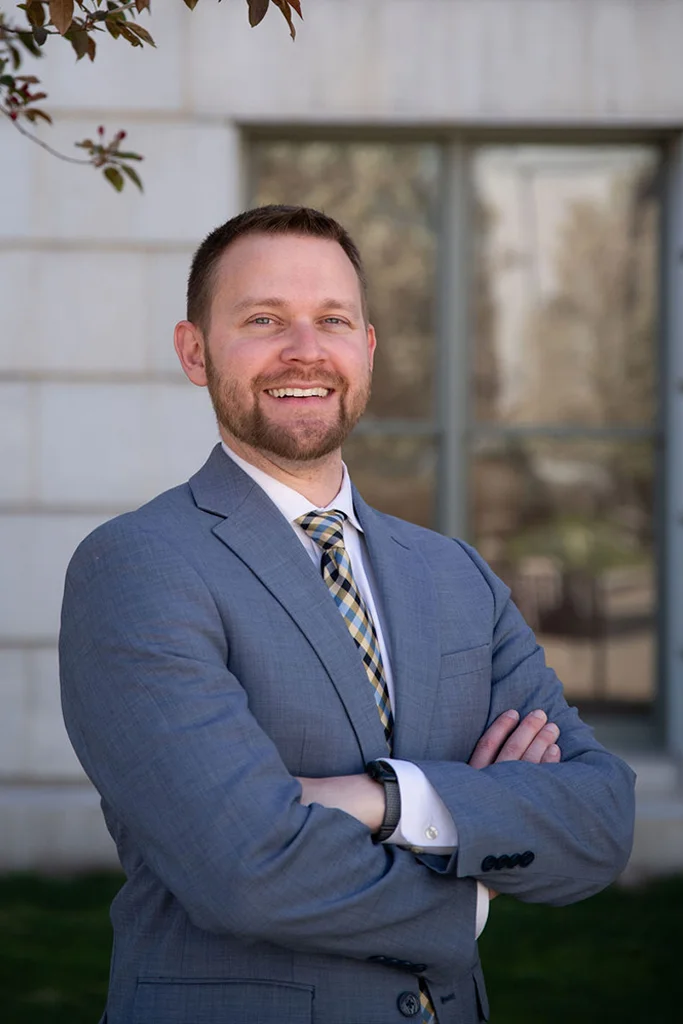
Riding a motorcycle and driving a car are treated the same way under Colorado’s DUI statutes, but the experience of being pulled over on a bike, the way evidence gets collected at the scene, and the assumptions officers and juries bring to a rider charged with impaired driving are anything but identical. A Denver motorcycle DUI lawyer who understands those differences can mean everything to how your case unfolds. Reid DeChant has defended impaired driving charges across Denver and the surrounding Front Range counties, and he approaches motorcycle DUI cases with the same focus on challenging the stop, the field sobriety evaluation, and the chemical test that has led to dismissals and not-guilty verdicts in cases that looked difficult from the start.
Motorcyclists already face an uphill battle with perception. Officers and prosecutors sometimes treat a rider as automatically reckless. That bias can color the entire investigation, from whether the stop was actually justified to how the arresting officer describes your balance and coordination in their report. Field sobriety tests designed for people standing on flat pavement with two feet behave very differently when administered to someone who just dismounted from a motorcycle after miles on the highway, particularly if that rider has any physical limitation, wears motorcycle gear, or is standing on uneven ground near a highway shoulder.
Colorado’s DUI laws impose serious consequences that go well beyond the criminal case itself. A conviction can affect your license through DMV proceedings that run parallel to the criminal charge, and for a motorcycle rider, losing that license cuts off transportation in a way that hits differently than it might for someone with another vehicle at home. The DMV hearing and the criminal case require two separate fights, and the seven-day deadline to request a DMV hearing after arrest is not flexible.
What Makes Motorcycle DUI Cases Different from Standard DUI Charges
The legal standard for impairment is the same whether you were driving a pickup truck or a Harley-Davidson. Colorado sets the per se blood alcohol limit at 0.08 percent for DUI and 0.05 percent for DWAI. But the practical reality of how a motorcycle DUI gets built from the moment of the traffic stop differs in ways that create both problems and opportunities for the defense.
Officers are trained to look for driving behaviors as indicators of impairment. The National Highway Traffic Safety Administration has published cues for detecting impaired motorcycle operators, and those cues are different from the ones used for passenger vehicles. Weaving within a lane, for instance, is something motorcycles do naturally for balance and road debris avoidance. Late braking, wide turns, and varying speed are likewise common riding behaviors that can be flagged incorrectly as impairment cues. A Denver motorcycle DUI attorney who knows how law enforcement is trained to observe riders can expose the weakness in a stop that was built on a misread of normal motorcycle dynamics.
Once stopped, the rider faces a field sobriety test situation that was never designed with motorcyclists in mind. The Standardized Field Sobriety Tests, including the walk-and-turn, the one-leg stand, and the horizontal gaze nystagmus test, were validated on people in ordinary shoes on flat surfaces. A motorcyclist still wearing full leather gear, a heavy jacket, or thick-soled boots is being asked to perform a balance task in conditions that would affect any sober person. If the officer did not account for those conditions in administering the test, the results can be challenged.
Blood and breath testing still applies to motorcycle riders under Colorado’s express consent law, and refusing the chemical test carries its own consequences through the DMV. But breathalyzer results and blood draws are not infallible. Chain of custody issues, improper calibration of testing equipment, delays between driving and testing, and medical conditions that affect breath results are all legitimate defense angles that Reid evaluates in every case.
Charges and Consequences Denver Motorcycle Riders Should Understand
- DUI (Driving Under the Influence): Applies when a rider’s blood alcohol content is 0.08 percent or higher, or when any substance renders them substantially incapable of safely operating the motorcycle; Colorado treats this as the more serious of the two primary impaired driving offenses and penalties escalate significantly for repeat charges.
- DWAI (Driving While Ability Impaired): Triggered at a blood alcohol content between 0.05 and 0.08 percent, or when any substance impairs the rider to the slightest degree; it carries fewer mandatory minimum penalties than DUI but still results in points on your license and can support a DMV revocation action.
- DUI-D (Driving Under the Influence of Drugs): Colorado’s recreational cannabis laws do not protect a rider from impaired driving charges; THC impairment is evaluated by a Drug Recognition Expert and through blood testing, and a positive THC test does not automatically mean conviction, but it does require careful defense of what the test actually shows about impairment at the time of driving.
- Express Consent DMV Hearing: Separate from the criminal case, this administrative proceeding can revoke your motorcycle license based solely on test results or a refusal; the hearing must be requested within seven days of arrest and Reid has successfully dismissed numerous Express Consent actions on procedural and substantive grounds.
- Felony DUI: A fourth or subsequent DUI offense in Colorado is charged as a felony regardless of whether the prior convictions occurred in Colorado or another state; the consequences include the possibility of prison time and a felony record that affects employment, housing, and licensing far beyond the sentence itself.
- DUI Causing Injury or Serious Bodily Injury: When a motorcycle accident results in injury to another person and the rider is alleged to have been impaired, prosecutors may file vehicular assault charges, which carry substantially higher penalties than a standard DUI and require an aggressive defense from the first court appearance.
- Motorcycle License Consequences: Colorado issues a separate motorcycle endorsement on a driver’s license, and a DUI conviction can affect both the endorsement and the underlying license; understanding exactly what the DMV proceeding will do to your riding privileges requires someone who handles both the criminal and the administrative sides of the case.
What to Do Immediately After a Motorcycle DUI Stop in Denver
The first hours after a motorcycle DUI arrest are not the time to try to explain yourself to the arresting officer. Colorado law requires you to identify yourself and comply with lawful commands, but you have the right to remain silent beyond that. Statements made at the scene, in the patrol car, or at the station often end up in the police report framed in a way that damages your defense. Say as little as possible and be cooperative without being confessional.
Request a DMV hearing within seven days. This deadline is fixed and missing it results in an automatic license revocation proceeding moving forward without your participation. The DMV mails a seven-day temporary driving permit at the time of arrest, and that permit includes instructions for requesting a hearing. That request should go to the Colorado Division of Motor Vehicles Hearings Division, and it is worth making that request through an attorney who can simultaneously begin gathering the evidence that will matter at the hearing.
Motorcycle DUI cases in Denver are prosecuted by the Denver County District Attorney’s Office and handled at the Lindsey-Flanigan Courthouse at 520 West Colfax Avenue. Arraignment typically occurs within days of arrest, and having an attorney before that first appearance can affect whether bond conditions include restrictions on driving. If your case arose in a surrounding county, Jefferson County cases go through the Jefferson County Justice Center in Golden, Arapahoe County cases through the Arapahoe County Justice Center in Centennial, and Adams County through the Adams County District Court in Brighton.
Preserve every piece of information you can from the night of the arrest. If your motorcycle has a dashcam or any recording system, secure that footage before it overwrites. If there were witnesses, note their names. Write down your own recollection of everything that happened, including where you were riding, road conditions, lighting, weather, and how the stop unfolded. Memory fades quickly, and the details you write down today may support your defense months from now when the case goes to trial or to a suppression hearing.
One of the most common mistakes motorcycle riders make after a DUI arrest is waiting too long to retain an attorney, believing the situation will resolve on its own or that a DUI is just a minor matter. A prior DUI conviction dramatically changes the sentencing exposure for any future charge, and even a first-offense conviction stays on your record and affects your insurance rates, your license, and in some professions your ability to work.
Why DeChant Law for Your Denver Motorcycle DUI Defense
Reid DeChant built his practice on the kind of trial experience that most private criminal defense attorneys never accumulate. His time as a public defender placed him inside Denver, Broomfield, and Adams County courtrooms defending clients against the full range of criminal charges, including DUI and DWAI at every level of severity. That volume of courtroom work means he has cross-examined police officers on their testing procedures, challenged the foundation of breathalyzer results, and argued suppression motions targeting the validity of traffic stops in courts throughout the Front Range.
DeChant Law’s track record in impaired driving cases includes dismissals of DUI charges outright, not-guilty verdicts at trial, and numerous successful DMV Express Consent hearing outcomes where license revocation actions were dismissed, including dismissals for procedural defects in the Express Consent advisement and for failure to administer chemical testing within the required window. Those results reflect the kind of technical precision that impaired driving defense requires alongside the courtroom confidence to take a case to trial when the evidence supports doing so.
Reid is a graduate of the Trial Lawyers College, the program founded by legendary attorney Gerry Spence that trains lawyers in the craft of storytelling and authentic human advocacy in front of juries. That training shapes how Reid builds a defense narrative, not just for the legal arguments, but for the human story the jury or the judge needs to understand in order to evaluate the case fairly. He is also a member of the National Association of Criminal Defense Lawyers and the Colorado Criminal Defense Bar, organizations that keep him current on evolving defense strategies and connected to the sharpest minds in criminal defense practice.
Working with a Denver motorcycle DUI attorney at DeChant Law means knowing exactly where your case stands at every stage. Reid communicates directly, explains the real options without sugarcoating them, and involves his clients in the decisions that shape the outcome.
Questions Denver Motorcyclists Ask About DUI Charges
Can I get a DUI on a motorcycle in Colorado even if I was riding safely?
Yes. Colorado’s DUI and DWAI statutes apply to any motor vehicle, which includes motorcycles. The question of whether you were riding safely matters for whether there was reasonable suspicion to pull you over, but once a stop occurs and a chemical test shows a blood alcohol content at or above the legal limit, the per se standard applies regardless of how your riding appeared.
Are field sobriety tests mandatory for motorcycle riders in Colorado?
Field sobriety tests are not mandatory. You can decline to perform them, and while declining may be noted in the police report, the results of a poorly administered or improperly scored field sobriety test can cause significant damage to your defense. The decision to take or decline these tests is worth understanding before you ever get on your bike, not after you are standing on a highway shoulder at night.
What happens to my motorcycle endorsement if I am convicted of DUI?
A DUI conviction in Colorado can result in revocation of your driving privileges, which affects both your standard driver’s license and any motorcycle endorsement on that license. The DMV proceedings that follow a DUI arrest run separately from the criminal case and can result in revocation even before a criminal conviction occurs. Reinstating full driving privileges after revocation typically involves completing required programs and paying reinstatement fees.
What is the express consent law and how does it apply to motorcycle riders?
Colorado’s express consent law means that by operating any motor vehicle on a public road, you have consented in advance to chemical testing if a law enforcement officer has probable cause to believe you are impaired. This applies equally to motorcycle riders. Refusing the test triggers an automatic license revocation proceeding through the DMV, separate from any criminal charge, and the revocation period for refusal is generally longer than the revocation period for a failed test.
How long does a motorcycle DUI case typically take in Denver courts?
First-offense misdemeanor DUI cases at the Lindsey-Flanigan Courthouse can sometimes resolve within a few months if the parties reach an agreement, but cases that involve contested evidence, suppression motions, or a trial can take substantially longer. Felony DUI cases or those involving injury move through a different track and often take a year or more from arrest to resolution. The DMV hearing, which runs parallel to the criminal case, typically gets scheduled within weeks of the request.
Can the THC from legal cannabis use in Colorado result in a motorcycle DUI charge?
It can. Colorado law does not exempt marijuana users from impaired driving laws. A blood THC level of five nanograms per milliliter or more creates a permissive inference of impairment, meaning a jury may infer impairment from that result, though it is not automatic. However, THC metabolizes differently than alcohol, and the timing between consumption and driving matters significantly in determining whether impairment actually existed when you were riding. These cases require careful analysis of the blood draw timeline and the Drug Recognition Expert’s evaluation.
What if I was involved in a motorcycle accident and the officer assumed I was impaired without testing?
An officer’s subjective belief that you were impaired is not sufficient for conviction. If chemical testing was not administered or was administered improperly, that is a significant defense issue. Accident scenes can be chaotic, and officers sometimes form conclusions about impairment based on factors like the accident itself, the smell of fuel, or a rider’s post-crash physical state rather than actual signs of intoxication. These assumptions can and should be challenged.
If I have prior DUI convictions from another state, do they count toward a felony charge in Colorado?
Yes. Colorado looks at prior DUI, DWAI, and equivalent convictions from other states when determining whether a new charge should be filed as a felony. A fourth qualifying offense, counting convictions from any state, can result in a felony DUI charge in Colorado. This makes it critically important to understand your prior record and how it affects your current exposure before making any decisions about how to handle a new charge.
Is a DWAI on a motorcycle less serious than a DUI?
DWAI carries lower mandatory minimum penalties than DUI, but it is still a criminal conviction that appears on your record, affects your insurance, and can support license point accumulation leading to suspension. For a rider who depends on their motorcycle for transportation or who holds a commercial driver’s license, the consequences of even a DWAI conviction can be significant. Treating a DWAI as a minor matter that does not require serious defense is a mistake.
Can a motorcycle DUI affect my ability to renew or obtain a motorcycle endorsement in the future?
A DUI conviction and the associated DMV revocation can create obstacles to reinstating or renewing a motorcycle endorsement. Colorado’s licensing restoration process involves specific requirements after a DUI-related revocation, and riders who are subject to an ignition interlock requirement as a condition of license reinstatement need to understand how that requirement applies to motorcycle operation specifically, which has its own set of complications given how interlock devices are installed.
Serving Denver Motorcycle Riders Across the Front Range
DeChant Law represents clients charged with motorcycle DUI across the Denver metro area and the broader Front Range. That includes riders stopped on I-70 in the mountains coming back through Clear Creek County, on I-25 through Denver, Englewood, and Pueblo, or on State Highway 93 between Golden and Boulder. Within Denver proper, cases arise across Capitol Hill, Baker, RiNo, the Highlands, Platt Park, Washington Park, Cherry Creek, and Five Points, as well as on major corridors like Colfax Avenue, Colorado Boulevard, and Broadway where law enforcement runs regular DUI patrols late at night and during events at Ball Arena, Empower Field at Mile High, or Coors Field.
Beyond Denver County, the firm handles motorcycle DUI matters in Jefferson County communities including Lakewood, Arvada, Wheat Ridge, Golden, and Littleton. Adams County cases from Aurora, Westminster, Thornton, Commerce City, Brighton, and Northglenn are regularly handled at the Adams County District Court. Arapahoe County cases from Englewood, Centennial, Sheridan, Glendale, and Greenwood Village go through the Justice Center in Centennial. Douglas County cases from Highlands Ranch, Castle Rock, Parker, and Lone Tree are handled at the Douglas County Combined Courts in Castle Rock. Riders facing DUI charges after events or rides in Broomfield County are also regularly represented through DeChant Law’s established presence in that jurisdiction. Wherever along the Front Range your stop occurred, the same focus on challenging every element of the case applies.
Denver Motorcycle DUI Attorney Ready to Review Your Case
A motorcycle DUI charge in Denver carries real consequences, and the outcome depends heavily on how the defense is built from the first days after arrest. Reid DeChant is a Denver motorcycle DUI attorney with the trial record, the technical knowledge, and the direct client communication that this kind of case demands. From the DMV hearing deadline to the suppression motion to trial preparation, every stage of your defense deserves the same level of attention. Call DeChant Law to schedule a consultation and get a straight assessment of where your case stands and what the realistic options are.