Denver DUI Dismissal Lawyer
A DUI charge is not a conviction. That distinction matters more than most people realize when they are standing outside their car on the side of I-25 at midnight, wondering what just happened to their life. The difference between a charge and a conviction often comes down to one thing: whether the defense attorney who handled the case knew where the weaknesses in the government’s case actually lived, and had the skill and willingness to attack them. A Denver DUI dismissal lawyer is not just someone who negotiates a plea. It is someone who reads the police report line by line, pulls the video from the patrol car, demands the calibration records for the breath machine, and forces the prosecution to prove every element of its case or drop it entirely.
Dismissals in DUI cases happen more often than the Denver County District Attorney’s Office would prefer the public to know. They happen because officers failed to follow Colorado’s Express Consent advisement requirements correctly. They happen because field sobriety tests were conducted on uneven pavement in the dark, or because the breath test instrument had maintenance issues that the prosecution cannot explain away. They happen because the initial traffic stop lacked any lawful basis and the evidence that followed it must be suppressed. None of those dismissals happen on their own. They happen because a defense attorney identified the problem, built the argument, and pressed it all the way through a hearing or to trial.
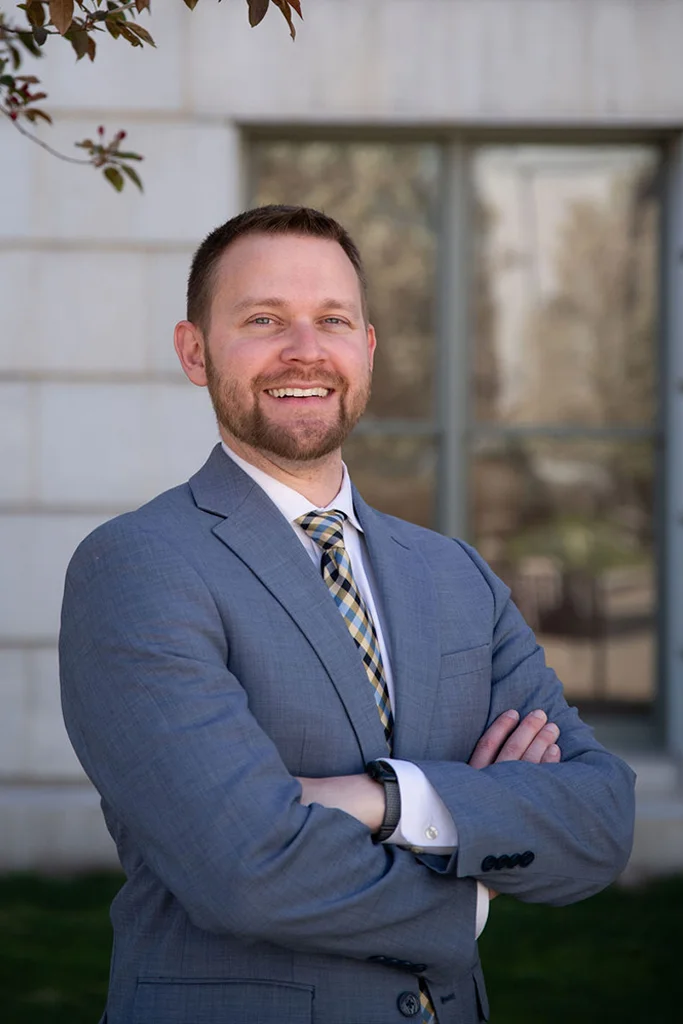
DeChant Law handles DUI defense in Denver with that level of attention. Attorney Reid DeChant has spent years in Colorado courtrooms, including extensive time as a public defender where the volume of DUI cases he handled gave him a working knowledge of how these cases are built and where they fall apart. When you are looking for a path to dismissal, that experience is not a background detail. It is the whole point.
Where DUI Cases Break Down: Grounds That Lead to Dismissal in Denver
- Unlawful traffic stop: The Fourth Amendment requires reasonable articulable suspicion before an officer can pull your vehicle over. Stops initiated on vague grounds, like a hunch, anonymous tips without corroboration, or minor equipment observations that do not meet the legal threshold, can result in suppression of all evidence gathered after the stop. Without that evidence, the prosecution frequently cannot proceed.
- Defective Express Consent advisement: Colorado law requires officers to advise drivers of their Express Consent rights in a specific way. DeChant Law has obtained DMV hearing dismissals in cases where the advisement was given improperly, given after Miranda warnings were already administered, or where the chemical test was not administered within the legally required time window after driving.
- Breath test instrument defects: The Intoxilyzer instruments used in Colorado require regular calibration, inspection, and maintenance. Records that show gaps in maintenance, failing accuracy checks, or improper operation by the administering officer can undermine the reliability of the test result and support a motion to suppress or a not guilty verdict at trial.
- Field sobriety test problems: The National Highway Traffic Safety Administration’s standardized field sobriety tests are only validated under specific conditions. Officers who administer them on sloped or uneven surfaces, in inadequate lighting, or without proper instruction, or who score them incorrectly, provide fertile ground for cross-examination and challenge.
- Blood draw chain of custody issues: When the prosecution relies on a blood test, it must establish that the sample was properly collected, stored, transported, and tested. Breaks in that chain, or lab errors at the Colorado Bureau of Investigation, can make the blood result inadmissible.
- Rising blood alcohol defense: Alcohol absorbs into the bloodstream over time. A person whose BAC was below the legal limit while actually driving may register above the limit by the time a test is administered. This defense, when supported by the timeline and the facts, directly challenges whether the prosecution can prove impairment at the time of driving.
- Miranda and constitutional violations: Statements made during custodial interrogation without proper Miranda warnings must be suppressed. Officers who question a driver after a DUI arrest without providing those warnings may lose the most incriminating evidence in the case, the driver’s own admissions.
Why Reid DeChant Pursues Dismissal Rather Than Defaulting to Pleas
A lot of DUI lawyers treat dismissal as the long shot and the plea as the practical outcome. Reid DeChant approaches it the other way around. Every DUI case gets evaluated first for what can be attacked, suppressed, or challenged, before anyone starts talking about what the DA is offering. That ordering matters because it changes the entire posture of the case.
Reid’s background as a public defender in Denver, Broomfield, and Adams County courtrooms means he has handled an enormous volume of DUI and DWAI cases under real pressure, with real stakes, and without the luxury of declining difficult files. That experience built an instinct for identifying problems in law enforcement’s work that many private attorneys never fully develop. It also built a comfort level in the courtroom that is difficult to manufacture. Reid has tried DUI cases to not guilty verdicts in Jefferson County, Arapahoe County, Douglas County, and Broomfield, and has obtained case dismissals and DMV Express Consent hearing dismissals across multiple Colorado jurisdictions.
Reid is also a graduate of the Trial Lawyers College, founded by Gerry Spence, which trains attorneys in how to genuinely connect with juries through storytelling and authentic advocacy rather than technical performance. In a DUI trial, that matters enormously. Jurors are not evaluating spreadsheets; they are evaluating whether the officer’s account is reliable and whether the defendant in front of them is who the prosecution says they are. A DUI defense attorney in Denver who can tell that story clearly and compellingly changes how those deliberations go.
Reid is a member of the National Association of Criminal Defense Lawyers and the Colorado Criminal Defense Bar, affiliations that keep him connected to developments in DUI law, emerging science around breath and blood testing, and the strategies that are working in courtrooms nationwide. He brings those resources to Denver clients, not just the ones whose cases get tried, but the ones whose cases get resolved favorably before trial because the defense was obviously strong enough to win.
What to Do in the First Days After a DUI Arrest in Denver
The window between a DUI arrest and the critical early deadlines in your case is narrow and unforgiving. Colorado’s Express Consent law means that if you took a breath or blood test at the officer’s request, the DMV will move to revoke your driving privileges automatically. You have a limited number of days from the date of the arrest to request a hearing before the DMV to contest that revocation. If that deadline passes without a hearing request, your license is suspended without any opportunity to fight it. Requesting the hearing does more than preserve your license, it creates a formal proceeding where your attorney can begin examining the evidence, cross-examining the arresting officer, and building the factual record that will inform your criminal defense.
On the criminal side, your case will be handled at the Lindsey-Flanigan Courthouse, located at 520 West Colfax Avenue in Denver. This is where Denver County cases are filed, arraigned, and tried. If your arrest occurred in a different jurisdiction, such as Jefferson County, Arapahoe County, or Adams County, the courthouse will differ, but the same urgent timeline applies. Your first court date after a DUI arrest is typically an arraignment where you enter an initial plea. Coming to that date without counsel, or with counsel who has not yet reviewed your file, puts you at an immediate disadvantage.
In the meantime, write down everything you remember about the stop as soon as possible: where you were coming from, what you had to eat and drink, when you had it, what the officer said when they approached the vehicle, how you were instructed to perform the field sobriety tests, and what happened at the station. Details that feel minor often become critical later. Preserve any receipts, text messages, or other records that help establish your timeline. Do not post anything about the arrest on social media, and do not discuss the details with anyone other than your attorney. Prosecutors in Denver have used social media posts and casual conversations to fill gaps in their cases.
Contact a Denver DUI defense attorney before your arraignment, not after. The earlier counsel is involved, the more complete the defense picture becomes and the less room there is for evidence to disappear or for procedural windows to close.
Questions About Getting a DUI Dismissed in Denver
Can a DUI actually be dismissed in Colorado, or is that just marketing language?
Dismissals are real outcomes in DUI cases. They happen for legal reasons, such as a suppression of evidence following an unlawful stop, and they happen because the prosecution cannot prove its case beyond a reasonable doubt. DeChant Law has a documented track record of DUI dismissals and not guilty verdicts across multiple Colorado counties. Dismissal is not a guaranteed outcome, but it is a realistic goal in cases where the evidence or the procedure has problems.
What is the difference between a DMV Express Consent dismissal and a criminal case dismissal?
These are two separate proceedings. The DMV Express Consent hearing is an administrative process to determine whether your driving privileges should be revoked. Winning that hearing means your license is not suspended, but it does not resolve the criminal charge. The criminal case moves through the district attorney’s office and the courts separately. It is possible to win one and lose the other, or to win both. Reid handles both proceedings for his clients.
Does refusing the breath test help or hurt my chances of dismissal?
Refusal has consequences of its own under Colorado’s Express Consent law, including a separate license revocation that may be longer than the one for a failed test. It also does not prevent prosecution; the officer’s observations of your driving and behavior can still support a DUI charge without a breath or blood result. Whether refusal helps or hurts depends heavily on the specific facts of your case, and it is a question worth discussing with a defense attorney before you assume either answer.
What happens if my blood test result was above the legal limit? Can the case still be dismissed?
Yes. A blood test result above the legal limit is not the end of the analysis. The question is whether the result is admissible. If there are chain of custody problems, laboratory errors, collection issues, or questions about the timing of the draw relative to when you were actually driving, those problems can undermine the result’s reliability. Even an admissible result above the limit does not automatically mean conviction; the prosecution must still prove impairment at the time of driving, and a jury still has to believe the evidence presented.
How does the Trial Lawyers College training affect how Reid handles DUI cases?
The Trial Lawyers College, founded by Gerry Spence, teaches attorneys to approach courtroom advocacy through authentic human connection and narrative rather than through purely technical argument. In a DUI trial, this means Reid does not just attack the breath machine or cross-examine the officer on procedural grounds. He presents the full picture of who you are, what actually happened, and why the government’s account is incomplete or unreliable. Juries respond to people, not abstractions, and that kind of advocacy changes how they evaluate the evidence.
Is a DWAI easier to dismiss than a DUI in Colorado?
Driving While Ability Impaired is a lesser charge than DUI in Colorado, typically triggered by a lower BAC reading or evidence of lesser impairment. While the legal threshold is lower, the dismissal analysis is not fundamentally different. The same suppression arguments, the same Express Consent issues, and the same evidentiary challenges apply to DWAI cases. The charge being less serious does not mean the defense should be less rigorous.
What if this is my second or third DUI? Does dismissal become less realistic?
Repeat DUI charges carry significantly higher stakes, which is exactly why the dismissal analysis becomes more important, not less. Prior convictions affect sentencing but they do not change the Fourth Amendment, they do not fix an improper traffic stop, and they do not make a defective breath instrument reliable. Prior history means you have more to lose, and that is precisely the situation where having a defense attorney who methodically works through every possible challenge to the evidence matters most.
Can a DUI dismissal remove the arrest from my record in Colorado?
If a DUI case is dismissed, you may be eligible to seek a sealing of the arrest record through Colorado’s civil case sealing process. The availability of sealing depends on the specific outcome and the nature of the charges. This is a separate legal step from the dismissal itself, but it is worth discussing with your attorney because an arrest record that is visible to employers and background check services can follow you even when the criminal case is resolved favorably.
How long does a DUI case typically take to resolve in Denver County courts?
A straightforward misdemeanor DUI in Denver County can move through the system in several months, while more complex cases involving serious injuries, multiple charges, or contested evidentiary hearings can take considerably longer. The DMV proceeding runs on a separate and usually faster timeline. The length of the case is not a good indicator of its outcome; some of the strongest dismissal results come after thorough preparation that requires time.
If I was stopped at a DUI checkpoint in Denver, does that affect the suppression analysis?
Sobriety checkpoints in Colorado are lawful, but they must comply with specific requirements for setup, notification, and operation. If a checkpoint was not properly established or administered, that can affect the admissibility of evidence gathered during it. The checkpoint context changes the Fourth Amendment analysis compared to a standard traffic stop, but it does not eliminate the analysis entirely.
Denver DUI Defense Representation Across the Metro Area and Beyond
DeChant Law represents clients facing DUI charges throughout the Denver metropolitan area and surrounding Colorado jurisdictions. In the city itself, this includes clients stopped along Colfax Avenue, Santa Fe Drive, and the stretches of I-25 and I-70 that see the highest concentration of late-night enforcement activity, as well as clients arrested near LoDo, RiNo, Capitol Hill, Baker, South Broadway, and the Denver Tech Center corridor. The firm also represents clients from Aurora, Lakewood, Littleton, Englewood, Greenwood Village, Centennial, and the surrounding communities in Arapahoe County.
Cases arising in Jefferson County, including those originating in Arvada, Wheat Ridge, Lakewood, Golden, and Evergreen, are handled with the same depth of attention, and Reid has a track record of DUI dismissals and not guilty verdicts specifically in Jefferson County courts. Adams County clients from Westminster, Thornton, Commerce City, Brighton, and Northglenn also have access to representation grounded in real experience in Adams County courtrooms. In Douglas County, the firm handles cases from Highlands Ranch, Castle Rock, Parker, Lone Tree, and Franktown. Broomfield County, Jefferson County, and Larimer County cases can also be evaluated upon contact.
Talk to a Denver DUI Defense Attorney About Your Dismissal Options
A DUI charge on your record carries consequences that extend well beyond the immediate penalties: your license, your employment, your professional credentials, and in some cases your immigration status can all be affected by a conviction that might have been preventable. If there are problems with how your case was built, an experienced Denver DUI defense attorney can find them, and Reid DeChant has a demonstrated history of doing exactly that across Colorado’s courts.
DeChant Law offers consultations for DUI cases throughout the Denver metro area. Reach out directly to schedule time with Reid and get a candid assessment of where your case stands and what realistic paths to dismissal might look like given the specific facts of your arrest.