Denver DUI Sentencing Lawyer
A DUI conviction in Colorado does not end at the courthouse. The sentence that follows can reshape your finances, your driving privileges, your employment, and your standing in the community for years. If you are at the sentencing phase of a DUI case, or if you are preparing a defense with an eye toward minimizing what a conviction would cost you, understanding exactly what Colorado courts impose, and why they impose it, is not optional background information. It is the foundation of every decision you make. A Denver DUI sentencing lawyer who has spent real time in front of Denver County judges and actually tried DUI cases to verdict understands how sentencing outcomes are shaped long before a judge ever opens a plea agreement or reads a presentence report.
Colorado DUI sentencing is built on a layered structure. There are statutory minimums and maximums, mandatory jail requirements that cannot be suspended, license revocation proceedings that run parallel to the criminal case through the DMV, and a range of probationary conditions that judges in Denver routinely impose. The difference between the statutory floor and the statutory ceiling is often enormous, and where a defendant lands within that range depends heavily on the quality of advocacy at every stage of the case. Whether this is a first offense stopped on I-25 after a Rockies game or a third offense with an accident and a high blood alcohol reading, the facts of how the case was built, challenged, and presented carry measurable consequences at sentencing.
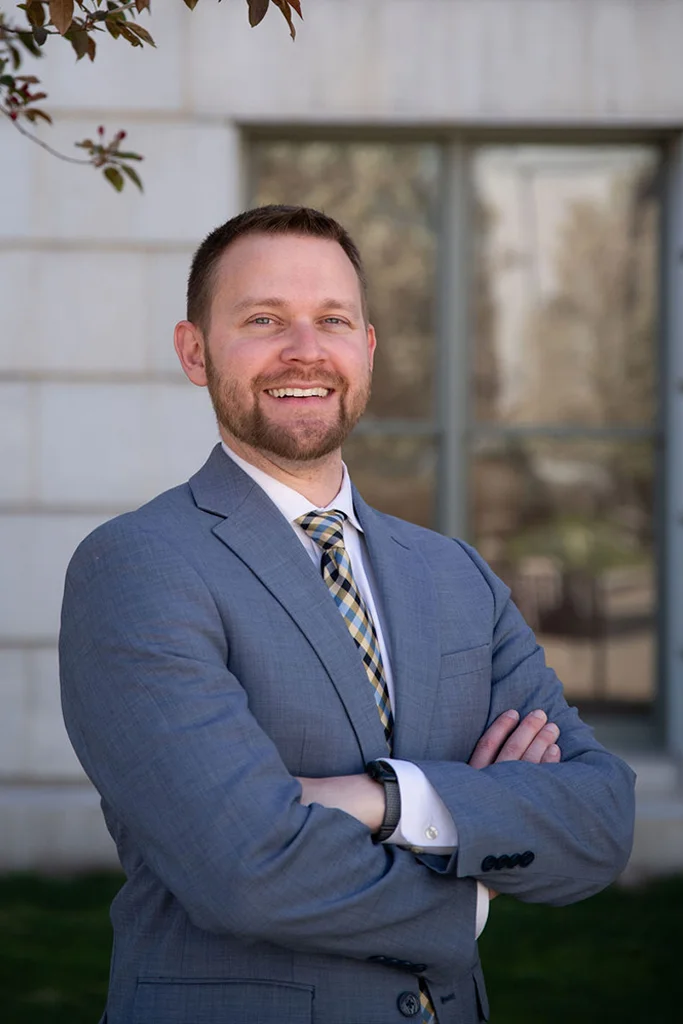
DeChant Law represents clients facing DUI sentencing in Denver County and throughout the surrounding jurisdictions. Attorney Reid DeChant’s background as a former public defender means he has handled DUI cases at every stage, from roadside stop to sentencing hearing, across multiple Colorado courthouses. That depth of exposure matters when the goal is not just getting through sentencing but getting through it with the least possible disruption to your life.
What Denver DUI Sentencing Actually Looks Like in Practice
Colorado divides impaired driving charges into two primary categories: DUI, which requires proof that a driver was substantially incapable of operating a vehicle safely due to alcohol or drugs, and DWAI, which carries a lower blood alcohol threshold and is charged as a lesser offense. The sentencing consequences for each tier differ, and they increase sharply with prior offenses. For a first-offense DUI in Denver, the law sets a minimum jail term that a judge can partially convert to community service or an alcohol education program, but the mandatory portion cannot simply be waived. For DWAI, the mandatory minimums are somewhat lower, but the license and DMV consequences can be nearly identical.
What most people do not realize is that Colorado’s DUI sentencing framework includes both the criminal sentence and a separate administrative action by the Colorado Division of Motor Vehicles. These two tracks run at the same time and are not automatically resolved by the same outcome. A case dismissed in criminal court does not necessarily stop the DMV from revoking your license. Conversely, a criminal conviction does not mean the DMV hearing is automatically lost. DeChant Law’s case results include multiple DMV Express Consent actions that were dismissed despite underlying criminal charges, which reflects the importance of treating each track as its own independent fight.
Probation conditions in Denver DUI cases frequently include alcohol monitoring through a SCRAM ankle bracelet or daily call-in testing, mandatory attendance at a Level II alcohol education and treatment program, community service hours, fines and court costs that can exceed several thousand dollars when all assessments are added up, and in many cases, installation of an ignition interlock device as a condition of any restricted driving privileges. A DUI sentencing attorney in Denver who regularly practices in front of Denver County judges knows which judges are more receptive to treatment-focused arguments and which require a stronger showing of accountability before considering the lower end of the sentencing range.
The Sentencing Factors That Shape What a Denver Court Imposes
- Prior DUI or DWAI convictions: Colorado law imposes escalating mandatory minimums based on the number of prior impaired driving offenses within a lookback period, and a third DUI offense can be charged as a felony, carrying potential state prison time rather than county jail.
- Blood alcohol concentration at the time of the stop: A BAC at or above 0.15 percent triggers a “persistent drunk driver” designation under Colorado law, which carries additional license consequences, mandatory treatment program enrollment, and an ignition interlock requirement that extends beyond what a standard DUI imposes.
- Whether an accident or injury occurred: A DUI arrest arising from a collision, especially one involving injury or property damage, changes the calculus for both the prosecution and the judge at sentencing, often resulting in significantly harsher conditions and less flexibility on probationary alternatives to incarceration.
- Drug involvement alongside or instead of alcohol: DUI-D charges, which involve driving under the influence of drugs rather than alcohol, follow the same sentencing framework as alcohol-based DUI but require different treatment program referrals and can complicate the defense of the underlying DMV action.
- Whether a minor was in the vehicle: The presence of a passenger under the age of sixteen at the time of a DUI arrest is an aggravating factor that Colorado courts take seriously, and it is one of the circumstances most likely to produce a sentence at the higher end of the applicable range.
- The quality of the mitigation presented: Voluntary enrollment in alcohol treatment, maintained employment, family responsibilities, lack of any prior criminal record, and demonstrated remorse all carry weight with Denver judges if they are presented through a compelling sentencing argument rather than just mentioned in passing.
- Commercial driver’s license status: A DUI conviction for a CDL holder carries federal consequences that can permanently affect the ability to operate a commercial vehicle, and the interaction between state DUI sentencing and federal CDL regulations requires specific attention during both the plea and sentencing phases.
What to Do If You Are Heading Into DUI Sentencing in Denver
If you have already entered a plea or been found guilty after trial, the period between conviction and sentencing is not dead time. It is the window during which the most important mitigation work happens. Courts in Denver that handle DUI cases, primarily Denver County Court for misdemeanor DUI charges and the Denver District Court at the Lindsey-Flanigan Courthouse at 520 West Colfax Avenue for felony DUI matters, typically allow several weeks between a conviction and a sentencing hearing. That time should be used deliberately.
One of the most effective steps a defendant can take before sentencing is voluntary enrollment in an alcohol education or treatment program. Colorado requires sentencing judges to order treatment anyway, but arriving at sentencing already enrolled and with documented progress shifts the framing of the hearing considerably. It demonstrates that treatment is being taken seriously rather than treated as a checkbox imposed by the court. Similarly, if alcohol monitoring is likely to be ordered as a probation condition, some defendants choose to begin voluntary monitoring before sentencing as a show of good faith.
Employment documentation and character support letters from employers, community members, or family members can be gathered and submitted before the sentencing hearing. Denver judges regularly receive presentence reports from probation officers that include a recommendation to the court, and it is worth understanding what goes into those reports and whether any inaccuracies should be challenged. Your attorney can review the presentence report before the hearing and respond to any characterizations that do not accurately reflect the circumstances of your case or your background.
Do not wait until the day of sentencing to raise the issues that matter most. DMV hearings for Colorado Express Consent license revocations must be requested within seven days of the arrest, and missing that deadline closes off one of the most important avenues for protecting your driving privileges regardless of what happens in criminal court. If that deadline has passed, there may still be arguments available around the manner in which the Express Consent advisement was given or the timing of chemical testing, both of which have resulted in dismissed DMV actions for DeChant Law clients. These are procedural and evidentiary arguments that require preparation and cannot be assembled the morning of a hearing.
Why Reid DeChant Is the Right DUI Sentencing Attorney for Your Denver Case
Not every attorney who handles DUI cases in Denver has stood in front of a jury and heard a not guilty verdict in a DUI trial. Reid DeChant has. DeChant Law’s published case results include DUI and careless driving not guilty at trial, DUI-drugs out of Jefferson County not guilty at trial, DUI third out of Douglas County not guilty at trial, DUI-drugs out of Broomfield County dismissed, and multiple Express Consent DMV actions dismissed across several counties. These are not summaries of the easiest cases that came through the door. They represent outcomes across a range of charges, courts, and factual circumstances that reflect consistent, prepared, trial-tested advocacy.
Reid trained at the Trial Lawyers College, founded by legendary attorney Gerry Spence, which develops lawyers in narrative advocacy and authentic human connection with judges and juries. At a sentencing hearing, that training is not irrelevant. The way a lawyer presents a client’s story, the relationship they have built with that client, and the specificity with which they can address the judge’s concerns all affect the outcome. A Denver DUI sentencing attorney who knows how to tell a client’s story honestly and completely gives that client a genuine advantage over one who simply reads from a prepared statement and asks for leniency in generic terms.
Reid is a member of the National Association of Criminal Defense Lawyers and the Colorado Criminal Defense Bar, organizations that keep him connected to the most current DUI defense strategies, sentencing advocacy techniques, and developments in Colorado DUI law. He handles cases in Denver County, Adams County, Broomfield, Arapahoe, Jefferson, Douglas, and other Front Range jurisdictions, which means his familiarity with individual courts and judges is built on actual repetition, not reputation.
Questions Denver DUI Clients Ask About Sentencing
What is the minimum jail time for a first DUI conviction in Denver?
Colorado law requires a mandatory minimum jail term for a first DUI conviction, though a portion of that time can often be served through community service hours at the judge’s discretion. The exact number of days required by statute is subject to legislative change, and the actual sentence imposed by a Denver judge will depend on the specific facts of the case, including BAC, the circumstances of the arrest, and any mitigation presented at sentencing. An attorney familiar with Denver County judges can give you a realistic range based on current practice rather than just the statutory text.
Can I avoid jail entirely on a first DUI in Denver?
In some first-offense cases, particularly DWAI charges or DUI charges with lower BAC readings and no aggravating factors, Denver judges have discretion to convert the mandatory minimum jail requirement to community service hours or to sentence a defendant to in-home detention rather than incarceration. This is not guaranteed, and it requires presenting a strong mitigation case at sentencing. The nature of the stop, whether any accident occurred, the defendant’s prior record, and the quality of the sentencing argument all factor into whether a judge exercises that discretion favorably.
What happens to my driver’s license after a DUI conviction in Denver?
A DUI conviction triggers a license revocation through the Colorado DMV that runs separately from any criminal sentence. The length of the revocation depends on whether this is a first or subsequent offense and whether the conviction involved a BAC at or above the persistent drunk driver threshold. After a revocation period, most defendants must install an ignition interlock device in any vehicle they drive as a condition of reinstating driving privileges. The interlock requirement lasts for a period determined by statute and prior offense history.
What is the “persistent drunk driver” designation and how does it affect sentencing?
Colorado law designates any driver who registers a BAC at or above 0.15 percent, or who refuses chemical testing, as a persistent drunk driver. This designation carries specific consequences beyond the standard DUI sentence, including mandatory enrollment in a Level II alcohol education and treatment program, an extended ignition interlock requirement, and enhanced DMV revocation periods. The designation applies even on a first offense if the BAC threshold is met, which is why the BAC reading in a case matters not just for the underlying charge but for the full scope of sentencing consequences.
Does a DUI conviction in Denver affect professional licenses or employment?
For many licensed professionals, including healthcare workers, teachers, attorneys, and others regulated by Colorado licensing boards, a DUI conviction triggers a mandatory reporting obligation and potentially a licensing investigation. The impact varies significantly by profession and licensing board. Some boards treat a first DUI as a minor matter that requires reporting but results in no formal action, while others treat any alcohol-related conviction as grounds for suspension or additional conditions on a license. Anyone who holds a professional license should discuss this consequence with their attorney before entering any plea.
Can DUI sentencing conditions be modified after the fact?
Colorado courts do have the ability to modify probation conditions after sentencing in certain circumstances, including reducing probation terms, removing certain conditions, or converting supervised probation to unsupervised status. Successful completion of treatment requirements and demonstrated compliance with all conditions are typically prerequisites. This is not automatic and requires a formal motion to the sentencing court. If circumstances in your life change after sentencing in a way that makes compliance with a particular condition difficult, discussing a modification motion with your attorney is worth pursuing rather than risking a probation violation.
How does a felony DUI in Colorado differ from a misdemeanor DUI at sentencing?
A third DUI conviction within a defined period, or a fourth DUI at any point, can be charged as a felony in Colorado. A felony DUI sentencing takes place in district court rather than county court, and the sentence range includes the possibility of a Colorado Department of Corrections prison sentence rather than county jail. Even if a prison sentence is not imposed, a felony DUI conviction carries collateral consequences that a misdemeanor does not, including the loss of certain civil rights, more significant employment barriers, and a permanent felony record. The stakes at the sentencing phase of a felony DUI case are categorically different from a misdemeanor case.
What role does a presentence report play in Denver DUI sentencing?
Before sentencing in many DUI cases, a Denver probation officer prepares a presentence report that includes a background investigation, a summary of the defendant’s criminal history, an assessment of substance abuse treatment needs, and a sentencing recommendation to the court. Judges give these reports significant weight. Your attorney should review the presentence report before the sentencing hearing and respond formally if there are inaccuracies in the factual background or if the recommendation does not account for relevant mitigating factors. Letting an unfavorable recommendation go unanswered is one of the more costly mistakes that can be avoided with preparation.
Does completing alcohol treatment before sentencing actually make a difference?
Yes, and meaningfully so. Denver judges who hear DUI cases regularly see defendants who enroll in treatment only after being ordered to do so. A defendant who walks into sentencing already enrolled, attending consistently, and with documentation of progress is presenting a different narrative than the one the court typically sees. It signals genuine engagement with the underlying issue rather than compliance under threat of punishment. Whether this translates into a lower sentence, fewer probation conditions, or greater flexibility on alternatives to incarceration depends on the judge and the facts of the case, but it is among the most concrete steps a defendant can take to influence a sentencing outcome.
What happens if I violate probation after a DUI sentence in Denver?
A probation violation in Denver triggers a revocation proceeding before the original sentencing judge. The standard of proof at a violation hearing is lower than at a criminal trial, which means the judge can find a violation based on a preponderance of evidence rather than proof beyond a reasonable doubt. If a violation is found, the judge can impose the suspended portion of the original sentence, extend probation, add conditions, or in serious cases revoke probation entirely and impose the maximum sentence that was initially available. Missed check-ins, failed alcohol tests, failure to complete required treatment hours, and new criminal charges are the most common triggers for probation violations in DUI cases.
DUI Sentencing Representation Across Denver and the Front Range
DeChant Law handles DUI sentencing cases in Denver and throughout the surrounding metropolitan area. From the Capitol Hill neighborhood and Baker through LoDo, RiNo, the Highlands, Stapleton, Montbello, Glendale, and Englewood, Reid represents clients whose cases arise from the full range of Denver’s roads, venues, and communities. The firm also handles DUI sentencing matters in Adams County, including Thornton, Westminster, Northglenn, and Commerce City, as well as Arapahoe County communities including Aurora, Centennial, Littleton, and Englewood. Jefferson County clients from Lakewood, Golden, Arvada, Wheat Ridge, and Evergreen are also regularly represented, along with Douglas County clients in Parker, Castle Rock, and Highlands Ranch. The firm handles cases from Broomfield, which sits at the intersection of several Front Range jurisdictions, as well as cases originating in Boulder County and along the I-70 corridor toward the mountain communities. Wherever along the Front Range your DUI case is pending, Reid’s familiarity with the specific courts, prosecutors, and judges in each jurisdiction is a genuine advantage at sentencing.
Speak With a Denver DUI Defense Attorney Before Your Sentencing Hearing
A sentencing hearing is not a formality, and the outcome is not predetermined by the fact of a conviction. The difference between a sentence that derails your life and one that allows you to move forward with your driving privileges, your employment, and your freedom largely intact depends on what happens in the weeks before the hearing and the quality of the advocacy inside the courtroom. Reid DeChant is a Denver DUI defense attorney who has handled these cases from arrest through sentencing and through trial, and who brings the preparation and courtroom presence that this stage of a case requires.
Contact DeChant Law to schedule a consultation about your DUI sentencing in Denver or anywhere on the Front Range. The sooner you begin building your mitigation case, the more options will be available to you when you stand before the judge.