Denver DUI Probation Violation Lawyer
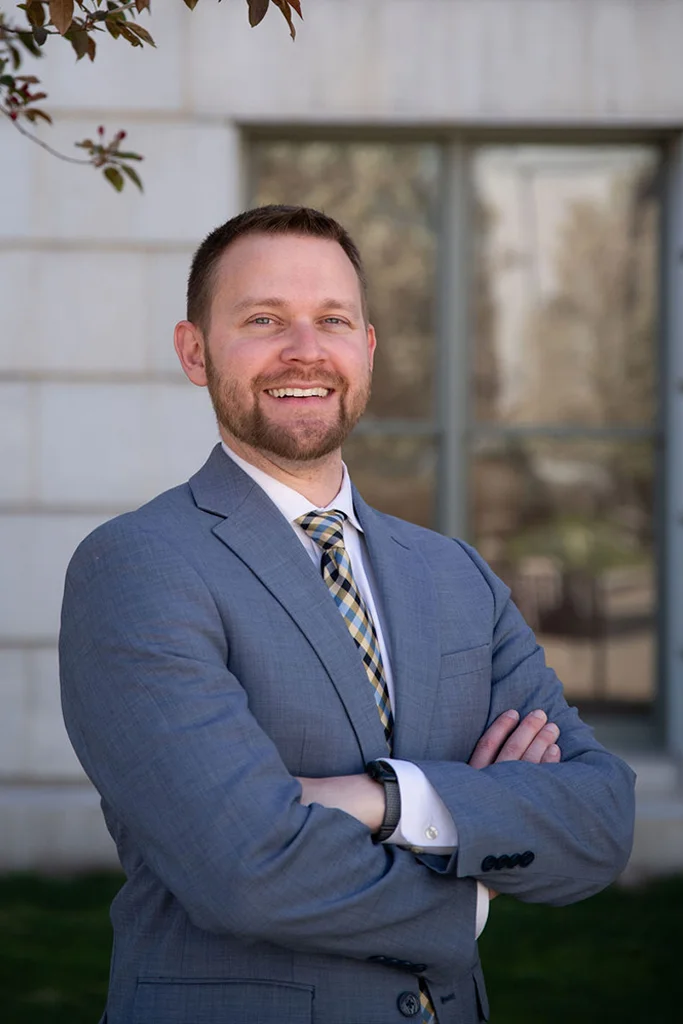
Probation after a DUI conviction in Denver is not a formality. It carries real conditions, real deadlines, and real consequences for anyone who falls short of meeting them. When a probation officer files a complaint or a court issues a summons for an alleged violation, you are looking at something that could be significantly worse than the original offense. Denver DUI probation violation lawyer Reid DeChant understands the mechanics of how these cases move through the system and what it actually takes to fight back effectively.
What makes probation violations particularly difficult is that the standard of proof is much lower than in a criminal trial. A judge does not need to be convinced beyond a reasonable doubt that you violated your conditions. A preponderance of the evidence, essentially that it is more likely than not that you failed to comply, is enough to revoke your probation and impose a sentence that could include jail or prison time. That lower bar means the facts matter even more, and having an attorney who knows how to present them is critical from the moment you are notified of the alleged violation.
Reid DeChant has spent years representing clients in Denver County and the surrounding jurisdictions, including cases that began as DUI charges and evolved into probation violation proceedings. His background as a former public defender means he has handled the volume and variety of cases necessary to understand how probation officers think, how prosecutors approach revocation hearings, and how judges exercise their discretion in these situations. If your probation is at risk, this is not the moment to wait and hope the situation resolves itself.
What Actually Gets DUI Probationers Into Trouble in Denver
Colorado DUI probation orders typically include a cluster of requirements that vary depending on the specifics of the original charge, the county of conviction, and the judge who sentenced you. Understanding where the common violations occur helps explain why so many people find themselves back in court.
- Interlock device violations: Colorado law requires ignition interlock devices for DUI offenders in many circumstances, and any failed startup test, missed calibration appointment, or tampering allegation will be flagged and reported to your probation officer as a potential violation of your conditions.
- Alcohol and drug monitoring failures: Many DUI probation orders require regular urinalysis, breath testing, or participation in remote alcohol monitoring programs. A single missed test, diluted sample, or positive result can trigger a violation complaint even if no new offense occurred.
- Failure to complete required alcohol education or treatment: Colorado courts frequently require Level I or Level II alcohol education and therapy programs as a condition of DUI probation. Missing sessions, failing to enroll within the required timeframe, or being discharged from a program can all support a violation allegation.
- New criminal charges: Any new arrest, not just a new DUI, can be alleged as a violation of a standard no-new-offenses condition. A minor incident at a bar, a traffic stop on I-25 that escalates, or even a domestic dispute can land you in a revocation hearing before the underlying new charge is resolved.
- Community service and fine payment defaults: Courts in Denver County regularly impose community service hours and fines as part of DUI sentencing. Falling behind on either, even due to job loss or medical hardship, can be reported as a violation.
- Missed probation appointments or check-ins: Whether supervised probation requires reporting to an officer in person or by telephone, failing to make contact as required is one of the most commonly alleged violations and one that can feel arbitrary if the failure was due to a scheduling miscommunication.
- Travel or residency violations: Many DUI probation orders restrict travel outside Colorado without prior approval. If you crossed state lines for work or a family emergency without clearing it with your probation officer, that can trigger a complaint.
What Happens at a Probation Revocation Hearing in Denver County
Once a probation officer files a complaint or the court issues an arrest warrant or summons for a probation violation, the case returns to the Lindsey-Flanigan Courthouse, where most Denver County criminal matters are handled. The judge who originally sentenced you will often be the same judge presiding over the revocation proceeding, which has real implications for how the hearing unfolds and what arguments carry weight.
At the revocation hearing, the prosecutor has the burden of proving the violation by a preponderance of the evidence. The rules of evidence at these hearings are more relaxed than at a trial, which means hearsay and documentary evidence that would be excluded from a jury trial can come in. Your probation officer’s written report may be admitted, lab reports may be introduced without live expert testimony, and witnesses who would not qualify under standard trial rules may be allowed to testify. This is one of the reasons people mistakenly assume there is nothing to argue at a revocation hearing. There is almost always something to argue, whether the violation was technical rather than willful, whether the evidence of the violation is actually reliable, whether the conditions were properly communicated, or whether circumstances mitigating the violation justify reinstatement on modified terms rather than revocation.
If the judge finds that a violation occurred, the options range from a warning and continuation of probation on the same or modified terms, to revocation and imposition of a jail or prison sentence. For a DUI conviction in Colorado, that often means the suspended jail sentence from the original case is now on the table. For felony DUI cases, the numbers are significantly higher. The outcome of a revocation hearing is genuinely uncertain, which is why having a DUI probation violation attorney in Denver who can present your circumstances coherently and argue for the least restrictive outcome matters enormously.
Why DeChant Law Handles These Cases Differently
Reid DeChant’s approach to defending a Denver DUI probation violation case is built on a foundation that goes deeper than procedural knowledge. As a graduate of the Trial Lawyers College, the training program founded by legendary attorney Gerry Spence that focuses on authentic human storytelling and genuine client connection in the courtroom, Reid brings a method to these hearings that most defense attorneys simply do not use. A revocation hearing is not just a paper exercise. It is an opportunity to show a judge who you are, what happened, and why the most constructive outcome is also the just one.
Reid’s background as a former public defender in Denver, Broomfield, and Adams County means he is not meeting these courtrooms for the first time when he walks in with you. He has cross-examined probation officers and challenged the reliability of monitoring evidence in ways that produced real outcomes for real clients. His case results include DUI cases dismissed outright, not-guilty verdicts at trial, and DMV express consent actions dismissed for procedural errors, all of which reflect the kind of detailed, aggressive case evaluation that probation violation defense also requires. He is a member of the National Association of Criminal Defense Lawyers and the Colorado Criminal Defense Bar, both of which keep him connected to the evolving strategies and case law that shape how these hearings are defended.
What matters most for a client facing revocation is having someone who will actually dig into the facts, challenge the evidence of the violation, and argue the outcome rather than just show up and accept whatever the prosecutor recommends. Reid treats every client as a participant in their own defense, not a passive recipient of whatever the court decides to hand down.
What to Do If You Have Been Notified of a Probation Violation
The moment you receive notice of a probation violation, whether through a probation officer’s call, a letter from the court, or an arrest warrant, your first priority is contacting a Denver DUI probation violation attorney before taking any other steps. Do not contact your probation officer to explain or apologize before speaking with counsel. Anything you say can be used in the revocation proceeding, and well-intentioned admissions often do more damage than silence.
Gather any documentation that might be relevant to the alleged violation. If the claim is that you missed a treatment session, pull your calendar, phone records, or any communications with the treatment provider. If the allegation involves a failed alcohol test, obtain any records you have about the testing process, the device’s maintenance history, or any medical circumstances that could explain the result. If you are dealing with a financial default on fines or community service, gather evidence of your employment situation, medical bills, or other circumstances that explain the shortfall. This documentation will not win your case on its own, but it gives your attorney material to work with at the hearing.
Revocation hearings in Denver County are typically scheduled within a relatively short window after the violation complaint is filed. You will likely be required to appear at the Lindsey-Flanigan Courthouse at 520 West Colfax Avenue in Denver. Depending on whether a warrant was issued, you may need to address that before the merits of the violation are heard. An attorney who handles these cases regularly will know exactly how to move through that process efficiently and without making it worse.
One of the most common mistakes people make after receiving violation notice is assuming the outcome is predetermined. It is not. Even clients who did technically violate a condition of their probation have options. Courts in Denver have broad discretion to reinstate probation, add conditions, modify the terms, or impose partial custody rather than full revocation. The way that discretion gets exercised often depends heavily on how the violation is explained, how it is contextualized against the rest of the person’s probation performance, and what concrete steps they are already taking to address whatever led to the violation.
Questions People Ask About DUI Probation Violations in Denver
Can I be arrested and held without bail for a DUI probation violation in Colorado?
Yes. When a probation violation complaint is filed, the court may issue an arrest warrant, and in many cases a judge will hold a probationer in custody until the revocation hearing is completed. Whether you can be released and on what conditions depends on the nature of the violation, your original offense, your prior record, and the judge’s assessment of your flight risk. An attorney can often appear before the court quickly to argue for release pending the hearing.
Will a probation violation automatically result in jail time?
Not automatically. The judge has discretion to continue probation on the same or modified terms if the violation is found to have occurred. However, if this is a second violation, if the violation involved a new criminal offense, or if the judge finds a pattern of non-compliance, the likelihood of incarceration increases significantly. The outcome is shaped heavily by how the hearing is presented and what mitigating information the court hears.
Does the new arrest have to result in a conviction before it can be used as a probation violation?
No. This surprises many people. A new arrest, even one that has not yet gone to trial or that may ultimately result in an acquittal, can be alleged as a probation violation. The probation revocation hearing and the new criminal case are separate proceedings with different evidentiary standards. Being found not guilty on the new charge does not automatically undo a probation revocation that was based on the same arrest.
What is the difference between a technical violation and a substantive violation, and does it matter?
A technical violation involves a failure to comply with a procedural condition, such as missing a check-in, being late to a treatment session, or not paying a fine on time. A substantive violation typically involves either a new criminal offense or a more serious breach of a core condition. The distinction matters at the revocation hearing because courts generally treat technical violations with more leniency, particularly when the underlying reason for the failure was beyond the probationer’s control. Presenting that context clearly and persuasively is part of what an attorney does at these hearings.
What happens to my driver’s license during a probation violation proceeding?
The probation violation hearing itself does not automatically trigger a new DMV action, but if the violation involves an interlock device failure or a new DUI arrest, those events can independently trigger license consequences through the Colorado DMV’s express consent process. The criminal and administrative tracks run separately, and you may need to address both simultaneously. Reid DeChant handles both tracks for clients facing these overlapping proceedings.
Can the terms of my probation be modified at the revocation hearing rather than having it fully revoked?
Yes, and this is often the most realistic and productive outcome to pursue. A judge can reinstate probation with additional conditions, such as added treatment requirements, stricter monitoring, or a short jail stay as a sanction, without fully revoking the probation sentence. Arguing effectively for modification rather than full revocation requires presenting the violation in context, showing what has already been accomplished during the probation period, and proposing concrete steps going forward.
My probation officer told me the violation is minor and I do not need a lawyer. Should I trust that assessment?
Probation officers are not your legal advocates. Their job is to supervise compliance and report non-compliance to the court. While some probation officers do communicate informally before filing a complaint, relying on a probation officer’s characterization of how serious a violation is as a basis for forgoing legal representation is a significant risk. Once a complaint is filed, the proceeding is in the court’s hands, not the probation officer’s.
What if I violated probation because I relapsed and have since re-entered treatment?
This is one of the most common scenarios in DUI probation violation cases, and it is also one where the outcome can be genuinely positive if the hearing is handled well. Colorado courts recognize that substance use disorder is a health issue, and judges who see a probationer who has already taken concrete steps toward treatment re-engagement before the hearing are often more willing to reinstate probation with modified conditions rather than impose incarceration. Documenting your re-enrollment, attendance, and commitment to treatment before the hearing date is important.
How long does a probation revocation hearing typically take in Denver County?
The actual hearing itself, once scheduled, can be brief in straightforward technical violation cases or may extend over multiple appearances if the violation is contested and involves witness testimony. The time between notification and hearing varies, but the process tends to move faster than a standard criminal trial. Some clients have their initial appearance and revocation hearing resolved within a few weeks of the violation complaint being filed, which underscores why retaining representation early matters.
If my probation is revoked, do I serve the full original suspended sentence?
Not necessarily. The judge has discretion to impose some or all of the suspended sentence, and in some cases may impose a sentence shorter than the original suspended term depending on the circumstances of the violation, the time already served on probation, and other equitable factors. This is another area where what your attorney argues at the hearing has a direct effect on the outcome. There is no formula that makes the result automatic.
DUI Probation Violation Defense Across the Denver Metro Area
DeChant Law represents clients facing DUI probation violation proceedings throughout Denver and the surrounding communities. From the neighborhoods of Capitol Hill, Five Points, Stapleton, and Wash Park through the commercial corridors of LoDo, RiNo, and Cherry Creek, clients throughout Denver proper count on Reid DeChant for this representation. The firm also serves clients in the suburbs and communities surrounding Denver, including Aurora, Lakewood, Englewood, Littleton, Centennial, and Highlands Ranch to the south and southeast. To the northwest and west, Reid represents clients from Wheat Ridge, Arvada, Westminster, Thornton, Northglenn, and Commerce City. Cases arising from DUI stops along I-70, I-25, I-225, and C-470 regularly lead to probation sentences in Jefferson County, Arapahoe County, Adams County, Douglas County, and Broomfield County courts, all jurisdictions where Reid has litigated cases throughout his career. Clients from Littleton, Parker, Castle Rock, and the Douglas County communities also routinely turn to DeChant Law when their DUI probation terms are at risk. Wherever your probation case is being supervised and wherever your revocation hearing is scheduled, the goal is the same: preserving as much of what you have built during your probation period as possible and arguing for the outcome that lets you move forward.
Denver DUI Probation Violation Attorney Ready to Defend Your Case
A probation violation notice is not a foregone conclusion. It is a legal proceeding with real arguments on both sides, a judge with genuine discretion, and an outcome that depends significantly on how your situation is presented and defended. Reid DeChant is a Denver DUI probation violation attorney who has spent his career preparing for exactly these moments, the ones where someone’s freedom depends on having a lawyer who is fully invested in the result. He brings the trial experience, the Training from the Trial Lawyers College, and the genuine client commitment that these hearings demand.
Do not wait to see what happens. The earlier you have representation in a probation violation proceeding, the more options are available and the more time your attorney has to build the strongest possible argument. Contact DeChant Law to schedule a consultation and start putting together your defense today.