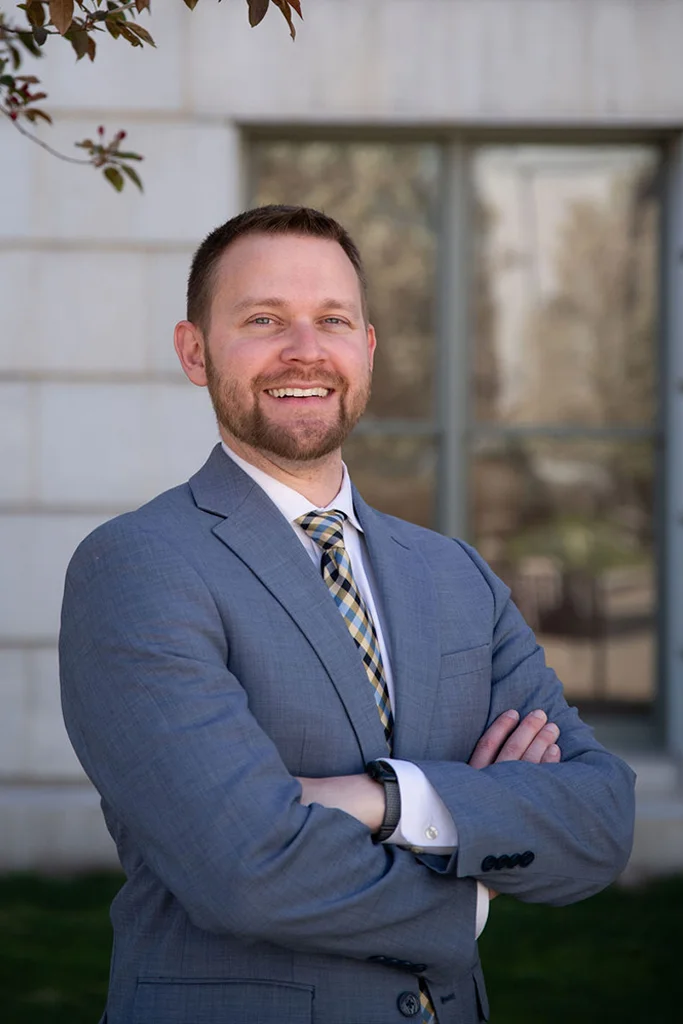
Denver DUI Jury Trial Lawyer
A DUI jury trial in Denver is a different animal than any other phase of the criminal process. Plea negotiations, pretrial motions, DMV hearings, these all require skill, but when twelve strangers file into the jury box at the Lindsey-Flanigan Courthouse and look at your client, everything changes. The lawyer standing beside that defendant needs to be someone who has actually been there, who has cross-examined the arresting officer, challenged the breath test operator, and told a real human being’s story in a way that twelve people believed. That is what Denver DUI jury trial lawyer Reid DeChant brings to every case that goes to verdict.
Colorado’s DUI statutes carry consequences that stack up fast: license revocation through the DMV’s Express Consent process, possible jail time, mandatory education programs, ignition interlock requirements, and a permanent criminal record that follows someone into job applications and apartment searches for years. First-offense DUI is serious. A third or subsequent DUI triggers felony exposure. In every one of those situations, the question of whether to take a case to trial is one of the most consequential decisions a defendant will ever make, and the answer depends almost entirely on who their lawyer is and whether that lawyer is actually prepared to try the case.
Reid DeChant has taken DUI cases to verdict in Denver County, Jefferson County, Arapahoe County, Douglas County, Adams County, and Broomfield County. His record includes Not Guilty verdicts in DUI trials, case dismissals following substantive legal challenges, and multiple DMV Express Consent hearing wins for clients whose licenses were on the line. That kind of trial-tested background is not typical in the private defense bar, and it shapes every strategy Reid builds from the moment a client walks through the door.
What a DUI Jury Trial in Colorado Actually Looks Like
Most people who get a DUI charge in Denver have never seen the inside of a courtroom, let alone a jury trial. The process at Lindsey-Flanigan moves through several distinct stages before a jury ever hears a word of testimony. After arraignment and case management conferences, the defense has the opportunity to file pretrial motions challenging the lawfulness of the traffic stop, the administration of roadside maneuvers, and the accuracy of the chemical test. If those motions succeed, a case can end before trial. If they do not, the case proceeds, and jury selection begins.
Jury selection in a DUI case is where trials are won and lost before a single witness takes the stand. Reid’s training at the Trial Lawyers College, a program founded by legendary attorney Gerry Spence, emphasized this truth directly. The process of identifying jurors who carry hidden biases against defendants, who will defer automatically to law enforcement testimony, or who have personal histories with impaired driving that make them incapable of fairness, that process demands a lawyer who understands people, not just law. Reid uses the psychodrama and storytelling techniques he learned at the Trial Lawyers College to conduct voir dire that gets past surface answers and surfaces the attitudes that actually decide verdicts.
The trial itself involves the prosecution presenting its evidence, typically the officer’s testimony about driving behavior and field sobriety test observations, the breath or blood test result, and any video from dashcam or body camera footage. The defense then has the right to cross-examine every witness, challenge every exhibit, and present its own evidence and witnesses. After closing arguments, the jury deliberates, and in Colorado, a DUI verdict requires unanimity. Every juror must agree. That creates real opportunities for a defense lawyer who has built genuine rapport with the jury throughout the trial.
The Specific Evidence a Denver DUI Trial Lawyer Must Be Ready to Challenge
- The Traffic Stop Itself: Colorado law requires that an officer have reasonable articulable suspicion before pulling someone over. Stops initiated because of weaving within a lane, late-night timing alone, or vague dispatch tips can be challenged under the Fourth Amendment, and an unlawful stop can result in suppression of all evidence gathered afterward.
- Standardized Field Sobriety Tests: The Walk-and-Turn, One-Leg-Stand, and Horizontal Gaze Nystagmus tests are only validated under highly controlled conditions. Road conditions, lighting, footwear, anxiety, physical health conditions, and poor officer instruction all affect performance and can undercut the prosecution’s reliance on SFST results.
- Breath Test Machine Accuracy: The Intoxilyzer instruments used in Colorado require regular calibration and proper maintenance records. Radio frequency interference, the presence of mouth alcohol, medical conditions like acid reflux, and improper observation periods can all compromise results in ways a knowledgeable defense attorney can expose.
- Blood Test Chain of Custody: In DUI-drug cases and cases involving blood draws, the prosecution must establish that the blood sample was properly collected, stored, labeled, and analyzed. Breaks in chain of custody or lab errors can render blood results unreliable or inadmissible.
- Officer Credibility and Body Camera Footage: Officers’ written reports and in-court testimony must match the video record. Inconsistencies between what an officer claims happened and what the footage actually shows are powerful impeachment material in front of a Denver jury.
- The Two-Hour Chemical Test Requirement: Colorado law requires that a chemical test be administered within a specific time window relative to driving. Reid has successfully argued DMV Express Consent dismissals on this basis, and the same principle can apply to criminal proceedings.
- Rising Blood Alcohol Defense: Alcohol absorbs into the bloodstream over time. A person’s BAC at the time the test is administered may be meaningfully higher than it was at the actual time of driving, which is the relevant moment under Colorado law. Forensic toxicology testimony can illustrate this distinction to a jury.
- Witness Credibility Beyond the Officer: Bartenders, passengers, bystanders, or other witnesses may testify about a defendant’s condition before they drove. Securing and preparing favorable witness testimony is part of building a complete trial defense.
When to Push for Trial and When to Negotiate: Decisions That Require a Real Trial Lawyer
One of the most valuable things a Denver DUI trial attorney brings to your case is an honest, informed assessment of when trial is the right choice and when it is not. That assessment can only come from a lawyer who has actually tried DUI cases in Colorado courts, because a lawyer without trial experience cannot accurately evaluate the risks and opportunities that trial presents. If your lawyer has never cross-examined a breath test technician in front of a jury, they cannot tell you how those cross-examinations tend to go.
Factors that make trial the stronger option include: a questionable or potentially unlawful traffic stop, a breath or blood test with identifiable reliability problems, video evidence that contradicts the officer’s characterization of your driving or demeanor, prior DMV hearing results that revealed weaknesses in the government’s case, and cases where the plea offers on the table would still result in serious consequences that trial could avoid. Factors that weigh toward negotiation include: overwhelming and unimpeachable evidence, prior DUI convictions that create mandatory minimum exposure if convicted at trial, and specific personal circumstances where certainty of outcome matters more than the possibility of acquittal.
What Reid will never do is push a client toward a plea simply because trial is difficult or because preparing for trial takes more work. And he will never push a client toward trial simply to generate fees or because the posture sounds better. The recommendation will always be grounded in an honest appraisal of the actual case, explained clearly so the client can make an informed decision. That transparency is a core commitment at DeChant Law.
Questions Denver DUI Defendants Ask Before Trial
What is the difference between DUI and DWAI in Colorado, and does it affect trial strategy?
Colorado law distinguishes between Driving Under the Influence, which requires proof that the driver was substantially incapable of safely operating a vehicle, and Driving While Ability Impaired, which involves a lesser degree of impairment. DWAI carries lower penalties but is still a criminal conviction. A jury can return a DWAI verdict as a lesser included offense in a DUI trial even if they do not find the defendant guilty of DUI, which affects how the defense structures its argument and how the attorney approaches jury selection and closing argument.
Can I choose to have a bench trial instead of a jury trial in Colorado?
Yes, defendants in Colorado misdemeanor DUI cases can waive the right to a jury trial and have the case decided by a judge alone. Whether that is strategically advisable depends on the specific judge assigned, the nature of the evidence, and counsel’s honest assessment of how a jury would respond to the facts of the case versus how a particular judge might analyze them. This is a decision that deserves careful legal consultation, not a general rule.
How long does a DUI jury trial typically take in Denver County?
Most misdemeanor DUI jury trials in Denver County last one to three days, including jury selection, testimony, and deliberations. Felony DUI cases or cases involving additional charges may take longer. The timeline from arrest to trial in Denver County can range from several months to over a year depending on caseload, motion practice, and whether continuances are requested. Your attorney can give you a more specific timeline once the case is assigned and the pretrial schedule is set.
What happens to my driver’s license while my DUI criminal case is pending?
Colorado operates two separate proceedings: the criminal DUI case handled at Lindsey-Flanigan Courthouse and the DMV Express Consent revocation hearing, which is an administrative proceeding separate from the criminal court. You must request a DMV hearing within a very short window after your arrest or your license will be automatically revoked. A win at the DMV hearing does not guarantee a win in the criminal case, and vice versa. Reid handles both tracks simultaneously, and his record in DMV Express Consent hearings is substantial.
If the jury acquits me at trial, does my DUI arrest still appear on my record?
An acquittal does not automatically seal or expunge an arrest record in Colorado. However, an acquittal does make you eligible to petition the court to seal the arrest record, which removes it from public view. Colorado’s record sealing process has specific requirements and timelines, and pursuing that step after a Not Guilty verdict is something Reid can help with as a continuation of representation.
Can a DUI conviction after a trial be appealed?
Yes. If a jury returns a Guilty verdict, the defendant has the right to appeal to the Colorado Court of Appeals. Grounds for appeal might include improper jury instructions, erroneous evidentiary rulings during trial, prosecutorial misconduct, or insufficient evidence to support the verdict. Appeals are distinct proceedings with strict filing deadlines, and the trial record becomes the foundation of the appeal, which is another reason why having a thorough and experienced trial attorney from the beginning matters so much.
What if I refused the breath or blood test? Does that make trial harder?
Refusing a chemical test in Colorado triggers an automatic Express Consent revocation, and the prosecution is permitted to tell the jury about the refusal and argue it as consciousness of guilt. That is a real trial challenge, but it is not insurmountable. The defense can address the refusal directly, provide context through testimony, and challenge the inference the prosecution asks the jury to draw. A case involving refusal requires a lawyer who is comfortable addressing difficult facts head-on rather than avoiding them.
Can prior DUI charges that were dismissed be used against me at trial?
Generally, dismissed charges cannot be introduced to prove guilt in a current case. However, prior bad act evidence under Colorado’s rules of evidence can sometimes be admitted for specific limited purposes. The admissibility of any prior conduct is a pretrial evidentiary issue that should be litigated through a motion in limine before the jury ever hears about it. This is exactly the type of pretrial work that separates thorough representation from passive representation.
What role does dashcam or body cam footage play in a Denver DUI trial?
Video evidence is often the most objective piece of evidence in a DUI case, and it cuts both ways. Video that shows a defendant walking steadily, speaking clearly, and performing field sobriety tests better than the officer’s report suggests can be powerful exculpatory evidence. Video that is consistent with the officer’s account will be used against the defendant. Reid reviews all available footage early in representation, because what the camera actually captured versus what the officer wrote in the report is often where the defense finds its most effective arguments.
Is it worth hiring a jury trial lawyer for a first-offense DUI if the BAC reading was above the legal limit?
A breath or blood test result above 0.08 is not automatic proof of guilt. It is a rebuttable piece of evidence that can be challenged through cross-examination of the testing officer, testimony from a forensic toxicologist, and argument about testing conditions and margin of error. First-offense DUI convictions in Colorado still carry real consequences, including license revocation, fines, required alcohol education classes, and a criminal record. Whether the facts of a specific case support a trial defense is a question worth asking before accepting any outcome, because the answer is not always obvious without a thorough case review.
Serving DUI Trial Clients Across the Denver Metropolitan Area
DeChant Law represents clients facing DUI jury trials across the full range of Denver-area courts and jurisdictions. In Denver proper, the firm defends clients from Capitol Hill, LoDo, RiNo, Five Points, Sunnyside, Washington Park, Highland, Baker, and every other neighborhood in the city. Clients stopped along Colfax Avenue, I-25, I-70, Broadway, and Speer Boulevard frequently appear in Denver County District Court. Beyond the city limits, Reid handles DUI trial cases in Jefferson County, representing clients from Lakewood, Golden, Wheat Ridge, Arvada, Littleton, and Evergreen. In Arapahoe County, the firm serves clients from Aurora, Centennial, Englewood, Cherry Hills Village, and Glendale. Douglas County clients from Parker, Castle Rock, Lone Tree, and Highlands Ranch come to Reid when their DUI case is headed toward trial in Castle Rock. Adams County cases from Thornton, Westminster, Northglenn, Brighton, Commerce City, and Federal Heights are handled in the Adams County Justice Center in Brighton, where Reid has tried cases and appeared before the bench regularly. Broomfield County clients from the city of Broomfield and surrounding communities also benefit from Reid’s familiarity with that courthouse and its proceedings. Whether the stop happened on a mountain road in Jefferson County, a highway interchange in Aurora, or a surface street in Denver’s nightlife districts, the trial preparation and courtroom approach remains the same: thorough, honest, and built around the specific facts of your case.
Talk to a Denver DUI Defense Attorney Before Your Case Is Decided
If your DUI case is moving toward trial, or if you are trying to decide whether a plea offer is actually the right outcome for your situation, do not make that call without speaking to a Denver DUI defense attorney who has actually tried these cases to verdict. Reid DeChant built his career inside Colorado courtrooms, first as a public defender handling volume cases across multiple counties, and then in private practice where every client receives direct, focused attention. His training at the Trial Lawyers College, his membership in the National Association of Criminal Defense Lawyers and the Colorado Criminal Defense Bar, and his documented record of Not Guilty verdicts and dismissals in DUI cases are not abstract credentials. They are the product of years of work inside the specific courts that will decide your case. Reach out to DeChant Law to schedule a consultation and get a direct, honest assessment of where your case stands and what a jury trial could realistically achieve.