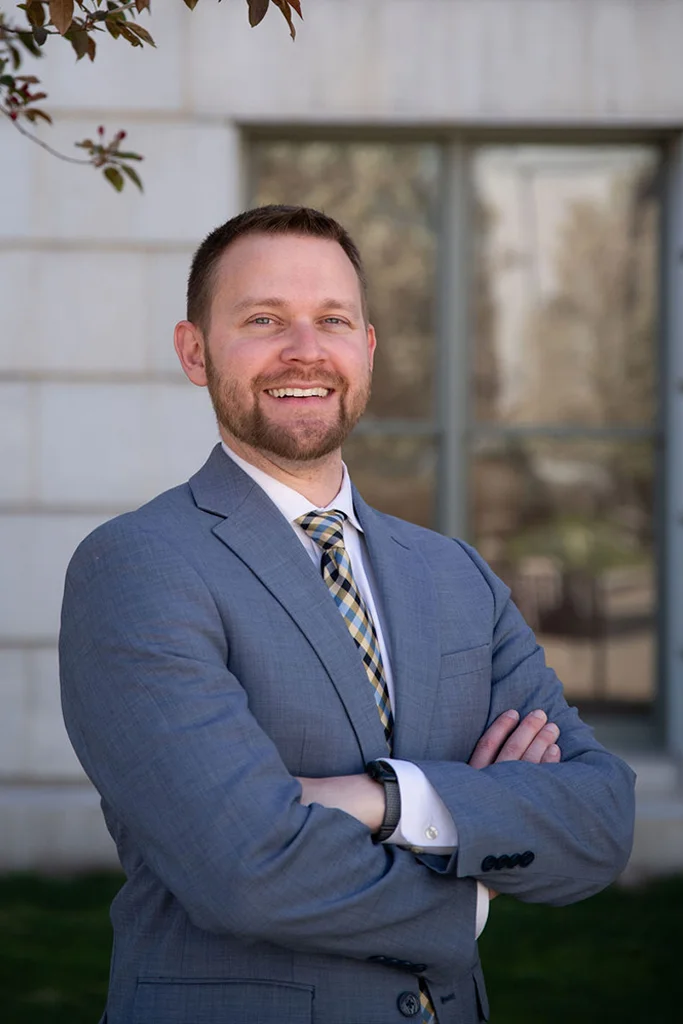
Denver DUI Checkpoint Lawyer
Sobriety checkpoints appear without warning along Denver’s busiest corridors, and the stops they generate can unravel quickly for drivers who do not understand what is happening or what they are legally permitted to do. A brief conversation with an officer at a checkpoint can turn into a field sobriety test, a breath test, and an arrest, all within minutes, before you have had any meaningful chance to assess your situation. If that sequence led to DUI charges against you, a Denver DUI checkpoint lawyer who understands how these enforcement operations actually work, and where they legally fail, can make the difference between a conviction that follows you for years and a case that never reaches a verdict.
Colorado courts have held that sobriety checkpoints are constitutionally permissible, but only when law enforcement follows specific procedural requirements. Those requirements are not suggestions. They are conditions, and when agencies cut corners on checkpoint administration, the resulting stops and arrests may be constitutionally defective. Reid DeChant examines checkpoint cases from the ground up: how the checkpoint was announced, how stops were selected, whether supervisory approval was obtained, how long drivers were detained, and whether the arresting officer followed required protocols from the moment your window came down to the moment you were placed in handcuffs.
Denver-area law enforcement agencies, including the Denver Police Department, Colorado State Patrol, and several county sheriff’s offices, conduct sobriety checkpoints with particular frequency around major events: Broncos and Nuggets games, Rockies home stands, Red Rocks concerts, New Year’s Eve, and the days surrounding major holidays. The I-25 corridor, Colfax Avenue, Federal Boulevard, and the stretch of I-70 between downtown and the airport have all seen checkpoint activity. Understanding how these operations are run, and where they typically go wrong, is the foundation of a checkpoint-specific DUI defense.
How Checkpoint Cases Differ from Standard DUI Stops
In a typical traffic stop, an officer must observe a specific traffic violation or have articulable reasonable suspicion before pulling a driver over. That individual suspicion requirement is the constitutional baseline for a stop, and challenging whether it actually existed is a central part of most DUI defense work. Checkpoint cases operate under a different legal framework entirely, which is why defending them requires a different kind of analysis.
Because courts allow law enforcement to stop vehicles without individualized suspicion at a properly constituted checkpoint, the constitutional validity of the checkpoint itself becomes the critical question. Colorado courts and the United States Supreme Court have established that checkpoints must meet several standards: they must be conducted pursuant to a neutral, predetermined formula for stopping vehicles rather than officer discretion, they must be supervised by senior law enforcement officials rather than left to roadside officers, the operational plan must be publicly announced in advance, and the degree of intrusion on detained drivers must be minimized. If any of these conditions are not met, the stop itself may be unlawful, and evidence gathered during an unlawful stop, including breath test results, field sobriety test observations, and officer testimony about your demeanor, may be subject to suppression.
This is not a technicality argument in the dismissive sense that phrase implies. It is a direct application of the Fourth Amendment and the Colorado Constitution. A Denver DUI checkpoint attorney who has handled these cases knows how to obtain the checkpoint’s operational plan, the law enforcement agency’s advance notice records, the supervisor’s authorization documents, and the data on how vehicles were actually selected for stopping. That documentation often reveals departures from the stated plan, and departures matter.
What a DUI Checkpoint Defense Actually Covers
- Checkpoint constitutionality challenges: Colorado law requires that sobriety checkpoints be established through supervisory policy decisions rather than individual officer discretion, and that the criteria for stopping vehicles be predetermined and neutral, meaning officers cannot cherry-pick which cars to stop based on gut instinct or appearance.
- Advance public notice requirements: Colorado agencies are generally required to publicize checkpoint locations in advance, and failure to provide adequate notice can undermine the checkpoint’s legal validity under both state and federal constitutional analysis.
- Duration of detention: Even at a lawful checkpoint, officers are constitutionally required to minimize the length of detention for drivers who show no signs of impairment, and an unreasonably prolonged stop may provide grounds to challenge everything that followed it.
- Field sobriety test administration: The National Highway Traffic Safety Administration has established standardized procedures for conducting the horizontal gaze nystagmus, walk-and-turn, and one-leg-stand tests, and deviations from those procedures can directly affect the reliability and admissibility of an officer’s conclusions.
- Breath and blood test challenges: Colorado’s Express Consent law requires that chemical testing be administered within two hours of driving, that the device used be properly calibrated and certified, and that specific advisements be given before testing; failures in any of these areas have resulted in dismissals in cases Reid DeChant has handled.
- Miranda and advisement issues: Checkpoint arrests that transition into custodial interrogation trigger Miranda protections, and statements made without proper advisement may be suppressible.
- DMV license revocation proceedings: A DUI arrest at a checkpoint typically triggers a separate administrative action against your driver’s license through the Colorado DMV, independent of any criminal case, and both proceedings require separate, simultaneous attention.
What You Should Do After a Checkpoint DUI Arrest in Denver
The period immediately following a checkpoint DUI arrest in Denver carries decisions that carry real weight. The most immediate is the DMV deadline. When you are arrested for DUI in Colorado, the arresting officer typically takes your license and issues a temporary driving permit. You have seven days from the date of that permit to request a hearing with the Colorado Division of Motor Vehicles. If you miss that window, your license will be automatically revoked without any opportunity to contest it. This is not a deadline that can be extended or made up later, and it runs concurrently with whatever else is happening in your criminal case.
The criminal case itself will be handled at the county level. DUI arrests occurring within the City and County of Denver are prosecuted through Denver County Court for misdemeanor charges or Denver District Court for elevated offenses, both located at the Lindsey-Flanigan Courthouse at 520 West Colfax Avenue. If your checkpoint arrest occurred in neighboring Jefferson, Arapahoe, Adams, or Douglas County, your case will be filed in the corresponding county courthouse, each of which has its own judges, prosecutors, and procedural culture. Knowing which courthouse handles your case matters because local practice, prosecutorial attitudes, and judicial tendencies vary.
In the days after your arrest, avoid discussing the details of the stop with anyone other than your attorney. Do not post about it on social media. Do not try to contact the arresting officer or the checkpoint agency. Preserve everything you have from the night in question: the temporary permit the officer gave you, any documents you received, receipts, your phone records showing your location, and the names and contact information of anyone who was with you. These details can matter more than they appear to at the outset.
A Denver DUI defense attorney will then begin obtaining the checkpoint’s operational records through formal legal channels. These records include the pre-operational plan signed by supervising officers, the vehicle selection formula, any shift supervisor logs, and the patrol agency’s advance public notice. In many checkpoint cases, the most valuable evidence for the defense comes not from what happened at the side of the road, but from what the paperwork does and does not show about how the checkpoint was authorized and administered.
Why Reid DeChant Handles Checkpoint DUI Cases Differently
Reid DeChant’s background as a former public defender gave him direct, high-volume exposure to DUI cases across Denver, Broomfield, and Adams County courtrooms. That experience is relevant here because it means Reid has cross-examined Colorado law enforcement officers about DUI stops and testing procedures in front of judges and juries, not just read about how to do it. The listed case results from DeChant Law include multiple DMV Express Consent actions dismissed for reasons including improper advisements, failure to administer the chemical test within the two-hour window, and other procedural defects. Those outcomes in DMV proceedings reflect the same analytical discipline that applies to checkpoint cases, where procedure is everything.
Reid’s training at the Trial Lawyers College, the program founded by Gerry Spence, shaped a courtroom approach grounded in honest storytelling rather than formulaic argument. In a checkpoint DUI case where the facts are heavily documented and the officer’s observations are part of the record, the narrative of what actually happened matters enormously to a judge deciding a suppression motion or a jury deciding credibility. Reid is also a member of the National Association of Criminal Defense Lawyers and the Colorado Criminal Defense Bar, affiliations that keep him connected to the legal strategies and emerging case law that checkpoint defense requires. His case results include not-guilty verdicts at trial in DUI cases across multiple Colorado counties, including Jefferson, Arapahoe, Douglas, and Broomfield, reflecting experience across the specific jurisdictions where Denver-area checkpoint arrests frequently occur.
When you retain DeChant Law for a checkpoint DUI, you are not handed off to a junior associate or managed at arm’s length. Reid works directly with each client, explains where your case stands and why, and builds the defense strategy around the specific facts of your stop, not a generic template.
Questions People Ask About DUI Checkpoint Cases in Colorado
Are sobriety checkpoints legal in Colorado?
Yes, Colorado courts have upheld sobriety checkpoints as constitutionally permissible under both federal and state law, provided that law enforcement follows specific procedural requirements. The checkpoint must be established through supervisory policy decisions, not individual officer discretion, must use a neutral vehicle selection formula, and must minimize the duration and intrusiveness of each stop. A checkpoint that deviates from these standards may be vulnerable to a constitutional challenge.
Do I have to answer questions at a checkpoint?
You are not required to answer questions beyond providing your license, registration, and proof of insurance. You have the right to remain silent, and invoking that right calmly and clearly is not legally incriminating. Officers at checkpoints are trained to use brief roadside conversations to develop probable cause, and the less you say, the less material they have to work with.
Can I refuse a field sobriety test at a checkpoint?
Yes. Standardized field sobriety tests in Colorado are voluntary, and you may decline to perform them. Refusing a field sobriety test is not the same as refusing a chemical breath or blood test under the Express Consent law. However, an officer may still arrest you if they believe they have probable cause based on other observations, such as the odor of alcohol, bloodshot eyes, or slurred speech. The absence of field sobriety test results can, in some cases, strengthen your defense.
What is Colorado’s Express Consent law and how does it apply to a checkpoint arrest?
Colorado’s Express Consent law provides that anyone who drives on Colorado roads has consented to a chemical test of their breath or blood if a law enforcement officer has probable cause to believe they are driving under the influence. If you refuse the chemical test, your license will be revoked for a longer period than if you had tested and failed. The Express Consent law applies equally to checkpoint arrests, and the specific advisements an officer is required to give you before offering the test are part of what can be challenged if those advisements were not given correctly or in full.
What happens to my driver’s license after a checkpoint DUI arrest?
Your license becomes subject to revocation through a Colorado DMV administrative proceeding that runs separately from your criminal case. You have seven days from the date your temporary permit is issued to request a DMV hearing. If you request a hearing in time, your driving privileges are typically preserved while the hearing is pending. If you do not request a hearing within that window, revocation becomes automatic. DeChant Law handles both the criminal defense and the DMV proceeding as part of a coordinated strategy.
What if the checkpoint was not publicly announced beforehand?
Colorado law enforcement agencies are generally expected to provide advance public notice of checkpoint locations, and a failure to do so can be raised as part of a constitutional challenge to the checkpoint’s validity. Whether this defect results in suppression of evidence depends on the specific facts, the applicable case law in your jurisdiction, and how the argument is developed and presented. This is one of the first things a checkpoint defense attorney will investigate when reviewing the agency’s operational records.
Can a checkpoint DUI be dismissed even if I failed a breath test?
Yes. Breath test results can be challenged on multiple grounds, including the device’s calibration records, whether the required maintenance procedures were followed, whether the test was administered within two hours of driving as required by Colorado law, and whether the officer was certified to operate the specific device used. If the checkpoint stop itself is found to be unconstitutional, the breath test result may be suppressed as the fruit of an unlawful seizure, regardless of its numerical value. DeChant Law’s case history includes DMV actions dismissed on procedural grounds related to the two-hour requirement and improper advisements.
Does a checkpoint DUI affect my professional license or employment in Colorado?
It can. Colorado professional licensing boards for nurses, teachers, real estate agents, commercial drivers, attorneys, and many other licensed professions require disclosure of criminal charges and convictions. A DUI conviction, even a first offense, may trigger a board review, a mandatory reporting obligation, or disciplinary proceedings depending on your specific license and profession. This is a reason why how the criminal case is resolved matters significantly beyond fines and probation.
What if I was arrested at a checkpoint but was not actually driving under the influence?
Checkpoint arrests are not always accurate. Officers making observations in brief, high-pressure roadside stops can misread nervousness as impairment, mistake legal prescription medication for illegal drug use, or form conclusions based on odor and appearance that do not reflect actual impairment. These cases are defensible, and presenting the full factual picture, including witness accounts, medical records, and cross-examination of the arresting officer’s methodology, is central to what Reid DeChant does in cases that go to trial.
How long will a checkpoint DUI case take to resolve in Denver?
Case timelines vary significantly based on whether the case goes to trial, whether suppression motions are filed and argued, and the current docket at the courthouse handling your case. Denver County Court and Denver District Court at Lindsey-Flanigan Courthouse have their own scheduling rhythms, and a contested suppression hearing will add time to the process. Cases that resolve through dismissal or plea negotiations typically move faster, while cases set for trial may take considerably longer. Your attorney should be able to give you a realistic estimate once the specific facts and charging documents are known.
Checkpoint DUI Representation Across the Denver Metro Area
DeChant Law represents clients facing DUI charges arising from sobriety checkpoints throughout the Denver metropolitan area and surrounding communities. In Denver proper, that includes clients from neighborhoods and corridors such as LoDo, RiNo, Capitol Hill, Five Points, Sunnyside, Wash Park, Baker, Highland, Congress Park, and Stapleton, as well as the major commercial and entertainment corridors along Colfax Avenue, Federal Boulevard, and Broadway where checkpoint activity concentrates. The firm also handles checkpoint DUI cases for clients in Lakewood, Golden, Wheat Ridge, Arvada, Westminster, Thornton, and Commerce City to the west and north, and in Englewood, Littleton, Centennial, Parker, and Aurora to the south and east. Jefferson County cases are filed at the Jefferson County Combined Courts in Golden; Adams County cases at the Adams County District Court in Brighton; Arapahoe County cases in Centennial; and Douglas County cases at the Douglas County District Court in Castle Rock. Reid DeChant has case experience in courtrooms across all of these jurisdictions, reflecting the geographic reach of Denver-area sobriety checkpoint enforcement operations.
Talk to a Denver DUI Checkpoint Attorney About Your Case
A checkpoint stop is not the end of your options. It is the beginning of a legal process that has specific rules, documented records, and multiple points where law enforcement errors can be identified and raised. Reid DeChant is a Denver DUI checkpoint attorney who has obtained dismissals and not-guilty verdicts in DUI cases across the counties where these stops occur, and who understands the procedural and constitutional arguments that checkpoint cases specifically require. The DMV clock runs fast after an arrest, and the sooner you have counsel working both the administrative and criminal sides of your case, the better your position. Call DeChant Law to schedule a consultation and discuss what the specific facts of your checkpoint stop actually mean for your defense.