Denver DUI Refusal Lawyer
Refusing a breath or blood test during a DUI stop in Colorado sets off a chain of consequences that runs on a separate track from your criminal case. Before any court date is scheduled, before any charges are formally filed, the Colorado Department of Revenue is already moving to revoke your license. The clock starts the moment you decline that chemical test. A Denver DUI refusal lawyer who understands both the criminal side and the DMV administrative process can make the difference between keeping your license and losing it for a year or longer.
Colorado’s express consent law requires any driver who operates a motor vehicle on public roads to submit to a chemical test when lawfully arrested for DUI or DWAI. The law treats refusal as a separate violation with separate consequences. That means even if your criminal DUI charge is reduced or dismissed, the revocation triggered by your refusal can still stand unless you challenge it directly. Most people don’t realize they have that fight on two separate fronts simultaneously.
The administrative hearing is where people most often get hurt without knowing it. You have only seven days from the date of your arrest to request a hearing with the Colorado DMV. Miss that window, and your license is automatically revoked. There is no automatic extension, and there is no appeal from inaction. If you refused a chemical test during a DUI stop anywhere in Denver or the surrounding metro area, the most urgent thing you can do is contact a Denver DUI refusal attorney today.
What Happens When You Refuse in Colorado: The Criminal and Administrative Collision
Colorado’s express consent statute creates two parallel proceedings after a refusal. The first is the DMV express consent hearing, an administrative process run by the Colorado Department of Revenue that operates independently of the courts. The second is the criminal DUI case that moves through the county court system. Both require defense. Neither can be ignored while you focus on the other.
At the DMV hearing, the issue is not whether you were guilty of DUI. The issue is narrower: was the stop lawful, were you properly advised of the express consent law, was your refusal unequivocal, and did law enforcement follow the required procedures? These are technical but consequential questions. DeChant Law has successfully challenged express consent actions on exactly these grounds, including cases dismissed because a client was advised of Miranda rights before receiving the express consent advisement, and cases dismissed for failure to administer the chemical test within two hours of driving. These are not technicalities for their own sake. They are the real legal standards, and they carry real consequences for the government’s case.
On the criminal side, a refusal can be used against you at trial. Prosecutors may argue that you refused because you knew you were impaired. But that inference can be challenged. There are legitimate reasons people refuse, including confusion about their rights, prior bad experiences with law enforcement, or medical conditions that affect breath test administration. A DUI defense attorney in Denver who understands how to address the refusal inference at trial can neutralize much of its damage.
Why DeChant Law Handles DUI Refusal Cases Differently
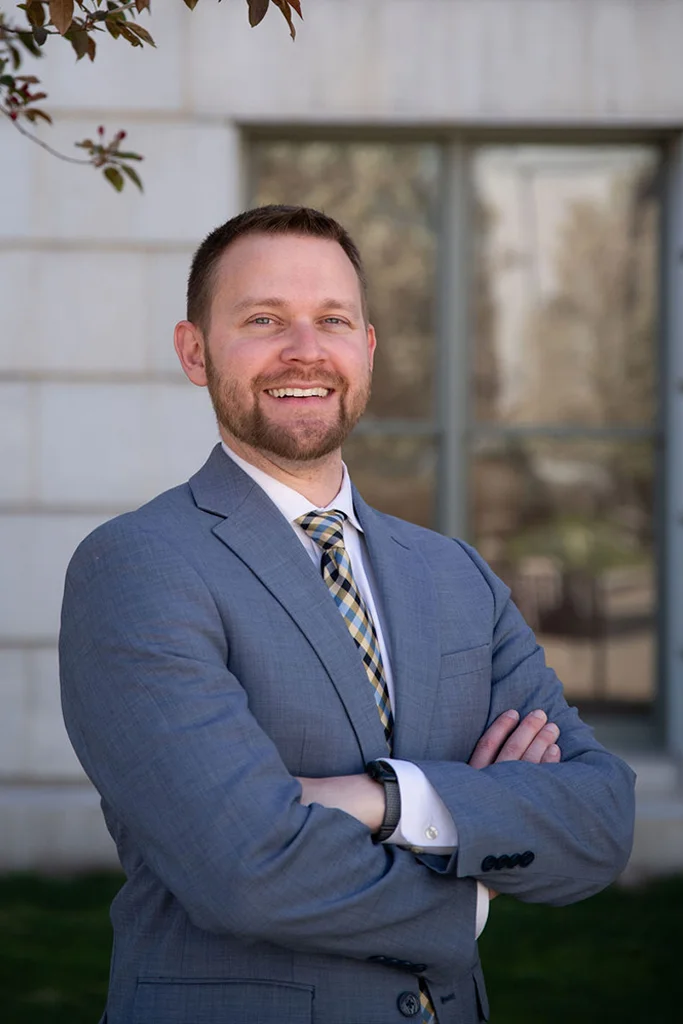
Reid DeChant built his practice on DUI defense, and he has devoted specific training and courtroom experience to the full range of impaired driving cases, including refusal cases, which present unique challenges that generic criminal defense lawyers often underestimate. As a former public defender who handled an enormous volume of cases in Denver, Adams County, and Broomfield County courtrooms, Reid developed a depth of familiarity with Colorado’s express consent process that comes only from years of actually litigating these hearings.
Reid is a graduate of the Trial Lawyers College, the exclusive advocacy training program founded by legendary attorney Gerry Spence. That training shapes how Reid approaches every case, including DUI refusals, where the ability to tell a compelling, human story to a jury or hearing officer matters enormously. He is also a member of the National Association of Criminal Defense Lawyers and the Colorado Criminal Defense Bar, staying current with the latest developments in DUI defense science and strategy.
The case results on DeChant Law’s record speak to the work. Multiple DMV express consent actions have been dismissed, including dismissals based on improper express consent advisements, Miranda-related procedural errors, and timing violations. A DUI and Careless Driving charge resulted in Not Guilty at trial. These outcomes were not accidents. They reflect careful preparation, deep knowledge of the legal and procedural requirements, and the willingness to take a case to hearing or trial when that is what the client’s situation demands.
The Most Common Issues in Denver DUI Refusal Cases
- Improper express consent advisement: Colorado law requires law enforcement to advise you of specific consequences before requesting a chemical test. If the advisement was incomplete, out of order, or delivered after Miranda warnings were given, the refusal may not be legally valid under Colorado’s administrative rules.
- Unlawful traffic stop: If the initial stop lacked reasonable suspicion, everything that followed, including the refusal, may be suppressible. Challenging the legality of the stop is often the first line of defense in refusal cases originating from DUI checkpoints or pretextual stops along I-25, I-70, or Colfax Avenue.
- Ambiguous or equivocal refusal: Not every hesitation or request for clarification constitutes a legal refusal. If you asked questions, expressed confusion, or conditionally agreed to testing, your response may not meet the standard of a clear refusal under Colorado law.
- Failure to administer the test within two hours: Colorado law requires the chemical test to be administered within two hours of driving. This is not a soft guideline. It is a legal requirement, and failure to comply has resulted in express consent actions being dismissed in cases Reid has handled.
- Medical inability to provide a sample: Certain respiratory conditions, panic disorders, or physical injuries can make breath testing impossible. If law enforcement failed to offer an alternative test method or documented the situation incorrectly, that is a defense worth exploring.
- Failure to request an alternative test: After completing the required test, Colorado law gives drivers the right to request an independent test. If law enforcement denied or interfered with that right, it may affect the admissibility of related evidence.
- The refusal inference at criminal trial: Prosecutors regularly argue that refusal is consciousness of guilt. Countering this narrative requires preparation, contextual evidence, and a lawyer willing to confront the argument directly rather than work around it.
After a Refusal Arrest: What the Next Seven Days Look Like
The seven-day deadline to request a DMV express consent hearing is not a bureaucratic formality. It is a hard cutoff. If you were arrested for DUI in Denver, Jefferson County, Adams County, Arapahoe County, or Douglas County after refusing a chemical test, that clock started running the moment the officer served you with the revocation notice. That notice typically takes the form of a pink or yellow document given to you at the time of arrest. It also serves as your temporary driving permit for seven days.
To request the hearing, you contact the Colorado Department of Revenue’s Hearing Division. The request must be made in writing or by phone within seven days, and it must specifically request a hearing on the express consent action. This is separate from any DMV hearing related to a BAC over the legal limit. Missing this step means automatic revocation, typically for one year on a first refusal.
While the DMV process is moving, your criminal case is also being initiated. If you were arrested in Denver, your case will likely be processed through Denver County Court or Denver District Court, located at the Lindsey-Flanigan Courthouse at 520 West Colfax Avenue. For DUI arrests in other metro counties, Jefferson County cases go through the Jefferson County Combined Courts in Golden, Arapahoe County cases through the Arapahoe County Justice Center in Centennial, and Douglas County cases through the Douglas County Combined Courts in Castle Rock.
Common mistakes people make in the days immediately following a DUI refusal arrest include waiting to hire an attorney, posting about the incident on social media, speaking to law enforcement without counsel, and missing the DMV hearing request deadline while focused on the criminal side. Each of these mistakes can limit your options significantly. A Denver DUI refusal attorney can take over communication with both the DMV and the court system, ensuring nothing falls through the gaps while you get your bearings.
Questions Denver Drivers Ask About DUI Refusals
Does refusing a breath test mean I automatically lose my license?
Not automatically, but it does trigger an administrative revocation process that will result in a license suspension unless you request a hearing and challenge the action. You have seven days from your arrest date to request that hearing. If you miss the deadline, the revocation takes effect without any review of whether the stop or advisement was lawful.
Can I be convicted of DUI if I refused the chemical test?
Yes. A refusal does not prevent the prosecutor from pursuing a DUI conviction. In the absence of a BAC reading, prosecutors may rely on officer observations, field sobriety test performance, dashcam footage, and the refusal itself as circumstantial evidence of impairment. The case is harder to prosecute without a chemical test result, but it is far from impossible.
Will the refusal be used against me at trial?
Prosecutors routinely attempt to use a refusal as evidence that the defendant knew they were too impaired to pass the test. Colorado law permits this inference to be argued to a jury. However, defense counsel can challenge the inference by presenting alternative explanations for the refusal, questioning the circumstances of the advisement, and contextualizing your conduct during the stop.
What is the difference between the DMV hearing and the criminal court case?
The DMV express consent hearing is an administrative proceeding before a hearing officer, not a judge, and it focuses exclusively on whether the administrative license revocation is legally valid. The criminal case proceeds in county or district court and determines whether you are guilty of DUI or DWAI. Winning the DMV hearing does not necessarily affect the criminal case, and vice versa. Both require active defense.
How long will my license be revoked if I lose the DMV hearing?
Under Colorado’s current framework, a first refusal typically results in a one-year revocation. Subsequent refusals carry longer revocation periods. There may be eligibility for a restricted license with an ignition interlock device after a portion of the revocation period is served, depending on your history and the specifics of your case.
Can a DUI refusal affect my ability to work if I drive commercially?
Yes, and the consequences for commercial driver’s license holders are significantly more severe than for standard license holders. Federal regulations governing CDLs impose stricter standards for DUI-related offenses and refusals, and a refusal while operating a commercial vehicle can result in CDL disqualification. Even a refusal in a personal vehicle can affect CDL eligibility. If you hold a CDL and refused a chemical test, this needs to be addressed immediately.
What if I have a medical condition that prevented me from providing a breath sample?
If a legitimate medical condition made it physically impossible to provide an adequate breath sample, that is a recognized defense to a refusal charge. You would typically need documentation of the condition and evidence that you made a genuine effort to comply. Law enforcement is required to offer a blood test as an alternative when breath testing is not feasible. Failure to do so on their part is itself a potential ground for challenging the revocation.
What happens if the officer failed to give me the express consent advisement properly?
The express consent advisement is a legally required step before law enforcement can treat a refusal as a refusal under Colorado law. If the advisement was missing, incomplete, or given out of sequence with other rights advisements, the refusal may be legally invalid. DeChant Law has had express consent actions dismissed on exactly this basis. The quality and completeness of the advisement is one of the first things to examine in any refusal case.
Can I challenge the original traffic stop in a DUI refusal case?
Yes. If the traffic stop was not supported by reasonable suspicion, a motion to suppress can be filed in the criminal case. A successful suppression motion may result in the entire case being dismissed. The stop’s legality is separately relevant in the DMV hearing as well, where the hearing officer can consider whether the initial contact was lawful. Patrol patterns in high-enforcement areas like LoDo, the RiNo corridor, and stretches of Broadway near bar districts make stop legality a meaningful issue in many Denver DUI refusal cases.
Is it worth fighting a DUI refusal charge if this is my first offense?
Yes. The consequences of a DUI conviction combined with a license revocation for refusal are not minor, even on a first offense. They can include significant fines, mandatory alcohol education programs, possible jail time, insurance rate increases, and a criminal record that does not disappear on its own. Fighting the charge is not just about avoiding a conviction. It is about preserving your license, your livelihood, and your record. First-offense DUI refusal cases have been won and dismissed. DeChant Law’s results include Not Guilty verdicts and case dismissals across DUI matters in Jefferson County, Arapahoe County, Douglas County, and Broomfield County.
DUI Refusal Defense Across the Denver Metro Area
DeChant Law defends DUI refusal cases throughout Denver and the surrounding communities. In Denver proper, this includes clients from Capitol Hill, Five Points, Baker, Sunnyside, Highland, the Denver Tech Center corridor, Stapleton, Montbello, Globeville, and the central business district. The firm also represents clients throughout the broader metro area, including Aurora, Lakewood, Arvada, Westminster, Thornton, Northglenn, Broomfield, Brighton, Commerce City, Englewood, Littleton, Centennial, Parker, Castle Rock, Lone Tree, Greenwood Village, and Wheat Ridge. Clients from communities further out, including Evergreen, Golden, Wheat Ridge, Edgewater, and the foothills communities along the I-70 mountain corridor, have also brought refusal cases to Reid DeChant. Wherever you were stopped and wherever your case will be heard in the Denver metro region, DeChant Law is prepared to appear and fight.
Contact a Denver DUI Refusal Attorney at DeChant Law
A DUI refusal in Colorado starts two clocks running at once. One leads to your DMV hearing. The other leads to your criminal court date. A Denver DUI refusal attorney at DeChant Law handles both sides of that fight, from the seven-day hearing request deadline through the final resolution of your case. Reid DeChant has the trial experience, the DMV hearing record, and the courtroom training to build the strongest possible defense on both tracks.
Do not let the administrative revocation become final through inaction while you focus on the criminal charge. Contact DeChant Law today to schedule a consultation and get both fights moving in the right direction.