Denver DUI Fourth Offense Lawyer
A fourth DUI offense in Colorado is not a more serious version of what came before. It is a different category of criminal exposure entirely. Colorado law treats a fourth or subsequent DUI as a Class 4 felony, which carries mandatory prison time, substantial fines, and a lifetime of collateral consequences that no amount of community service or treatment programming will erase. If you are reading this because you or someone you know is facing a fourth DUI charge in Denver or the surrounding metro, the most important thing to understand is that the legal framework here has almost nothing in common with a first or second offense. You need a Denver DUI fourth offense lawyer who has spent significant time inside Colorado courtrooms, who understands how felony DUI prosecutions actually work, and who will not tell you to plead guilty and move on.
The Denver County District Attorney’s Office prosecutes fourth-offense DUIs aggressively. Prosecutors in felony DUI cases often have prior conviction records, chemical test results, and law enforcement testimony already organized before you ever appear in court. The case moves through the Lindsey-Flanigan Courthouse on a felony track, which means different procedures, different stakes, and different leverage points than a misdemeanor DUI proceeding. Understanding what you are actually facing, before making any decision about how to respond, changes everything.
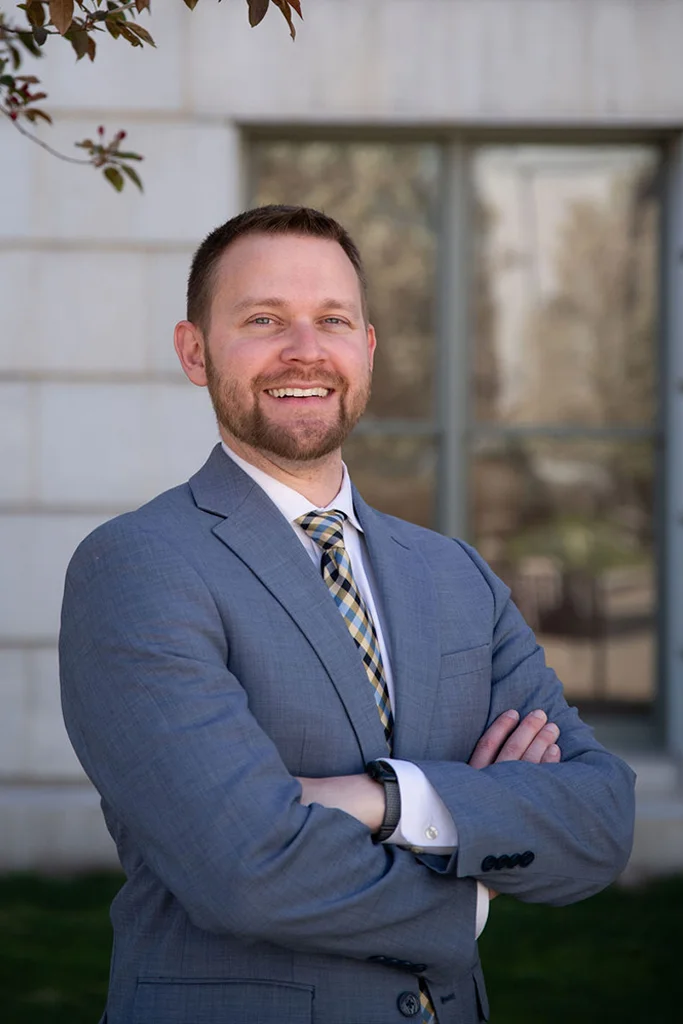
Reid DeChant has defended clients across Denver, Adams County, Jefferson County, Broomfield, Douglas County, and Arapahoe County on serious DUI charges, including felony cases. He trained as a public defender before building his private practice, which means he has handled the volume of cases that most private attorneys never see. That experience shapes how he approaches fourth-offense DUI defense because he has been on the other side of the table. He knows how prosecutors build these cases, and he knows where they are vulnerable.
What a Fourth DUI Charge Actually Means Under Colorado Law
Colorado’s DUI statute elevates a fourth or subsequent DUI offense to a Class 4 felony. That single reclassification triggers the entire felony criminal justice apparatus: felony charging documents, potential grand jury proceedings, district court jurisdiction, and sentencing guidelines that include mandatory incarceration in the Colorado Department of Corrections. This is not a municipal or county jail sentence. A felony DUI conviction can send someone to state prison.
The mandatory minimum sentence for a Class 4 felony in Colorado sits at 90 days in county jail as a condition of any probationary sentence, though the statute permits courts to impose up to six years in the Department of Corrections followed by three years of mandatory parole. Fines can reach $500,000, though actual fine amounts in felony DUI cases typically fall lower. The court will also require participation in a Level II alcohol education and treatment program, and compliance with those programs is monitored closely. Probation violations in felony DUI cases are treated seriously and can result in the original prison sentence being imposed.
Beyond the sentence itself, a felony conviction permanently alters a person’s civil status in Colorado. Felons lose voting rights during incarceration and parole, cannot possess firearms, and face significant barriers to employment, professional licensing, and housing. For anyone holding a commercial driver’s license, a CDL revocation is a near-certain outcome. Immigration consequences for non-citizens can be severe, including removal proceedings. These downstream effects matter as much as the sentence itself, and a complete defense strategy accounts for all of them.
How Denver Fourth-Offense DUI Cases Are Actually Defended
The existence of three prior convictions does not mean there is no defense. It means the defense has to be built carefully and from the ground up. Reid DeChant’s approach to felony DUI defense in Denver begins with scrutinizing how those prior convictions were obtained, because the prosecution must prove that the prior offenses qualify under the statute. If a prior conviction resulted from a constitutionally defective proceeding, or if the records are incomplete or inconsistent, those priors may be subject to challenge. This is a line of attack that many lawyers never pursue because it requires knowing exactly what to look for in old court files.
The current charge also gets a full independent review. Fourth-offense DUI cases often involve a traffic stop, a field sobriety evaluation, and a chemical test. Each of those components carries its own set of procedural and constitutional requirements. Probable cause for the stop must have existed. Field sobriety tests must have been administered under the correct conditions and correctly scored. Chemical tests, whether breath or blood, must have been performed within legally mandated timeframes, using properly calibrated and maintained equipment, by certified operators. Colorado’s Express Consent law imposes specific advisement requirements on law enforcement, and failures in that process have resulted in license action dismissals at the DMV level.
Reid’s case results include multiple DMV Express Consent action dismissals based on failures in the chemical testing process, improper advisements, and procedural irregularities. He has also secured not guilty verdicts in DUI-drugs cases and multiple DUI dismissals across Jefferson, Arapahoe, Douglas, and Broomfield Counties. While past results do not guarantee a particular outcome, this track record reflects a lawyer who actually contests cases rather than processing them toward predictable outcomes.
Why DeChant Law Is the Right Choice for a Felony DUI Defense in Denver
Reid DeChant built DeChant Law around two things: trial experience and genuine client investment. His years as a public defender meant handling serious cases in high volume, in the exact courtrooms where felony DUI cases in Denver are tried. That experience cannot be replicated by lawyers who have spent their careers in transactional work or who rarely go to trial. A felony DUI case may ultimately resolve through negotiation, but the negotiation only produces results if the prosecutor believes you are prepared to go to trial and capable of winning one.
Reid’s training at the Trial Lawyers College, founded by legendary trial attorney Gerry Spence, gave him tools that go beyond procedural knowledge. Felony DUI defense at trial requires communicating with jurors, connecting a client’s humanity to the facts of the case, and telling a story that makes sense of the evidence in a way a verdict form can reflect. Reid does not argue abstractions at juries. He advocates for people, and juries respond differently to that approach than to lawyers who present legal arguments alone.
Reid maintains active membership in the National Association of Criminal Defense Lawyers and the Colorado Criminal Defense Bar. These affiliations are not decorative. They keep Reid connected to the most current defense strategies, legislative changes, and developments in forensic science that affect how chemical test results can be challenged and how suppression motions are argued. In felony DUI defense, staying current is not optional.
Charges and Issues Common to Denver Fourth-Offense DUI Cases
- Class 4 Felony DUI: Colorado elevates a fourth or subsequent DUI to a Class 4 felony under state statute, exposing defendants to state prison time, substantial fines, and a permanent felony record distinct from the misdemeanor DUI framework that governs earlier offenses.
- Prior Conviction Validity: The prosecution must establish that qualifying prior convictions exist and are properly documented; constitutional defects in prior proceedings or incomplete records can create grounds to challenge the felony elevation.
- Express Consent and Chemical Testing Compliance: Colorado law requires specific advisements and mandates that chemical tests be administered within two hours of driving; failures in this process have resulted in case dismissals at both the DMV and criminal court levels.
- Blood Test Evidence and Forensic Challenges: Blood draw procedures, chain of custody documentation, laboratory handling protocols, and analyst certification all affect the admissibility and weight of chemical test evidence in felony DUI proceedings.
- DMV License Revocation Proceedings: A fourth DUI arrest triggers a separate DMV administrative process that can result in long-term or permanent license revocation; this proceeding runs parallel to the criminal case and requires its own defense strategy and hearing request within strict deadlines.
- Mandatory Treatment and Probation Requirements: Even when prison is avoided, felony DUI sentences impose extensive treatment obligations, monitored sobriety requirements, and intensive supervision conditions that carry real consequences for any violation.
- Immigration and Collateral Consequences: For non-citizens, a felony DUI conviction carries severe immigration consequences including deportation risk; for anyone holding a CDL or professional license, the licensing consequences of a felony conviction require immediate attention alongside the criminal defense.
Steps to Take Immediately After a Fourth DUI Arrest in Denver
The first 72 hours after a fourth DUI arrest in Denver carry an outsized importance. If you submitted to a chemical test at arrest, you have a very short window, generally seven days from the arrest, to request a DMV hearing to contest the license revocation that will otherwise take effect automatically. Missing that deadline typically waives your right to challenge the revocation. Reid DeChant handles both the criminal defense and the DMV proceeding, which matters because the two processes intersect in ways that require coordination.
On the criminal side, a fourth-offense DUI is filed as a felony in district court, not county court. That means the case goes through the Denver District Court at the Lindsey-Flanigan Courthouse at 520 West Colfax Avenue. The felony process includes an advisement hearing, a preliminary hearing or grand jury review, arraignment, pretrial motions, and, if necessary, trial. Each of those stages offers opportunities to challenge the evidence, negotiate, or suppress illegally obtained materials. The preliminary hearing in particular can be a powerful tool if the evidence of probable cause is thin.
Document everything you remember about the stop, the field sobriety testing, the advisements you received, and the chemical test procedure. Do not discuss the facts of the case with law enforcement, prosecutors, or anyone else before speaking with a criminal defense attorney. Statements made before and after arrest have a way of appearing in police reports and trial testimony in ways that are difficult to address later. Secure any dashcam, bodycam, or surveillance footage that may have captured the stop, because that evidence can be lost quickly if not requested through formal legal channels.
If you are released on bond, understand that the bond conditions in a felony DUI case typically include alcohol monitoring. Violations of those conditions can result in bond revocation and pretrial detention. Compliance with every condition, no matter how burdensome it feels, is essential. The prosecutor and judge both watch how defendants conduct themselves on pretrial release, and it affects plea negotiations and sentencing outcomes.
Questions About Denver Fourth Offense DUI Defense
Is a fourth DUI automatically a felony in Colorado?
Yes. Colorado law treats a fourth or subsequent DUI conviction as a Class 4 felony, regardless of whether the prior convictions occurred in Colorado or in another state. The prosecution must document and establish those prior convictions as part of the case, but the felony classification is triggered by the existence of the priors, not by the facts of the current incident alone.
What is the mandatory minimum sentence for a felony DUI in Colorado?
A Class 4 felony DUI conviction requires at least 90 days in county jail as a mandatory minimum condition even if the court imposes probation rather than prison. The court has authority to impose up to six years in the Department of Corrections, followed by mandatory parole. The specific sentence depends on the facts, the defendant’s history, compliance with conditions, and the quality of the defense presented.
Can prior DUI convictions from other states count toward the fourth offense total?
Yes. Colorado courts can and do count out-of-state DUI convictions when determining whether the current offense qualifies as a fourth. The prosecution will typically obtain certified records of prior convictions from other states. Whether those prior convictions were constitutionally obtained and properly documented is something Reid DeChant examines in every case where out-of-state priors are at issue.
Do I have to lose my license permanently after a fourth DUI?
A fourth DUI arrest triggers a DMV revocation proceeding separate from the criminal case. Colorado’s administrative revocation process has its own timeline and its own hearing procedure. The DMV can and does impose long-term or permanent revocations for multiple offense DUI cases. Requesting a hearing within the deadline after arrest is critical, and the outcome of that hearing can be affected by the evidence and arguments your attorney presents.
What is the difference between DUI and DWAI, and does it matter for a fourth offense?
Colorado distinguishes between DUI, which requires impairment to the slightest degree or a BAC of 0.08 or higher, and DWAI, which covers impairment that affects driving to the slightest degree with a BAC between 0.05 and 0.08. For prior offense counting purposes, both DUI and DWAI convictions count. A fourth offense that would otherwise be a DWAI can still trigger the felony classification because of the prior conviction history.
How are blood test results challenged in a felony DUI case?
Blood test results in Colorado DUI cases can be challenged on multiple grounds: improper collection technique, failure to maintain proper chain of custody, laboratory handling errors, inadequate refrigeration, issues with the blood kit’s integrity, and failures in the analyst’s certification or procedure. In felony cases, Reid can work with independent forensic experts to review the state laboratory’s procedures and conclusions. Results that appeared solid at the misdemeanor level deserve the same scrutiny at the felony level.
What happens at the preliminary hearing in a felony DUI case?
At the preliminary hearing, the prosecution must present evidence sufficient to establish probable cause that the offense was committed and that the defendant committed it. This is a lower standard than trial, but it is not a formality. A skilled criminal defense attorney in Denver can use the preliminary hearing to lock in witness testimony, expose weaknesses in the prosecution’s evidence, and lay groundwork for suppression motions. Waiving this hearing is sometimes tactically appropriate, but doing so without a clear strategic reason can forfeit meaningful advantages.
Can a felony DUI be reduced to a misdemeanor through plea negotiation?
Reduction from felony to misdemeanor is not automatic and is not guaranteed, but it does happen in some cases depending on the facts, the specific priors, and the strength of the defense. Prosecutors have discretion to negotiate charges. That discretion is most likely to be exercised favorably when the defense has built a credible case for trial, identified real weaknesses in the prosecution’s evidence, and presented a defendant who has taken genuine steps toward addressing any underlying issues. Plea outcomes depend heavily on case preparation, not just on filing a motion or requesting a meeting.
Will a felony DUI conviction affect my ability to own a firearm in Colorado?
Yes. A felony conviction under Colorado or federal law prohibits firearm possession. A fourth DUI conviction, as a Class 4 felony, would trigger this prohibition. This is one of the many collateral consequences that extend well beyond the sentence itself and that factor into how seriously this charge must be defended from the beginning.
How long does a felony DUI case typically take in Denver’s courts?
Felony cases move through the Denver District Court on a longer timeline than misdemeanor matters. From initial advisement through resolution, felony DUI cases in Denver commonly take six months to a year or more, depending on the complexity of the evidence, the court’s schedule, and whether the case proceeds to trial. Cases that involve suppression motions, independent expert review of blood evidence, or challenges to prior convictions may take longer. That timeline is not wasted time; it is the period during which the defense is built.
Serving Denver and the Surrounding Front Range Communities in Felony DUI Cases
DeChant Law represents clients facing fourth-offense and felony DUI charges across the Denver metropolitan area and the broader Front Range. In Denver proper, that means clients from Capitol Hill, Five Points, Stapleton, Sloan’s Lake, Washington Park, Highland, Baker, Congress Park, Park Hill, and Globeville. The firm also serves clients from the surrounding communities of Aurora, Englewood, Littleton, Lakewood, Arvada, Westminster, Thornton, Northglenn, Commerce City, Brighton, and Broomfield. Jefferson County clients from Wheat Ridge, Edgewater, Golden, Evergreen, and Conifer can reach the firm. Arapahoe County matters from Centennial, Cherry Hills Village, Greenwood Village, and Glendale are also handled, as are cases from Douglas County communities including Lone Tree, Highlands Ranch, Castle Rock, and Parker. Adams County clients from Federal Heights, Henderson, Bennett, and the greater Adams County area have worked with Reid DeChant through the Adams County court system as well. Wherever your case is filed on the Front Range, Reid has likely practiced in or been familiar with that jurisdiction’s courts and prosecutors.
Denver DUI Fourth Offense Attorney: Ready to Review Your Case
A fourth DUI charge demands a complete defense, not a resigned one. If you are facing a felony DUI prosecution in Denver or anywhere in the metro area, Reid DeChant is a Denver DUI fourth offense attorney who has the courtroom experience, the trial training, and the case-by-case intensity to build a real defense. This is not the time to hire whoever is cheapest or most convenient. It is the time to be represented by someone who will go through every piece of evidence, challenge every weak point in the prosecution’s case, and stand beside you through every stage of the proceedings. Call DeChant Law to schedule a consultation and start understanding exactly what you are facing and what can be done about it.