Denver DWAI Lawyer
Colorado draws a legal line between driving under the influence and driving while ability impaired, and that distinction matters enormously when you are the one facing charges. A Denver DWAI lawyer handles a charge that many people underestimate until they see what it actually costs: fines, points on your license, mandatory public service hours, possible jail time, and a conviction that follows you into background checks for years. DWAI in Colorado can be triggered by a blood alcohol content as low as 0.05, which means one or two drinks can put someone in legal jeopardy even when they felt completely fine to drive.
The Denver metro area generates a substantial number of DWAI arrests each year. Enforcement concentrates around the neighborhoods and corridors where nightlife, sports events, and entertainment venues cluster. Patrols on Colfax Avenue, Broadway, the I-25 corridor through downtown, the LoDo entertainment district, and the areas around Ball Arena and Empower Field at Mile High ramp up on nights and weekends, during concerts, and before and after Broncos, Nuggets, and Avalanche games. Officers conducting these stops are trained to document specific observations, administer standardized field sobriety tests, and gather the chemical test evidence that prosecutors will rely on. What looks like an airtight case from the outside often has vulnerabilities that only become visible to someone who knows where to look.
DWAI also carries a separate track that most people do not anticipate: the DMV Express Consent process. Your driver’s license is at risk on a completely different timeline than your criminal case, and missing critical deadlines on the DMV side can cost you your license regardless of how the criminal matter resolves. That dual-track pressure is one of the first things a competent DWAI attorney in Denver addresses the moment they take a case.
What Makes DWAI Different From DUI, and Why That Difference Shapes Your Defense
DUI under Colorado law requires a blood alcohol concentration at or above 0.08, or evidence that alcohol or drugs substantially impaired the driver’s ability to operate a vehicle. DWAI sets a lower bar: impairment “to the slightest degree,” meaning that even a modest reduction in physical or mental faculties can support a charge. The flip side is that the lower statutory threshold also means the prosecution’s case can be harder to prove beyond a reasonable doubt, because a BAC between 0.05 and 0.08 creates a rebuttable presumption of impairment, not a conclusive one. That is a meaningful distinction when you are building a defense.
A first DWAI conviction carries penalties that include fines, mandatory public service hours, possible jail time, and eight points against your Colorado driver’s license. A second DWAI or DWAI following a prior DUI escalates those consequences sharply. When a DWAI involves drugs rather than alcohol, the analysis becomes more complex: there is no universal legal limit for most substances the way there is for alcohol, and the prosecution typically relies on officer observations, field sobriety results, and the opinion of a Drug Recognition Expert. Each of those pieces of evidence has its own set of vulnerabilities, and a thorough defense examines every one of them.
Why DeChant Law Handles DWAI Cases Differently
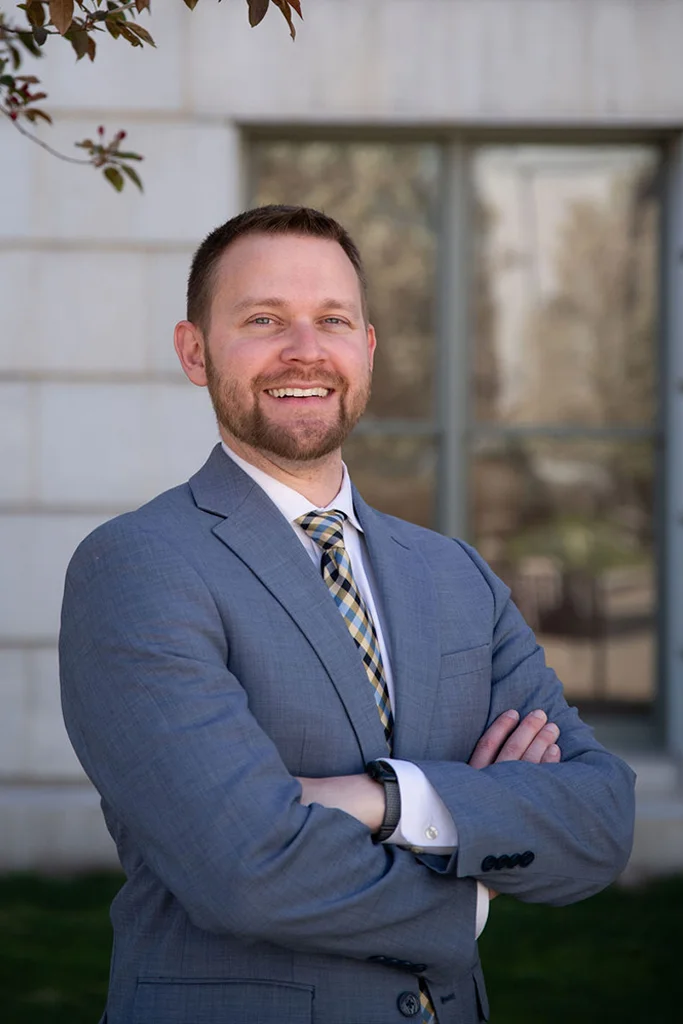
Reid DeChant built his practice around exactly the kind of case that requires both courtroom skill and deep technical knowledge of impaired driving law. His background as a former public defender gave him extensive time inside Denver, Broomfield, and Adams County courtrooms, cross-examining law enforcement officers, challenging chemical test results, and trying impaired driving cases in front of juries. That volume of real trial experience is not something you find in every private practice attorney, and it shapes how Reid evaluates a DWAI case from the moment he reviews the police report.
Reid is also a graduate of the Trial Lawyers College, the program founded by legendary attorney Gerry Spence that trains lawyers in the kind of storytelling and human connection that actually moves jurors. Legal arguments alone rarely win DWAI trials. What wins is the ability to make a jury understand the full context of what happened: who you are, what the traffic stop actually looked like, what the officer’s observations really mean, and why the evidence does not tell the story the prosecution claims. Reid’s training in that method of advocacy is part of what distinguishes his approach to these cases.
The firm’s case results reflect that approach. DeChant Law has secured dismissals in multiple DMV Express Consent actions, including cases dismissed for improper Express Consent advisement, cases dismissed because a chemical test was not administered within the required two-hour window, and cases dismissed for Miranda-related issues. A DUI and Careless Driving resulted in a Not Guilty verdict at trial. DUI cases out of Arapahoe County, Douglas County, and Jefferson County have been dismissed at various stages. These results do not guarantee a particular outcome in any individual case, but they reflect the kind of rigorous, detail-oriented defense that Reid applies to every impaired driving matter he handles.
Reid maintains active membership in the National Association of Criminal Defense Lawyers and the Colorado Criminal Defense Bar, keeping him connected to current developments in DWAI defense strategy and the latest challenges to chemical testing methods, field sobriety protocols, and law enforcement procedures.
DWAI Charges a Denver Defense Attorney Regularly Encounters
- Standard alcohol DWAI: Colorado’s most common form of DWAI involves a BAC between 0.05 and 0.08, where the prosecution must prove impairment to the slightest degree rather than relying on a per se BAC threshold. The rebuttable presumption built into this range creates genuine room for defense.
- DWAI-drugs: When impairment is attributed to marijuana, prescription medications, or other controlled substances, prosecutors typically rely on Drug Recognition Expert evaluations and officer observations rather than a simple blood alcohol number. DRE protocols have specific procedural requirements, and their reliability is a legitimate subject of challenge.
- DWAI with combined substance use: Charges involving both alcohol and another substance introduce additional complexity, including disputes over which substance caused the alleged impairment and whether the chemical testing captured an accurate picture of the driver’s condition at the time of driving.
- DWAI following a prior impaired driving conviction: Colorado law treats repeat impaired driving offenses much more harshly, and a DWAI that would otherwise be a misdemeanor can result in significantly elevated consequences when there is a prior conviction on record.
- DWAI with accident involvement: When a DWAI arrest follows a collision, the prosecution often adds careless or reckless driving charges. The physical evidence from the crash scene becomes part of the case, and the defense must address both the impairment allegations and the driving conduct evidence.
- DWAI at a DUI checkpoint or saturation patrol: Denver and surrounding jurisdictions conduct organized enforcement operations, particularly around holidays and major events. The legality of the stop and the checkpoint’s compliance with constitutional requirements are threshold issues in these cases.
- DWAI involving commercial drivers or CDL holders: Commercial driver’s license holders face federal and state consequences that go beyond standard DWAI penalties. A conviction can end a career, which means the stakes justify a particularly aggressive defense from the outset.
The First Seventy-Two Hours After a DWAI Arrest in Denver
The period immediately after a DWAI arrest is not time you can afford to spend waiting. Colorado’s Express Consent law requires drivers to submit to chemical testing when lawfully requested by an officer who has probable cause to believe impairment is involved. If you refused a test or submitted to one, that result will drive both your criminal case and a parallel DMV proceeding. You have a narrow window, typically seven days from the date of the arrest, to request a DMV hearing to contest the administrative revocation of your license. If that deadline passes without a request, the revocation proceeds automatically regardless of what happens in the criminal case. Your attorney needs to know about this deadline on day one, not after it has expired.
DWAI cases in Denver are processed through the Denver County courthouse at the Lindsey-Flanigan Courthouse on Elati Street in the Lincoln Park neighborhood. If your arrest occurred in a surrounding jurisdiction, your case may be in the Jefferson County Combined Courts in Golden, the Adams County District Court in Brighton, the Arapahoe County Justice Center in Centennial, or the Douglas County Combined Courts in Castle Rock. Knowing which courthouse is handling your case matters because local prosecutors, judges, and enforcement cultures vary across those jurisdictions. Reid has tried cases and defended clients in all of these courthouses as a public defender and in private practice.
Gather everything you can remember about the stop while it is still fresh: the location, the time, what you consumed and when, what the officer said, the order in which the field sobriety tests were administered, and any conditions that might have affected your performance on those tests. Medical conditions, physical injuries, uneven pavement, poor lighting, wind, and anxiety can all influence standardized field sobriety test results in ways that have nothing to do with impairment. Your attorney will want every detail, because what seems minor to you may be significant to the defense.
Avoid discussing your case on social media, with coworkers, or with anyone other than your attorney. Statements made outside of the attorney-client relationship can surface in discovery and be used against you. That includes text messages sent after the arrest, posts made while the case is pending, and conversations with anyone who is not your lawyer.
Questions People Ask About Denver DWAI Cases
Is a DWAI charge less serious than a DUI?
On paper, a first DWAI conviction carries somewhat lighter penalties than a first DUI conviction. But that relative comparison does not mean DWAI is a minor matter. It still results in a criminal conviction, points against your license, potential jail time, fines, mandatory public service, and a record that can affect employment, housing applications, and professional licensing. The lower BAC threshold that triggers DWAI charges can also make people think they have no defense, when in reality the rebuttable presumption in that BAC range gives a skilled defense attorney meaningful room to work.
What happens to my driver’s license after a DWAI arrest in Colorado?
Colorado’s Express Consent law creates an administrative revocation process that runs separately from the criminal case. After a DWAI arrest, you have a limited window to request a DMV hearing. If you submitted to a chemical test, the DMV will seek to revoke your license based on the test result. If you refused, the revocation period is typically longer. An attorney who handles the DMV side of the case can challenge the revocation on procedural grounds, advisement issues, and the sufficiency of the officer’s probable cause, independent of the criminal proceedings.
Can a DWAI charge be reduced or dismissed in Denver?
Yes, DWAI charges can be reduced, dismissed, or result in a not guilty verdict at trial, depending on the facts of the case. Common avenues include challenging the legality of the traffic stop, questioning the reliability of the field sobriety tests, disputing the chemical testing procedures or the chain of custody for blood samples, and raising issues with the officer’s Express Consent advisement. DeChant Law has secured dismissals and not guilty verdicts in impaired driving cases across multiple Denver-area courts.
What is a Drug Recognition Expert and how does that affect a DWAI-drugs case?
A Drug Recognition Expert is a law enforcement officer trained to evaluate drivers for drug impairment through a multi-step protocol that includes physical evaluations, vital sign measurements, and structured observations. DRE testimony is commonly used in DWAI-drugs cases where a blood test shows a substance but the legal limit question is more nuanced than with alcohol. DRE protocols must be followed precisely, and the officer’s conclusions involve a degree of subjective judgment that can be challenged through cross-examination and, in some cases, through expert testimony from a qualified forensic toxicologist.
What if I passed the field sobriety tests but still got arrested for DWAI?
This situation occurs more often than people expect. An officer who suspected impairment may have found enough in their observations to support an arrest even when the field sobriety test performance was mixed or borderline. The arrest decision and the question of what the evidence actually proves at trial are separate inquiries. If you performed reasonably on the standardized tests, that is a significant piece of evidence in your favor, and a competent defense will make sure the jury or the prosecution understands exactly what that means.
How does marijuana affect a DWAI charge in Colorado?
Colorado’s legalization of recreational marijuana has not eliminated DWAI-marijuana charges. Colorado law establishes a rebuttable presumption of impairment at five nanograms of active THC per milliliter of whole blood, but unlike alcohol, THC metabolizes in ways that do not neatly correspond to real-time impairment. Someone who consumed marijuana days earlier may have residual THC in their blood without being impaired at all. This makes the scientific basis for DWAI-marijuana cases legitimately contested, and defense attorneys who understand the toxicology can challenge both the testing methodology and what the results actually mean in terms of the driver’s actual condition at the time of driving.
Will a DWAI conviction affect my professional license in Colorado?
It can. Many licensed professionals, including nurses, teachers, real estate agents, attorneys, and CDL holders, are required to report criminal convictions to their licensing boards. A DWAI conviction is a criminal conviction, and depending on the licensing body’s rules, it may trigger a review process, additional conditions on a license, or disciplinary action. This is one of the reasons the full consequences of a DWAI matter extend well beyond the courtroom, and why the defense of these cases deserves the same level of attention regardless of whether the charge sounds minor on the surface.
Can I represent myself in a Denver DWAI case?
You have the right to represent yourself, but DWAI cases involve multiple interacting systems: the criminal case, the DMV Express Consent proceeding, field sobriety test science, chemical testing protocols, and constitutional issues around the validity of the stop and arrest. Prosecutors handling DWAI cases in Denver are experienced and familiar with standard arguments. Handling the technical and procedural dimensions of a DWAI defense without legal training leaves most people significantly disadvantaged. The risks of a conviction, including the record, the license consequences, and the potential employment impact, typically far outweigh the cost of hiring an attorney.
How long does a DWAI case typically take in Denver County courts?
The timeline varies considerably depending on whether the case resolves through dismissal, a plea agreement, or goes to trial. Misdemeanor DWAI cases in Denver County can move relatively quickly to a resolution if the defense and prosecution reach an agreement, but cases that require more intensive litigation, including challenges to chemical test evidence or motions regarding the legality of the stop, take longer. Cases that proceed to trial extend further still. Your attorney should give you a realistic picture of the timeline based on the specific facts of your case and the current docket conditions in the relevant court.
What if the chemical test result is close to the DWAI threshold?
Results near the lower boundary of the DWAI range are particularly worth examining carefully. Blood and breath testing equipment has margins of error, calibration requirements, and procedural standards that must be met for the results to be reliable. A result that appears just above 0.05 on paper may fall within the margin of error of the testing device, and that issue can be explored through the testing records and, where appropriate, through independent analysis. Your attorney should request all documentation related to the testing equipment’s maintenance and calibration history as part of building the defense.
Denver DWAI Defense Representation Across the Metro Area
DeChant Law represents clients facing DWAI charges throughout Denver and the surrounding communities. The firm handles cases arising from arrests in Denver proper, including the Capitol Hill neighborhood, Highland, Baker, RiNo, Stapleton, Montbello, and the areas surrounding downtown. Cases from the I-25 and I-70 corridors, which see consistent enforcement activity, are a regular part of the practice.
Beyond Denver’s city limits, the firm defends clients in Lakewood, Arvada, Westminster, Thornton, Northglenn, Commerce City, Aurora, Englewood, Littleton, Centennial, Lone Tree, Parker, Castle Rock, and Highlands Ranch. To the north and west, Reid represents clients with cases in Broomfield, Louisville, Lafayette, Boulder, and Golden. The Adams County communities of Wheat Ridge, Federal Heights, Brighton, and Northglenn, as well as Arapahoe County communities including Greenwood Village and Cherry Hills Village, are also part of the firm’s regular practice area. Whether the case is in a Denver County courtroom, the Jefferson County Combined Courts, Adams County District Court, Douglas County Combined Courts, or the Broomfield Combined Courts, the approach remains the same: thorough preparation, aggressive defense, and honest communication with the client about what the evidence shows and what the options are.
Talk to a Denver DWAI Attorney Before Your Next Court Date
A DWAI charge deserves a serious defense, not because the label sounds alarming, but because the consequences of a conviction are real and lasting. Reid DeChant has spent his career defending impaired driving cases in Denver and the surrounding metro courts, and he brings genuine trial experience and a detailed understanding of Colorado’s Express Consent and DWAI framework to every case he handles. If you are looking for a Denver DWAI attorney who will examine every piece of evidence, challenge every procedural misstep by law enforcement, and fight for the best possible result in your case, DeChant Law is the firm to call. Do not wait until the DMV deadline has passed or the criminal case has already moved forward without you. Reach out to DeChant Law today to schedule a consultation.